








Introduction: The Anatomy of a Movement
Across freight yards, highway truck stops, and independent operator forums, a quiet resolve is taking shape. Rumors of coordinated work stoppages and rolling strikes—ranging from localized weekend shutdowns to broader protests—reflect a level of industry cohesion that defies traditional labor metrics. While only a fraction of American truck drivers carry formal union cards, the vast network of independent owner-operators and non-union personnel are finding common ground.
This growing unrest is not merely a labor dispute; it is a symptom of structural strain across the American logistics network. Truck drivers serve as the economic circulatory system of the country, moving roughly 7 billion ton-miles of freight daily. When independent truckers and fleet drivers begin discussing coordinated action, it signals profound friction between the front-line workers who keep shelves stocked and the centralized economic forces dictating the terms of their trade.
To understand the current state of the industry, one must examine a convergence of pressures: historic fuel price spikes, vulnerable regional refining capacity, and the looming transition toward autonomous fleet operations. These factors threaten not just the livelihood of the individual trucker, but the stability of the entire supply chain.
Main Facts: The Triple Threat to Freight
The contemporary logistics landscape is being reshaped by three distinct, compounding crises:
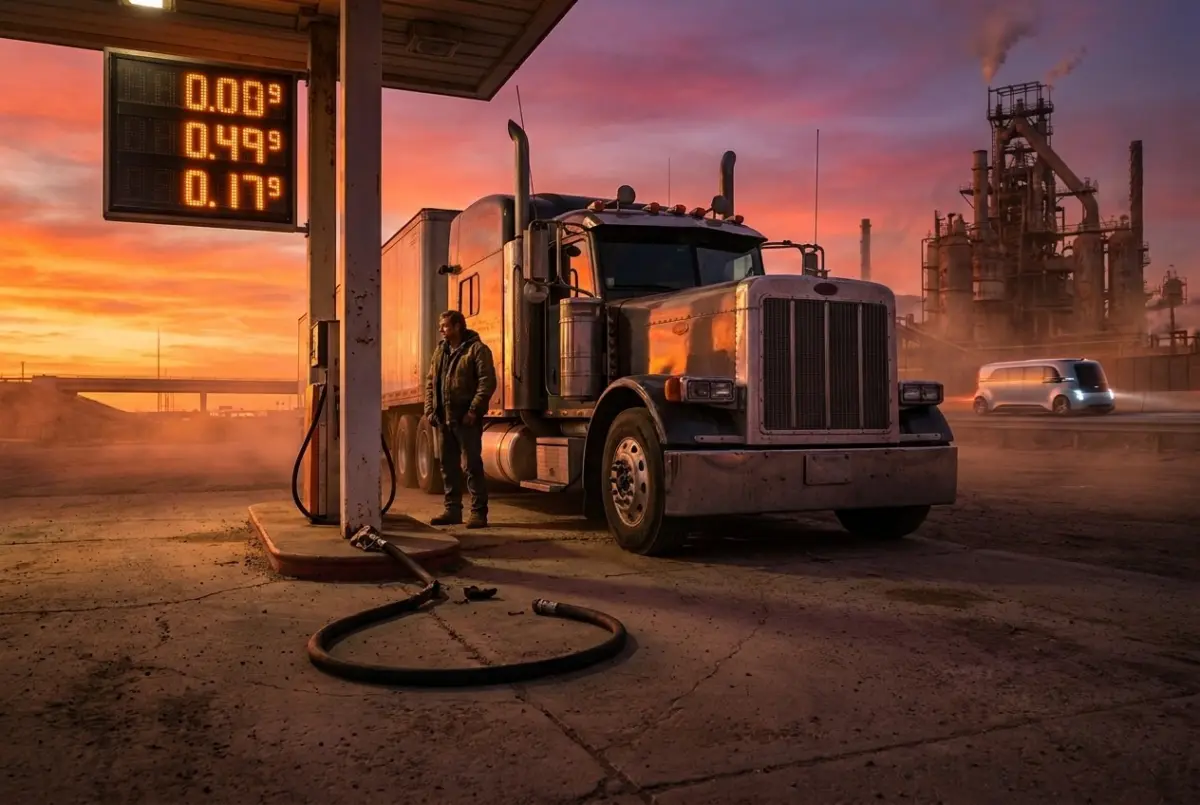
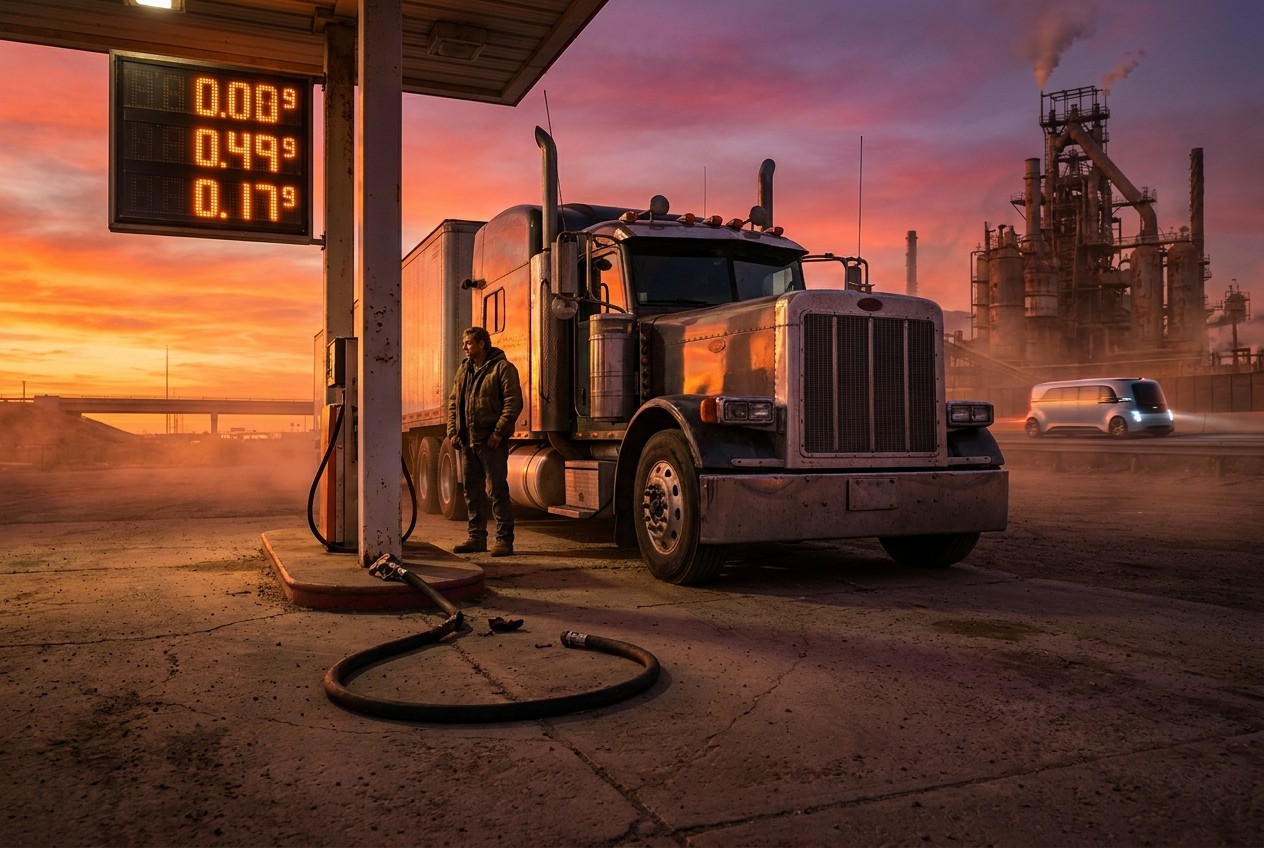
- Unprecedented Fuel Inflation: Diesel prices have shattered historical ceilings, with retail averages climbing well past previous benchmarks. In major metropolitan areas like San Francisco, prices have breached the $8-per-gallon threshold, translating into fill-up costs exceeding $1,200 for a single semi-truck rig. Nationally, averages have hovered near historic highs, adding a punishing surcharge to every pallet of goods moved across the interstate system.
- Refinery Fragility and Regional Scarcity: Domestic refining capacity has contracted significantly due to a combination of regulatory pressures, corporate restructuring, and acute infrastructure failures. Major refining outages in California and the Midwest have stripped millions of gallons of diesel and gasoline from regional markets, threatening rolling fuel shortages.
- The Autonomous Disruption: Capital investment in self-driving, long-haul trucking technology continues to accelerate. As autonomous platforms advance toward commercial viability, they threaten to displace human drivers—particularly independent owner-operators who lack the capital to compete with automated, 24/7 mega-fleets.
Chronology of the Crisis: Key Milestones
The escalation of fuel costs, infrastructure failures, and labor tension can be traced through a series of critical events over the past year:
- October 17, 2025: Phillips 66 officially shutters its Wilmington refinery in Southern California, removing approximately 139,000 barrels per day of refined product capacity from the state’s market amid tightening environmental mandates and storage requirements under state legislation like Assembly Bill X2-1.
- January 31, 2026: Valero Energy absorbs a massive financial restructuring loss to close its Benicia refinery in Northern California, further constricting fuel supplies on the West Coast and driving retail diesel prices upward.
- Early 2026: National retail diesel prices surge significantly compared to previous baseline years, climbing roughly 60 percent year-over-year. The heavy truck fleet—consuming over 2.9 million barrels of diesel daily—absorbs the immediate impact, passing surging transportation costs down the supply chain.
- September 11, 2026: Geopolitical disruptions compound domestic vulnerabilities when Saudi Arabia temporarily shuts down its East-West Pipeline following regional drone attacks, leading to cancelled crude export cargoes for European markets and tightening global refined product supplies.
- Late September 2026: A critical grid failure knocks out ExxonMobil’s Joliet refinery in Channahon, Illinois, triggering emergency flaring and an operational shutdown that removes approximately 11 million gallons per day of fuel capacity from the Midwest market, initiating fears of a broader regional supply crunch.
Supporting Data and Economic Impact
The math behind modern trucking reveals an industry operating on razor-thin margins under extreme inflationary pressure.
- Fuel Consumption: The United States heavy truck fleet consumes upwards of 2.9 million barrels of diesel fuel every single day to transport essential consumer goods, agricultural products, and industrial materials.
- Price Escalation: Compared to prior years when diesel hovered near stable baselines, recent surges have added nearly $3.00 per gallon to operational expenses. With retail pumps in high-cost regions hitting or exceeding $8.00 to $9.99 per gallon, individual fill-ups frequently cross the $1,200 threshold.
- Operational Overhead: Fuel typically represents one of the largest variable expenses for an independent owner-operator. When fuel costs double or triple within a short window, small businesses lacking corporate subsidies find themselves operating at a severe loss. Freight rates have failed to scale proportionally with fuel inflation, compressing profit margins and driving an uptick in voluntary bankruptcies and surrendered rigs.
Official Responses and Industry Perspectives
The divergence between corporate leadership, regulatory bodies, and front-line operators highlights a deep communication gap regarding the future of logistics:
- Energy Majors and Refining Executives: Industry leaders, including representatives from major energy firms like Shell, have publicly acknowledged tightening global refining margins and structural supply constraints. Corporate statements frequently point to deferred maintenance, aging infrastructure, and shifting regulatory compliance costs as primary drivers behind refinery consolidation and closures.
- Regulatory Bodies: State-level regulators, particularly in states like California, defend policies aimed at accelerating the transition away from fossil fuels and mandating minimum fuel reserves. However, critics argue that aggressive regulatory mandates—such as those enforced by AB X2-1—have inadvertently accelerated refinery retirements by raising operational compliance costs to unsustainable levels.
- Independent Associations and Drivers: Grassroots trucker organizations and independent owner-operators argue that government and corporate leadership are ignoring the foundational economics of freight transport. While union representatives negotiate within structured frameworks, independent operators face unmitigated exposure to spot-market fuel prices, highlighting a structural vulnerability in how national logistics are managed during systemic crises.
Broader Implications: The Future of Freight and Labor
The convergence of high fuel prices, localized scarcity, and automation introduces profound long-term implications for the American economy:
1. Persistent Inflation and Consumer Costs
Because nearly all retail goods spend part of their journey on a diesel-powered truck, fuel inflation acts as a hidden tax on consumers. As transportation expenses rise, retailers pass these costs down to grocery stores, hardware suppliers, and e-commerce platforms. This dynamic reinforces inflationary pressures, affecting household budgets across every demographic.
2. Supply Chain Centralization
The rise of autonomous trucking represents a structural inflection point. Unlike human drivers, who are restricted by federal hours-of-service regulations and require rest stops, autonomous rigs are designed for continuous, round-the-clock operation. While this promises lower long-term operating costs for major shipping conglomerates, it poses an existential threat to independent owner-operators. The resulting industry consolidation could concentrate freight control into the hands of a few capital-rich corporations, potentially reducing route redundancy and leaving less profitable rural areas underserved.
3. The Shift Toward Resilience and Decentralization
As centralized supply chains and traditional energy networks exhibit growing volatility, industry analysts and independent operators are increasingly looking toward localized resilience. From exploring alternative energy infrastructure and solar-backed microgrids to fostering localized supply networks, the long-term sustainability of American logistics may depend heavily on diversifying away from single-point dependencies.
The path forward for the trucking industry remains turbulent. Navigating this triple crisis will require a careful balance between addressing immediate fuel affordability, securing critical refining infrastructure, and managing a technological transition that redefines the human element of American transportation.