






Main Facts
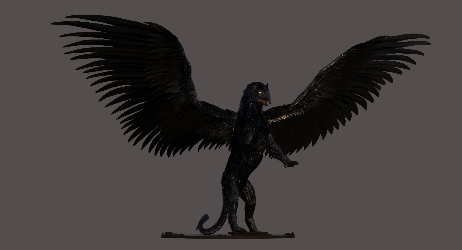
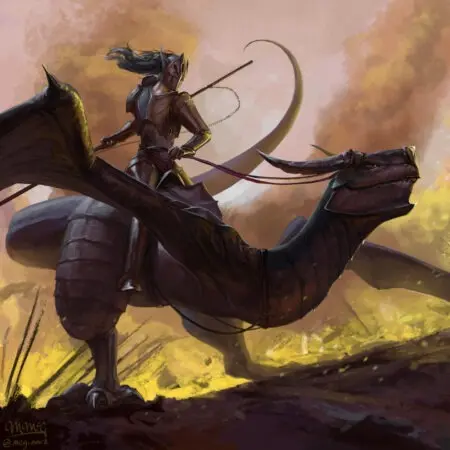
In the vast taxonomy of mythological creatures, the wyvern occupies a fascinating yet frequently misunderstood niche. Often mistaken for its more famous cousin, the classic four-legged dragon, the wyvern is distinguished by a strictly two-legged stance and upper limbs that double as massive, bat-like wings. Etymologically, the name "wyvern" traces its roots back to the Anglo-Saxon word wivere, meaning serpent or worm.
Unlike the grandiose, fire-hoarding apex dragons of high fantasy, wyverns are typically portrayed as smaller, more aggressive, and far less discerning beasts. Biological and mythological descriptions credit them with eagle-like talons, a beak-like jaw designed for efficient scavenging and hunting, and a deadly, barbed stinger at the tip of their tail. Historically documented in medieval bestiaries, heraldry, and folklore across England and continental Europe, the creature has transitioned from a feared harbinger of plague and war to a resilient symbol of strength, conquest, and heraldic pride.
Chronology: From Ancient Worms to Modern Heraldry
To understand the cultural footprint of the wyvern, one must trace its evolution across millennia, moving from ancient folk beliefs to medieval symbolism and modern pop culture.
- Ancient & Old Saxon Era: Oral traditions across Anglo-Saxon and Germanic cultures tell tales of fire-breathing "worms" or serpents falling from the sky. These creatures were believed to burrow deep into the earth to guard precious celestial treasures—specifically meteorites—never to emerge again.
- The Middle Ages: The wyvern rose to prominence in European bestiaries. It became heavily integrated into Christian iconography as an allegory for Satan, war, and pestilence. Medieval populations frequently blamed the beasts for spreading the Black Death. Simultaneously, alchemists adopted the wyvern as a metaphor for prima materia—matter in its basest, unrefined state—which the alchemist-knight had to conquer and transform into spiritual or literal gold.
- The Renaissance: Observers of nature and early scientists began documenting encounters, or at least evaluating the creature’s place in the natural world. Notably, the polymath Leonardo da Vinci recorded observations of an alleged encounter between a lion and a wyvern, though historians debate whether he witnessed the event firsthand or merely transcribed traveler tales.
- The Industrial Era to Present: As human populations expanded and advanced weaponry made large predators obsolete, wyverns largely vanished from the European landscape. Today, they survive primarily as enduring symbols in heraldry, appearing on coats-of-arms, flags, and shields, while maintaining a prominent presence in modern fantasy literature and gaming.
Supporting Data: Anatomy, Habitat, and Behavioral Comparisons
To fully distinguish the wyvern from other mythological reptiles, folklorists and cryptozoologists rely on a comparative framework of physical and behavioral traits.

Wyvern Versus Classic Dragon
| Trait | Wyvern | Classic Dragon |
|---|---|---|
| Limbs | Two legs (bipedal) and two wings (forelimbs integrated into wings) | Four legs and two separate wings |
| Tail Anatomy | Often tipped with a venomous or barbed stinger | Flexible tail, typically unadorned |
| Jaws & Diet | Beak-like jaws optimized for carrying prey and scavenging | Massive, tooth-filled jaws for consuming large prey |
| Hoard Preferences | Indiscriminate collectors; hoards include shiny baubles alongside rubbish and bones | Highly selective; hoards focus strictly on precious metals and gems |
| Temperament | Bold, aggressive, and less timid in human encounters | Cautious, solitary, highly intelligent, and reclusive |
Habitat and Lair Ecology
Wyverns traditionally favor protected, rugged environments. Their lairs are typically found deep within dense forests, woodlands, or cavernous mountainous recesses. Unlike dragons, which prefer isolated mountain peaks to brood over vast chambers of gold, wyvern nests are easily identified by the chaotic debris left behind. Because "dragonets"—as they were historically called in England—lack aesthetic discernment, their lairs are littered with a mixture of animal bones, stolen livestock, and miscellaneous shiny rubbish.
Official Responses, Scholarly Interpretations, and Historical Records
While modern zoology rejects the physical existence of winged reptiles, historians, literary scholars, and medieval chroniclers have left behind a robust archive documenting how societies interpreted the beast.
The Ecclesiastical and Alchemical Perspective
During the medieval period, the Church utilized the wyvern as a powerful pedagogical tool. Bestiaries distributed across monastic libraries painted the creature as an agent of chaos. Because medieval Europe was repeatedly devastated by outbreaks of disease, the narrative that wyverns carried pestilence on their wings served as a tangible, albeit supernatural, explanation for invisible microbial horrors.
Conversely, alchemists viewed the creature through a lens of transformation. In alchemical texts, the wyvern represented the ego or untamed nature that required sublimation. The legendary "dragon slayer" or "wyvern knight" was viewed as an allegory for the alchemist himself, mastering base elements through patience, intellect, and science.

Cryptozoological Theories and Sightings
Though mainstream science classifies the wyvern as pure mythology, cryptozoologists and fringe researchers occasionally point to historical anomalies. The notation by Leonardo da Vinci regarding a combat between a lion and a wyvern remains a favorite talking point among researchers of cryptids. While skeptics argue that da Vinci was likely sketching a stylized heraldic battle or interpreting traveler hyperbole, proponents suggest that remnants of large, aggressive reptiles may have lingered in remote pockets of Eastern Europe and Russia well into the Renaissance before succumbing to habitat loss and firearms.
Implications: Cultural Legacy and Modern Survival
The trajectory of the wyvern offers profound insights into how human imagination processes fear, power, and identity.
Heraldry and National Identity
Today, the most tangible survival of the wyvern is found in European heraldry. Unlike the dragon—which frequently symbolizes wisdom, royalty, or imperial mandate in Eastern traditions—the wyvern in Western heraldry almost universally denotes war, envy, strength, and relentless conquest. Families and military units who bore the wyvern on their shields and pennants sought to project an image of unyielding ferocity and defensive might. This tradition persists in municipal crests, sports mascots, and military insignia across the globe.
Pop Culture and Fantasy Media
In contemporary culture, the wyvern has experienced a massive renaissance through fantasy literature, tabletop role-playing games (such as Dungeons & Dragons), and video game franchises (such as The Witcher and Monster Hunter). By clearly separating the wyvern from the dragon—giving creators a creature that feels slightly more animalistic, agile, and predatory—storytellers have ensured that the Anglo-Saxon wivere remains a staple of the imagination.

Ultimately, whether viewed through the dusty pages of a medieval bestiary, carved into the stone of an English cathedral, or rendered in high-definition CGI, the wyvern endures. It stands as a testament to humanity’s enduring fascination with the untamed wilderness and the fearsome predators that once dominated our ancestors’ deepest nightmares.