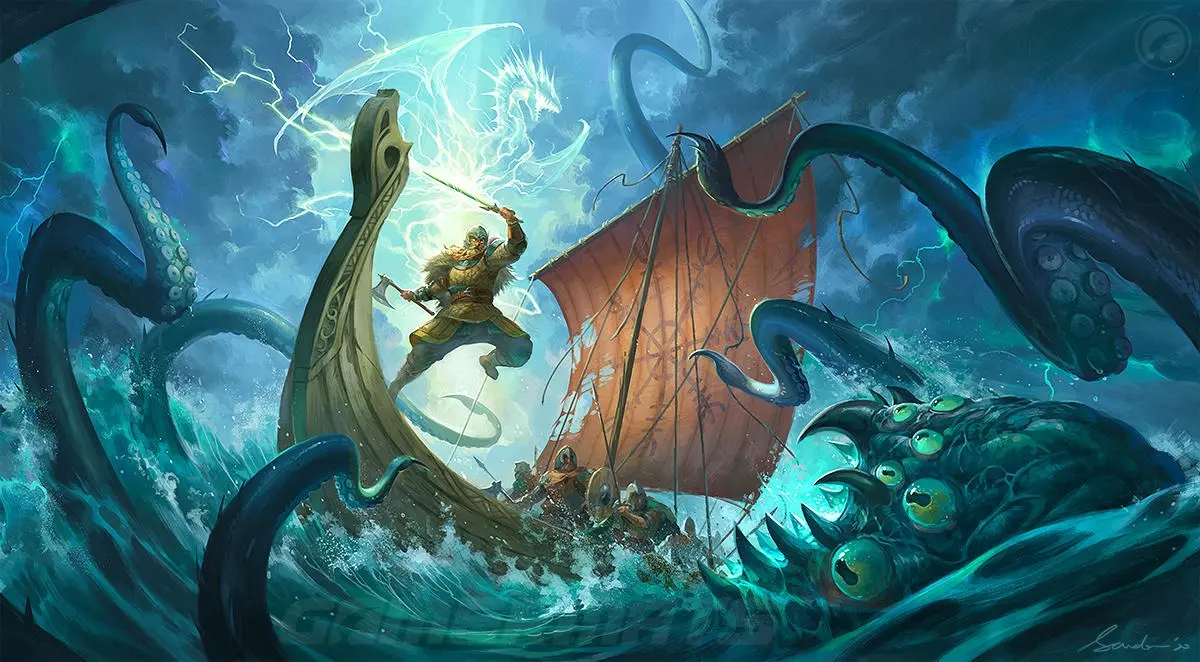








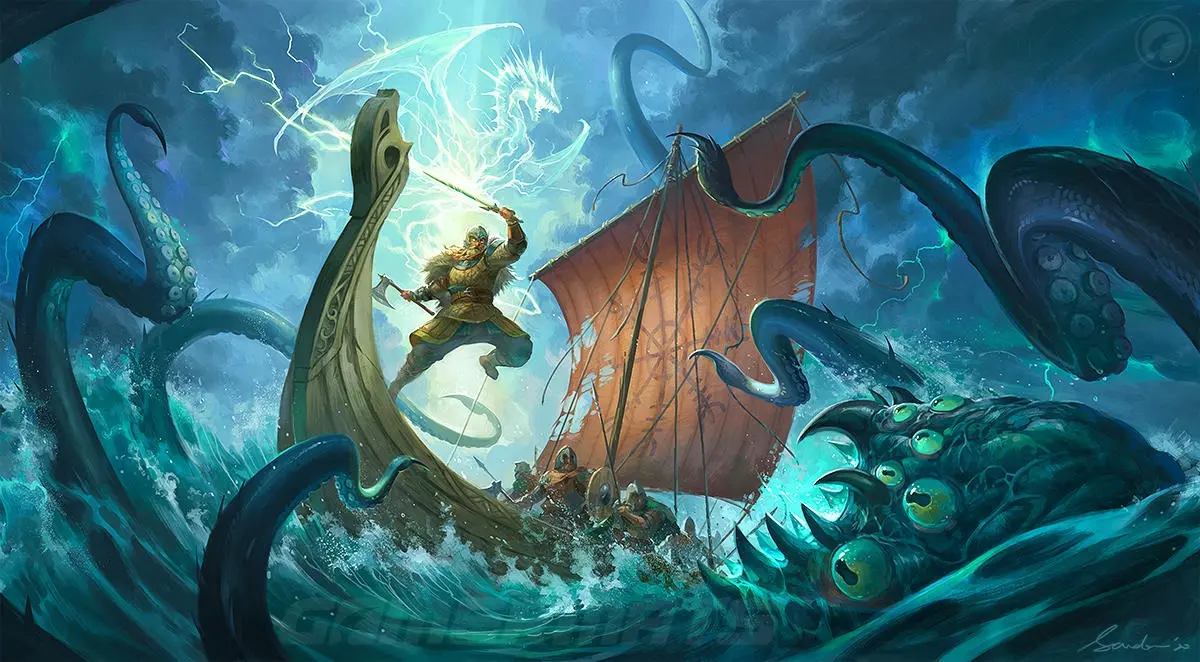
OSLO, NORWAY — Long before modern sonar mapped the ocean floor and satellite imagery tracked the deepest trenches, the Atlantic was viewed through a lens of profound terror and awe. For medieval Scandinavian sailors navigating the icy, unpredictable waters of Norway and Iceland, the sea was not merely a medium of trade and travel; it was a living, breathing frontier populated by unfathomable hazards. Among the pantheon of monsters born from this maritime anxiety, none commanded as much fearful respect as the Kraken—a colossal cephalopod-like beast capable of swallowing entire vessels whole and dragging unlucky crews into the abyss.
While the era of wooden-hulled galleons has long since passed, the cultural footprint of the Kraken endures. Today, marine biologists, historians, and mythologists continue to dissect how a combination of optical illusions, deep-sea exploration, and encounters with real-world giant squids forged one of the most enduring legends in human history.
Main Facts: Anatomy of a Legend
At its core, the Kraken is an embodiment of nature’s raw, untamable fury. Originating in the rich oral traditions of Scandinavian folklore, the creature is defined by its sheer scale, destructive power, and elusive nature.
Unlike sirens or merfolk, which often possessed human traits, the Kraken was purely elemental. Historical accounts describe it not as a malicious entity seeking revenge, but as a force of nature—indifferent, immense, and terrifyingly efficient. According to traditional lore, the creature’s primary traits include:
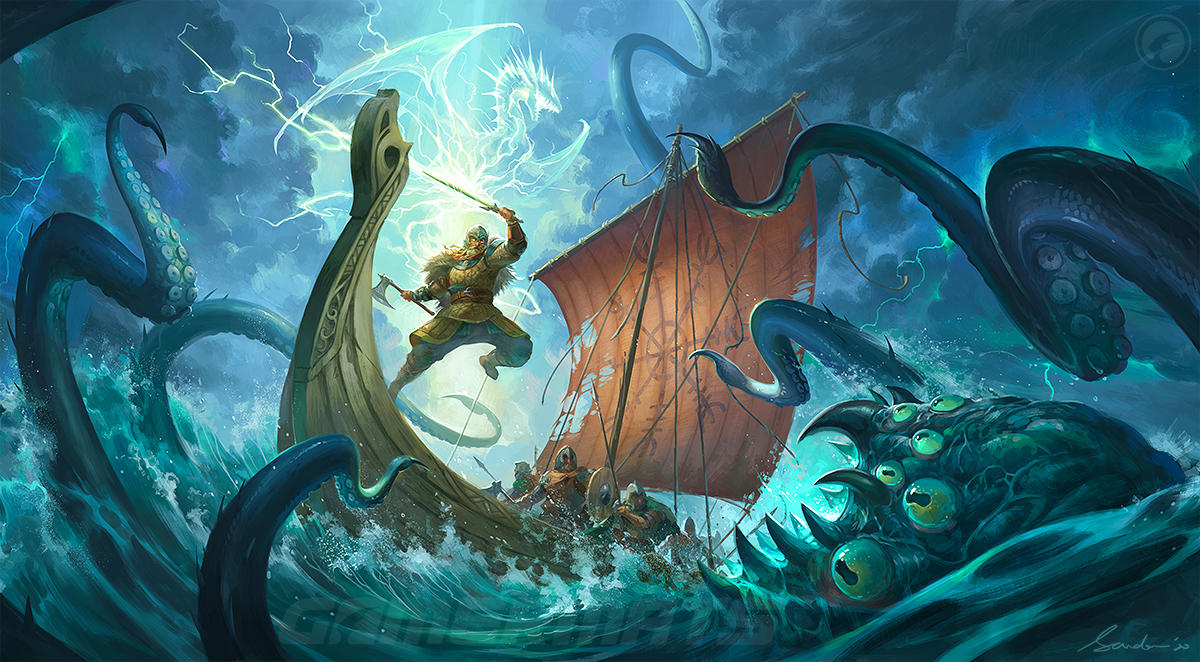
- Colossal Proportions: Legends consistently rank the Kraken as the largest beast in the ocean, frequently described as miles wide, possessing a body so massive that it could easily be mistaken for an uncharted island.
- The Maelstrom Effect: One of the most dangerous attributes ascribed to the Kraken was its ability to displace massive volumes of water. As the creature submerged or surfaced, it created catastrophic whirlpools and eddies capable of pulling nearby ships down into the depths.
- Devastating Predatory Tactics: Tales often describe the beast using its sweeping, tree-trunk-sized tentacles to strip masts from decks, ensnare hulls, and drag entire crews into the dark waters below.
- The Fisheries Trap: Paradoxically, old Scandinavian texts also note that fishermen would sometimes intentionally brave the dangers of the Kraken because the monster was believed to be surrounded by vast schools of fish feeding on its excretions—a high-risk, high-reward gamble for desperate mariners.
Chronology: The Evolution of the Kraken in History
While seafaring myths are as old as navigation itself, the Kraken’s journey from whispered folklore to documented "science" spans several centuries of European history.
The Viking Age and Early Sagas (c. 1000–1200 AD)
The earliest foundations of the Kraken myth lie in the oral traditions of Norse voyagers. While the specific name "Kraken" does not frequently appear in the earliest Icelandic sagas, descriptions of monstrous sea creatures—such as the Hafgufa (sea mist) and the Lyngbakr (heather-back)—feature prominently in texts like the Örvar-Odds saga. These creatures shared the defining characteristic of the Kraken: islands that turned out to be living beasts.
The Bishop’s Account: Erik Pontoppidan (1752)
The definitive codification of the Kraken occurred during the Enlightenment. In 1752, Erik Pontoppidan, the Bishop of Bergen and a member of the Royal Academy of Sciences in Copenhagen, published his monumental work, The Natural History of Norway.
Pontoppidan treated the Kraken not as a fairy tale, but as a biological reality. Gathering accounts from Norwegian fishermen and sea captains, he provided detailed descriptions of the creature. He noted that when the Kraken surfaced, it exposed a back a mile and a half in circumference, bristling with dangerous, horn-like extremities. Pontoppidan’s work cemented the Kraken in the European scientific and cultural consciousness, making it a staple of 18th-century cartography and literature.
The Scientific Skepticism (19th Century)
As the Age of Sail gave way to the industrial era, scientific rigor began to dismantle fantastical zoology. By the mid-19th century, naturalists viewed the Kraken as a mythological exaggeration. However, this skepticism coincided with a startling discovery: the physical reality of giant cephalopods.
In 1857, Danish naturalist Japetus Steenstrup formally described the Giant Squid (Architeuthis dux) after examining a massive beak washed ashore in Denmark. Suddenly, the long, writhing tentacles of the Kraken were grounded in biological fact, transforming the monster from pure fantasy into a hyper-exaggerated reflection of a real, elusive deep-sea dweller.
Supporting Data: Myth Versus Marine Biology
To understand why generations of sailors believed in the Kraken, modern researchers look at the intersection of oceanic phenomena and marine biology. While no creature a mile wide has ever existed, the ocean routinely produces animals that defy ordinary human scale.
| Metric / Feature | The Mythological Kraken | The Real-World Giant Squid (Architeuthis dux) | The Colossal Squid (Mesonychoteuthis hamiltoni) |
|---|---|---|---|
| Estimated Length | Up to several miles (island-sized) | Up to 13 meters (43 feet) | Up to 10–14 meters (33–46 feet) |
| Weight | Hundreds of tons | Up to 275 kg (606 lbs) | Up to 500 kg (1,100 lbs) |
| Behavior | Actively hunts ships, creates whirlpools | Solitary deep-sea dweller; preys on fish and other squid | Deep-sea predator; utilizes sharp hooks on tentacles |
| Habitat | Surface waters, fjords, and open ocean | Abyssal zone (200 to 1,000+ meters deep) | Antarctic and Southern Ocean deep waters |
Marine biologists note that encounters with dying giant or colossal squids—which occasionally float to the surface or wash ashore due to injury, illness, or changes in water temperature—would have easily terrified medieval crews. A floating, rotting mass of pale flesh adorned with long, suction-cupped tentacles would look entirely alien to a 12th-century sailor.

Furthermore, oceanographers point out that the Norwegian coast is home to some of the strongest tidal currents and whirlpools in the world, most notably the Moskenstraumen (the inspiration for Edgar Allan Poe’s "A Descent into the Maelstrom"). It is highly probable that natural hydrodynamic phenomena, combined with the sudden appearance of surfacing marine mammals or giant squids, birthed the terrifying tales of ships being pulled down by a monster.
Official Responses and Modern Cultural Impact
While government agencies and maritime authorities do not issue warnings regarding mythological cephalopods today, the legacy of the Kraken remains a powerful economic and cultural force in Scandinavia and beyond.
Cultural institutions in Norway and Iceland actively celebrate the myth as a core component of their maritime heritage. Museums in Bergen and Reykjavik frequently feature exhibits exploring how historical sailors interpreted the natural hazards of the North Atlantic.
In contemporary pop culture, the Kraken has transcended its Scandinavian roots to become a global archetype of deep-sea terror and power:
- Sports: The Seattle Kraken franchise in the National Hockey League (NHL) brought the myth into mainstream professional sports, utilizing maritime and mythological branding.
- Cinematic Presence: Blockbuster franchises, most notably Disney’s Pirates of the Caribbean, brought the Kraken back to the global stage as a terrifying engine of destruction controlled by dark forces.
- Marine Exploration: Modern oceanographic institutions often invoke the Kraken when naming deep-sea submersibles, autonomous underwater vehicles (AUVs), or mapping initiatives aimed at exploring the uncharted 80% of Earth’s oceans.
Implications: Why the Kraken Still Matters
The enduring fascination with the Kraken is not merely a symptom of a nostalgic longing for monsters; it speaks to a fundamental aspect of human psychology and our relationship with the natural world.
Even in the 21st century, when humanity has mapped the surface of Mars and sequenced the human genome, the deep ocean remains largely alien to us. We know less about the abyssal plains of our own planet than we do about the surfaces of neighboring celestial bodies. The Kraken serves as a psychological placeholder for the unknown—a reminder that despite our technological advancements, nature still holds secrets capable of reducing human beings to a state of profound insignificance.
As climate change shifts marine ecosystems and deep-sea mining opens new frontiers in the abyss, marine biologists continue to discover previously unknown species in the dark waters below. While a mile-long island-eating cephalopod remains safely within the realm of myth, the deep sea continues to prove that reality can be every bit as strange, vast, and awe-inspiring as the legends of old.