






STOCKHOLM — For decades, dietary guidelines have frequently lumped nitrates and nitrites together, casting a broad shadow over both leafy greens and processed meats. However, a landmark long-term study conducted by researchers at the prestigious Karolinska Institutet provides a significant paradigm shift in nutritional science. By tracking tens of thousands of adults over a quarter-century, the research team has drawn a sharp, biologically distinct line between the two compounds: while dietary nitrates from vegetables show zero association with colorectal cancer, high dietary nitrite intake is linked to a marked increase in cancer risk among men, particularly in the distal colon.
The findings, which draw from a robust foundation of public health data spanning from 1998 through 2022, reinforce and refine existing global health warnings regarding processed foods. More importantly, they offer much-needed clarity for consumers navigating conflicting nutritional advice regarding what to put on their plates.
Main Facts: The Karolinska Institutet Study at a Glance
The observational study, designed to parse out the nuanced health impacts of nitrogen-based food compounds, yielded several critical statistical takeaways:
- Vast Scale: Researchers tracked 82,009 middle-aged and older adults drawn from two long-running, highly reliable Swedish cohorts.
- Decades of Observation: Individual food and water intake data were meticulously linked to national cancer registries over a 24-year follow-up period (1998–2022).
- Cancer Incidence: During the course of the study, 3,170 participants developed colorectal cancer.
- The Nitrate Verdict: Dietary nitrate intake—primarily sourced from vegetables—showed no association with colorectal cancer risk.
- The Nitrite Hazard: Men in the highest fifth of dietary nitrite intake faced a 23% higher risk of developing colorectal cancer overall compared to those in the lowest fifth. This risk was even more heavily concentrated in the distal colon, where high nitrite exposure elevated risk by up to 50%.
- The Sex Divide: Interestingly, women showed no such pattern or elevated risk associated with high nitrite intake, a biological puzzle that researchers have flagged for urgent follow-up investigation.
Chronology: How the 24-Year Investigation Unfolded
To understand the weight of these findings, it is helpful to examine the timeline and methodology behind the research:
1. Cohort Establishment and Baseline Data (Late 20th Century)
The research relies on data gathered from two major, long-standing Swedish population-based cohorts. In the years leading up to the 1998 official start of the tracking period, participants completed extensive, validated food frequency questionnaires detailing their dietary habits, water sources, and lifestyle factors.
2. The Tracking Window (1998–2022)
Beginning in 1998, researchers began cross-referencing the baseline dietary habits of the 82,009 participants against Sweden’s comprehensive national cancer registries. This continuous linkage allowed scientists to monitor cancer diagnoses across the population in real-time, accounting for dropouts, deaths, and changes in health status over nearly a quarter of a century.
3. Data Synthesis and Final Analysis (Mid-2020s)
By the conclusion of the 2022 follow-up window, researchers had cataloged 3,170 confirmed cases of colorectal cancer. Utilizing advanced biostatistical models, the team at Karolinska Institutet adjusted for confounding variables—such as age, total caloric intake, alcohol consumption, smoking, and physical activity—to isolate the specific impact of dietary nitrates and nitrites. The results conclusively separated the safety profile of plant-based nitrates from the carcinogenic potential of industrial nitrites.
Supporting Data: The Biochemistry of Nitrates vs. Nitrites
Why do two chemically similar compounds behave so differently inside the human body? The answer lies in their dietary sources and the biochemical matrices that accompany them.
The Source Makes the Substance
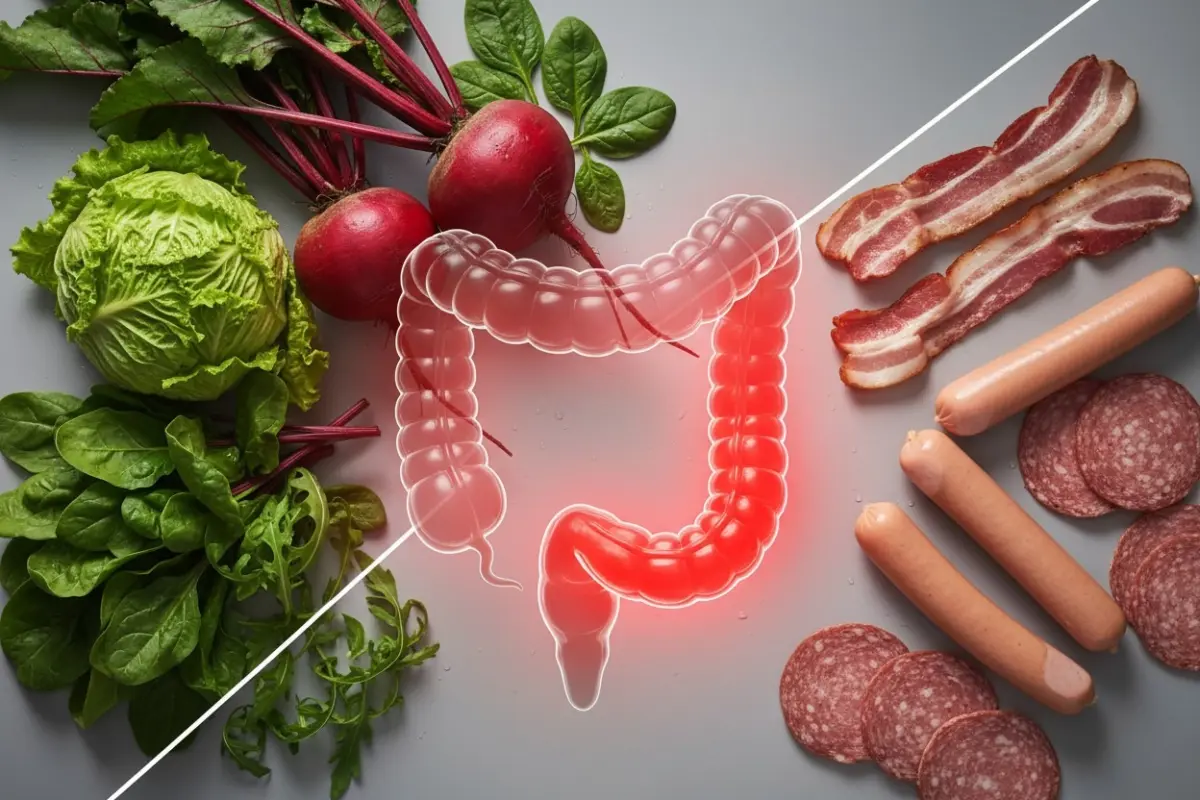
- Nitrates ($textNO_3^-$): Nitrates occur naturally in soil and are absorbed by plants during their growth cycle. Consequently, vegetables—particularly leafy greens like spinach, arugula, lettuce, and root vegetables like beets—carry the vast majority of nitrates in a typical human diet.
- Nitrites ($textNO_2^-$): Nitrites operate differently. They enter the modern diet primarily as chemical food additives (such as sodium nitrite). Curing salts are heavily utilized across the processed meat industry to inhibit bacterial growth (specifically Clostridium botulinum) and to preserve an appealing, pinkish-red color in items like bacon, hot dogs, pepperoni, salami, and various deli meats.
The Protective Matrix of Vegetables
While the human body naturally converts a small percentage of dietary nitrate into nitrite during digestion, the surrounding nutritional context matters enormously.
Vegetables arrive bundled with a powerful defense mechanism: a matrix of vitamin C, polyphenols, and dietary fiber. These compounds actively block the chemical reactions that form N-nitroso compounds (nitrosamines)—the dangerous, carcinogenic byproducts that can form when nitrites break down in the gut.
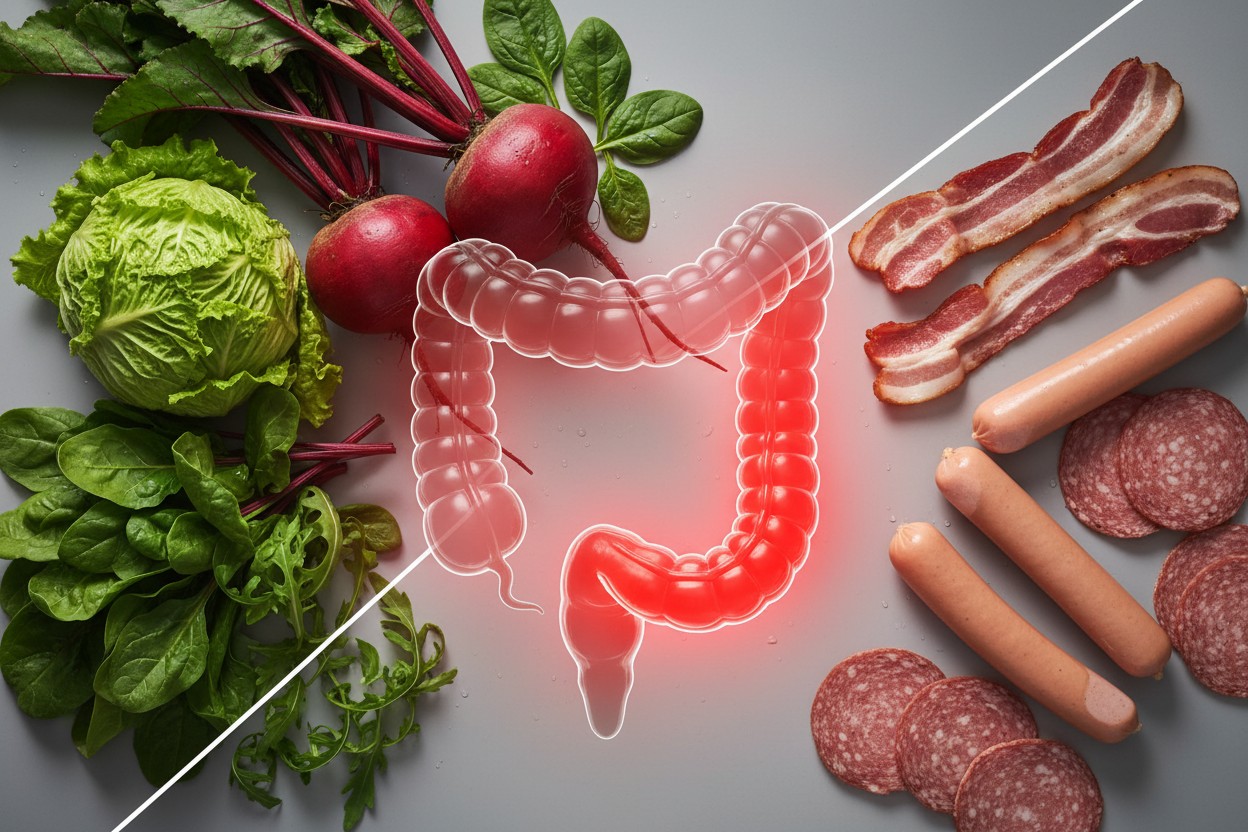
Processed meats, conversely, entirely lack these protective antioxidants and fiber components. When sodium nitrite in processed meats reacts with digestive byproducts in the acidic environment of the stomach and gut, it readily forms carcinogenic nitrosamines. Toxicology literature has long described these nitrosamines as potent mutagens capable of inducing tumor growth across multiple organs.
Official Responses and Global Context
The findings from Karolinska Institutet do not exist in a vacuum; they reinforce a growing consensus among international public health and cancer research organizations.
The WHO and IARC Classifications
The International Agency for Research on Cancer (IARC), an arm of the World Health Organization (WHO), has previously classified processed meats—including bacon, ham, hot dogs, and sausages—as Group 1 human carcinogens, meaning there is sufficient evidence of carcinogenicity in humans. A majority of IARC experts have concluded that consuming just 50 grams of processed meat daily (roughly two slices of deli ham or one hot dog) increases an individual’s baseline colorectal cancer risk by 18%.
Furthermore, earlier toxicological studies have linked heavy consumption of nitrate- and nitrite-containing cold cuts to a nearly 30% increased risk of bladder cancer. Public health agencies continue to stress that industrial food additives used in curing processes are primary contributors to this cumulative toxic burden.
Implications: Practical Dietary Takeaways
For the average consumer, translating these complex biochemical findings into daily eating habits does not require drastic, restrictive measures. Instead, it points toward a few straightforward, evidence-backed adjustments.
1. Do Not Fear the Greens
One of the most reassuring takeaways of the Karolinska study is that nitrate-rich vegetables carry zero association with colorectal cancer risk. Consumers should feel fully confident in maintaining or increasing their intake of spinach, beets, arugula, lettuce, and other garden greens. These foods offer profound cardiovascular and metabolic benefits that far outweigh any theoretical risks.
2. Treat Processed Meats as Occasional Indulgences
Given that the study linked high nitrite intake to a 23% overall increase in male colorectal cancer risk—and a staggering 50% spike in distal colon cancer specifically—experts recommend relegating cured and processed meats to the occasional treat rather than making them a daily dietary staple.
3. Leverage Dietary Antidotes
For those who do choose to consume processed meats occasionally, dietary science offers a biochemical shield. Pairing cured meats with foods rich in vitamin C (such as fresh citrus fruits, bell peppers, or berries) can actively mitigate risks. Vitamin C disrupts the nitrosation reaction in the gut, helping to block the formation of carcinogenic nitrosamines before they can damage intestinal tissue.
4. Awaiting Further Study on the Sex Divide
The discovery that men experience a heightened risk from dietary nitrites while women do not remains an intriguing scientific mystery. Researchers at Karolinska Institutet have noted several working hypotheses, including differences in average baseline processed meat consumption between sexes, hormonal influences on how the gut processes N-nitroso compounds, and variations in statistical power. However, public health experts emphasize that the practical takeaway is universal: cutting back on nitrite-heavy processed meats benefits colon health across all demographics, regardless of which specific biological pathways ultimately explain the sex split.
Ultimately, the Karolinska Institutet study brings unprecedented precision to nutritional epidemiology. By drawing a bright, scientifically verified line between the natural nitrates in a garden salad and the chemical nitrites in a deli counter package, science has empowered consumers to make smarter, safer choices for long-term digestive health.