Main Facts
For more than twenty-five years, Joe White made a living out of anticipating disaster. Operating in the high-stakes worlds of information security and technology startups, risk management was not merely a theoretical concept for him—it was his daily mandate. His professional responsibility was to interrogate assumptions, identify hidden vulnerabilities, design layered defenses, and execute critical decisions when the stakes were highest.
Yet, during one of the most pivotal chapters of his life, White failed to recognize the most critical vulnerability of all: the one inside his own mind.
Suffering from severe, unacknowledged professional burnout, White made a series of high-stakes financial decisions that ultimately cost him approximately $3 million in retirement savings. The capital vanished into an offshore cryptocurrency lending platform—an enterprise that later unraveled, leaving White to pick up the pieces.
While White has spent the past three years pursuing legal accountability regarding the platform, the true epicenter of the tragedy, he argues, goes far deeper than corporate malfeasance or deceptive marketing. The core vulnerability was cognitive. Burnout severely impaired his judgment, masking itself as high-functioning competence and blinding him to risks he would have effortlessly spotted earlier in his career. His story highlights a terrifying paradox of modern high-performance culture: the very traits that make professionals successful—endurance, independence, and the ability to "push through" exhaustion—can actively obscure the cognitive decline that precedes catastrophic failure.
Chronology of a Crisis: The Build-Up and Fall
To understand how a seasoned risk professional could lose his life savings, one must examine the slow, insidious timeline of burnout. It does not arrive with a sudden crash; rather, it creeps in through decades of normalized stress.
- Decades in the Trenches: White spent over a quarter-century navigating the relentless pace of the tech sector. Long hours, chronic tight deadlines, and constant crisis management became the baseline of his daily existence.
- The Normalization of Exhaustion: Through years of practice, White learned to override physical and mental fatigue. Successfully pushing past exhaustion time and again convinced him of a dangerous falsehood: that his ability to endure stress was proof of his resilience.
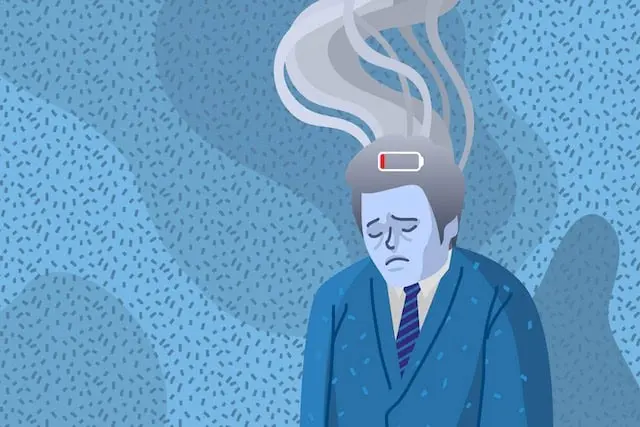
- The Cognitive Decline: Gradually, chronic sleep deprivation, brain fog, and relentless stress eroded his mental acuity. Complex evaluations that once felt second nature began to require disproportionate effort, yet because he was still producing output and solving technical problems, he assumed his cognitive faculties were intact.
- The Financial Exposure: Operating in this cognitively depleted state, White engaged with an offshore cryptocurrency lending platform. Drawn in by misrepresented risks and lacking his usual analytical sharpness, he committed his decades-long retirement savings to the venture.
- The Realization and Aftermath: The financial consequences ultimately became irreversible, wiping out his safety net. Stripped of his savings, White faced the grim reality of his condition. In the years following the loss, he pivoted from simply seeking financial recovery to examining the psychological architecture of his failure, launching a public campaign—including a GoFundMe initiative—to raise awareness and fund his ongoing legal battles.
Supporting Data: The Hidden Toll of Burnout and Cognitive Fatigue
White’s personal catastrophe mirrors broader, well-documented trends in modern labor markets, particularly within high-intensity industries like technology, finance, and security.
- The "High-Functioning" Illusion: Psychological research consistently demonstrates that chronic stress alters prefrontal cortex function—the brain region responsible for executive control, risk assessment, and long-term planning. Unlike acute stress, which triggers fight-or-flight responses, chronic burnout induces a flatlining of emotional and cognitive reactivity, allowing individuals to maintain outward productivity while experiencing internal executive dysfunction.
- The Single Point of Failure: In information security, engineers rely on "redundancy"—ensuring that no single system failure can bring down an entire network. White notes that he built his professional life around this principle, yet structurally engineered his personal life with a single point of failure: his own unaided, exhausted brain.
- The Cryptocurrency Sector Risk: White’s loss highlights the systemic vulnerabilities within unregulated or loosely regulated offshore digital asset platforms. During the crypto lending boom, many platforms masked structural insolvency behind complex terminology and high-yield promises, preying not only on financial optimists but also on individuals whose analytical defenses were lowered by fatigue.
- The Cost of Recovery: True burnout recovery, experts note, extends far beyond a standard weekend vacation or a brief sabbatical. It requires a systemic overhaul of boundaries, sleep hygiene, digital disconnection, and, crucially, the establishment of external accountability checks.
Official Responses and Professional Insights
While White’s primary battle has been directed at recovering his assets through legal channels, his narrative has sparked vital conversations among psychologists, cybersecurity experts, and leadership coaches regarding the intersection of mental health and executive decision-making.
Mental health advocates emphasize that high-achieving professionals are uniquely susceptible to burnout because competence breeds isolation. When an individual has built an identity around being the "fixer" or the expert, asking for help feels like an existential failure.
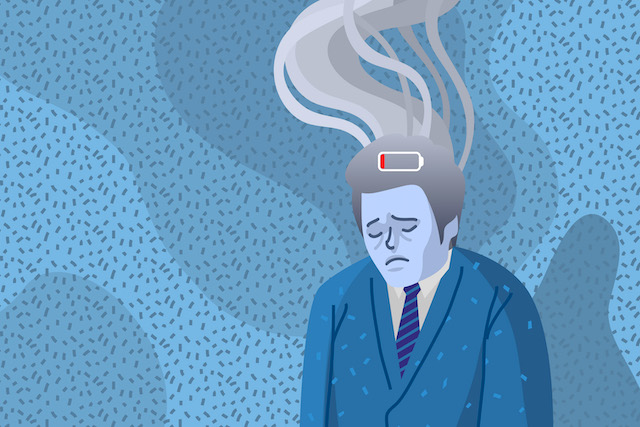
Furthermore, behavioral economists and psychologists point out that financial decision-making under conditions of cognitive fatigue heavily skews toward risk acceptance. Exhausted brains struggle to accurately compute long-term probabilistic threats, instead defaulting to short-term optimizations or failing to challenge dubious assumptions presented by charismatic actors.
Industry peers have increasingly rallied behind White’s transparency, noting that the tech sector’s glorification of "grind culture" creates an environment where admitting to exhaustion is treated as a professional liability. By speaking out, White is helping to dismantle the stigma, reframing burnout not as a simple lack of willpower, but as a severe occupational hazard with quantifiable physical, cognitive, and financial costs.
Implications: Redefining Risk Management for the Mind
The broader implications of Joe White’s story extend far beyond the cryptocurrency markets or the tech sector. They force a fundamental re-evaluation of how ambitious individuals safeguard their lives against their own internal vulnerabilities.
1. Competence as a Vulnerability
The most profound takeaway from White’s experience is that high competence can act as a blinding agent. The longer an individual successfully navigates complex environments independently, the more confident they become in their own perceptions—even when those perceptions are compromised by exhaustion. Recognizing that "the mind evaluating your condition is the same mind affected by that condition" is vital for preventing catastrophic blind spots.
2. Implementing Personal "Redundancy"
Just as high-risk systems require multi-factor authentication and peer reviews, major personal and financial decisions require external safeguards. When facing life-altering choices, exhausted individuals must actively slow down the process and introduce independent oversight—not because advisers are inherently smarter, but because they are not exhausted in the same way.
3. Shifting the Definition of Recovery
Society must move past the superficial understanding of burnout recovery as mere rest. True recovery demands systemic change: ruthless prioritization of sleep, establishment of hard professional boundaries, regular disconnection from digital devices, and a cultural shift that normalizes admitting when one’s cognitive tank is empty.
Ultimately, White’s $3 million lesson serves as a sobering cautionary tale for high-performers everywhere. Burnout does not always manifest as a dramatic collapse or an inability to get out of bed. Often, its most dangerous manifestation is far more subtle: it allows you to keep walking forward while quietly stripping away the very judgment you need to survive.