By the Editorial Desk Published in partnership with Studio Visit
Main Facts
In the contemporary design landscape, aesthetic trends shift with seasonal velocity, often prioritizing surface-level novelty over structural integrity. Against this fleeting backdrop, Case Studios—a Düsseldorf-based interdisciplinary design practice—operates under a radically different premise. For this German studio, the defining characteristic of a project is not a signature style, but a rigorous, unyielding discipline: a commitment to the intrinsic logic of raw materials.
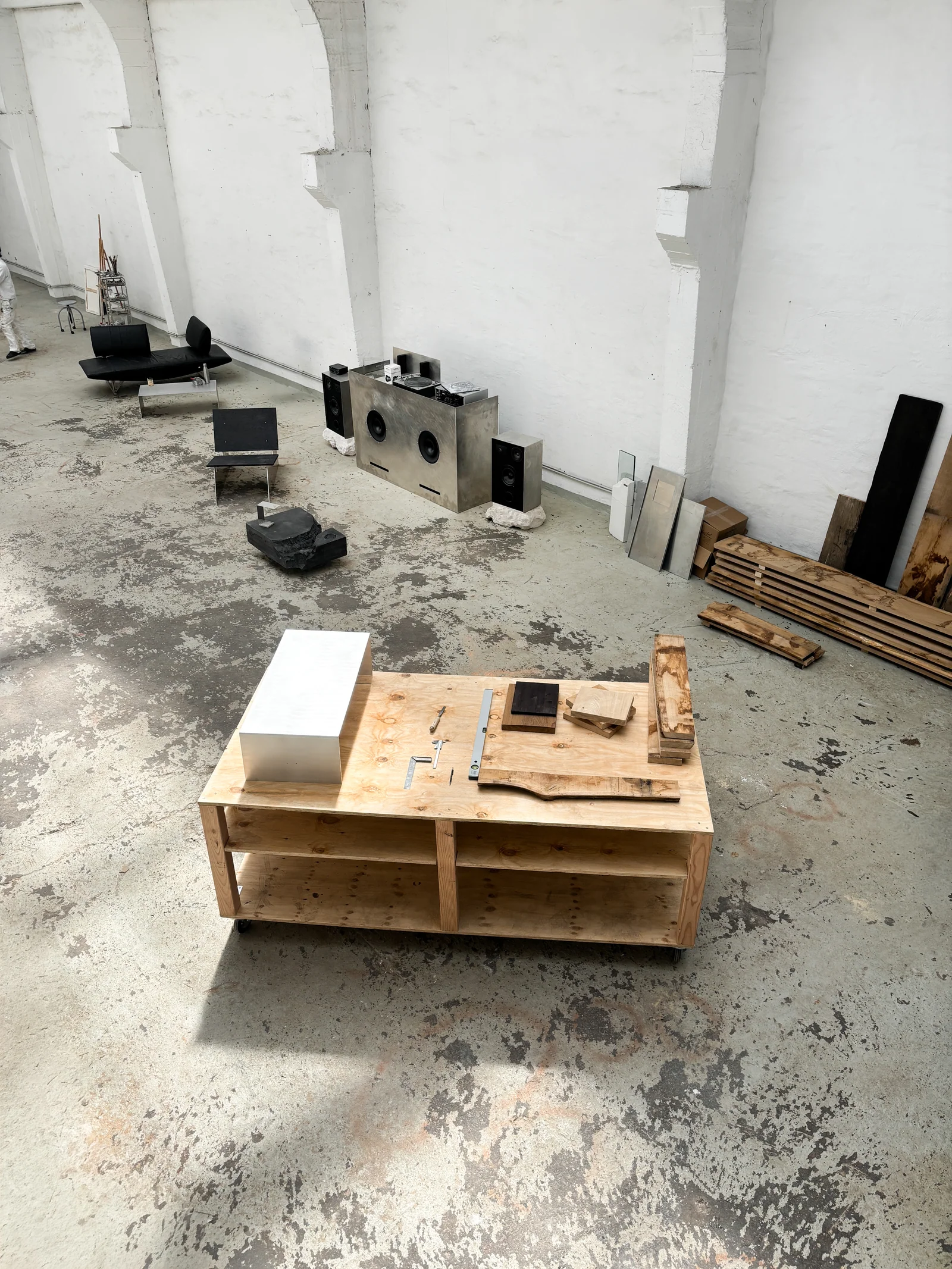
Founded by a collaborative team with deep roots in both visual arts and traditional craftsmanship, Case Studios bridges the gap between product design, interior architecture, and large-scale artistic installations. Their core philosophy rejects the conventional design trajectory of sketching a desired form and subsequently forcing a material to fit that predetermined mold. Instead, the studio champions a reverse methodology: the material comes first. Its geological or biological structure, its historical context, its physical limitations, and its inherent behaviors dictate the ultimate form of the object.
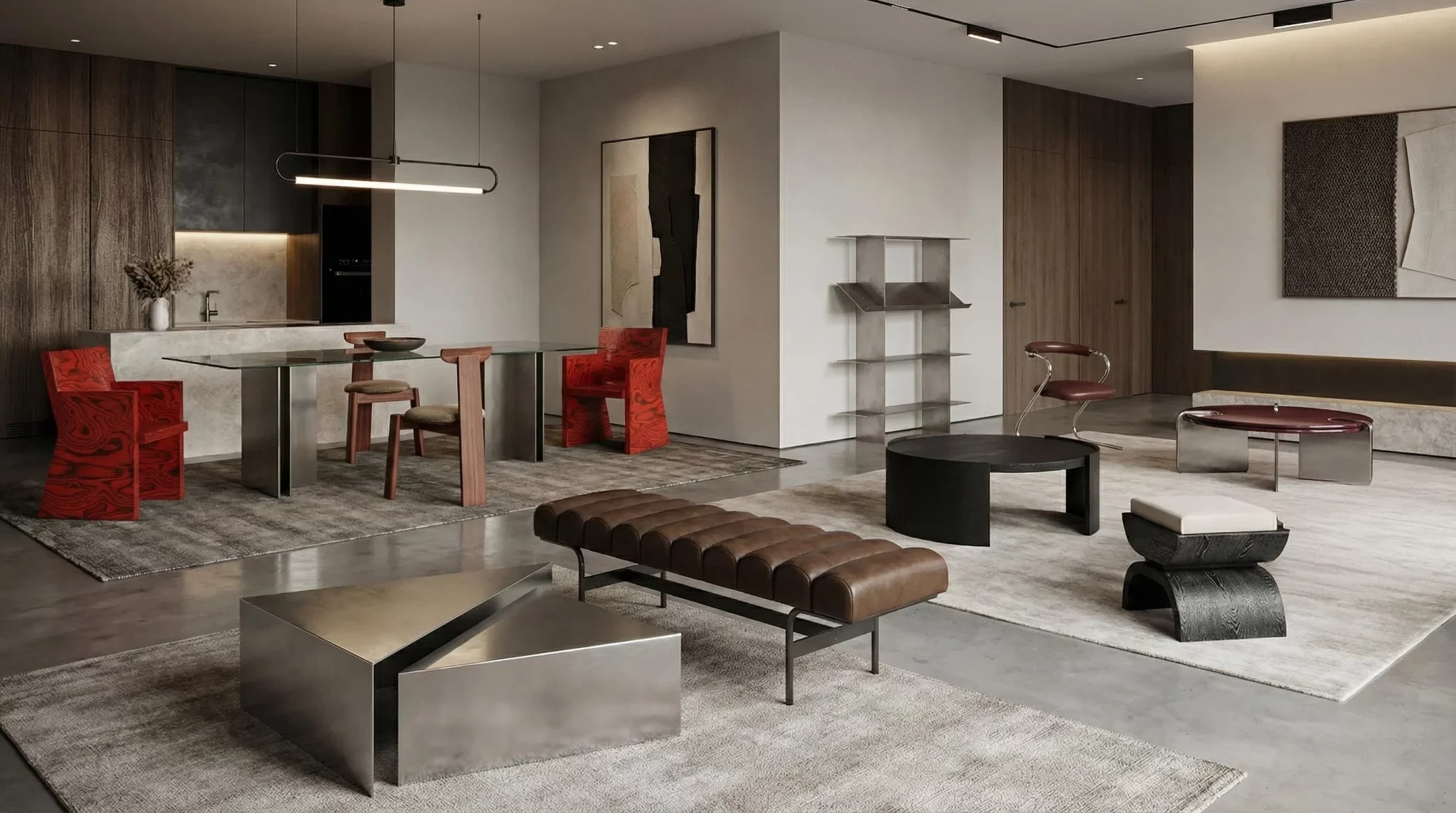
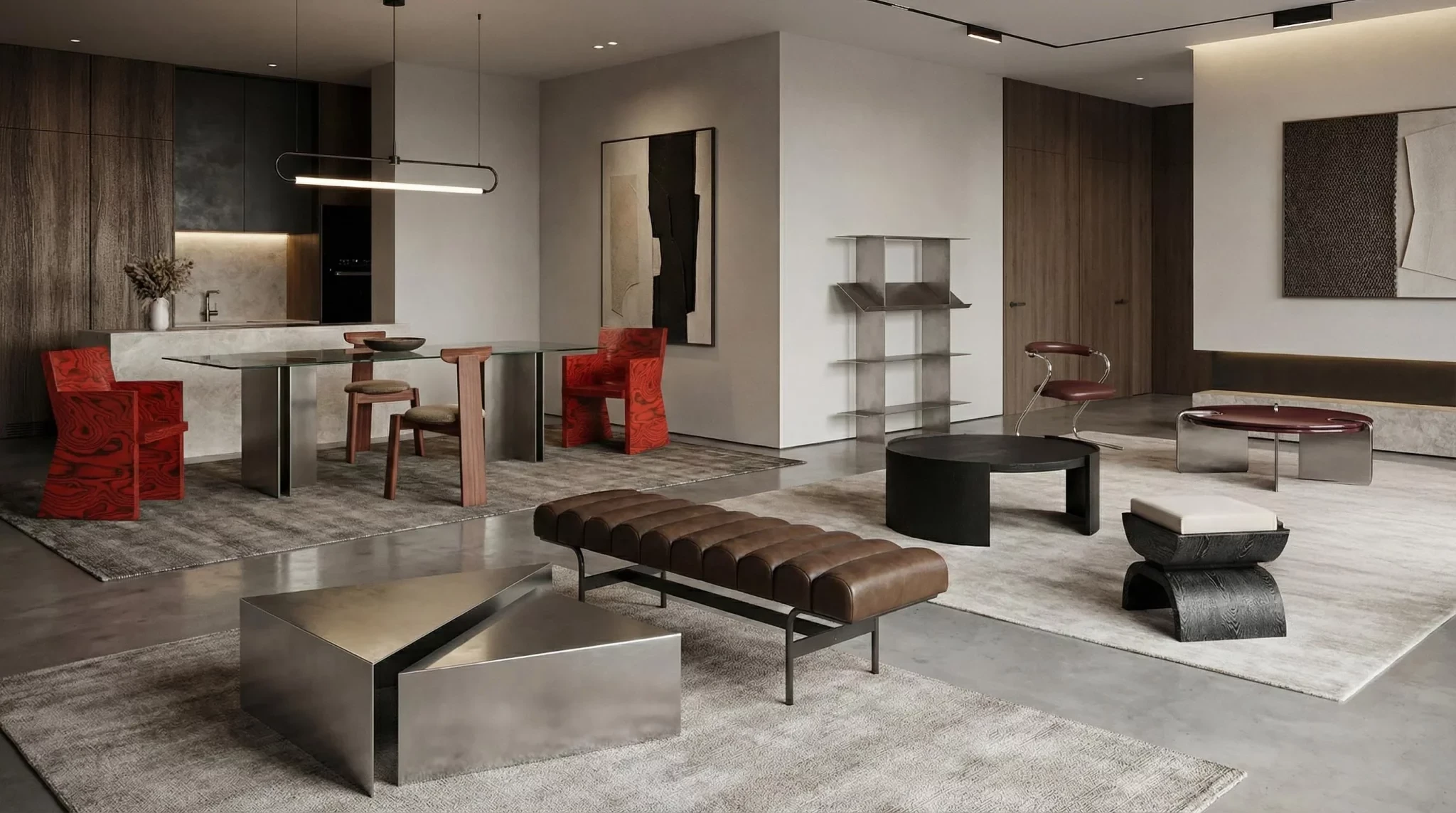
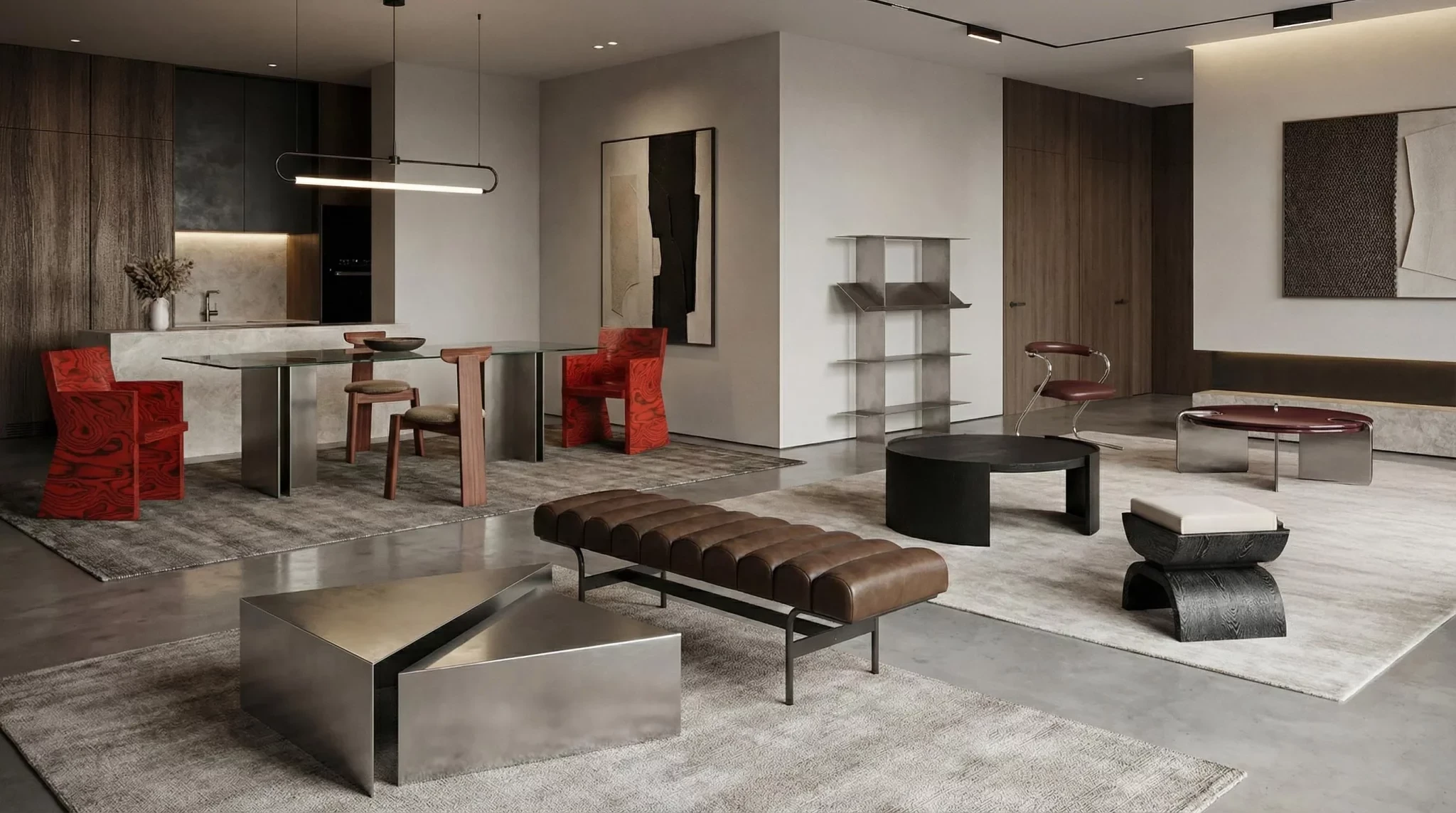
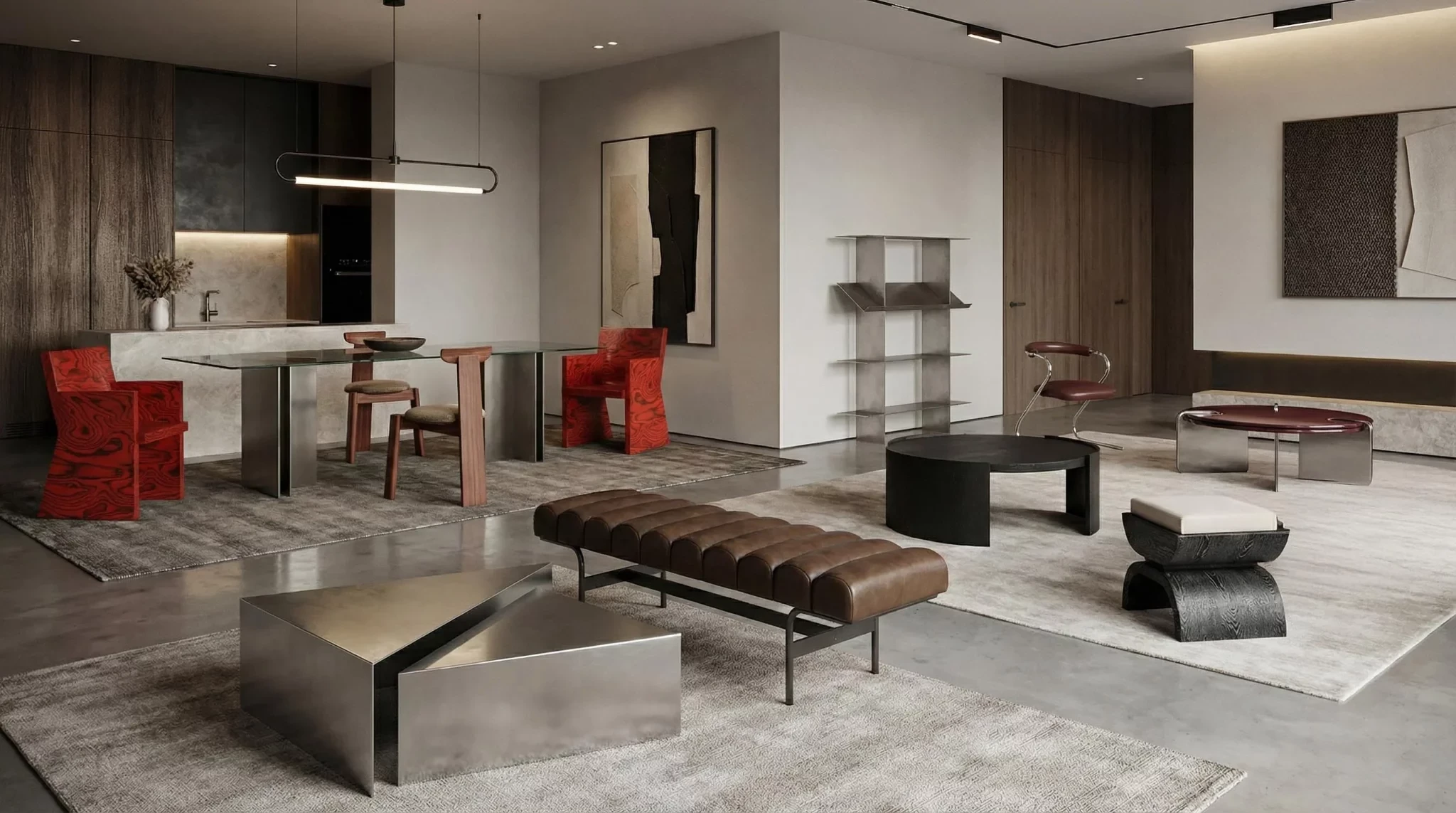
This philosophy manifests in a carefully curated palette of uncompromising mediums—primarily raw concrete, hand-polished aluminum, and yakisugi (charred wood). By allowing each substance to express its natural properties without superficial ornamentation, Case Studios creates furniture and architectural elements that feel entirely inevitable. The studio’s flagship creation, the Yakisugi Burnt Wood Coffee Table, serves as the definitive physical manifestation of this ethos, pairing ancient Japanese pyrotechnic preservation techniques with industrial, hand-sanded aluminum. Measuring 115 × 60 × 30 cm, the piece is a masterclass in structural contrast, low-slung proportions, and material honesty. Because the charring process reacts organically to each individual plank of hardwood, no two tables are identical, cementing the studio’s reputation for creating objects that both highlight and reshape the raw elements from which they are forged.
Chronology
To understand the trajectory of Case Studios, one must examine the evolution of its founders’ backgrounds and the specific timeline that led to the establishment of their Düsseldorf headquarters.
The Formative Years (Pre-2020): The founding members—operating individually across the realms of fine art, sculpture, and master-level carpentry—develop a shared frustration with the modern furniture industry’s reliance on veneers, synthetic composites, and decorative-only finishes. They begin informal dialogues exploring how traditional European craftsmanship can intersect with modern industrial processes.
The Düsseldorf Foundation (2021–2022): The collective officially unifies under the moniker Case Studios, setting up a combined workshop and laboratory space in Düsseldorf, Germany. The location is chosen deliberately for its proximity to both heavy industrial manufacturing hubs and progressive contemporary art scenes. The team shifts its focus away from mass production, choosing instead to focus on limited-edition product lines and bespoke interior architectural commissions.
Material Exploration and R&D Phase (2022–2023): The studio spends over a year experimenting with structural concrete formulations and reviving historical timber preservation methods. It is during this period that the studio perfects its approach to yakisugi—traditionally known as shou sugi ban—adapting the ancient Japanese technique not merely as a weatherproofing measure for exterior cladding, but as a fine-art surface treatment for interior statement furniture.
The Introduction of Metal Integration (2024): Recognizing the need for structural tension, the studio introduces cold-worked, hand-sanded aluminum into its designs. The juxtaposition of volatile, organic charcoal surfaces with pristine, industrial metal becomes a defining visual and structural signature of the brand.
The Exclusive Line Launch (2025–Present): Case Studios debuts its curated collection to the international design market, highlighted by the Yakisugi Burnt Wood Coffee Table. The launch garners critical acclaim from architectural publications, lifestyle curators, and design platforms such as Roomhints, marking the studio’s transition from a local German workshop to a globally recognized name in material-driven design.
Supporting Data
The operational philosophy and physical output of Case Studios can be evaluated through specific metrics, material dimensions, and technical specifications that define their craft:
Studio Headquarters: Düsseldorf, Germany.
Core Disciplines: Product design, interior architecture, and site-specific artistic installations.
Primary Material Palette:
Yakisugi Hardwood: Thermally modified and deeply charred timber, offering enhanced structural density and natural decay resistance.
Hand-Sanded Aluminum: Cold-formed industrial metal finished by hand to create a tactile, light-diffusing surface.
Architectural Concrete: Custom-cured aggregate mixes chosen for compressive strength and monumental presence.
Dimensions: 115 cm (Length) × 60 cm (Width) × 30 cm (Height).
Proportions: Low-profile, wide stance engineered to visually anchor a living space rather than passively occupy it.
Production Method: Handcrafted in Germany; entirely bespoke due to the variable nature of the wood charring process.
Design Output Metrics: 100% of products utilize structural surfaces where the exterior finish also acts as the load-bearing or protective mechanism, eliminating redundant decorative layers.
Official Responses & Design Philosophy
The intellectual framework of Case Studios is articulated through statements released by its founding collective, emphasizing an ethos of restraint, respect for matter, and functional honesty.
When discussing the fundamental approach to object creation, a spokesperson for the collective stated:
"There is a discipline at the center of everything Case Studios makes. Not a style—a discipline. A commitment to the idea that a material has its own logic, and the designer’s job is to understand it, honor it, and get out of the way."
Expounding upon the intricate process of material selection and refinement, the studio released the following operational manifesto:
"The deliberate use, selection, and refinement of unique and durable materials create objects that both reshape and highlight the original properties of each material. We do not start with a form and find a material to fill it. The process runs in the other direction. The material comes first—its properties, its structure, its history, its limitations. The form emerges from that conversation."
Industry critics and architectural curators have frequently noted that this philosophy directly counters the fast-furniture culture prevalent in the twenty-first century. By treating materials as active participants in the design dialogue rather than passive commodities, Case Studios positions its catalog as an antidote to ephemeral styling.
Implications
The rise of Case Studios signals a broader, much-needed shift within high-end interior architecture and product design. As consumers and professionals alike grow weary of mass-produced homogeneity masked by superficial trends, the demand for authentic, material-first craftsmanship is accelerating.
Redefining Sustainability Through Durability: By utilizing techniques like yakisugi, which inherently seals and hardens wood against environmental degradation without toxic chemical treatments, Case Studios demonstrates that ancient preservation methods offer modern solutions to product longevity. Objects that are built to last centuries reduce the turnover cycle of consumer goods.
The Renaissance of Tactility in a Digital Age: In an era dominated by smooth glass screens and digital renderings, physical spaces crave tactile diversity. The stark contrast between cold, hand-sanded aluminum and the rugged, carbonized texture of burnt hardwood engages multiple human senses, reminding occupants of the physical reality of their environments.
The Blurring Lines Between Art and Function: Because Case Studios operates fluidly across product design, architecture, and artistic installations, their work challenges the boundary separating utilitarian furniture from gallery-grade sculpture. Each piece serves as an architectural anchor for a room, transforming interior design from mere decoration into spatial philosophy.
As Case Studios continues to expand its footprint from its Düsseldorf base outward to global collectors and design enthusiasts, its methodology offers a blueprint for the future of making: respect the medium, embrace natural imperfections, and let the material dictate the form.