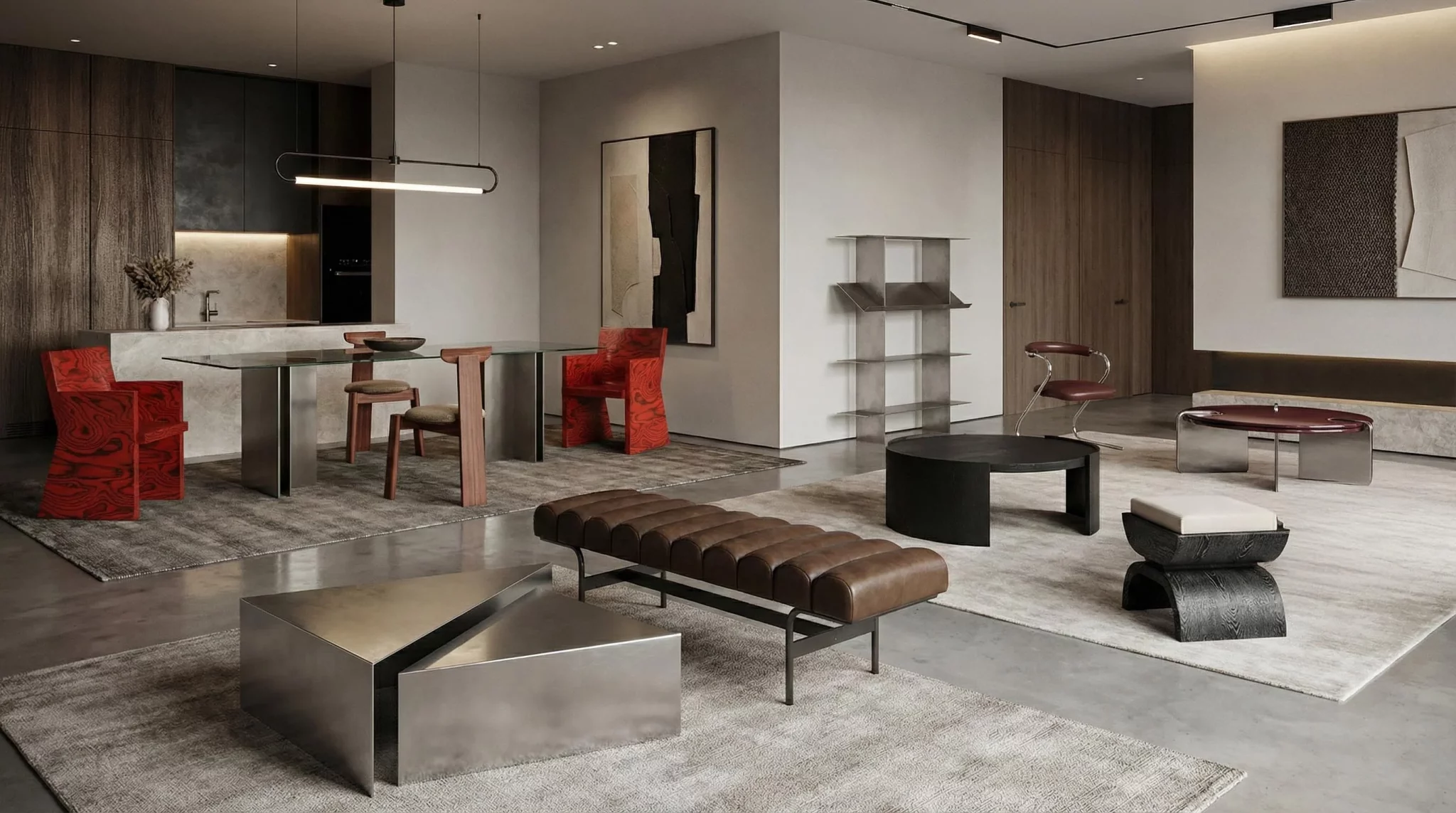
ISTANBUL — Great design rarely begins with a grand marketing launch or a calculated business plan. More often, it emerges from the quiet accumulation of solutions—the persistent repetition of a visual sensibility solving spatial problems until it can no longer be ignored.
This is the origin story of Regen Studio, a multidisciplinary design practice and artisanal furniture brand based in Türkiye. Founded by a visionary architect, Regen did not set out to disrupt the commercial furniture market. Instead, it was born out of a profound architectural continuity: a distinct design language that kept surfacing across diverse spatial projects, embedded within custom pieces designed for hyper-specific environments. At a certain point, that thread became too strong to leave scattered among architectural briefs. The studio materialized simply to give that continuity a name, a framework, and an independent voice.
Today, Regen Studio stands at the intersection of architecture, collectible design, and heritage craftsmanship. Eschewing mass production and scalable manufacturing entirely, the studio operates on a made-to-order model executed by master local artisans. The result is a body of work that is collectible in the truest sense of the word: made once, made well, and engineered to outlast transient design trends.
Main Facts: At the Intersection of Architecture and Craft
To understand Regen Studio, one must first understand the mind of its founder. Trained as an architect, her approach treats furniture not as an isolated decorative object, but as a direct extension of structural and spatial philosophy.
- The Medium: Every piece is meticulously crafted using a combination of rich woods, metals, bespoke textures, and vibrant color palettes.
- The Production Model: Zero mass production. Every item is made to order by skilled artisans in Türkiye, ensuring unparalleled attention to detail and a microscopic reduction in industrial waste.
- The Aesthetic DNA: A seamless marriage of mid-century modern organic forms, structural clarity, and a revived appreciation for forgotten artisanal techniques.
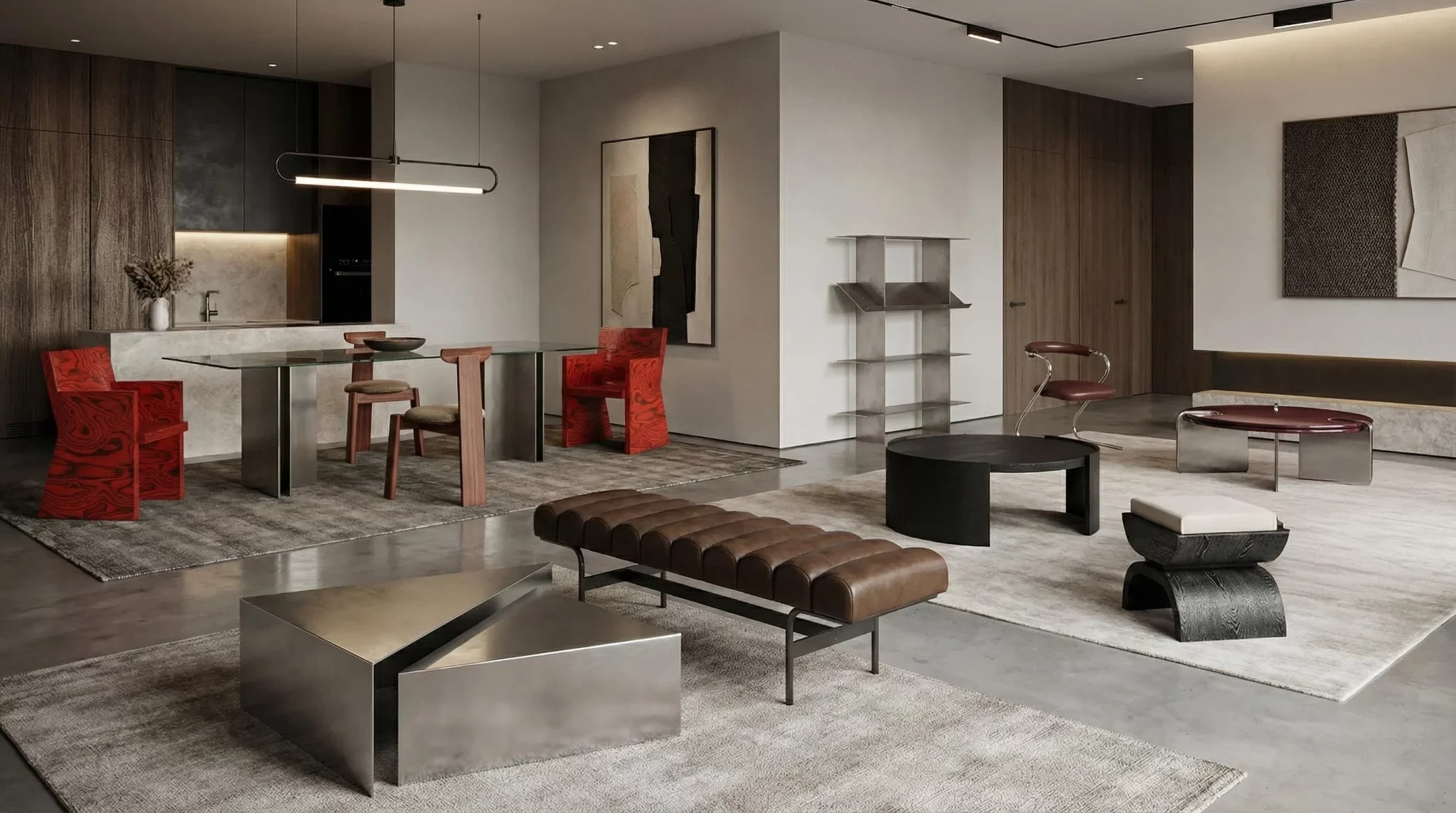
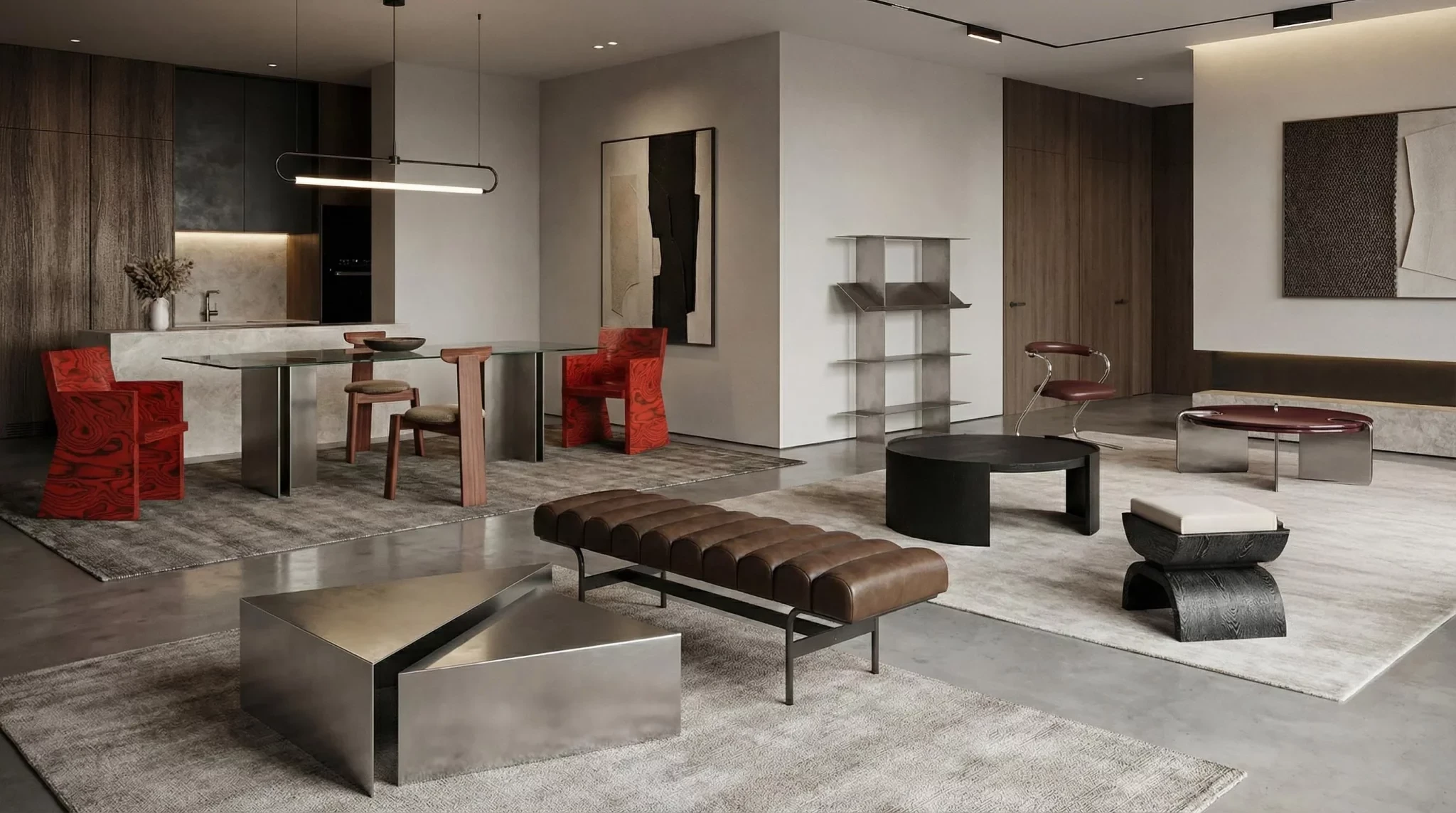
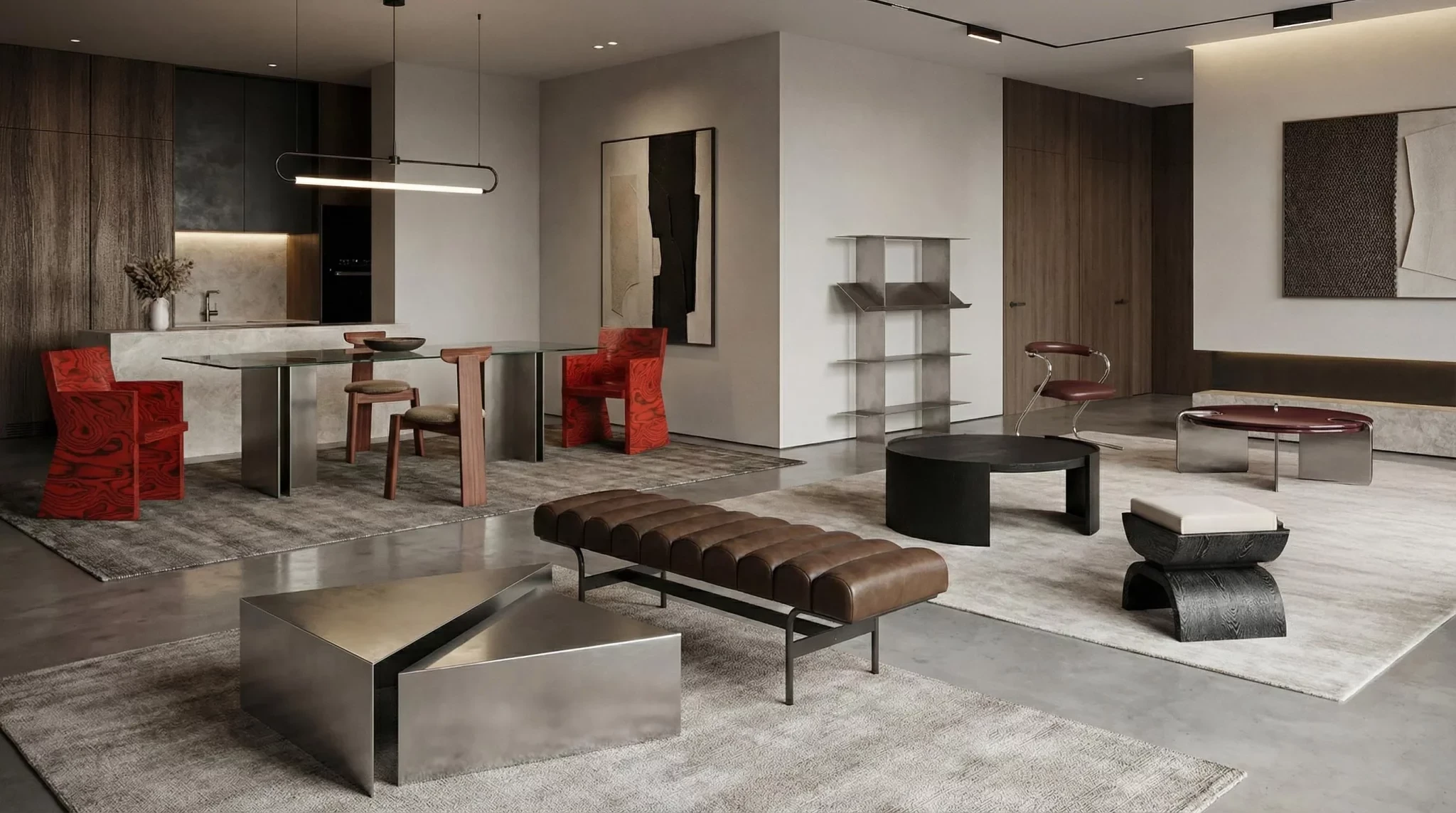
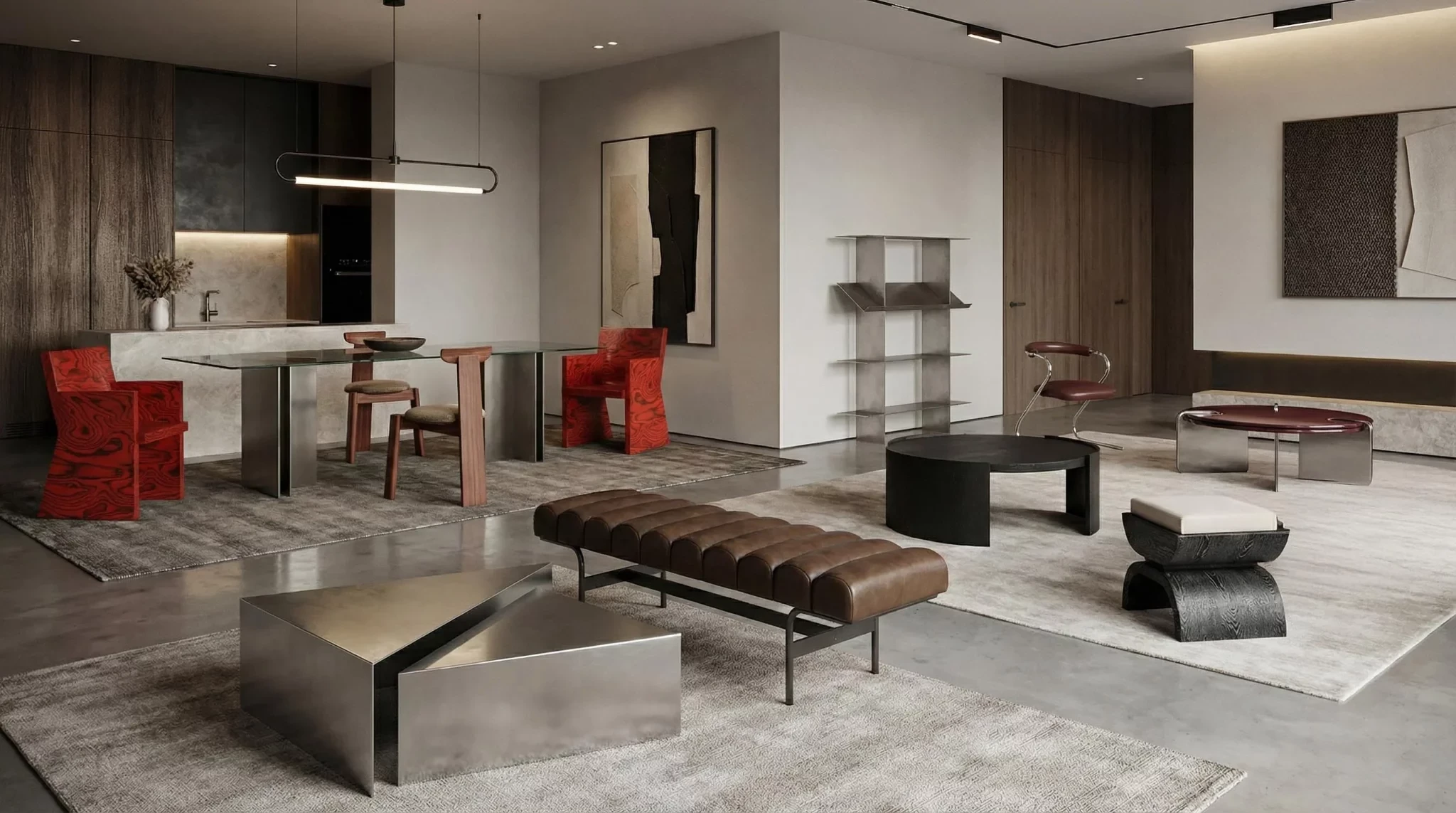
- The Flagship Piece: The striking Kira chair—a masterpiece of root veneer and bold red polish that encapsulates the studio’s philosophy of quiet confidence and architectural proportion.
Rather than viewing furniture design as separate from the built environment, Regen Studio treats every chair, table, and spatial element as a micro-architecture. Proportion, human scale, spatial relationships, and atmospheric resonance are calculated with the same rigor whether designing a multi-story building or a single-family seating unit.
Chronology: The Evolution of an Independent Design Practice
The trajectory of Regen Studio can be traced through a deliberate evolution from practical architectural problem-solving to unbound artistic exploration.
Phase 1: The Architectural Incubation (The Pre-Studio Years)
For years, the studio’s founder operated a traditional architectural practice. Within the scope of these projects, clients frequently required custom furniture to resolve complex spatial constraints—awkward angles, limited floor plans, or specific atmospheric demands. Unknowingly, these bespoke commissions began to develop a collective subconscious. Across entirely different projects, the same proportions, the same structural logic, and the same emotional responses to materials kept appearing.

Phase 2: Recognizing the Thread
As the custom pieces accumulated, a cohesive design vocabulary emerged. The architect realized that these objects were no longer just serving individual client briefs; they were communicating a unified aesthetic philosophy. The instinct for how an object should inhabit a room, how light should bounce off its surfaces, and how it should command a space had solidified into a distinct language.
Phase 3: The Birth of Regen Studio
Driven by the desire to liberate this design language from the confines of individual architectural briefs, the founder established Regen Studio. This new entity functioned as an independent laboratory of form and material—free to experiment, iterate, and follow its creative instincts wherever they led.
Phase 4: Artisanal Partnerships and Global Reach
Moving away from digital renderings and factory lines, Regen partnered directly with local Turkish workshops. By empowering traditional craftspeople who still possess ancestral knowledge of woodworking, finishing, and metalwork, the studio established a sustainable production pipeline. Today, Regen Studio delivers its bespoke, made-to-order creations to international clients seeking authenticity and soul in their interiors.
Supporting Data: Process, Constraints, and Craftsmanship
The methodology of Regen Studio challenges the modern tech-accelerated design ethos. Where contemporary manufacturing prioritizes speed and cost-efficiency, Regen leans into friction, limitation, and time.
The Iterative Loop
Every Regen piece begins with context. Before a single line is drawn or a material is selected, the studio asks foundational questions: How will this object live within a space? What psychological atmosphere should it support? What is its relationship to light, shadow, and human movement?
Once the architectural parameters are established, the process transitions into material exploration. This is an intensely tactile phase. Textures are tested, finishes are layered, and color is applied to understand how an object can simultaneously command presence and maintain subtlety.
The design process is deeply iterative. It involves endless drawing, physical prototyping, critique, and refinement. Crucially, collaboration with the workshop artisan happens concurrently with design, not afterward. Craftsmanship is treated as an active participant in shaping the final character of the piece from day one.

The Power of Constraints
In many ways, Regen Studio’s greatest design catalyst has been limitation. Many of the studio’s most iconic forms originally emerged under strict real-world pressures—tight delivery timelines, challenging spatial layouts, or restricted material availability within architectural projects.
Rather than viewing these limitations as obstacles, the studio embraces them as a source of precision. Constraints force a designer to edit away the unnecessary, leaving only the essential. This philosophical stance proves that boundary conditions do not inhibit creativity; they sharpen it.
Official Perspectives: Design Philosophy and the Voice of the Maker
In statements detailing the studio’s ethos, the founder emphasizes that furniture should never scream for attention; instead, it should command respect through its absolute coherence.
"Furniture is not an accessory to architecture; it is its miniature manifestation," notes the studio’s design philosophy. "When you design a chair for a room, you are not just designing a place to sit. You are designing how a human body relates to the volume of the air around it, how the floor meets the wall, and how an object holds or releases the atmosphere of a space."
This perspective informs the studio’s delicate balancing act between historical reverence and contemporary innovation. Regen Studio draws heavily from the mid-century modern movement—particularly its respect for organic silhouettes, structural honesty, and functional clarity. However, the studio is equally fascinated by historical techniques that modern industrialization has left behind.
By resurrecting forgotten crafting methods and reinterpreting them through a modern lens, Regen creates a living dialogue between the past and the present. The goal is never nostalgic pastiche; it is contemporary relevance informed by timeless craftsmanship.
The Object as a Mirror: The Kira Chair Case Study
To witness the culmination of Regen Studio’s philosophy, one need look no further than its flagship piece: The Kira Chair.

Anatomy of the Kira Chair
- Materials: Premium root veneer surface, intricate wood veneer internal construction, sealed with a high-gloss bold red polish.
- Dimensions: 88 × 56 × 63 cm.
- Production: Handcrafted, made to order, fully customizable polish color options.
- Origin & Delivery: Hand-built in Türkiye by local artisans; estimated delivery within 2 to 4 weeks.
The Kira chair is a masterclass in controlled theatricality. Wrapped in a rich root veneer and finished with a striking, unapologetic red polish, it is a silhouette that immediately draws the eye without ever resorting to gimmicks. It is confident, highly sculptural, and entirely self-assured.
As the studio describes it, the Kira chair is designed to be a mirror of the person who lives with it. At 88 × 56 × 63 cm, its proportions were conceived at an architectural scale. It was built for a specific kind of interiority—designed for a room rather than a digital catalogue. It does not shout for validation; it simply anchors the room and refuses to be ignored.
Implications: The Future of Collectible Design and Slow Craft
The rise of Regen Studio highlights a broader, critical shift within the global design landscape. As consumers experience fatigue from mass-produced, algorithmic furniture trends propagated by fast-furniture giants, a counter-movement is rapidly gaining momentum.
1. The Renaissance of Local Artisans
Regen’s reliance on Turkish workshops demonstrates a viable economic model for preserving endangered artisanal trades. By connecting local craftspeople with international high-end markets, studios like Regen ensure that generational skills—such as specialized root veneer application and custom polishing—survive and thrive in the 21st century.
2. The Rise of "True" Collectible Design
The demand for hyper-curated, low-volume, made-to-order pieces is skyrocketing. Discerning clients and interior architects are increasingly turning away from homogenized luxury in favor of objects that carry a narrative, an architectural pedigree, and human touch. Regen Studio positions itself precisely at the vanguard of this movement.
3. Sustainability Through Longevity
In an era where sustainability is often used as a marketing buzzword, Regen Studio’s approach offers the most radical eco-friendly solution possible: making things that last forever. By eliminating mass overproduction, utilizing durable natural materials, and creating items with timeless aesthetic value, the studio combats the disposable culture of modern interiors.
Our Hint
For design enthusiasts looking to inject architectural soul and uncompromising craftsmanship into their spaces, the Kira Chair by Regen Studio stands out as an essential acquisition. It is a testament to what happens when architectural intelligence meets the human hand—proving that the most powerful objects are those that do not merely fill a room, but quietly and permanently transform its atmosphere.