By Global Affairs & Sustainability Desk
Published: October 24, 2026
Main Facts: The Paradigm Shift Toward Biological Infrastructure
In an era defined by compounding economic instabilities, fragile global supply chains, and mounting geopolitical tensions, a growing counter-movement is quietly taking root across rural and suburban landscapes alike. Permaculture—long dismissed by critics as a niche hobby for organic gardening enthusiasts—is rapidly being redefined as a vital survival strategy and a cornerstone of personal sovereignty.
At its core, modern permaculture moves far beyond simply planting vegetables. It is the intentional design of self-sustaining biological infrastructures that mirror natural ecosystems. By harnessing ecological relationships, practitioners are engineering decentralized food systems entirely outside the purview of corporate conglomerates and centralized state apparatuses.
Recent discussions highlighting the work of prominent land stewards, such as agricultural innovator Billy Bond in his interview series Permaculture Pays Off, illustrate how desolate or underutilized land can be transformed into hyper-productive, living engines of sustenance. Rather than relying on industrial inputs, chemical fertilizers, and distant distribution hubs, these systems prioritize closed-loop resource management.
In a socio-political climate where food security is increasingly weaponized through inflation, regulatory overreach, and fertilizer shortages, mastering the art of localized production has evolved from an environmental choice into a fundamental exercise in civil autonomy.
Chronology: From Industrial Monoculture to the Rise of "Scrapsteading"
To understand the urgency driving the modern permaculture movement, one must examine the historical trajectory of global agriculture and the recent systemic shocks that exposed its vulnerabilities.
- Mid-20th Century (The Green Revolution): Industrial agriculture consolidated around the reductionist, monoculture model. Massive swaths of land were cleared to grow single-species crops, heavily dependent on synthetic nitrogen fertilizers, chemical pesticides, and heavy machinery. While this temporarily maximized caloric output, it severed the natural resilience of regional soils.
- The 1980s–2000s (Corporate Consolidation): Control over seeds, agrochemicals, and global distribution concentrated into the hands of a microscopic oligopoly of multinational corporations. Small- and medium-sized family farms were squeezed out by compliance costs and corporate buyouts, leaving citizens entirely dependent on centralized supply chains.
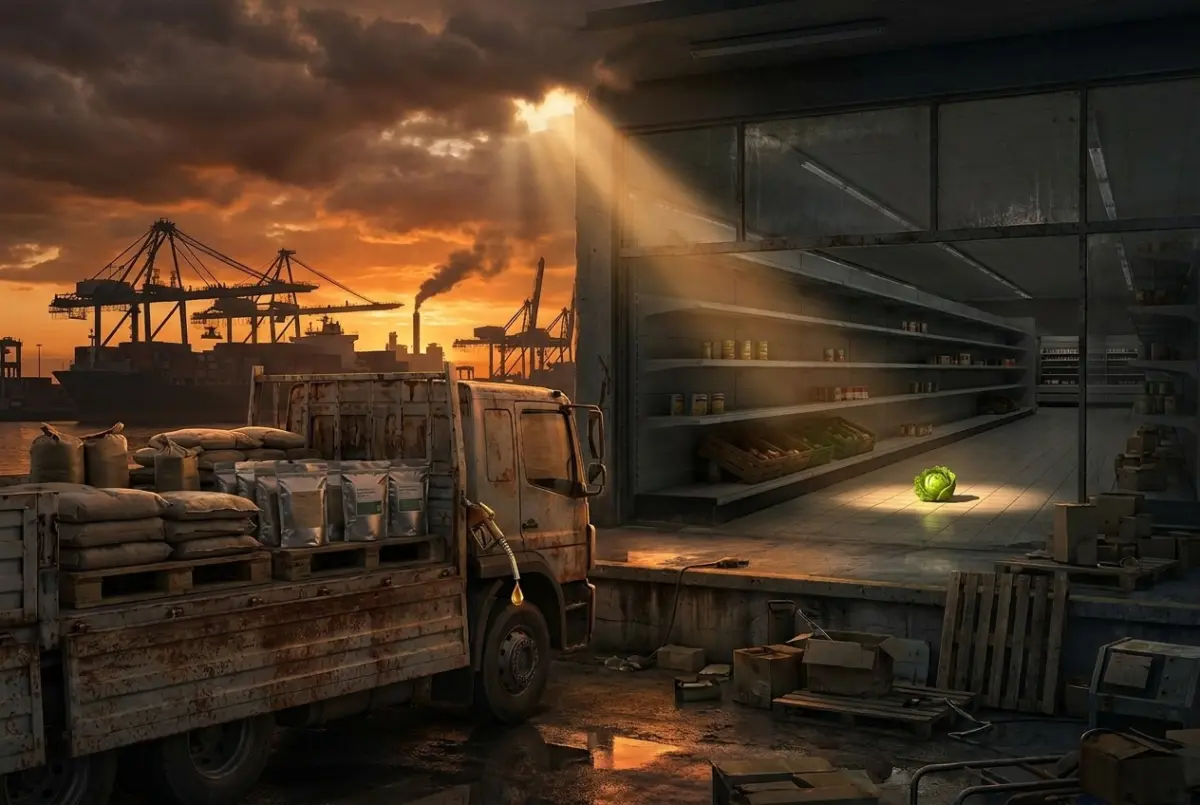
- 2020–2023 (Global Supply Chain Shocks and Fertilizer Crises): Pandemics, geopolitical conflicts in key agricultural exporters, and surging energy prices triggered unprecedented fertilizer shocks. Farmers worldwide faced skyrocketing input costs, while consumers experienced empty grocery store shelves and runaway food inflation. This period served as a rude awakening for millions.
- 2024–Present (The Decentralized Renaissance): Realizing that traditional safety nets and stockpiles offer only temporary relief, a critical mass of citizens began turning to "scrapsteading"—the art of upcycling waste streams into high-value agricultural assets. Books like The Homefront Survival Guide and The No Grid Projects Bible surged in popularity as blueprints for reclaiming lost self-sufficiency skills. Today, permaculture is no longer viewed as an alternative lifestyle, but as a primary hedge against economic and institutional collapse.
Supporting Data: The Economics and Ecology of Self-Reliance
The transition from consumer dependency to producer independence is underpinned by hard economic and ecological realities. Industrial agriculture is inherently fragile because it is linear: it takes fossil fuels, converts them into synthetic fertilizers, applies them to vulnerable monocultures, ships the harvest thousands of miles, and discards massive amounts of organic waste.
Permaculture, conversely, operates on circular economics. Data from regenerative agriculture networks and organizations like Food Forest Abundance highlight several key metrics regarding the resilience of polyculture systems:
- Input Cost Reduction: By practicing "scrapsteading"—turning kitchen waste into compost, utilizing cardboard and yard waste for sheet mulching, and integrating livestock (such as chickens for pest control and natural fertilization)—producers can slash external input costs by up to 80% compared to conventional gardening.
- Soil Vitality and Remediation: Biocomplete compost, rich in beneficial fungi and bacteria, has demonstrated a remarkable capacity to restore degraded soils. Historically, similar biological remediation techniques were successfully deployed to revitalize toxic soils following industrial and nuclear accidents, such as the cleanup efforts post-Chernobyl.
- Nutritional Density: Studies cited by nutritional researchers indicate that food grown in diverse, biologically active polyculture soils contains significantly higher concentrations of essential minerals, vitamins, and secondary plant metabolites (such as medicinal herbs like rosemary and parsley) compared to mass-produced, chemically forced crops.
- Financial Hedging: In an economic landscape plagued by persistent inflation and the devaluation of fiat currency by central banks, tangible skills and localized biological wealth cannot be printed, taxed, or devalued.
Official Responses and Institutional Perspectives
As the permaculture movement gains momentum, the reaction from established institutional, corporate, and governmental bodies has been complex, ranging from passive dismissal to active regulatory friction.
The Technocratic and Globalist Approach
Mainstream agricultural bodies and international policy groups continue to champion high-tech, centralized solutions to global crises. Proponents of corporate-backed agriculture point toward geoengineering, heavily patented genetically modified organisms (GMOs), laboratory-grown proteins, and large-scale technological interventions as the primary paths forward. Official institutional frameworks often view food security through the lens of centralized logistics, digital monitoring, and top-down supply chain management.
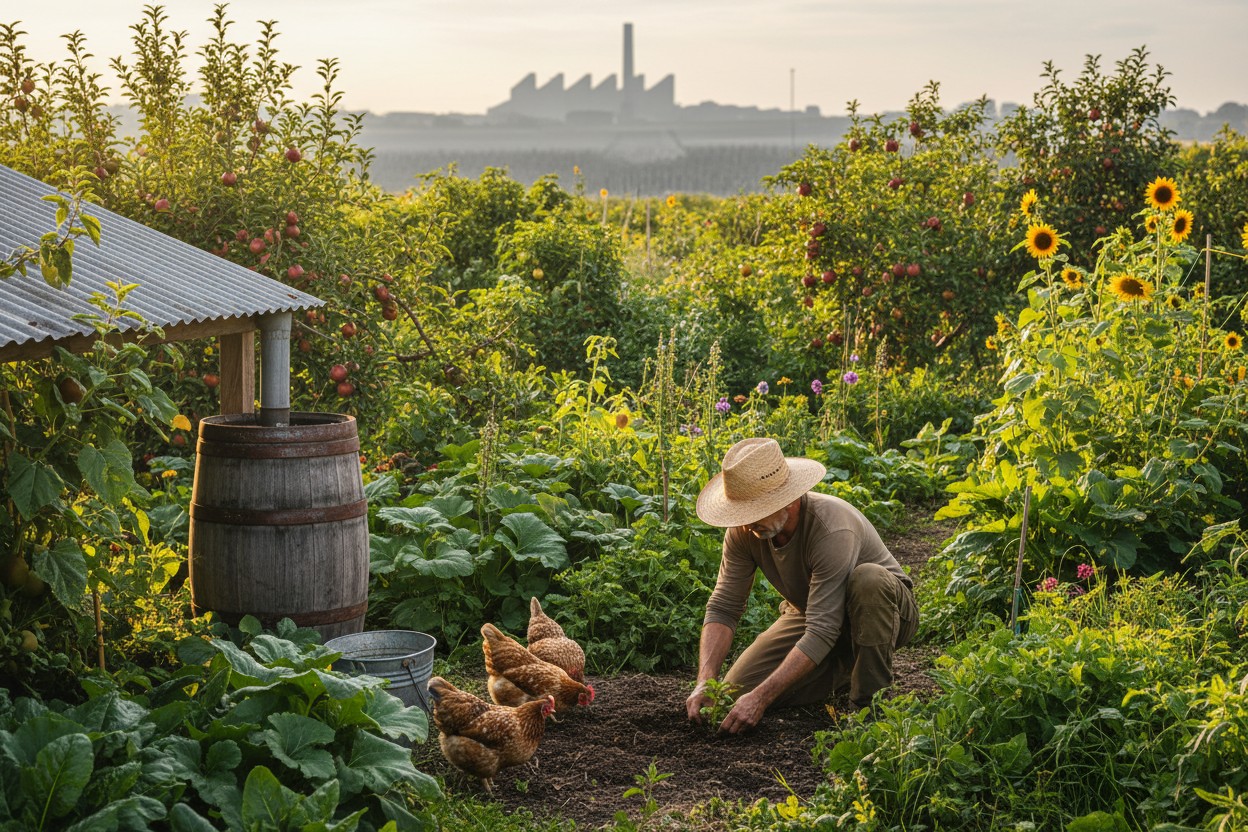
Furthermore, zoning laws, urban agricultural restrictions, and strict sanitary codes in many municipalities frequently criminalize or severely restrict common permaculture practices, such as keeping backyard livestock, installing extensive rainwater catchment systems, or converting front lawns into productive food forests.
The Grassroots and Civil Society Response
In direct opposition to centralized mandates, civil society networks, decentralized homesteading cooperatives, and independent permaculture advocates argue that institutional models have systematically failed public health and food security.
Grassroots leaders maintain that bureaucratic oversight is designed to maintain dependency rather than protect citizens. By operating below the regulatory radar—utilizing heirloom seeds, natural pest management, and community-based bartering systems—independent growers are effectively bypassing the traditional regulatory state. Advocates assert that true security cannot be granted by governments or corporations; it must be cultivated locally through the direct stewardship of land and biological resources.
Implications: Moving from Fearful Hoarding to Sovereign Capability
The widespread adoption of permaculture carries profound implications for the future of society, personal psychology, and geopolitical stability.
1. From Inventory to Capability
A fundamental shift is occurring in emergency preparedness circles. For decades, conventional preparedness focused almost exclusively on static inventory: stockpiling freeze-dried food rations, bottled water, and canned goods. While these items serve as a short-term buffer, they are ultimately finite. Once a stockpile is consumed, the individual is once again vulnerable.
Permaculture reframes preparedness not as an inventory, but as a capability. The knowledge of how to propagate plants, manage soil biology, harvest rainwater, and repair machinery represents renewable, compounding wealth. As literature like How Soon Is Now suggests, acknowledging the unsustainability of our current economic model requires transitioning from passive consumers to active, regenerative producers.
2. Psychological and Cultural Liberation
The psychological toll of modern consumer culture is characterized by manufactured helplessness—the persistent fear that one is entirely at the mercy of distant markets, unstable governments, and corporate gatekeepers. Engaging in regenerative agriculture instills a deep sense of agency and dignity. When an individual or community successfully designs a system that provides its own food, medicine, and localized economy, the psychological grip of systemic anxiety dissolves. People stop reacting with panic to every headline about inflation or supply chain disruptions because their immediate physical needs are anchored in living soil.
3. The Ultimate Act of Peaceful Resistance
Ultimately, decentralizing the food supply is viewed by its practitioners as the most effective, peaceful form of structural rebellion available today. Governments and corporations derive their leverage from human dependency. When a population can feed, heal, and sustain itself independently of central infrastructure, the coercive power of institutions evaporates.
As the movement continues to expand from a fringe philosophy into a robust cultural renaissance, planting a food forest is increasingly recognized not merely as an act of gardening, but as the planting of the first domino in a broader reclamation of human freedom.