By the Environmental Desk
Published: October 24, 2023
Main Facts
For decades, the standard advice for eco-conscious individuals looking to conserve water has focused heavily on personal hygiene habits. Turn off the tap while brushing your teeth, install low-flow aerators, and, most famously, shorten your daily showers. Environmental campaigns frequently urge citizens to shave two minutes off their shower time to "save the planet."
While these domestic water-saving measures do yield measurable reductions, they often feel like a daily sacrifice to the average consumer. However, recent data highlights a striking disconnect between where individuals focus their conservation efforts and where the vast majority of water is actually consumed.
According to data compiled by the U.S. Geological Survey (USGS), the hidden water footprint embedded in our daily diet—particularly in animal agriculture—vastly outweighs direct household water usage. Most notably, the water required to produce a single pound of beef is equivalent to more than 12 hours of continuous showering with a traditional, low-efficiency showerhead. This realization is shifting the conversation around sustainable living from minor bathroom adjustments to broader, systemic dietary choices that offer profound environmental impacts without requiring daily lifestyle friction.

Chronology
To understand how personal conservation messaging evolved, it is helpful to look at the timeline of environmental advocacy and resource management:
- The Late 20th Century (1970s–1990s): Following the rise of the modern environmental movement and recurrent droughts in regions like the American West, municipal governments and grassroots organizations focused heavily on municipal water restrictions. Campaigns targeted visible uses of water: lawn sprinklers, car washing, and indoor plumbing fixtures.
- The Turn of the Millennium: As plumbing standards improved with the introduction of federal efficiency mandates (such as the U.S. Energy Policy Act of 1992), attention shifted to consumer behavior. The "shorter shower" mantra became a staple of school curriculums and earth-day PSAs.
- The 2010s: Researchers began quantifying the "virtual water" or "water footprint" of consumer goods, pioneered by institutions like the UNESCO-IHE Institute for Water Education. Scientists started calculating the massive amounts of irrigation water needed to grow feed crops (like corn and soy) for livestock, bringing the hidden agricultural water cost to light.
- The 2020s: Tools such as the USGS food impacts water calculator gained traction among consumers and educators. Environmental communicators began challenging the efficacy of focusing solely on domestic habits, pointing out that dietary modifications offer a drastically higher return on investment for water conservation.
Supporting Data
To evaluate the true scale of water consumption, environmental analysts rely on quantifiable metrics that compare direct domestic usage against indirect agricultural inputs.
Let us break down the math of a typical household water-saving measure:
- The Shower Scenario: A standard, traditional, low-efficiency showerhead flows at a rate of roughly 2.5 gallons per minute.
- If an individual shaves 2 minutes off their daily shower, they save 5 gallons of water per day.
- Multiplied across 365 days, that annual savings amounts to 1,825 gallons.
While saving nearly 1,825 gallons a year sounds commendable, it pales in comparison to the resource demands of modern food production. According to the USGS water calculator:

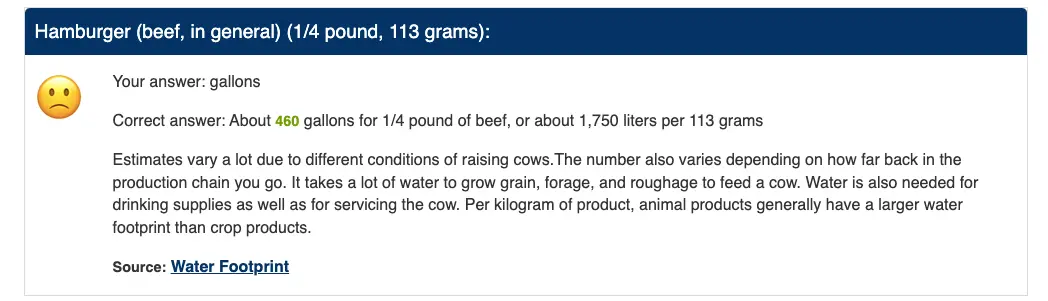
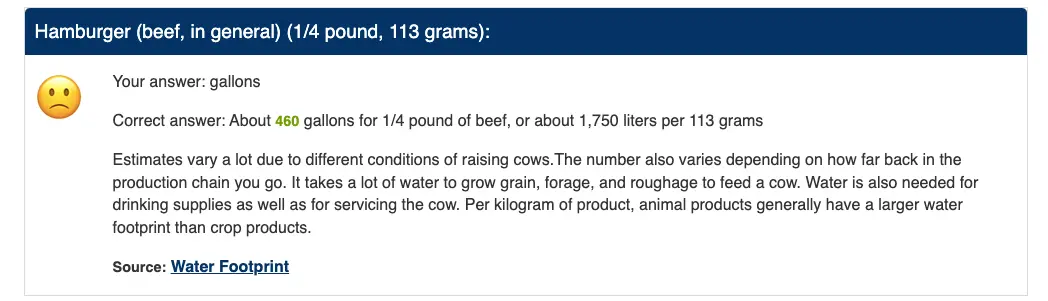
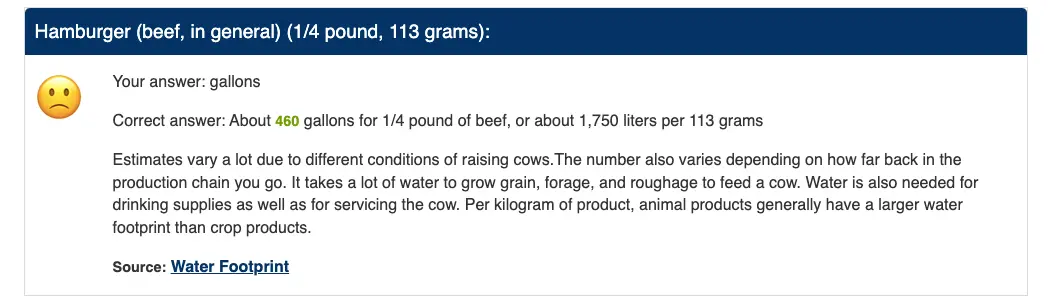
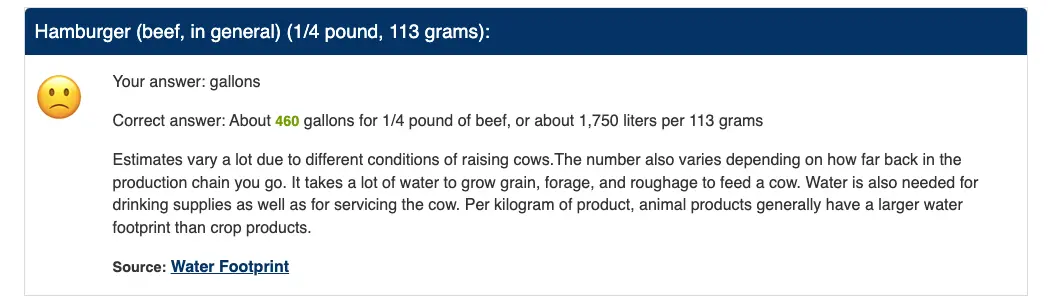
- A single quarter-pound of beef requires approximately 460 gallons of water to produce.
- Scaling that up, a single pound of beef demands roughly 1,840 gallons of water.
The Equivalency:
Consider what this means in practical terms. Reducing your shower time by two minutes every single day for an entire year saves roughly 1,825 gallons of water. Eating one single pound of beef consumes approximately 1,840 gallons of water.
Stated differently, the water footprint of a single pound of beef is roughly equal to 736 minutes (or over 12 hours) of continuous showering with a traditional 2.5-gallon-per-minute showerhead. When viewed through this lens, minor bathroom sacrifices pale in comparison to the impact of dietary choices.
Official Responses
Environmental scientists, agricultural economists, and sustainability consultants have increasingly weighed in on the psychological and systemic challenges of water conservation messaging.
Scott Cooney, a prominent serial eco-entrepreneur, sustainability consultant, and author, notes the friction inherent in traditional conservation advice. "You hear it often enough—want to save the planet? Try shaving 2 minutes off your shower every day," Cooney writes. "And—yes, you could, of course, do that. But—doesn’t that feel like a sacrifice? And we’re all about saving the planet but doing so without it ever feeling like a sacrifice."

Cooney points out that when everyday people take interactive quizzes—such as the USGS food impacts water calculator—they routinely experience a rude awakening. Most consumers grossly underestimate the water footprint embedded in animal proteins like beef, chicken, and pork.
Agricultural and water resource officials emphasize that while domestic conservation remains critical during acute regional droughts, long-term water security requires addressing agricultural efficiency. Because roughly 70 to 80 percent of all human water use goes toward agriculture, shifting dietary habits or adopting water-smart farming techniques yields exponentially greater resource savings than municipal rationing alone.
Implications
The realization that dietary choices dwarf domestic habits in water consumption carries profound implications for consumers, policymakers, and environmental advocates alike.
1. Shifting the Burden from Lifestyle to Diet
For decades, consumers have been conditioned to feel guilty about long showers, running faucets while washing dishes, or watering lawns. While these actions matter—especially in arid municipalities facing immediate supply crunches—they place an undue psychological burden on individuals for marginal macro-level gains. Conversely, shifting one’s diet to incorporate more plant-based meals, or being mindful of meat consumption (particularly beef), offers a massive reduction in an individual’s water footprint with zero impact on personal hygiene or daily comfort.

2. Rethinking Corporate and Agricultural Accountability
Focusing solely on consumer behavior risks ignoring the systemic drivers of water scarcity. The vast amounts of water used in beef and poultry production are tied to industrial feed production, inefficient irrigation methods, and lax regulatory frameworks in agricultural sectors. Policymakers are increasingly urged to incentivize regenerative agriculture, drought-resistant feed crops, and advanced irrigation technologies that target the root cause of agricultural water waste.
3. Redefining "Green" Living
Ultimately, the data encourages a maturation of the environmental movement. Rather than viewing sustainability purely through the lens of personal deprivation (shorter showers, colder washes, strict rationing), modern ecological consciousness is moving toward intelligent resource allocation. By understanding where resources are truly consumed—our plates rather than our plumbing—individuals can make high-impact choices that protect global water supplies while maintaining a high quality of life.