By Global Environmental Desk
Published: October 2023
Main Facts: Shifting the Focus of Water Conservation
For decades, the standard eco-friendly advice doled out to environmentally conscious citizens has centered on daily lifestyle tweaks. Turn off the tap while brushing your teeth, fix leaky faucets, and, perhaps most persistently, shave a couple of minutes off your daily shower. The narrative is simple: personal sacrifice equals planetary preservation.
However, recent data compiled by environmental scientists and hydrologists suggests that these well-intentioned domestic habits might be missing the forest for the trees—or, more accurately, the agriculture for the bathroom. While cutting down shower times does yield tangible water savings, the volume saved pales in comparison to the hidden water footprints embedded in our daily consumer choices, most notably our diet.
According to data from the U.S. Geological Survey (USGS), the water required to produce standard food items—particularly animal proteins like beef and chicken—dwarfs household water usage. When consumers look at the big picture of sustainability, making minor adjustments to dietary choices can achieve massive conservation milestones without requiring the daily friction and perceived sacrifice of a shorter shower.
Chronology: The Evolution of Water Conservation Advice
To understand how we arrived at the current paradigm of water conservation, it is helpful to look back at how environmental messaging has evolved over the past fifty years.

The 1970s–1990s: The Birth of Domestic Eco-Awareness
Following the birth of the modern environmental movement and the establishment of agencies like the U.S. Environmental Protection Agency (EPA) in 1970, public service announcements primarily focused on direct, visible household consumption. Campaigns urged citizens to install low-flow aerators, water their lawns less frequently, and limit time spent in the shower. The core message was direct: if water comes out of a tap in your home, that is where you need to conserve it.
The 2000s–2010s: The Rise of "Virtual Water" and Footprinting
As global trade expanded and environmental science advanced, researchers began looking at "virtual water"—the total volume of freshwater consumed directly and indirectly to produce a good or service. British academic Tony Allan introduced the concept of the "water footprint" in the early 2000s, shifting academic and eventually public focus toward supply chains. Consumers began to realize that manufacturing a pair of jeans or a smartphone consumed thousands of gallons of water overseas.
The Present Day: Confronting the Plate
In recent years, agencies like the USGS and independent sustainability researchers have made virtual water data accessible to the general public through interactive tools like the food impacts water calculator. This has sparked a modern reckoning: consumers are discovering that the most water-intensive product in their daily lives isn’t flowing from their bathroom showerheads, but is sitting squarely on their dinner plates.
Supporting Data: Crunching the Numbers
To appreciate the scale of agricultural water consumption versus household use, one must examine the mathematics behind the claims.
The Shower Calculus
Let us break down the standard advice to cut two minutes off a daily shower.

- Even with a traditional, older, low-efficiency showerhead operating at a flow rate of 2.5 gallons per minute, a two-minute reduction saves 5 gallons of water per day.
- Multiplied across a 365-day year, this habit saves 1,825 gallons of water.
On the surface, saving nearly 2,000 gallons a year sounds commendable. But how does this stack up against our food consumption?
The Beef Benchmark
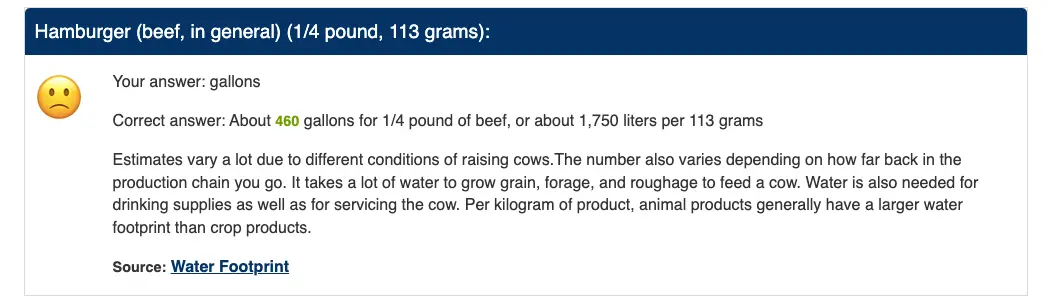
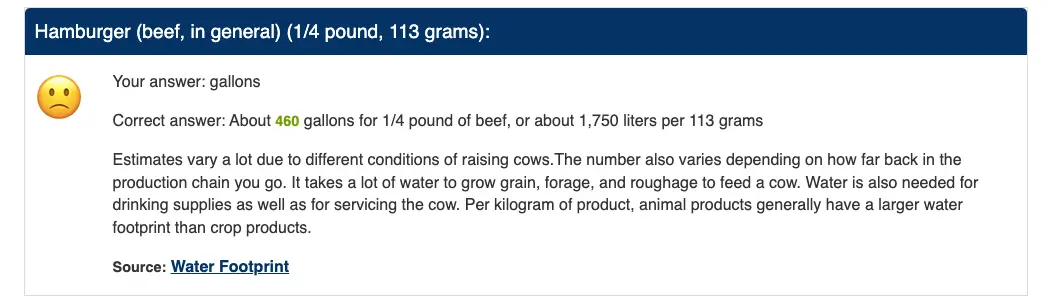
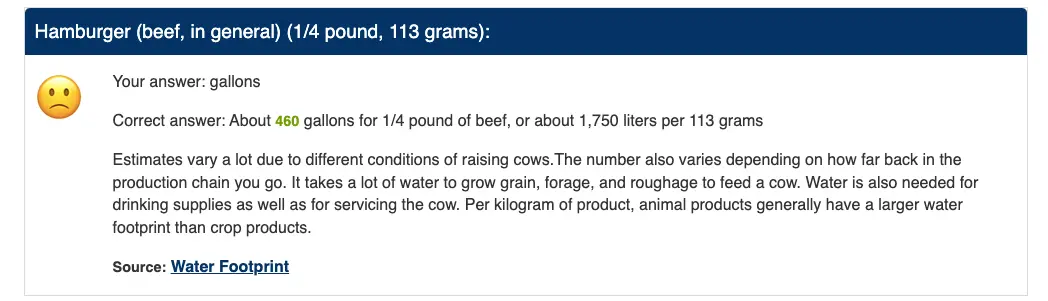
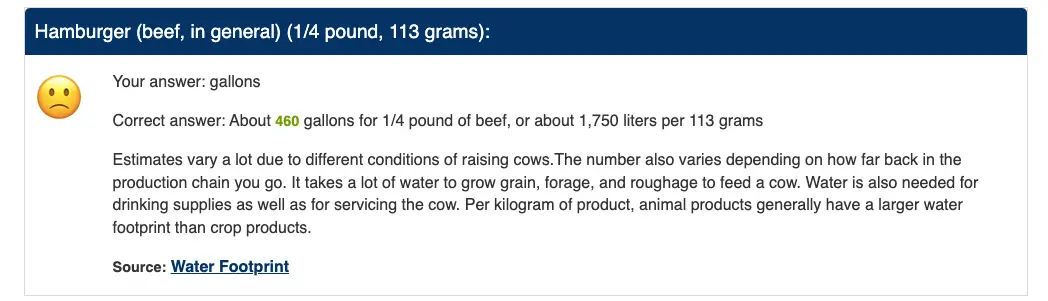
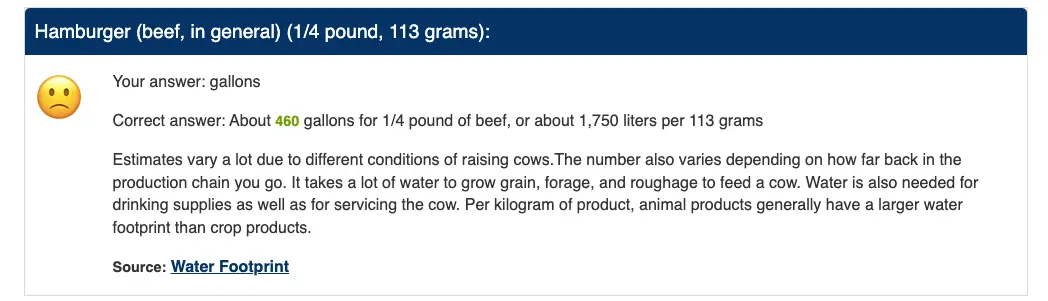
According to USGS data and agricultural life-cycle assessments, producing a single quarter-pound (4 ounces) of beef requires approximately 460 gallons of water. Scaling that up, a full pound of beef demands an astonishing 1,840 gallons of water.
Put simply: Producing one single pound of beef consumes more water than reducing your shower time by two minutes every single day for an entire year.
To push the comparison further, let us look at the time equivalent. With a traditional 2.5-gallon-per-minute showerhead, it takes 736 minutes of continuous showering to use 1,840 gallons of water. That means an individual could theoretically take a continuous, 12-hour shower—or simply eat a single pound of beef—and consume the exact same volume of freshwater.
Official Responses and Expert Perspectives
Environmental experts, sustainability consultants, and agricultural economists have increasingly weighed in on the disconnect between public perception and actual environmental impact.

Scott Cooney, a prominent serial eco-entrepreneur, sustainability consultant, and author, has long advocated for shifting consumer focus toward high-impact, low-sacrifice interventions.
"You hear it often enough—want to save the planet? Try shaving 2 minutes off your shower every day," Cooney notes. "And yes, you could, of course, do that. But doesn’t that feel like a sacrifice? We’re all about saving the planet, but doing so without it ever feeling like a sacrifice."
Cooney’s perspective aligns with behavioral psychology research, which shows that habits requiring daily friction and self-denial (like timing oneself in the shower) often have low long-term compliance rates. Conversely, structural or dietary shifts—such as swapping out a few meat-based meals per week for plant-based alternatives—can yield exponentially larger ecological dividends with far less daily mental fatigue.
Agricultural researchers emphasize that livestock farming is inherently water-intensive due to the vast amounts of irrigated feed (such as alfalfa and corn) that cattle consume over their lifetimes, in addition to drinking water and processing sanitation.
Implications for the Future of Sustainable Living
The realization that dietary choices outweigh domestic habits in the realm of water conservation carries profound implications for individual action, corporate policy, and public education campaigns.

1. Redefining "Green" Priorities
For decades, green living guides have heavily emphasized in-home water-saving techniques. While these practices remain important—particularly in drought-stricken regions like the American Southwest—they should not overshadow the broader conversation about agricultural consumption. Public awareness campaigns must expand beyond the bathroom to address the food system.
2. The Rise of Conscious Consumption
Consumers looking to minimize their environmental footprint are increasingly turning to tools like the USGS water impact calculator. By understanding that livestock agriculture accounts for a massive share of global freshwater consumption, individuals can make targeted adjustments—such as adopting a "Flexitarian" diet, partaking in "Meatless Mondays," or choosing alternative proteins—that achieve maximum environmental benefit with minimum personal deprivation.
3. Policy and Agricultural Innovation
On a systemic level, the heavy water footprint of meat production points to an urgent need for agricultural innovation. Policymakers and agribusinesses must invest in water-efficient crop irrigation, regenerative agriculture practices, and the development of lab-grown or plant-based proteins that mimic conventional meat without the staggering resource overhead.
Conclusion
Saving the planet does not have to feel like an exercise in asceticism. While rushing through your morning routine to save a few gallons of water is well-intentioned, the numbers reveal that true, high-impact conservation lies elsewhere. By simply re-evaluating what we put on our plates, we can conserve thousands of gallons of water effortlessly—proving that sometimes, the most effective way to protect our natural resources is to change how we eat, not how we wash.