






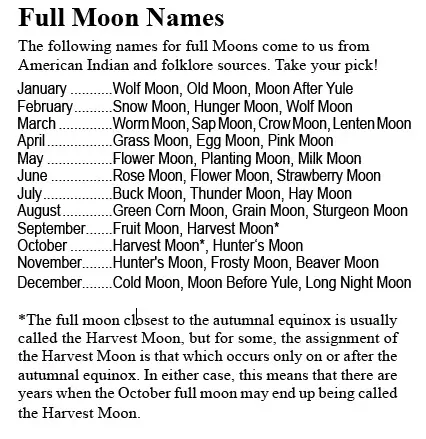
Long before digital notifications, pocket-sized smartphones, and standardized solar calendars dictated the rhythm of daily life, humanity’s primary timepiece hung brightly in the nocturnal sky. For millennia, indigenous peoples across North America looked upward, treating the lunar cycle as an essential, living ecological calendar.
Far from being mere poetic monikers, names like the Wolf Moon, Strawberry Moon, and Beaver Moon represent a sophisticated system of environmental observation, botanical tracking, and animal behavior analysis. Rooted in deep cultural wisdom, these lunar designations served as critical survival tools. Today, while modern society relies on the rigid framework of the Gregorian calendar, the traditional names of the full moons persist—bridging ancient ecological knowledge with contemporary stargazing.
Main Facts: The Intersection of Astronomy and Ecology
The system of naming full moons familiar to contemporary almanac readers is largely a historical synthesis. It combines Indigenous North American environmental observations—predominantly from the Algonquian language family—with European colonial adaptations and Celtic folklore.
In Anishinaabe tradition, the moon is known as Nookomis Dibik-Giizis, or Grandmother Moon, revered as a principal teacher and guide. Unlike the fixed, mathematically driven Gregorian calendar, which ignores the natural world in favor of solar geometry, Indigenous lunar calendars were deeply fluid. Depending on the tribe, a year might comprise 12 or 13 moons, and could be divided into four or five distinct seasons.
These names were not chosen at random; they served as ecological data points. When the moon signaled the arrival of the "Worm Moon," it did not just mean spring was near; it indicated that the soil had softened, earthworm casts had reappeared, and the robins would soon follow. Similarly, the "Sturgeon Moon" signaled to Great Lakes tribes that the fish catch was peaking, marking a critical window for food acquisition and preservation.
Chronology: A Journey Through the 13 Moons
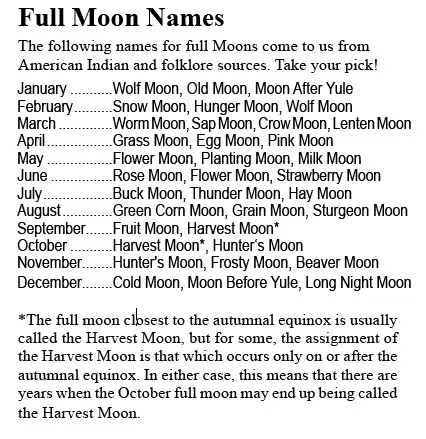
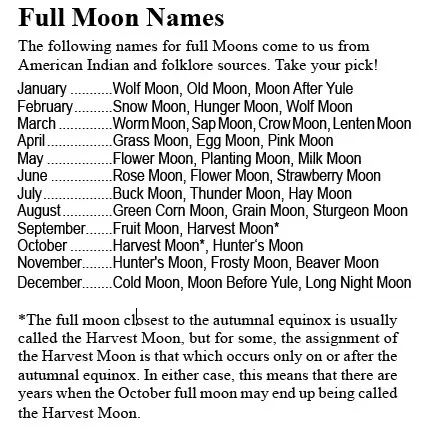
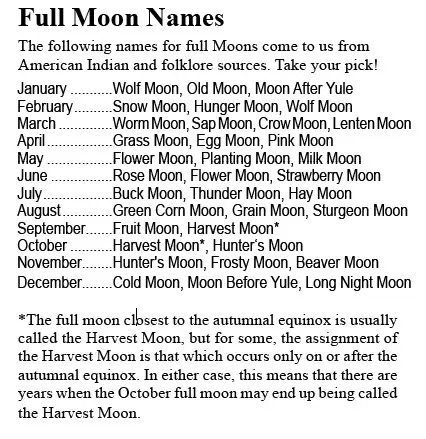
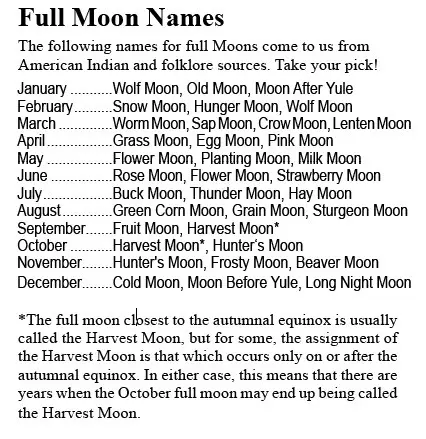
The traditional lunar cycle follows the shifting patterns of the North American seasons, moving from the harsh tests of deep winter through the explosive growth of spring and summer, ending in the bountiful harvests and quiet preparations of autumn.
Winter Moons: Survival and Endurance
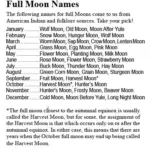
- January – Wolf Moon: Often associated with the haunting howling of hungry packs of wolves echoing through deep winter snows. While popularized by European settlers drawing on Celtic and Old English roots, many Indigenous nations referred to this period with terms like the Severe Moon or Center Moon, highlighting the perilous peak of winter.
- February – Snow Moon / Hunger Moon: Reflecting winter’s most punishing phase, this moon was dubbed the Hunger Moon by several tribes due to dwindling food reserves. Conversely, the Ojibwe named it after the sucker fish, a vital aquatic resource that sustained communities through late-winter scarcity. Other traditions called it the Bear Moon, aligning with the birth of bear cubs.
Spring Moons: Renewal and Growth
- March – Worm Moon: As temperatures rise, thawing ground yields earthworm casts, signaling the return of migratory birds. Northern tribes frequently called this the Full Crow Moon due to the cawing of crows marking winter’s retreat, or the Sap and Sugar Moon, denoting the start of maple syrup harvesting.
- April – Pink Moon: Named for the wild ground phlox (Phlox subulata), which blankets parts of North America in vibrant pink blooms during early spring. The Ojibwe utilized this time for boiling maple sap, while other groups referred to it as the Breaking Ice Moon or The Moon of the Red Grass Appearing.
Summer Moons: Abundance and Activity
- May – Flower Moon: Signifying spring’s botanical climax, this moon celebrates widespread blooming and sets the temporal marker for planting staple crops like corn.
- June – Strawberry Moon: A near-universal marker among the Ojibwe and neighboring tribes, this moon celebrates the ripening of wild strawberries. Coastal communities simultaneously recognized it as the Fish Moon, marking the annual upstream migration of shad.
- July – Buck Moon / Thunder Moon: Coinciding with the peak growth period of male deer antlers, this moon is also frequently called the Thunder Moon due to the high frequency of summer thunderstorms. Celtic traditions similarly designated this the Claiming Moon or Herb Moon.
- August – Sturgeon Moon: Centered around the Great Lakes and Lake Champlain, this moon highlights the peak of the sturgeon harvest. For the Anishinaabe, it represents Manoomini-giizis, the sacred season for harvesting wild rice (manoomin), an activity rich in ritual and nutritional importance.
Autumn Moons: Harvest and Preparation
- September – Harvest Moon: Defined as the full moon occurring closest to the autumnal equinox, this lunar event provides extended evening light, historically granting farmers and gatherers extra time to secure staple crops like corn, beans, squash, and wild rice before the frost.
- October – Hunter’s Moon: Following the harvest, fields stood clear of crops and trees dropped their leaves, leaving game exposed. Animals, fattened by a summer of abundant foraging, made this the optimal time for hunting and securing winter protein.
- November – Beaver Moon: Historically signaling the period to set beaver traps before swamps froze solid to ensure a supply of thick winter pelts, this moon also mirrors the frantic biological activity of beavers reinforcing their lodges against the cold.
- December – Cold Moon: Bringing the deepest snows and longest nights of the year, this moon was universally acknowledged by challenging names like the Long Night Moon or Hunger Moon, marking the endurance test of the winter solstice.
Supporting Data: Tribal Diversity and Regional Variance
To view the lunar calendar as a monolith is to misunderstand the immense cultural diversity of North America’s Indigenous populations. With over 576 federally recognized tribes in the United States alone—and hundreds more First Nations in Canada—environmental nomenclature varied dramatically by geography, climate, and local ecology.

| Region / Tribe | Primary Focus | Representative Moon Name & Meaning |
|---|---|---|
| Great Lakes (Ojibwe / Anishinaabe) | Aquatic life, wild rice, maple sugaring | Manoomini-giizis (Wild Rice Moon / August) |
| Northeastern Woodlands (Algonquian) | Agriculture, seasonal flora | Pink Moon (Wild Phlox blooming / April) |
| Subarctic / Northern Tribes | Survival metrics, fauna migration | Hunger Moon / Severe Moon (Mid-winter scarcity / Feb) |
| European Colonial Settlers | Folklore, Old English/Celtic agricultural markers | Wolf Moon (Settler adaptation / January) |
Climate disparities meant that a tribe located in southeastern Ontario experienced spring thaws weeks ahead of a community in North Dakota. Consequently, their lunar markers shifted to accurately reflect local ecological realities rather than abstract dates.
Official Responses and Perspectives on Cultural Heritage
In recent decades, historians, ethnobotanists, and tribal leaders have increasingly emphasized the importance of preserving and accurately attributing these naming conventions.
Cultural preservationists note that mainstream popular culture—largely driven by commercial almanacs like The Old Farmer’s Almanac, which has published these names since the late 18th century—has frequently detached the names from their specific tribal contexts. While popularization has kept the nomenclature alive, it has often homogenized diverse Indigenous traditions into a single, generic "Native American" category.
Tribal historians emphasize that these names are part of Gookomisinaan dibik-giiziso-mazina’igan (the lunar calendar system), which remains an active, living tradition in many Native communities. Elders stress that using these names carries a responsibility: practitioners and nature enthusiasts must acknowledge their Indigenous origins rather than treating them as novel, decorative folklore.
Furthermore, contemporary environmental scientists are beginning to recognize the value of Indigenous Traditional Ecological Knowledge (TEK). As climate change disrupts modern weather patterns and shifts seasonal indicators—causing flowers to bloom early and ice thaws to happen irregularly—traditional lunar calendars offer a dynamic framework for observing environmental shifts. The flexibility inherent in Indigenous timekeeping demonstrates that these systems were always designed to adapt to a changing planet.
Implications: Reconnecting with the Natural World
The enduring fascination with full moon names carries significant implications for modern society. In an era dominated by hyper-accelerated digital schedules, reconnecting with lunar cycles offers a psychological and ecological anchor.
- Heightened Environmental Awareness: Observing the full moon through the lens of seasonal markers encourages individuals to pay closer attention to local flora and fauna, fostering a deeper sense of place.
- Cultural Respect and Decolonization: By understanding the specific Algonquian and Anishinaabe roots of these terms, the public can move past romanticized stereotypes and develop a genuine appreciation for Indigenous science and stewardship.
- Adaptability in the Face of Climate Change: As traditional ecological markers shift due to global warming, studying historical tribal calendars reminds us that time and nature are not static. Humanity must remain flexible and observant in the face of ecological disruption.
Ultimately, full moon names are far more than poetic titles for astrophotographers. They are archival records of human survival, ecological harmony, and profound intellectual achievement—a timeless reminder of our place within the grand, cyclical rhythm of the natural world.