By Global Science & Culture Desk
For millennia, long before the digital glow of smartphones or the rigid structures of modern wall calendars dictated the passage of time, humans looked upward to find meaning in the lunar cycle. Across North America, Indigenous peoples relied on the moon’s predictable phases interwoven with subtle, shifting environmental cues as an essential timekeeping system. By giving each full moon a distinct, evocative name, these communities preserved a sophisticated repository of ecological science and cultural wisdom.
Today, terms like the "Wolf Moon" in January or the "Strawberry Moon" in June remain fixtures in popular culture, almanacs, and stargazing circles. Yet, these names are far more than poetic labels. They are living artifacts of a complex relationship with the natural world—a tradition that bridges ancient Indigenous observations, European colonial adaptations, and modern ecological awareness.
Main Facts: The Intersection of Astronomy, Ecology, and Culture
At its core, the traditional naming of full moons is an ancient form of environmental journalism. Long before modern meteorologists tracked shifting ecosystems, Indigenous groups used the lunar calendar to monitor the micro-changes of their local biomes.
The system of full moon names most widely recognized in contemporary North America originates primarily from the Algonquian language family. Stretching historically from New England to the Lake Superior region, Algonquian-speaking peoples—most notably the Ojibwe (also referred to as the Chippewa or Anishinaabe)—developed intricate calendars that mirrored the rhythm of the land.
In Anishinaabe tradition, Nookomis Dibik-Giizis (Grandmother Moon) is regarded as a primary teacher. Unlike the fixed, solar-based Julian and Gregorian calendars, which measure time by mathematical abstraction, traditional Indigenous lunar calendars were flexible and ecological. A year might consist of 12 or 13 moons, and tribes might observe four or five distinct seasons. This fluidity allowed communities to synchronize their survival strategies—such as maple sugaring, wild rice harvesting, and hunting—with the actual behavior of plants and animals.
Chronology: A Journey Through the Twelve Moons
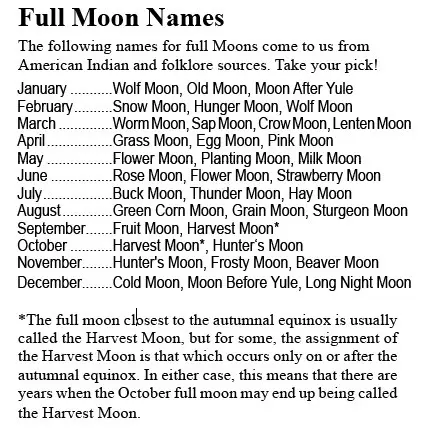
The cycle of the moon mirrors the cyclical nature of life itself. The traditional names trace a chronological path through the environmental shifts of the North American year, capturing the challenges of winter survival, the explosion of spring growth, the abundance of summer, and the necessary preparations for the cold months ahead.
Winter Moons: Survival, Endurance, and Scarcity
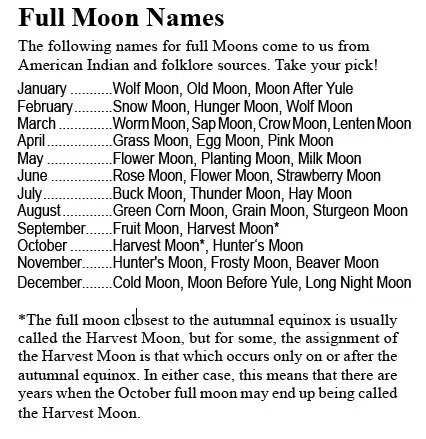
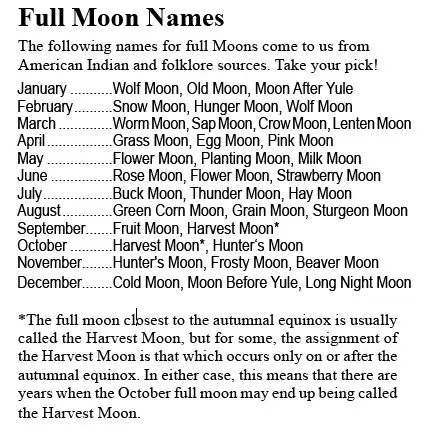
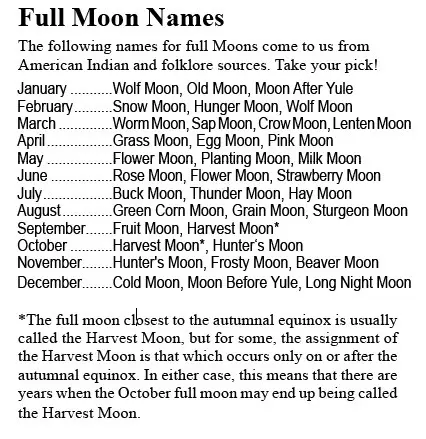
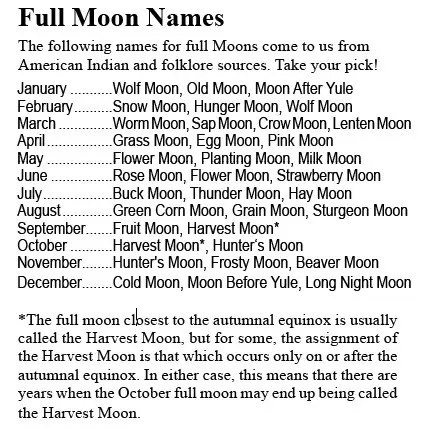
- January – Wolf Moon: Often associated with the haunting sound of hungry wolves howling in the dead of winter. While historians note that European settlers brought this name over from Celtic and Old English traditions, Native American names for this period—such as the Severe Moon or Center Moon—spoke directly to the harsh realities of midwinter survival.
- February – Snow Moon / Hunger Moon: Representing the peak intensity of winter, this moon highlighted the scarcity of food resources. While some tribes referred to it as the Hunger Moon, others named it the Bear Moon to mark the birth of bear cubs. The Ojibwe often named this moon after the sucker fish, a vital aquatic resource that sustained communities through the late-winter lean period.
Spring Moons: Renewal, Thaw, and Awakening
- March – Worm Moon: Marking the softening of the ground and the reappearance of earthworm casts, which in turn enticed the return of robins. Northern tribes frequently called this the Full Crow Moon as the cawing of crows signaled winter’s retreat, alongside names like Snow Crust Moon and Sap and Sugar Moon.
- April – Pink Moon: Named for the vibrant pink phlox wildflowers that bloom across North America in early spring. The Ojibwe and neighboring Algonquian tribes also recognized this as the Maple Sap Boiling Moon, while other communities marked the period with names like Breaking Ice Moon and The Moon of the Red Grass Appearing.
Summer Moons: Abundance, Harvest, and Activity
- May – Flower Moon: Spring reaches its zenith in May, with moon names celebrating widespread botanical blooms and signaling the critical window for planting corn.
- June – Strawberry Moon: Synchronized with the ripening and harvesting of wild strawberries. Because this month brought an abundance of easy nourishment from nature, coastal tribes also called it the Fish Moon, noting the annual upstream migration of shad.
- July – Buck Moon / Thunder Moon: Named because a buck’s antlers are growing at full force during this period. It is equally known as the Thunder Moon due to frequent midsummer electrical storms. In medieval European traditions, equivalent names included the Claiming Moon and Herb Moon.
- August – Sturgeon Moon: Highlighting the peak catch of sturgeon, a lifeline for tribes surrounding the Great Lakes and Lake Champlain. For the Ojibwe, this moon (Manoomini-giizis) held profound ritual and nutritional importance as the exact time to harvest wild rice.
Autumn Moons: Gathering and Preparation
- September – Harvest Moon: Defined as the full moon occurring closest to the autumnal equinox. This was the critical window for gathering staple crops such as corn, pumpkins, squash, beans, and wild rice before the first frost.
- October – Hunter’s Moon: Historically considered the optimal time for hunting. Animals were fattened after a summer of heavy foraging, and leafless trees stripped prey of their natural hiding spots.
- November – Beaver Moon: Signaled the traditional time to set beaver traps before swamps froze solid, ensuring communities had warm furs for the upcoming winter. Alternatively, it marked the period when beavers worked frantically to reinforce their lodges.
- December – Cold Moon: Marking the arrival of heavy snows and deep freezes. To many tribes, this was also known as the Full Hunger Moon or Long Night Moon, capturing the isolation and endurance required during the darkest days of the year.
Supporting Data: Tribal Diversity and Environmental Nuance
To view full moon names as a monolith is to misunderstand the immense geographical and cultural diversity of North America’s Indigenous populations. With 576 federally recognized tribes in the United States alone—and hundreds more First Nations in Canada—the array of moon names is virtually limitless.
Climate and geography dictated nomenclature. For instance, a tribe in southeastern Ontario experienced vastly different ecological markers in April compared to a tribe in North Dakota. Consequently, the Anishinaabeg and neighboring linguistic families tailored their lunar calendars to reflect hyper-local environmental intelligence.

Furthermore, European colonization introduced a layer of syncretism. Early American settlers blended Indigenous ecological wisdom with remnants of European folklore. While settlers adopted descriptive Native American terms, they also retained medieval European nomenclature—such as the Mead Moon in July or the Barley Moon in September—creating a hybrid cultural lexicon that persists in modern almanacs, most notably The Old Farmer’s Almanac, which has published these names since the late 18th century.
Official Responses and Perspectives: Cultural Respect in Modern Stargazing
As public interest in astronomy and outdoor recreation surges, anthropologists, Indigenous leaders, and cultural historians have increasingly emphasized the need for respect and context when utilizing traditional moon names.
Cultural preservationists stress that these names are not merely whimsical branding for calendar apps; they represent thousands of years of accumulated empirical data. They are a testament to Indigenous stewardship of the land and a deep understanding of animal behavior, plant biology, and meteorology.
In official statements from various cultural heritage organizations, experts urge modern stargazers to move beyond passive consumption of these names. Observers are encouraged to research the specific Indigenous nations historically tied to their geographic region—such as the Haudenosaunee, Lenape, or Ojibwe—and learn the localized names and ecological histories unique to those lands.
Implications: Climate Change and the Living Tradition
The traditional lunar calendar is not a static historical relic; it is a living, breathing system that continues to adapt. Today, many Indigenous communities—such as the Anishinaabeg, who continue to utilize traditional lunar calendars like the Gookomisinaan dibik-giiziso-mazina’igan—find themselves facing unprecedented modern challenges.
Climate change is profoundly disrupting traditional seasonal patterns. Unseasonably warm winters, shifting migration paths, and altered plant blooming cycles mean that ecological markers are no longer syncing up with traditional lunar expectations. For instance, maple sap runs earlier than it did a century ago, and erratic weather patterns complicate traditional harvesting windows.
This ecological instability underscores the original genius of the lunar naming system: it was always designed to be flexible and responsive to the environment. As Indigenous communities adapt their timekeeping and land-management practices to a warming planet, the traditional moons serve as a vital historical baseline, measuring the rapid environmental transformations of the modern era.
Conclusion
The full moon names that adorn modern calendars are a bridge across time, connecting us to the cosmos above and the rich ecological heritage below. They remind us that for thousands of years, human survival depended on deep, attentive listening to the earth and the sky.
By honoring the Indigenous origins of these names and acknowledging the complex web of science and culture they represent, modern sky-watchers can transform a simple glance at the night sky into a profound act of historical and environmental appreciation.