By Global Science & Culture Desk
WASHINGTON — Long before the glow of smartphones illuminated human faces or digital calendars dictated the rhythm of daily life, our ancestors looked up at the night sky and found an infallible timepiece. Across North America and beyond, Indigenous communities utilized the predictable phases of the lunar cycle, paired with meticulous environmental observation, to navigate the passage of time.
Today, terms like "Wolf Moon," "Pink Moon," and "Harvest Moon" remain fixtures in popular culture, almanacs, and stargazing apps. Yet, beneath these poetic monikers lies a sophisticated, millennia-old system of ecological science, cultural heritage, and deep spiritual connection. Understanding these names requires a journey backward through time—tracing a complex web of Indigenous knowledge, colonial adaptation, and the enduring resilience of ancestral traditions.
Main Facts: The Intersection of Astronomy and Ecology
At its core, the traditional naming of full moons was never merely about giving a pretty title to a bright celestial body. It served as a functional, decentralized survival guide.
In Indigenous traditions, particularly among Algonquian-speaking peoples whose historical territories stretched from New England to the Great Lakes, the moon was viewed as a living relative and teacher. In Anishinaabe tradition, the moon is known as Nookomis Dibik-Giizis, or "Grandmother Moon."
Unlike the static, solar-based Gregorian calendar used globally today, Indigenous lunar calendars were deeply dynamic. They did not measure time in rigid, equal 30- or 31-day blocks. Instead, a year might consist of 12 or 13 moons, categorized across four or even five distinct seasons. Because survival depended on synchronizing human activity with the natural world, the names assigned to each moon functioned as ecological alarms: signaling when to plant crops, when fish were spawning, when sap was running, and when harsh winters demanded preparation.
Chronology: A Year Through the Indigenous Lunar Cycle
To understand how these naming systems mapped onto the environment, one must follow the shifting seasons, observing how Indigenous nations marked the passage of the year through direct engagement with nature.
Winter Moons: Endurance and Survival
The darkest, coldest months of the year tested the limits of human resilience, a reality reflected in the names given to the winter moons.
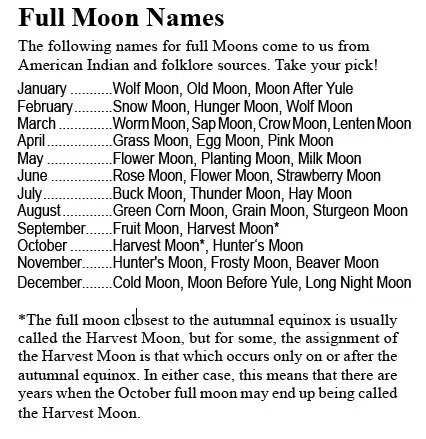
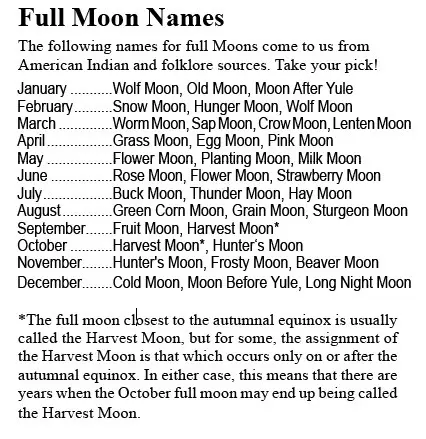
- January – The Wolf Moon: While popularized in modern times, the association with howling, hungry wolves carries both European (Celtic and Old English) and North American roots. However, many Native American nations referred to this period as the Severe Moon or Center Moon, highlighting the brutal midpoint of winter.
- February – The Snow and Hunger Moons: February represented winter’s peak intensity. Tribes frequently called this the Hungry Moon due to depleted food stores, or the Bear Moon, marking the birth of bear cubs. The Ojibwe traditionally named this month after the sucker fish, a vital aquatic resource that sustained communities through the late-winter lean spell.
Spring Moons: Renewal and Awakening
As temperatures rose, the earth stirred back to life, prompting a rapid shift in human activity and ecological observation.
- March – The Worm Moon: Named for the appearance of earthworm casts as the ground softened—signaling the return of robins—northern tribes often preferred the term Full Crow Moon, honoring the cawing birds that signaled winter’s retreat. Other names included the Snow Crust Moon and the Sap and Sugar Moon, marking the collection of maple syrup.
- April – The Pink Moon: Derived from the blooming of wild ground phlox (Phlox subulata) in early spring, this moon was also heavily tied to agricultural and hydrological markers. The Ojibwe and neighboring groups recognized it as the maple sap boiling moon, while others tracked the melting ice via names like Breaking Ice Moon and The Moon of the Red Grass Appearing.
Summer Moons: Abundance and Harvest Preparation
Summer brought a bounty of resources, dictating a busy schedule of gathering, fishing, and early cultivation.

- May – The Flower Moon: Signifying peak floral bloom and the ideal window for planting corn, this moon celebrated the earth’s sudden, vibrant productivity.
- June – The Strawberry Moon: Widely recognized across various tribes, this moon signaled the ripening of wild strawberries. Coastal communities simultaneously tracked the upstream migration of shad, calling it the Fish Moon.
- July – The Buck Moon and Thunder Moon: Male deer grow their antlers at peak velocity during this mid-summer period, inspiring the Buck Moon designation. Frequent, dramatic summer storms also earned it the title Thunder Moon.
- August – The Sturgeon Moon: Centered around the Great Lakes, this moon marked the peak catch for sturgeon. For the Anishinaabe, it held profound cultural significance as Manoomini-giizis—the sacred moon for harvesting wild rice.
Autumn Moons: Gathering and Stockpiling
With the year turning toward cooler temperatures, the focus shifted entirely toward securing provisions for the coming cold.
- September – The Harvest Moon: Occurring closest to the autumnal equinox, this moon illuminated the fields just long enough for farmers to gather staple crops like corn, pumpkins, squash, beans, and wild rice.
- October – The Hunter’s Moon: With fields cleared of crops and deciduous trees dropping their leaves, game animals were easily spotted and well-fed from the summer months, making this the prime window for autumn hunting.
- November – The Beaver Moon: Marking the final push before the first deep freezes, this moon indicated the ideal time to set beaver traps for warm winter pelts, or simply observed beavers frantically building their winter lodges.
- December – The Cold Moon: Bringing the heaviest snows and longest nights, this final moon of the cycle was occasionally called the Long Night Moon or Full Hunger Moon, bracing communities for the return of deep winter.
Supporting Data: Tribal Diversity and Regional Adaptations
A common misconception is that a single, monolithic "Native American calendar" exists. In reality, North America’s linguistic and cultural diversity generated a vast constellation of localized knowledge systems.
Today, there are 576 federally recognized tribes in the United States alone, alongside hundreds of First Nations in Canada. Each community developed nomenclature tailored to its precise geographic coordinates. For example:
- Climate Variations: Anishinaabe communities in southeastern Ontario experienced vastly different ecological triggers than tribes in North Dakota, leading to distinct lunar designations for the same calendar span.
- Linguistic Roots: The Algonquian language family—encompassing the Ojibwe (Chippewa), Cree, Lenape, and Mi’kmaq, among others—provided the foundational vocabulary that early European settlers most frequently encountered and adapted.
- Colonial Integration: European settlers did not arrive in a vacuum; they brought their own agricultural and folklore-based moon names from Celtic, Germanic, and Old English traditions (such as the "Mead Moon" in July or "Barley Moon" in September). Over centuries, these traditions merged, creating the hybridized naming conventions found in modern almanacs.
Official Responses: Preserving Heritage in a Changing Climate
In recent years, Indigenous leaders, historians, and environmental scientists have increasingly emphasized the importance of recognizing the scientific and cultural validity of traditional ecological knowledge (TEK).
"These names are not just historical artifacts or poetic devices; they are data points gathered over thousands of years," explains Dr. Elena Vance, an ethnobotanist specializing in Great Lakes Indigenous practices. "When a community notes that a specific moon aligns with the emergence of a plant or the migration of a fish, they are documenting long-term ecological baselines."
Furthermore, modern tribal communities are actively utilizing their traditional lunar calendars—such as the Anishinaabe Gookomisinaan dibik-giiziso-mazina’igan—to monitor the impacts of climate change. As global warming shifts seasonal temperatures, ice-off dates, and migration patterns, contemporary Indigenous scientists note that traditional indicators are shifting, proving that these lunar systems remain active, living frameworks rather than rigid historical relics.
Implications: Respect, Education, and Modern Stewardship
The commercialization of full moon names in popular culture—frequently broadcasted across weather apps and social media feeds—brings both visibility and a risk of cultural erasure.
Cultural preservationists and Indigenous scholars urge modern nature enthusiasts and stargazers to approach lunar traditions with intentionality and respect. Key implications for modern society include:
- Acknowledging Indigenous Origins: Public discourse must consistently credit the Algonquian and other Native nations whose empirical observations birthed these naming systems.
- Local Land Recognition: Stargazers are encouraged to research the specific Indigenous nations historically and currently stewarding the land they inhabit, as local tribes often maintained distinct lunar names independent of pan-Indian generalizations.
- Adopting Ecological Mindfulness: By returning to the spirit of the lunar calendar, modern society can foster a deeper, more observant connection to the natural world, recognizing that human survival remains inextricably linked to seasonal shifts, animal behaviors, and plant life cycles.
As Grandmother Moon continues her eternal orbit, her phases offer a timeless invitation: to look up, to observe the earth below, and to honor the profound wisdom of those who charted the skies long before us.