In the quiet, high-altitude landscape of Breckenridge, Colorado, furniture maker Coulton Becker is quietly redefining the intersection of emotional resonance and functional design. As the founder of Studio Becker, launched in 2020, Becker produces small-batch, handcrafted furniture exclusively from premium domestic hardwoods such as walnut, white oak, and maple. Eschewing mass production and automated assembly lines, Becker builds each piece individually by hand, integrating traditional woodworking techniques with a deeply minimalist aesthetic.
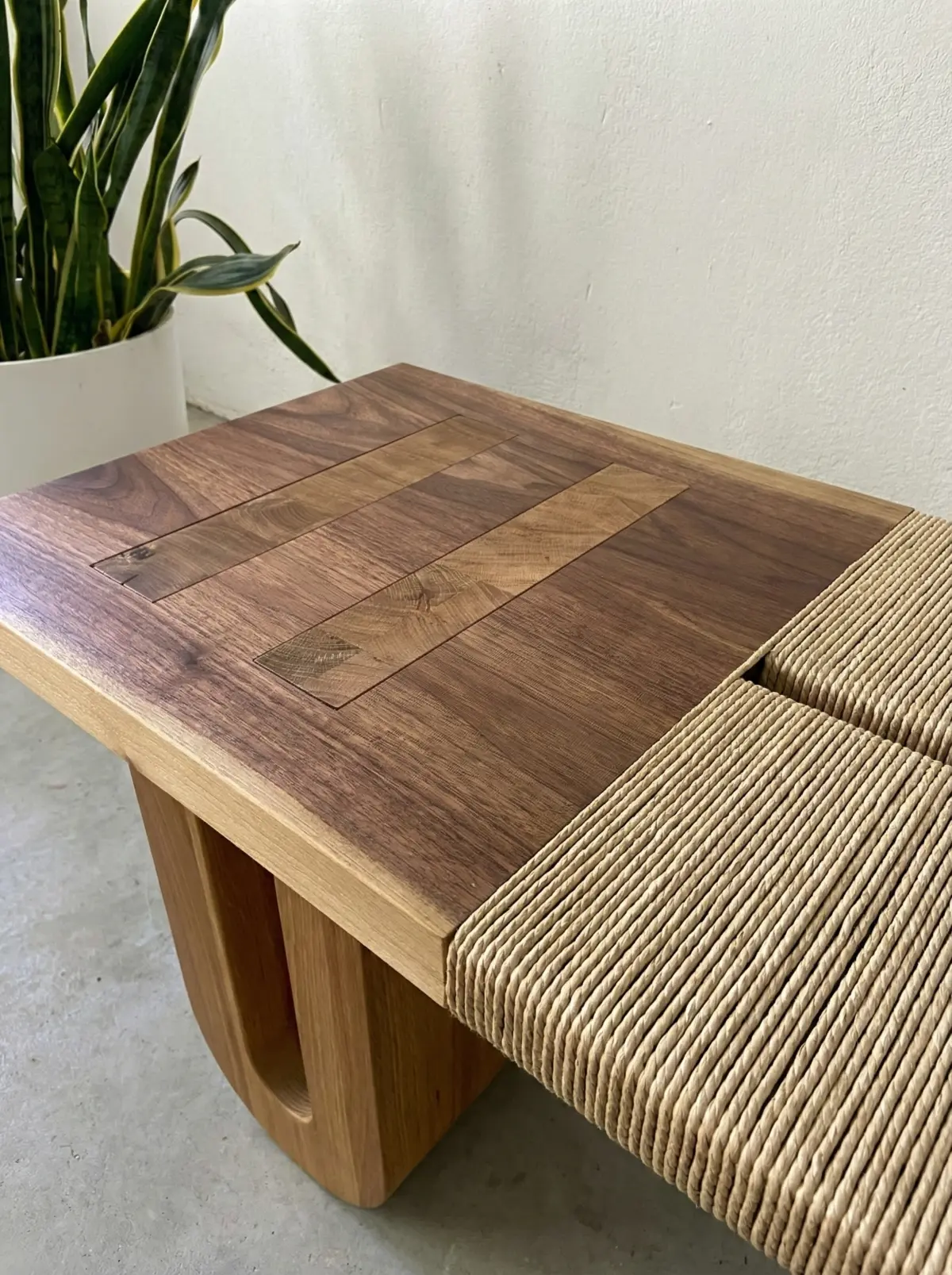
Among his signature works is the Una Bench, a $4,600 statement piece measuring 60 inches long, 16 inches wide, and 18 inches high. Hand-wrapped in durable Danish cord and constructed from carefully selected hardwoods, the bench exemplifies the studio’s broader philosophy: that physical objects should carry as much intangible weight—in the form of memory, emotion, and intentional living—as they do physical mass.
Studio Becker represents a growing movement within contemporary design that values provenance, tactile authenticity, and sustainable material lifecycles over transient, disposable trends. Operating out of the Rocky Mountains, Becker works directly with individual clients and interior designers on custom commissions, turning raw lumber into enduring architectural artifacts for modern homes.
Chronology of a Craft: From Architecture to Woodworking
To understand Coulton Becker’s furniture, one must trace the winding, often deeply personal path that led him to the workshop. Long before he was selecting grain patterns for luxury residential spaces, Becker was a student of architecture and interior design at the University of Missouri. At age twenty, during his sophomore year, his life underwent a seismic shift when his father passed away.
Faced with a profound, disorienting loss, Becker turned to the language he knew best: design. Seeking a tangible outlet for his grief, he embarked on a project far exceeding any scale he had previously attempted. He designed and built a memorial titled Fluss Ewig—German for "constantly changing."
The creation of Fluss Ewig served as a turning point. Upon stepping back to view the completed memorial, Becker experienced a moment of intense clarity that would dictate the trajectory of his career. It was not merely an academic exercise; it was the realization of a vocation. Woodworking was no longer just a medium for building structures; it was a medium for processing human experience.
Following his graduation in 2019, Becker initially entered the professional sphere designing luxury mountain homes in Frisco, Colorado. While the work aligned with his formal training, the onset of the global COVID-19 pandemic in 2020 dramatically accelerated his creative evolution. The disruption of standard routines collapsed the distance between his day job and his true calling. It was during this period of universal uncertainty that Studio Becker was born—a fittingly reflective genesis for a practice centered on the idea that objects can anchor human emotion.
In the years that followed, Becker refined his practice through geographic and artistic shifts. He relocated to Kansas City to intensively develop his technical craft before returning to Colorado, eventually settling his workshop in Breckenridge in 2025. With every move, the work grew quieter, more deliberate, and increasingly distinct in its voice.
Supporting Data and Materiality: Inside Studio Becker’s Workshop
The operational model of Studio Becker stands in sharp contrast to the modern furniture industry, which is heavily reliant on flat-pack logistics, synthetic veneers, and overseas mass manufacturing. Studio Becker operates on principles of slowness, transparency, and uncompromising quality.
Material Selection and Sourcing
Becker works exclusively with premium hardwoods, prioritizing species like:
American Walnut: Celebrated for its rich, dark tones and dramatic grain variation.
White Oak: Chosen for its exceptional durability, straight grain, and timeless neutral warmth.
Maple: Valued for its fine, uniform texture and subtle, clean appearance.
Every board is hand-selected not just for structural integrity, but for character and how the wood is anticipated to age and patina over decades of domestic use.
Signature Construction Techniques
Danish Cord Weaving: Many of Becker’s seating and bench designs incorporate hand-woven Danish cord, a durable three-ply paper twine that offers ergonomic comfort while introducing organic texture.
Proportional Minimalism: Pieces are designed with strict geometric discipline. The Una Bench, for instance, maintains precise dimensions (60” x 16” x 18”) to ensure versatility across diverse floor plans—functioning equally well at the foot of a king-sized bed, anchoring a long corridor, or serving as a minimalist focal point in a living room.
Made-to-Order Scalability: By operating as a boutique studio rather than a factory, Studio Becker accommodates custom dimensions, wood species alterations, and bespoke commissions for interior designers tackling specialized residential projects.
Official Perspectives and Design Philosophy
The underlying ethos of Studio Becker is articulated directly through its founder’s reflections on the relationship between humans and their living spaces. In an era dominated by digital experiences and ephemeral consumer goods, Becker advocates for the psychological grounding provided by physical craftsmanship.
"The moment I took a step back from the completed memorial, I realized my passion for design and woodcraft," Becker recalls of the Fluss Ewig project that started it all. That formative experience cemented a core design pillar that persists today.
Expounding on the philosophy behind his commercial pieces, Becker notes:
"Physical objects often have a meaning and emotion associated with them, and that’s what I aim to instill in every piece I work on."
This perspective aligns with a broader critical shift in interior architecture. Rather than treating furniture as disposable utility items, progressive designers and makers are asking clients to view investment pieces as enduring companions. By imbuing walnut and white oak with careful joinery and thoughtful proportions, Studio Becker bridges the gap between fine art and functional utility.
Implications for the Contemporary Design Landscape
The rise of independent studios like Coulton Becker’s highlights several significant trends shaping the future of architecture, interior design, and artisanal manufacturing.
1. The Counter-Movement to Fast Furniture
As consumers grow increasingly fatigued by low-quality, mass-produced home goods designed for short life cycles, there is a measurable resurgence in demand for heritage-quality pieces. Studios that emphasize local production, traceable materials, and hand-finished details are finding a dedicated audience willing to invest in higher upfront costs for generational durability.
2. The Psychology of Residential Spaces
The pandemic fundamentally altered how people view their homes. Residences transformed from mere living quarters into sanctuaries, offices, and spaces for emotional recovery. Becker’s approach—treating furniture as a medium capable of holding memory and easing the mind—resonates deeply with modern homeowners seeking spaces that promote psychological well-being.
3. The Regional Craft Renaissance
Relocating to creative hubs like Breckenridge and Kansas City demonstrates how contemporary artisans are decentralizing from traditional coastal design capitals (such as New York or Los Angeles). By embedding their work in the rugged, inspiring landscapes of the American West, makers like Becker infuse regional character into national design conversations.
Ultimately, Studio Becker proves that furniture making can be an act of storytelling. Through deliberate lines, honest materials, and a profound respect for the emotional weight of objects, Coulton Becker continues to carve out a unique space in modern design—proving that the best things we bring into our homes are those that help us feel at home within ourselves.