Main Facts
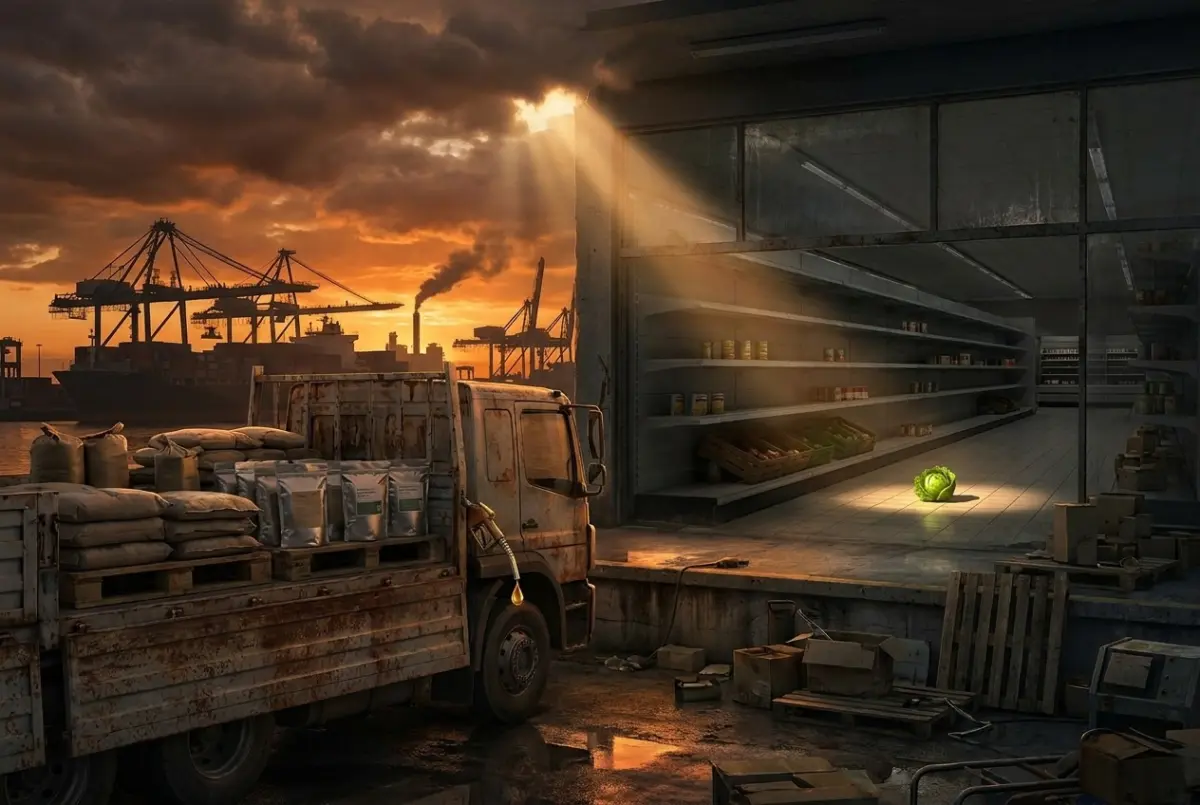
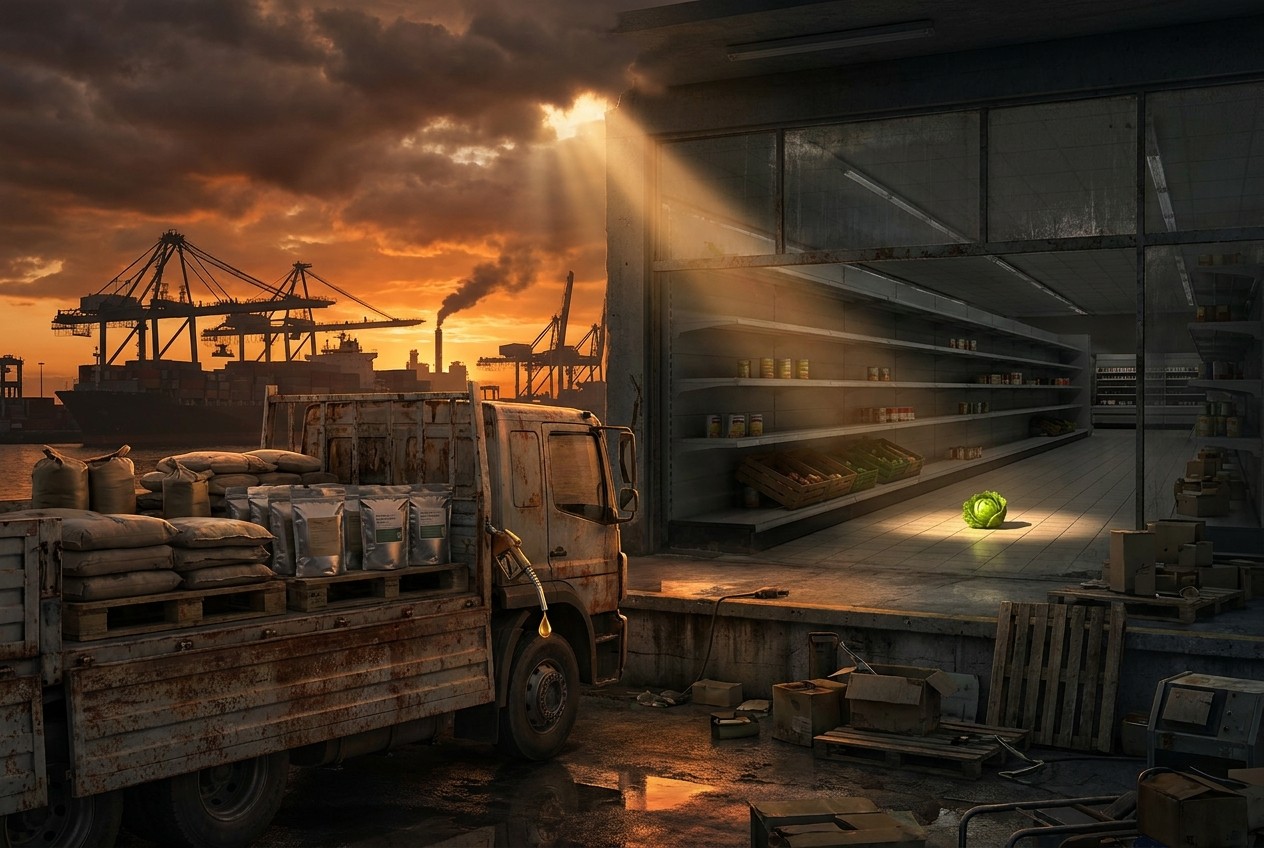
The global food supply chain is facing an unprecedented convergence of physical scarcity, escalating geopolitical conflict, and skyrocketing input costs. At the wholesale level, agricultural commodities, storable grains, and specialized food products are experiencing severe inventory contractions. Suppliers report available stock plummeting by upwards of 80 percent across multiple product categories, including freeze-dried fruits, organic cacao, nuts, seeds, and grains.
These shortages are not temporary logistical hiccups; they represent a fundamental breakdown in physical availability. Wholesale acquisition costs are surging dramatically. For instance, shipping and procurement prices for bulk items have jumped by 50 percent or more. This wholesale inflation is driven primarily by a severe global refining squeeze, which has pushed diesel prices near record highs. Because diesel powers the tractors, refrigerated transport fleets, and cargo ships of the modern agricultural apparatus, high fuel costs are permanently ratcheting up the baseline price of every consumable item on the market.
Simultaneously, geopolitical flashpoints—most notably the conflict involving Iran and disruptions around the strategic Strait of Hormuz—have severely restricted the global flow of natural gas and nitrogen-based fertilizers. Without these essential inputs, farmers across major agricultural regions in North and South America face constrained yields, setting the stage for persistent, multi-year food inflation and acute regional famines. Financial institutions, including JPMorgan and UBS, along with agricultural economists, warn that structural food inflation will persist well above pre-pandemic averages, disproportionately impacting vulnerable populations and lower-income demographics worldwide.
Chronology of the Crisis
Understanding the trajectory of the current food crisis requires examining the progressive tightening of global supply chains over recent years:
- Pre-2026 (The Foundation of Vulnerability): Decades of consolidated corporate agribusiness, under-invested refining infrastructure, and heavy reliance on globalized supply chains left the agricultural sector uniquely vulnerable to external shocks. Persistent free-trade policies without adequate domestic infrastructure supports hollowed out regional farming resilience in both developed and developing nations.
- Late 2025 to Early 2026 (The Energy and Fertilizer Squeeze): Escalating geopolitical tensions in the Middle East, specifically around the Strait of Hormuz, began choking off natural gas supplies necessary for nitrogen fertilizer production. Fertilizer costs spiked, and domestic agricultural producers began warning of reduced planting acreage for the upcoming spring cycles.
- February 2026 (Accelerating Retail Inflation): Official economic data highlighted that U.S. food prices had already risen 3.1 percent over the preceding 12 months. Concurrently, the domestic cattle herd plummeted to historic lows—levels not seen since 1952—driving ground beef prices to record highs of over $6.00 per pound.
- September 2026 (Early Wholesale Warnings): Industry insiders and wholesale distributors began sounding the alarm regarding severe inventory shortages. Wholesale suppliers reported inventory collapses exceeding 80 percent for key storable foods, signaling that physical scarcity was transitioning from abstract projections to a tangible reality.
- Late 2026 (The Freight and Logistics Recession): Transportation and logistics sectors absorbed severe shocks as diesel prices hovered near record highs, averaging between $6.00 and $6.45 per gallon nationwide. Freight companies began cutting thousands of jobs across transportation and food manufacturing sectors to offset escalating operating costs.
- 2027 and Beyond (The Projected Peak Crisis): Analysts and industry leaders project that 2027 will mark the most severe food crisis of the modern era. With fertilizer deficits stunting crop yields and wholesale baseline prices permanently elevated, global food inflation is forecasted to average over 25 percent, with essential staples experiencing even sharper increases.
Supporting Data and Economic Indicators
The severity of the unfolding food crisis is quantified by a series of critical economic and agricultural metrics spanning energy, livestock, freight, and consumer demographics:
- Wholesale Inventory Collapse: Major wholesale distributors report that suppliers who previously quoted large-scale inventories (such as 250 pallets of specific bulk ingredients) are now limiting orders to a fraction of that volume (e.g., 35 pallets), representing an inventory reduction of over 80 percent.
- Surging Fuel and Transport Costs: National average diesel prices have broken past $6.00 per gallon, with AAA data tracking prices near $6.45 per gallon. Regular gasoline has similarly hovered above $4.20 per gallons. These energy spikes directly inflate the cost of every phase of food production, from field tilling to long-haul freight delivery.
- Livestock Depletion: The U.S. cattle inventory has contracted to approximately 2 million head, the lowest baseline recorded since 1952. This structural deficit has driven ground beef prices up by roughly 50 percent compared to historical decade averages, settling near $6.10 per pound.
- Transportation Labor Retrenchment: Amid rising fuel and operational expenses, the U.S. freight economy has initiated sweeping labor contractions. A single recent wave saw approximately 1,850 jobs eliminated across 15 distinct transportation, logistics, and food manufacturing enterprises.
- Demographic Strain: According to AARP analyses, economic pressures are pushing older Americans to the brink. Approximately one in eight Americans aged 50 to 64 currently lives in poverty, with the poverty rate rising to 15.4 percent for individuals 65 and older, and nearing 17 percent specifically for women within that demographic.
Official Responses and Interventions
Governments and financial institutions have attempted to deploy various policy tools to mitigate the cascading pressures on the energy and agricultural sectors, though critics argue these measures are largely palliative:
- The White House and Executive Actions: The federal administration has explored unprecedented measures, including the potential invocation of the Defense Production Act specifically to expand domestic fuel refining capacity—a tool never before utilized for this purpose. Additionally, executive actions have been deployed to expand access to tax-free red-dyed diesel to offer temporary relief to agricultural and commercial transport operators.
- International Energy Coordination: Proposals have been advanced within the G7 for a coordinated emergency energy release totaling 100 million barrels, specifically prioritizing diesel allocation during the initial 20-day window to stabilize plummeting transport fuel reserves.
- Financial and Monetary Warnings: Major global banking institutions have issued structural warnings. JPMorgan analysts have outlined a "Five Ws" framework characterizing the next global food crisis—War, Weather, Warehousing, Water, and Waste. Similarly, UBS analysts project that global food inflation will remain structurally elevated well above pre-pandemic norms due to compounding input shocks.
- Sanctions and Financial Enforcement: The U.S. Department of the Treasury, under Secretary Scott Bessent, has heightened economic enforcement and issued explicit warnings regarding international entities continuing commercial and financial relationships with adversarial states in the Middle East, further complicating global trade channels.
Implications for Consumers and the Global Economy
The structural transformation of the agricultural and supply chain landscapes carries profound implications for everyday consumers, national stability, and international security.
The Illusion of Temporary Spikes
A critical error made by casual observers is treating current food inflation as a cyclical spike that will naturally recede. Industry experts emphasize that energy and transportation costs act as a "ratchet" rather than a wave. When freight, diesel, and fertilizer costs permanently reset to higher plateaus, those expenses are systematically baked into the final retail cost of goods. Consequently, the prices observed at grocery store checkout counters today represent the lowest baseline consumers will experience for the foreseeable future.
Developed Nations vs. Subsistence Farming
While developed nations like the United States are projected to face persistent price inflation, product gaps, and limited availability rather than completely vacant supermarket aisles, the humanitarian impact in developing regions will be far more severe. Subsistence farmers across parts of Africa, Southeast Asia, and Latin America operate on razor-thin margins. When the cost of diesel and nitrogen fertilizer exceeds the market return of an entire harvest, these farmers are forced to halt production entirely. This dynamic introduces a genuine risk of localized and regional famines, amplifying global migration pressures and geopolitical instability.
Corporate Consolidation and Resilience
The crisis also highlights the vulnerabilities inherent in a consolidated corporate agribusiness model. Mega-corporations that control vast segments of grain storage, processing, and distribution often navigate macroeconomic volatility by passing costs downward while protecting profit margins. For individual citizens, the systemic breakdown underscores a shifting paradigm: reliance on centralized, globalized food networks is becoming increasingly precarious.
As institutional safety nets face unprecedented strain, experts across preparedness and agricultural sectors emphasize that personal economic resilience, local food production (such as home gardening, micro-greens, and food preservation), and decentralized community-level supply networks are no longer fringe concepts, but rather rational, pragmatic strategies for navigating the turbulent economic landscape ahead.