







By Scott Cooney
Published by Green Living Ideas
Main Facts: Rethinking Water Conservation
We have all heard the standard advice handed down by generations of environmental advocates: if you want to save the planet, start by turning off the tap. Shaving just two minutes off your daily shower is frequently heralded as a cornerstone of personal sustainability. And undeniably, you could do it.
Yet, for many, rushing through a morning routine feels less like a noble act of stewardship and more like a tedious sacrifice. True sustainable living should empower individuals without imposing a lifestyle of constant deprivation. To understand where our conservation efforts are best directed, we must look past the bathroom door and examine the hard data governing our daily resource consumption.
When evaluating the true scale of our personal water footprint, common household habits often pale in comparison to systemic agricultural realities. While trimming bathroom habits yields modest, incremental savings, the food on our plates exerts an astronomical pull on global water reserves. By shifting our focus from minor domestic inconveniences to high-impact dietary choices, we can achieve monumental ecological benefits with zero sense of personal sacrifice.
Chronology: The Evolution of Personal Conservation Advice
For decades, public service announcements and environmental campaigns have targeted direct, visible domestic water use.

- The Late 20th Century: As municipal water shortages and droughts began hitting headlines—particularly in the American West—campaigns urged citizens to fix leaky faucets, install low-flow aerators, and turn off the tap while brushing teeth.
- The Turn of the Millennium: The narrative shifted toward bathroom efficiency. Standard showerheads, which historically pumped out upwards of 5 gallons per minute, were scrutinized. Government regulations and green building standards popularized the 2.5-gallon-per-minute (gpm) showerhead, while environmentalists pushed for behavioral modifications, such as the coveted "shorter shower" initiative.
- The Modern Era of Footprint Analysis: In recent years, researchers and institutions like the U.S. Geological Survey (USGS) have popularized the concept of "virtual water" or "embedded water"—the total water consumed throughout the lifecycle of a product, from raw material to finished good. This framework fundamentally altered how conservationists view personal impact, revealing that what we consume is far more water-intensive than how we wash.
Supporting Data: Crunching the Numbers
Let us examine the math behind the traditional shower-saving advice, and then hold it up against the staggering metrics of modern agriculture.
The Shower Calculus
Imagine you resolve to shave two minutes off your daily shower. Utilizing a traditional, low-efficiency showerhead running at 2.5 gallons per minute, you save:
- 5 gallons per day (2 minutes × 2.5 gallons)
- 1,825 gallons per year (5 gallons × 365 days)
Not a trivial amount by any stretch. Saving nearly two thousand gallons of water annually feels like a tangible victory for the eco-conscious consumer.
The Food Footprint Shock
Now, consider the broader picture provided by resources like the USGS food impacts water calculator. Many consumers grossly underestimate the hidden water costs associated with everyday food items—particularly animal proteins such as beef and chicken.
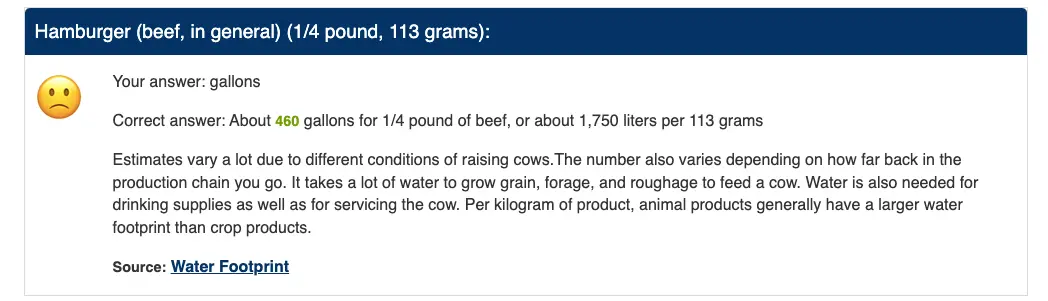
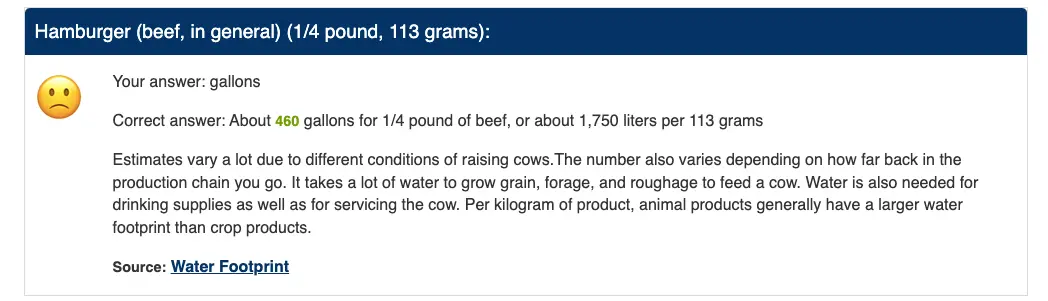
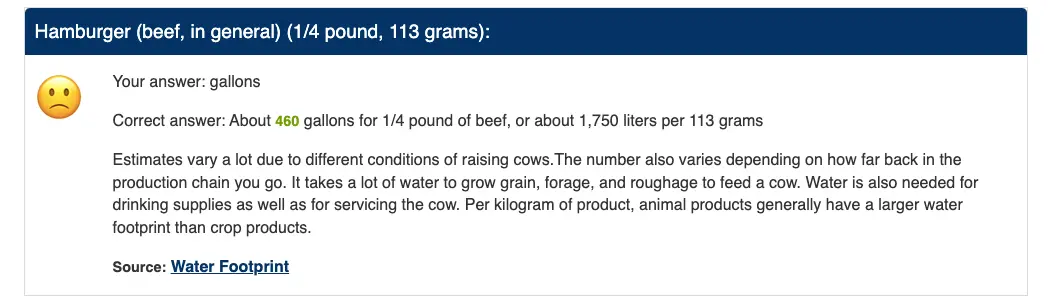
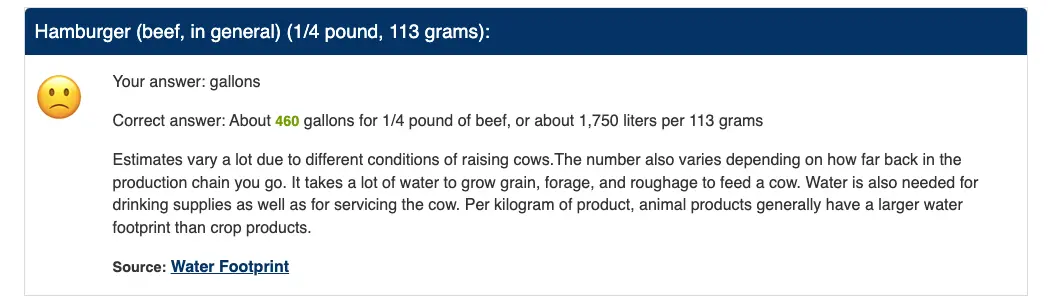
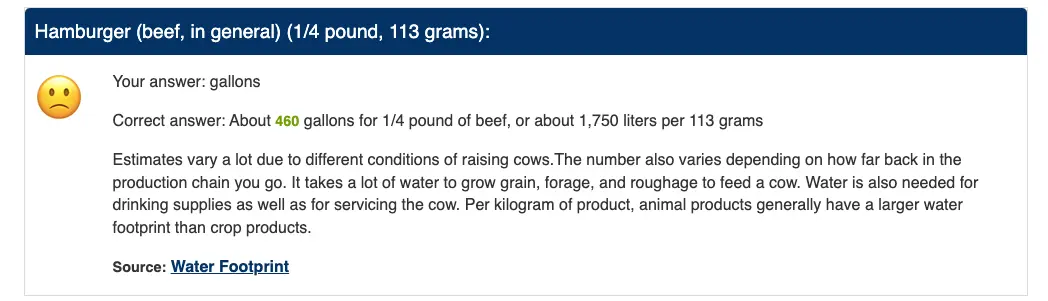
According to agricultural data utilized by federal water agencies, the production of a single quarter-pound of beef requires an astonishing 460 gallons of water. Scale that up, and you are looking at roughly 1,840 gallons of water per pound of beef.

Let that sink in: One single pound of beef consumes more water than cutting two minutes off your daily shower for an entire 365-day year.
To put this relationship into perspective using our baseline 2.5-gpm showerhead, consuming just one pound of beef is equivalent to taking a continuous, uninterrupted 12-hour shower. You could stand under the running water for half a day, or you could eat a single pound of beef—and the environmental ledger would balance out identically in terms of water expenditure.
Official Responses and Scientific Consensus
Hydrologists, environmental scientists, and agricultural economists increasingly emphasize that targeting direct residential use—while helpful for local municipal management—addresses only a fraction of total human water demand.
Government agencies, including the USGS and the Environmental Protection Agency (EPA), stress that agriculture accounts for roughly 80% of all water consumed in the United States, and an even higher percentage in arid regions. Within the agricultural sector, livestock feed production and beef cattle rearing represent some of the most resource-intensive operations on Earth.
When institutional bodies release calculators tracking embedded water, the goal is not to shame consumers, but to realign public awareness with scientific reality. Water scarcity is not merely an urban plumbing issue; it is fundamentally an agricultural and dietary challenge. Shifting the public conservation dialogue away from minor behavioral tweaks in the bathroom and toward systemic dietary choices is viewed by many researchers as a necessary evolution in environmental education.

Implications for the Future of Sustainable Living
What does this data mean for the everyday environmentalist who wants to protect the planet without feeling deprived?
1. Re-evaluating "Sacrifice"
Forcing yourself to rush through a shower every morning can feel like an ongoing, unpleasant tax on your daily comfort. Conversely, exploring plant-forward eating, experimenting with alternative proteins, or simply reducing meat consumption a few days a week often opens the door to culinary discovery, improved health, and financial savings. It transforms a perceived "sacrifice" into an exciting lifestyle upgrade.
2. High-Impact vs. Low-Impact Environmentalism
The Pareto principle—the idea that 80% of effects come from 20% of the causes—applies neatly to sustainability. Focusing obsessively on short showers is a low-impact habit that yields modest results. Redesigning our diets to lower our embedded water and carbon footprints represents a high-impact strategy that fundamentally alters our ecological trajectory.
3. Empowerment Through Education
Tools like the USGS water calculator demystify the invisible supply chains supporting modern consumer culture. By understanding where our resource footprints actually lie, we are empowered to make choices that matter. You no longer need to shiver through a hurried shower to feel like you are doing your part; instead, you can make informed, powerful decisions at the grocery store and the dinner table.
Ultimately, saving the planet shouldn’t feel like a punishment. By focusing our energy where the numbers are largest, we can achieve profound ecological preservation while actually enjoying the journey.

About the Author
Scott Cooney is a serial eco-entrepreneur, having founded Pono Home, HomeEfficiency.com, and CleanTechnica. He is the author of two books, a former sustainability consultant for major global brands including Johnson & Johnson, Wal-Mart, and Duke Energy, and a former adjunct professor teaching the first course in sustainable business in the MBA program at UH Manoa. A passionate advocate for local, healthy food, Scott’s personal favorite sustainable meal remains vegan nachos.