








OSLO, NORWAY — For centuries, the deep ocean has remained one of humanity’s final true frontiers—a realm of immense pressure, pitch-black depths, and unexplained phenomena. Long before modern oceanography mapped the abyssal plains, ancient and medieval mariners relied on folklore to conceptualize the perils of the open sea. Among the most enduring and terrifying figures born from this maritime anxiety is the Kraken, a colossal cephalopod-like monster said to inhabit the frigid waters off the coasts of Norway and Iceland.
Hailing deeply from Scandinavian mythology, the Kraken served as an ultimate embodiment of the unpredictable and often lethal nature of the ocean. While modern science has demystified many oceanic phenomena and introduced us to real-world giants like the colossal squid (Mesonychoteuthis hamiltonii), the cultural footprint of the Kraken continues to captivate the human imagination.
Main Facts: Defining the Legendary Beast
At its core, the Kraken is a mythical sea monster of colossal proportions, originating primarily in the seafaring traditions of Norway and Iceland.
What Does a Kraken Do?
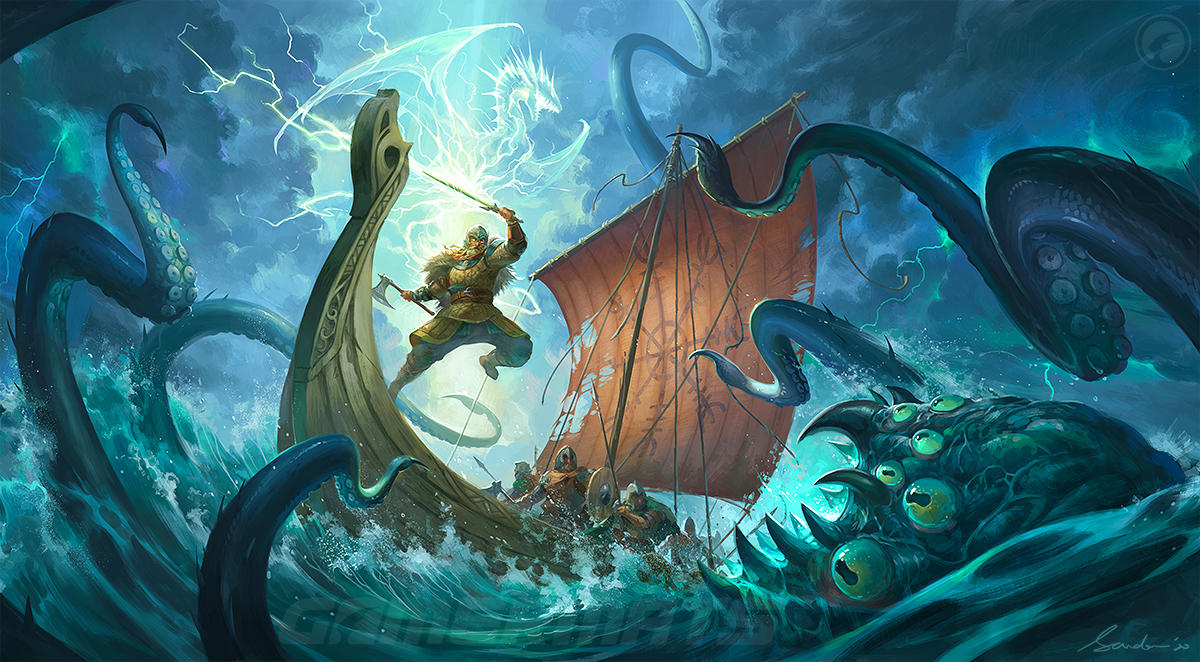
In Scandinavian folklore, the Kraken is synonymous with sheer terror on the high seas. Its legendary actions and behaviors include:
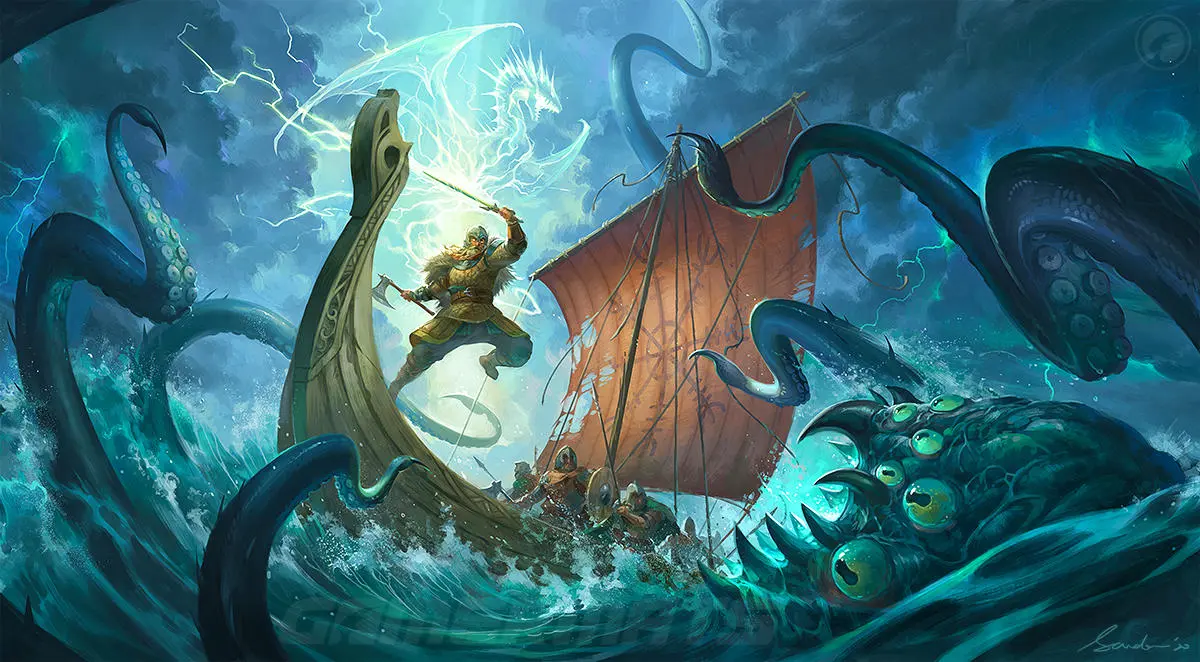
- Targeting Vessels: The beast was said to actively attack shipping fleets, dragging entire wooden galleons and their crews down into the crushing darkness of the ocean.
- Creating Deadly Whirlpools: As the Kraken descended or ascended beneath the water, its massive displacement of water created immense whirlpools and vortexes capable of swallowing passing ships whole.
- Trapping Fishermen: Tales often warned that the creature would intentionally stir up the surrounding waters to disorient schools of fish, drawing unsuspecting fishermen directly into its domain.
- Releasing Submarine Hazards: Some legends claimed the beast could emit a thick, cloud-like excretion that fouled the water, blinding sailors and making navigation impossible.
Physical Description
While the Kraken is mythical and varies across centuries of storytelling, certain physical characteristics remain consistent in popular lore. Imagine a super-sized squid or octopus scaled up to planetary proportions—far larger than any living animal known to science. Key visual elements include:
- Colossal Mass: A body so massive that historical sailors frequently mistook it for an uncharted island or a low-lying archipelago.
- Formidable Tentacles: Arms of incredible length and strength, capable of wrapping around the hull of a large vessel and snapping it like kindling.
- Terrifying Eyes: Glowing or deeply unsettling eyes capable of piercing the murky depths of the twilight zone.
- Spiked Appendages: In some regional variations, the beast was described as possessing razor-sharp barbs or claws along its tentacles to ensure no captured prey could escape.
Chronology: The Evolution of the Kraken in History
The legend of the Kraken did not appear overnight; rather, it evolved over centuries through shared mariner accounts, ecclesiastical texts, and natural histories.
- Norse Sagas (13th Century): Early references akin to the Kraken can be found in old Norse literature, including the ancient saga Örvar-Odds. Texts from this era occasionally mentioned terrifying sea beasts such as the hafgufa (sea-mist) and the lyngbakr (heather-back), creatures so large they resembled islands.
- The Accounts of Bishop Erik Pontoppidan (1752): The most famous and detailed historical descriptions of the Kraken came from Erik Pontoppidan, the Bishop of Bergen and a fellow of the Royal Academy of Sciences in Copenhagen. In his seminal work, The Natural History of Norway, Pontoppidan provided a comprehensive account of the beast. He described it as a floating island-like creature that posed a catastrophic risk to navigation, noting that if it grabbed a warship of the largest size, it could pull it down to the bottom.
- Carl Linnaeus and Scientific Classification (1735–1758): Even the father of modern taxonomy, Carl Linnaeus, included the Kraken in the first edition of his groundbreaking work Systema Naturae (1735) under the scientific name Microcosmus marinus. However, due to mounting skepticism, Linnaeus dropped the creature from later editions of the text.
- Herman Melville and 19th-Century Literature (1851): The Kraken crossed over into mainstream global literature. Herman Melville’s masterpiece Moby-Dick (1851) contains direct references to the "Great Heidelburgh Tun" and a giant squid-like creature that evokes the legendary terror of the Kraken.
- Discovery of Giant Squids (Late 19th Century to Present): As marine biology advanced, washed-up giant squids (Architeuthis dux) provided physical evidence that inspired the myth, bridging the gap between folklore and zoological reality.
Supporting Data: Dimensions and Mythic Proportions
Because the Kraken is a creature of fiction, its size is not bound by the biological limitations of modern terrestrial or marine biology. However, historical and literary metrics offer a glimpse into just how colossal the beast was believed to be.
- Estimated Dimensions in Lore: While a blue whale—the largest animal known to have ever lived—reaches lengths of up to 100 feet and weighs around 200 tons, the Kraken was frequently described as surpassing these dimensions by orders of magnitude.
- The "Island" Metric: Historical accounts frequently noted that a resting Kraken spanned a circumference of a mile and a half (approx. 2.4 kilometers). Sailors who anchored on its back, believing it to be firm land, only realized their mistake when the "island" began to sink beneath them, triggering sudden, boiling currents.
- Tentacle Span: Descriptions often noted tentacles stretching hundreds of feet into the air—tall enough to tower over the highest masts of 18th-century frigates.
Official Responses & Scientific Perspectives
How did governments, scientists, and historians react to tales of a mile-wide cephalopod sinking ships? Historically, responses ranged from superstitious dread to rigorous academic investigation.
Historical Authority
During the Middle Ages and the Renaissance, maritime authorities and church officials took accounts of sea monsters seriously. Sailors were encouraged to perform protective rites before setting sail into northern waters. Bishop Pontoppidan’s documentation was treated as authoritative natural history by many European scholars of the 18th century, who sought to catalogue all of God’s creations—no matter how frightening.

Modern Marine Science
Today, marine biologists and oceanographers view the Kraken as a brilliant, imaginative manifestation of real encounters with elusive deep-sea life.
- The Giant Squid (Architeuthis dux): Scientists confirm that giant squids do exist in the bathypelagic zone. While they rarely exceed 43 feet in length and do not hunt ships, dead specimens washing ashore on Scandinavian beaches undoubtedly fueled centuries of exaggerated folklore.
- Submarine Volcanism: Geologists suggest that some "island" sightings and sudden whirlpools attributed to the Kraken may have actually been the result of underwater volcanic activity and seismic shifts off the coast of Iceland and Norway, which can rapidly alter water levels and churn the sea surface.
Implications: The Enduring Legacy of the Beast
The cultural and psychological implications of the Kraken extend far beyond old Norwegian folklore. The monster has left an indelible mark on modern pop culture, literature, and our relationship with the unknown.
A Metaphor for the Unknown
Psychologically, the Kraken represents humanity’s primal fear of the deep. Just as early mapmakers wrote "Here be dragons" in unexplored territories, Scandinavian sailors used the Kraken to articulate the invisible perils lurking beneath the waves. It served as a reminder of human vulnerability in the face of nature’s raw, untamed power.
Pop Culture Phenomenon
In contemporary media, the Kraken has transformed from a regional Scandinavian nightmare into a global pop-culture icon. It features prominently in blockbuster Hollywood franchises (such as Pirates of the Caribbean and Clash of the Titans), modern fantasy literature, video games, and even professional sports—most notably represented by the Seattle Kraken National Hockey League (NHL) franchise.
Inspiring Modern Exploration
Ironically, the myth of the Kraken has played a role in driving oceanographic research. The enduring fascination with giant, tentacled sea monsters inspires generations of marine scientists, submersible pilots, and deep-sea explorers to probe the darkest trenches of our oceans, proving that reality is often just as wondrous—and mysterious—as myth.