Main Facts: The Intersection of Folklore and Reality
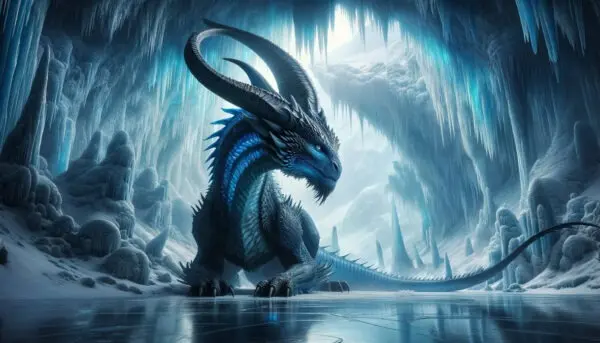
For millennia, humanity has been captivated by creatures that exist purely within the realm of the imagination. From the fire-breathing dragons of European folklore to the graceful mermaids of maritime lore, mythical beasts occupy a unique space in human culture. They are immortalized in ancient texts, modern cinema, and artistic masterpieces like Misticon’s evocative Frozen Depths: A Tale of the Ice Dragon. Yet, beneath the layers of fantasy lies a compelling question that continues to puzzle historians, anthropologists, and scientists alike: are these extraordinary entities merely products of ancient storytelling, or do they represent distorted reflections of real biological phenomena?
From a strictly empirical standpoint, there is no scientific evidence that classic mythological creatures—such as the winged, fire-breathing dragons of medieval European literature or unicorns with magical horn properties—ever roamed the earth. The laws of thermodynamics, evolutionary biology, and paleontology make the physical existence of such animals biologically implausible. A vertebrate breathing actual fire, for instance, faces insurmountable metabolic and chemical hurdles.
However, dismissive skepticism fails to explain the universal presence of similar monster archetypes across completely isolated human civilizations. Dragons, serpent-like water beasts, and towering humanoids appear in the folklore of cultures separated by vast oceans and millennia of time. This global convergence suggests that mythical creatures are not random fabrications. Instead, they often serve as cultural frameworks designed to explain the inexplicable, rationalize natural disasters, or articulate humanity’s primal fear and awe of the untamed wilderness.
Furthermore, modern science increasingly recognizes that several legendary beasts originated from actual animals, misinterpreted through the fog of ancient ignorance, exaggerated storytelling, and cultural telephone. When ancient peoples stumbled upon the physical evidence of prehistoric life, they did not have access to modern paleontology. Consequently, they drew upon their own cosmological frameworks to make sense of what they saw, turning fossils into dragons and giant marine bones into sea serpents.
Chronology: A History of Mythological Sightings and Scientific Discoveries
To understand how mythical creatures evolved in the human consciousness, it is necessary to examine the historical timeline of humanity’s encounters with the strange and the unknown.
Antiquity and the Classical Era
- c. 400 BCE: Greek historian Ctesias writes Indica, describing fantastical creatures such as the unicorn, which he presents not as a myth, but as a real animal native to India (likely based on distorted travelers’ tales of rhinoceroses).
- 1st Century CE: Pliny the Elder compiles Naturalis Historia, cataloging numerous real animals alongside fantastic beasts, treating both with similar levels of credibility. This blurs the line between zoology and mythology for over a millennium.
The Age of Exploration and Maritime Lore
- 1555: Swedish archbishop Olaus Magnus publishes Carta Marina, featuring terrifying depictions of sea monsters, including the giant Kraken, which many historians believe was inspired by rare sightings of giant squids (Architeuthis) washing ashore or tangling with early sailing vessels.
- 17th and 18th Centuries: As global exploration accelerates, sailors frequently report encounters with mermaids. Modern marine biologists attribute these sightings to exhausted mariners mistaking manatees and dugongs—aquatic mammals with paddle-like tails—for human-like sea maidens.
The Modern Era of Cryptids
- 1933: The modern legend of the Loch Ness Monster explodes into global media following a famous sighting and newspaper report by Aldie Mackay, sparking a century-long quest to find a surviving plesiosaur in the deep Scottish loch.
- 1967: The Patterson-Gimlin film captures footage in Northern California of what is purported to be Bigfoot, catalyzing the modern subculture of cryptozoology—the search for animals whose existence has not been substantiated by mainstream science.
Supporting Data: Misidentification, Hoaxes, and Biological Inspiration
When analyzing why humans consistently report seeing mythical creatures, researchers point to a combination of psychological phenomena, deliberate deception, and genuine biological mix-ups.
1. The Power of Cognitive Biases
Human brains are evolutionary pattern-recognition machines designed to keep us safe in dangerous environments. When an individual walks through a dense forest or looks out over a dark, choppy lake, the brain prioritizes survival over accuracy.
- Pareidolia: This psychological phenomenon causes the human brain to perceive familiar patterns—most notably human faces or animal shapes—in random stimuli, such as a gnarled tree root resembling a crouching monster.
- Expectation Bias: When someone actively looks for a legendary beast like Bigfoot or the Loch Ness Monster, ambiguous visual inputs (a swaying pine branch, a swimming otter) are automatically interpreted as confirmation of the myth.
2. Historical Hoaxes
Throughout history, clever tricksters have capitalized on human gullibility for fame or financial gain. During the Victorian era, the "Feejee mermaid"—constructed by stitching the torso of a monkey onto the tail of a fish—was exhibited globally to packed houses. Similarly, many Bigfoot photographs and Loch Ness surface images have eventually been unmasked as elaborate pranks involving rubber suits, carved wooden feet, or toy submarines.
3. Paleontological Inspiration: The Real Fossils Behind the Myths
Long before the formal establishment of paleontology in the 19th century, ancient humans frequently unearthed the fossilized remains of prehistoric animals. These discoveries served as the primary physical blueprints for many mythological creatures:
- Mammoths and Mastodons: The skulls of prehistoric elephants feature a large central nasal cavity where the trunk attaches. To an ancient Greek or Roman shepherd who had never seen an elephant, this single opening looked precisely like the eye socket of a giant, one-eyed cyclops.
- Dinosaur Fossils: In the Gobi Desert and parts of China, wind erosion frequently exposes the fossilized remains of ceratopsian dinosaurs like Protoceratops. With their beaked mouths and quadrupedal bodies, these fossils bear a striking resemblance to descriptions of the mythical griffin, suggesting that ancient nomads weaving stories around campfire tales were actually performing rudimentary paleontology.
Official Responses and Scientific Consensus
Mainstream scientific organizations—including zoological societies, paleontological institutes, and wildlife conservation groups—maintain a measured and objective stance regarding the intersection of folklore and biology.
Institutions like the Smithsonian National Museum of Natural History emphasize that while cryptozoology (the search for hidden animals) captures the public imagination, it operates outside the rigorous peer-reviewed methodologies of mainstream science. Biologists point out that populations of large, undiscovered mammals—such as a breeding colony of giant primates like Bigfoot or a surviving family of prehistoric marine reptiles like plesiosaurs in Loch Ness—are biologically and ecologically impossible. To sustain a viable breeding population, an animal species requires a minimum threshold of individuals to prevent inbreeding depression. In modern, heavily monitored environments like the Scottish Highlands or the Pacific Northwest, such a population would inevitably leave behind verifiable biological evidence: scat, hair samples, carcasses, and undeniable genetic footprints.
However, scientists are careful not to close the book entirely on the unexplored wonders of our planet. Marine biologists frequently remind the public that we know less about the deep ocean floor than we do about the surface of the moon. Every year, oceanographers discover hundreds of new species in the abyssal zones, hydrothermal vents, and deep-sea trenches. Giant squids, once dismissed as sailors’ hallucinations (the Kraken), were finally filmed alive in their natural deep-sea habitat for the first time in the 21st century.
Therefore, the official scientific consensus is clear: while fire-breathing dragons and magical unicorns do not exist, nature is infinitely more creative, diverse, and stranger than human imagination could ever invent on its own.
Implications: The Cultural and Environmental Value of Mythical Beasts
The enduring persistence of mythical creatures in modern society carries profound implications for conservation, human psychology, and our relationship with the natural world.
Fostering Environmental Curiosity
Mythological creatures serve as an essential gateway to genuine scientific literacy. A child who becomes fascinated by the lore of sea serpents, ice dragons, or forest spirits is often motivated to learn marine biology, ecology, and zoology. These fantastical narratives make the study of the natural world accessible and thrilling, transforming passive observers into active explorers.
Protecting the Unexplored Wilderness
Ironically, mythical monsters have historically played a role in environmental preservation. Indigenous folklore around the world frequently populates deep forests, pristine lakes, and sacred mountains with powerful spirits or monsters. These legends acted as ancient conservation tools, discouraging overfishing, deforestation, and reckless behavior in fragile ecosystems by instilling a healthy, respectful fear of the unknown.
Even today, cryptid tourism brings millions of dollars to rural economies around Loch Ness in Scotland and the Pacific Northwest of the United States. This economic incentive encourages local communities to protect their natural landscapes from industrial degradation, ensuring that the misty lakes and dense forests remain pristine—if not for the monsters themselves, then for the awe-inspiring biodiversity that actually lives there.
The Endless Quest for Discovery
Ultimately, the study and celebration of mythical creatures remind humanity of its own humility. In an age dominated by satellite mapping, urban sprawl, and digital saturation, the idea that undiscovered mysteries still lurk in the shadows provides a vital psychological counterweight.
Whether we are gazing up at Misticon’s artistic rendering of an ice dragon soaring through frozen depths or pondering the dark, peat-stained waters of a remote Scottish lake, the myth lives on. As long as there are dark trenches in the oceans and untamed canopies in the rainforests, humanity will continue to wonder what might be hiding just out of sight—proving that sometimes, the search for a myth is far more valuable than finding the truth.