





Introduction: The Enduring Legacy of Classical Antiquity’s Most Majestic Beast
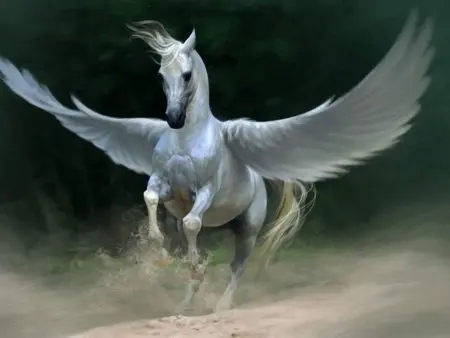
Few figures in classical mythology capture the human imagination quite like Pegasus. Classically depicted as a magnificent, snow-white stallion gifted with broad, feathered wings, this creature has transcended its origins in ancient Greek folklore to become a universal symbol of freedom, poetic inspiration, and boundless capability.
While pop culture frequently reduces Pegasus to a simple cinematic mount—as seen in Hollywood blockbusters like Clash of the Titans—the true breadth of his lore is steeped in complex divine lineage, dramatic interventions in mortal affairs, and profound symbolic weight. This comprehensive deep dive examines the facts, the mythology, the cinematic interpretations, and the deep-seated cultural implications of history’s most famous winged horse.
Main Facts: Origins, Lineage, and Anatomy of a Myth
To understand Pegasus, one must first look to his tumultuous divine birth. In traditional Greek mythology—derived from ancient Greek (Πήγασος, Págasos; Latin: Pegasus, Pegasos)—the winged stallion is the offspring of Poseidon, the formidable Olympian god of the sea, and the Gorgon Medusa.
A Gory Birth: Challenging Cinematic Lore
According to Hesiod’s Theogony, Pegasus did not emerge from a quiet meadow, nor was he companion to Perseus from childhood, as Hollywood sometimes portrays for narrative convenience. Instead, Pegasus was foaled directly from the neck of Medusa when the hero Perseus decapitated her using a reflective bronze shield and winged sandals.
Because Medusa perished at the exact moment of his birth, her death marked the beginning of Pegasus’s existence. Consequently, cinematic depictions pairing a young Perseus and a fully grown Pegasus side-by-side—such as in the 1981 and 2010 adaptations of Clash of the Titans—diverge significantly from ancient textual traditions. (Cinematically, filmmakers often utilize majestic breeds like the Friesian to stand in for the mythical beast, lending physical weight and dramatic presence to the silver screen.)
The Divine Twin: Chrysaor
Pegasus was not born alone. Emerging alongside the winged horse was his brother, Chrysaor. Unlike his equine sibling, Chrysaor is traditionally depicted in anthropomorphic form as a warrior. Little survives of his specific mythological exploits, save for the translation of his name—“he who bears a golden sword”—and his reputation as a courageous fighter.
Taming the Untamed: The Golden Bridle
By nature, Pegasus was wild, untamed, and fiercely independent. He roamed the high peaks of Mount Helicon and drank from mystical springs. To harness such divine power required celestial intervention. According to the myth of Bellerophon, the goddess Athena took pity on the mortal hero and gifted him a golden bridle. With this divine artifact, Bellerophon was able to approach and master the winged stallion, enabling their famous exploits—including the destruction of the fire-breathing Chimera.
Chronology: The Mythological Timeline of Pegasus
To trace the narrative arc of Pegasus through ancient literature is to follow a trajectory from divine birth to heavenly constellation.
[Birth]          --->  [The Helicon Spring]  --->  [The Chimera Hunt]  --->  [The Fall of Bellerophon] ---> [Apotheosis]
Medusa's neck        Struck by hoof            Defeated alongside          Attempted ascent to          Placed among the stars
                     creates Hippocrene        Bellerophon                 Mount Olympus                as a constellation
1. The Birth at the Edge of the World
Upon the decapitation of Medusa by Perseus, Pegasus springs forth fully formed from her severed neck, immediately taking to the skies away from the mortal realm of blood and stone.
2. Creation of the Hippocrene Spring
During his terrestrial wanderings, Pegasus struck Mount Helicon with his hoof. From the impact, a spring burst forth known as the Hippocrene (the "Horse’s Fountain"). This spring became sacred to the Muses, cementing Pegasus’s eternal association with poetry, music, and divine inspiration.
3. The Partnership with Bellerophon
Tasked with slaying the Chimera—a monstrous creature combining the features of a lion, goat, and serpent—the hero Bellerophon realized he needed aerial supremacy. Guided by Athena and armed with the golden bridle, he bonded with Pegasus. Together, they soared above the beast, raining down attacks from safety until the monster was vanquished.
4. Overreach and the Fall
Emboldened by his victory against the Chimera, Bellerophon grew arrogant. He attempted to ride Pegasus all the way to Mount Olympus to join the ranks of the gods. Offended by this mortal presumption, Zeus sent a gadfly to sting Pegasus. The startled winged horse bucked, throwing Bellerophon back down to earth, where he lived out his days crippled and humbled.
5. Ascension to the Heavens
Following the fall of Bellerophon, Pegasus continued his journey upward, welcomed by Zeus into the stables of Mount Olympus. There, he served the king of the gods, carrying his thunderbolts and lightning flashes across the skies. Eventually, Pegasus was immortalized by Zeus, transformed into the constellation that bears his name.

Supporting Data: Evolution from Ancient Text to Modern Media
The depiction of Pegasus has undergone a fascinating evolution over millennia. While classical Greek and Roman pottery exclusively portrayed a pure white stallion with majestic, feathered wings, modern fantasy and popular culture have expanded upon this foundational archetype.
Comparative Analysis of Pegasus Depictions
| Era | Primary Medium | Physical Characteristics | Notable Associations |
|---|---|---|---|
| Classical Antiquity | Pottery, Sculptures, Epic Poetry | Pure white stallion, large avian wings | Poseidon, Medusa, Bellerophon, Muses |
| Renaissance & Neo-Classical | Oil Paintings, Tapestries | Muscular equine build, soaring above landscapes | Poetic inspiration, divine favor |
| Modern Pop Culture | Cinema, Animation, Fantasy Art | Diverse coloration (blacks, duns, pintos), varied wing types, sometimes depicted with horns | Heroic mounts, magical ecosystems |
| Contemporary Gaming | Video Games, Tabletop RPGs | Scaled armor, magical element manipulation, vast herds | Mountable travel systems, combat companions |
As seen in modern digital art platforms (such as community showcases on DeviantArt), contemporary creators frequently experiment with the creature’s morphology. It is now common to see pegasi integrated into expansive fantasy worlds complete with multi-hued coats, armored plating, and familial herds that soar across fictional skies.
Symbolic Implications: Why Pegasus Endures
The enduring popularity of Pegasus is not merely a relic of ancient storytelling; it reflects deep-seated psychological and cultural archetypes. Scholars and cultural historians categorize the symbolism of Pegasus into four primary pillars:
1. Inspiration and Creativity
Because his hoof strike brought forth the Hippocrene spring—the mythological source of artistic and poetic inspiration—Pegasus became the ultimate patron beast of writers, painters, and musicians. To "ride Pegasus" in literary circles historically meant to tap into a state of elevated creative ecstasy.
2. Heroism and Victory
As the key instrument in the defeat of the Chimera, Pegasus represents the triumph of intellect, divine aid, and courage over chaotic monstrosity. He stands shoulder-to-shoulder with other legendary helpers, bridging the gap between mortal striving and divine success.
3. Transcendence and Freedom
With wings that lift him clear of the earth and hooves that touch the highest peaks, the winged horse is a universal emblem of liberation. He embodies humanity’s perennial desire to transcend physical limitations, rise above earthly troubles, and explore the unknown.
4. Nobility and Purity
Traditionally styled as an immaculate white stallion, Pegasus projects an aura of untamed nobility. Unlike beasts of burden, he cannot be forced into service through violence; he requires a divine, golden artifact to accept a rider, underscoring themes of mutual respect and celestial destiny.
Cultural Implications and Modern Relevance
Today, the legacy of Pegasus extends far beyond mythology textbooks. He occupies a vital space in global pop culture, corporate branding, and modern esoteric thought.
In Education and Literature
Pegasus remains a primary entry point for young readers discovering classical mythology. Through adaptations by modern fantasy authors, the winged horse continues to introduce generations to the rich pantheon of ancient Greece, keeping classical narratives alive in contemporary curricula.
In Corporate Identity and Aviation
Given his association with speed, altitude, and divine power, the image of Pegasus has frequently been adopted by institutions seeking to project reliability and loftiness. Most notably, Mobil Oil utilized the red flying horse as a corporate mascot for decades, cementing the creature in 20th-century commercial iconography. Similarly, aerospace initiatives and tech startups frequently invoke the name "Pegasus" to symbolize breakthrough innovation and upward mobility.
The Psychological Dimension
From a Jungian perspective, winged animals represent the synthesis of earthly instinct (the horse) and spiritual aspiration (the wings). Pegasus bridges the chasm between the subterranean depths of the unconscious (born from Medusa, creature of the deep earth/sea via Poseidon) and the luminous heights of consciousness (ascending to Olympus and the stars). This psychic integration explains why the myth resonates so deeply across eras, speaking to humanity’s ongoing quest for self-actualization.
Conclusion
From his violent, miraculous birth at the hands of Perseus and Medusa to his celestial home among the constellations, Pegasus remains one of the most powerful and flexible symbols in human history. Whether galloping across the slopes of Mount Helicon to inspire poets or soaring across modern cinema screens, the winged stallion continues to challenge our limits, lift our imaginations, and remind us of the enduring power of myth.