





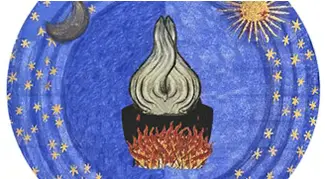
For centuries, the academic study of medieval magic, occult traditions, and folk belief systems was confined to rare manuscript archives and elite university lecture halls. Today, a digital shift in higher education is breaking down those historical barriers. Through Massive Open Online Courses (MOOCs), world-renowned institutions are opening their vault doors to a global audience, offering low-cost, self-paced access to the scholarly study of the esoteric past.
Leading this educational movement is the Universitat de Barcelona, whose online course, "Magic in the Middle Ages," hosted on the Coursera platform, offers a rigorous historical re-examination of how medieval societies navigated the boundary between science, religion, and the supernatural. As interest in esoteric history and pagan studies continues to grow globally, such programs demonstrate how modern technology can democratize high-level academic research.
Main Facts: Inside the Universitat de Barcelona’s Digital Curriculum
The "Magic in the Middle Ages" curriculum, created by faculty at the Universitat de Barcelona—one of Europe’s oldest and most prestigious research institutions—provides a comprehensive overview of how medieval Europeans understood and practiced magic between the 5th and 15th centuries.
Designed to be completed in approximately nine hours of instruction across five specialized modules, the self-paced course is available globally on Coursera. While the lecture materials can be audited for free, students seeking a verified certificate of completion can obtain one for $49, a tiny fraction of conventional university tuition fees. To ensure international accessibility, the course is taught in English with comprehensive subtitle support in English, Catalan, and Spanish.
Deconstructing the Syllabus: Popular vs. Learned Magic
Rather than treating medieval magic as a monolithic set of irrational superstitions, the curriculum approaches the subject through the twin lenses of social history and the history of science. It separates medieval esoteric practices into two distinct categories:
- Popular Magic: The daily beliefs, protective charms, folk healing methods, and fertility rituals practiced by rural laypeople, often blended with orthodox Christian liturgical practices.
- Learned Magic: High-level, ritualized disciplines practiced primarily by educated elites, clerics, and scholars. This includes:
- Alchemy: The philosophical and protoscientific practice aimed at transmuting base metals and discovering universal panaceas.
- Geomancy: A method of divination that interprets markings on the ground or patterns formed by tossed dirt and rocks.
- Necromancy: High ritual magic focused on the invocation of spirits or demons, often utilizing Latin formulas derived from clerical traditions.
A central thesis of the course is the crucial role of Eastern cross-cultural influence. Lecturers explore how Islamic, Jewish, and Byzantine scientific texts translated during the High Middle Ages fundamentally shaped Western European understandings of medicine, optics, and esoteric philosophy.
Chronology: From Academic Niche to Open-Access Digital Learning
The integration of esoteric history into mainstream digital education represents the convergence of decades of historiographical shifts and technological evolution.
+-----------------------------------------------------------------------------------+
| CHRONOLOGY OF ESOTERIC STUDIES IN DIGITAL HIGHER EDUCATION                        |
+-----------------------------------------------------------------------------------+
| 2012        | The "Year of the MOOC": Platforms like Coursera and edX launch.     |
| 2014–2015   | Universitat de Barcelona develops specialized humanities MOOCs.    |
| 2016 (July) | "Magic in the Middle Ages" launches; updated with Astrology module|
| 2020–2022   | Pandemic accelerates global demand for digital micro-credentials. |
| Present     | Academic esotericism gains mainstream traction in digital education.|
+-----------------------------------------------------------------------------------+
The Early Academic Shift (Late 20th Century – 2012)
Historically, mainstream academia viewed the study of magic as a marginal topic. However, pioneering work by 20th-century historians like Lynn Thorndike and Frances Yates established that medieval magical thought was deeply intertwined with the development of modern science. By the early 2010s, departments of history and religion across Europe began establishing dedicated research units focused on Western esotericism.
The MOOC Revolution and Course Launch (2012–2016)
In 2012, higher education entered the "Year of the MOOC," with platforms like Coursera expanding access to university-level instruction. Recognizing a growing public fascination with medieval history, the Universitat de Barcelona developed "Magic in the Middle Ages."
In July 2016, the course underwent a major pedagogical expansion, adding a brand-new module dedicated exclusively to medieval astrology. This addition highlighted how celestial mechanics and planetary influences were viewed not as modern horoscopes, but as legitimate branches of natural philosophy used by medieval physicians and monarchs alike.
Post-Pandemic Growth and Contemporary Relevance (2020–Present)
The global disruptions of the early 2020s accelerated adoption of digital credentials. As millions turned to online platforms for continuous learning, niche humanities electives saw unprecedented enrollment spikes. Today, the course stands as an established entry point for students, independent researchers, and historical enthusiasts seeking peer-reviewed scholarship over pop-culture myths.
Supporting Data: Measuring the Impact of Open Esoteric Pedagogy
Data from higher education analytics highlights the shifting economic and demographic landscape of online humanities education.
Cost and Accessibility Metrics
| Metric | Traditional On-Campus Elective | Coursera / Universitat de Barcelona MOOC |
|---|---|---|
| Average Cost | $1,000 – $3,500 per credit unit | Free to audit; $49 for certificate |
| Time Commitment | 12–15 weeks (45+ class hours) | 9 total hours (self-paced) |
| Geographic Constraint | Physical attendance required | Global digital access |
| Language Localization | English-only (typically) | English audio; English, Catalan, Spanish subtitles |
Educational Reach and Demographics
Massive Open Online Courses in specialized humanities subjects consistently draw a broader demographic than traditional degree programs. Coursera’s platform data indicates that non-degree-seeking lifelong learners make up over 60% of enrollments in niche history modules. Furthermore, multilingual support (such as the Catalan and Spanish translations offered by the Universitat de Barcelona) expands reach into Latin America and Southern Europe, areas with rich localized folklore and medieval history.
The Historical Data: Knowledge Transfer in the Middle Ages
The curriculum itself relies on quantitative historical data, examining the massive influx of translated works during the 12th-Century Translation Movement. During this period, hundreds of Arabic and Greek scientific treatises—containing foundational elements of optics, astronomy, and alchemy—were translated into Latin, predominantly in Spain and Southern Italy, serving as the foundation for Western university curricula.
Official Responses and Expert Perspectives
Academic historians and digital education experts have increasingly defended the importance of offering rigorous courses on historical magic, noting that public interest in the topic is often distorted by modern media.
Countering Popular Stereotypes
"Popular culture frequently portrays the Middle Ages through two extreme lenses: either as an era of romanticized wizardry or as a dark, ignorant period defined solely by violent witch hunts," explains Dr. Arnald Puy, a contributor to European digital humanities initiatives. "In reality, the high medieval witch trials popular in public imagination did not reach their peak until the Early Modern period—the 16th and 17th centuries. Academic courses like the one offered by Universitat de Barcelona help correct these chronological misconceptions by showing that medieval magic was often viewed as a rational framework for understanding natural laws."
The Interdisciplinary Value
Faculty from the Universitat de Barcelona emphasize that studying medieval esoteric thought is crucial for understanding the birth of modern scientific methodology. In statements outlining the course objectives, the instruction team notes:
"Magical thought has always attracted human imagination. In this course, we introduce students to the Middle Ages through a wide conception of magic. Students gain an approach to medieval culture, beliefs, and practices from the perspective of History and History of Science… promoting reflection about certain stereotypes associated with this period."
Educational strategists at Coursera have also highlighted the success of specialized history offerings, noting that courses covering niche cultural traditions perform exceptionally well in student engagement metrics due to high intrinsic learner motivation.
Implications: Transforming Public History and Esoteric Pedagogy
The availability of specialized digital courses like "Magic in the Middle Ages" carries broad implications for higher education, public history, and contemporary cultural movements.
+---------------------------------------------------------------------------------+
| BROADER IMPLICATIONS OF OPEN ACADEMIC ESOTERICISM                               |
+---------------------------------------------------------------------------------+
| 1. Demystification of History | Replaces media myths with peer-reviewed research |
| 2. Accessibility & Equity     | Removes financial barriers to specialized knowledge|
| 3. Bridge to Modern Practice  | Grounding modern Pagan/Occult studies in history |
| 4. Future of Micro-learning   | Proving demand for specialized humanities electives|
+---------------------------------------------------------------------------------+
1. Demystification of the "Dark Ages"
By offering accessible, peer-reviewed analysis of medieval esoteric practices, universities are actively dismantling persistent myths about medieval intellectual life. Students learn that figures who practiced early forms of alchemy or astrology were not anti-scientific rebels, but often the leading intellectuals, physicians, and advisors of their time.
2. Bridging the Gap Between Academia and Modern Esotericism
The explosion of interest in modern Paganism, Wicca, and contemporary occult practices over the past decade has created a substantial audience hungry for historical authenticity. Courses like Barcelona’s provide modern practitioners and curious observers with primary-source evidence, allowing them to distinguish between ancient or medieval traditions and 19th- or 20th-century romantic revivals.
3. The Future of Specialized Humanities Credentials
As traditional humanities departments face budgetary pressures worldwide, MOOCs offer a sustainable model for preserving and scaling niche academic subfields. Rather than relying on small campus seminars, a single university can educate tens of thousands of global students in specialized subjects like medieval necromancy, ancient paleography, or historical linguistics.
4. Educational Equity in Global Learning
By keeping certificate fees low ($49) and offering free audit pathways, institutions like the Universitat de Barcelona ensure that high-level academic research is no longer restricted by income or geography. A student in South America, Southeast Asia, or rural North America can engage with primary medieval manuscripts analyzed by leading European scholars.
Conclusion
The Universitat de Barcelona’s "Magic in the Middle Ages" course on Coursera represents more than just a novelty offering; it reflects a broader transformation in how history is taught and consumed in the 21st century. By combining history, science, and cultural analysis into a flexible 9-hour digital framework, the program illuminates a fascinating, often misunderstood era of human thought—proving that the academic study of magic still holds the power to enlighten the modern world.