HONOLULU — Beneath the idyllic surface of white-sand beaches, swaying palms, and the fragrant mist of blooming plumeria lies an entirely different dimension of the Hawaiian Islands—one steeped in ancient lore, shapeshifting deities, and the palpable presence of the supernatural. For centuries, Hawaiian mythology has served not merely as a collection of campfire tales, but as an intricate cultural framework that connects the indigenous people to their environment.
In the Aloha State, the veil between the physical and spiritual worlds is widely perceived as remarkably thin. From the fiery domain of Pele, the goddess of volcanoes, to the twilight footsteps of the Huakaʻi Pō (the Night Marchers), the folklore of Hawaii remains a vital, breathing aspect of the archipelago’s contemporary identity.
Main Facts: The Pantheon and Entities of the Hawaiian Archipelago
Hawaiian folklore is populated by a diverse and vibrant cast of beings—ranging from all-powerful deities and half-divine demigods to diminutive master builders and spectral guardians. Understanding the cultural geography of Hawaii requires a foundational grasp of these central entities:
- Pele, the Goddess of Volcanoes: Undeniably the most famous figure in Hawaiian mythology, Pele embodies both the destructive and creative forces of nature. Residing within the fiery calderas of the Kilauea volcano on the Big Island, Pele commands molten rock and seismic activity. Her presence remains so culturally immediate that modern park rangers still receive packages from tourists returning "stolen" volcanic rocks, driven by fear of her legendary curse.
- The Kapua (Demigods): Born from the unions of gods and mortals, the Kapua possessed extraordinary abilities, most notably shapeshifting. Among them, the legendary Maui stands out for his cunning intellect and daring exploits on behalf of humanity.
- Kamapuaʻa (The Hog Child): A prominent demigod of fertility and wild boars, Kamapuaʻa is a classic trickster figure. Renowned for his ability to transform into various flora and fauna, he is historically famous for his tumultuous, fiery romance and epic battles with the goddess Pele—a mythological reflection of the volatile relationship between water-bearing mountain vegetation and molten lava flows.
- The Menehune: Standing only two to three feet tall, these legendary dwarf-like people are credited with master-level craftsmanship. According to oral history, the Menehune constructed ancient stone temples (heiau), fishponds, and aqueducts overnight, strictly adhering to a rule that required them to vanish before the first rays of sunlight touched the horizon.
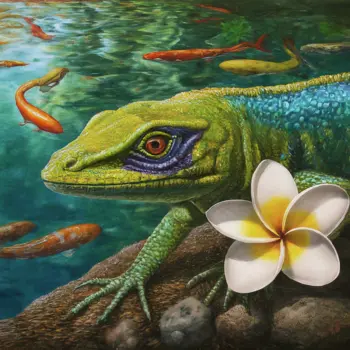
- Moʻo (Guardian Lizard Spirits): Shapeshifting entities capable of manifesting as lizards, massive eels, or dragons, the Moʻo serve as sacred protectors of freshwater springs, fishponds, and coastal ecosystems. Historically, islanders treated them with profound reverence, offering tributes to ensure stable weather and abundant water supplies.
- Akua and the Night Marchers (Huakaʻi Pō): Akua serves as an overarching term for spirits, encompassing benevolent ancestral protectors (Kupua) and mischievous or dangerous entities. Among the most feared paranormal phenomena are the Night Marchers—the ghosts of ancient chiefs and warriors who march in single file under the cover of darkness, bearing torches and chanting haunting battle cries.
Chronology: A Timeline of Mythological Lore and Modern Encounters
The history of Hawaiian mythology spans centuries of oral tradition, European contact, and modern preservation:
- Pre-Contact Era (Ancient Hawaii): Polynesian voyagers settle the islands, bringing with them a rich oral tradition. Myths are codified to explain natural phenomena, establish kapu (taboos), and enforce social order. Megastructures like fishponds and temples are attributed to the engineering prowess of the Menehune.
- The Era of Exploration and Monarchy (Late 18th to 19th Century): Western explorers, missionaries, and scholars begin documenting Hawaiian oral histories. Prominent figures like King David Kalākaua later champion the preservation of traditional arts, hula, and legends against colonial suppression.
- The 20th Century: As tourism booms, Hawaiian mythology is increasingly commercialized, yet deeply respected by local communities. Traditional practices experience a renaissance during the Hawaiian Cultural Renaissance of the 1970s, bringing sacred sites back into active use.
- The 21st Century: Modern technology intersects with ancient belief. Contemporary platforms document ongoing "sightings" of Pele, unexplained phenomena near sacred sites, and cultural resource management battles to protect ancestral lands from modern development.
Supporting Data: The Legend of Maui and the Sun
One of the most enduring narratives in Hawaiian folklore highlights the cunning nature of the demigod Maui. Driven by deep devotion to his mother, Hina, Maui intervened in a cosmic crisis to benefit all of humankind.
Hina relied on sunlight to dry and beat tree bark into tapa cloth, a vital material for traditional Hawaiian garments. However, the sun’s original path across the sky was erratic and swift. Days were far too short, plunging the islands into premature darkness and severely hindering Hina’s work—as well as the agricultural and fishing endeavors of the wider community.

Determined to alleviate his mother’s burden, Maui journeyed to the summit of the dormant volcano Haleakalā on Maui. There, he meticulously wove a heavy celestial net from plant fibers.
As dawn crested the horizon, Maui lay in wait. When the sun began its rapid ascent, he cast his net, ensnaring the celestial body. Wielding his enchanted magical club, Maui struck the sun until it begged for mercy.
To secure its freedom, the sun struck a historic compromise with the demigod: for half of the year, it would travel at a reduced pace across the sky, guaranteeing humanity adequate daylight hours for survival and labor. To this day, the majestic summit of Haleakalā—literally translating to "House of the Sun"—stands as a geographical monument to this epic feat.
Official Responses and Cultural Preservation
As Hawaii continues to navigate the balance between a booming tourism economy and the preservation of its indigenous heritage, local government agencies, cultural practitioners, and historians play a critical role in managing the legacy of these myths.
The Hawaii Volcanoes National Park Stance
Park rangers at Hawaii Volcanoes National Park on the Big Island regularly address visitors regarding the cultural sensitivity surrounding Pele. Millions of tourists visit the park annually, and while many are simply sightseers, a significant number leave with a lingering sense of the supernatural.
Park officials maintain a strict policy regarding the removal of volcanic rock and sand. "When visitors take a piece of lava home as a souvenir, they often experience a streak of bad luck, leading them to mail the rocks back with apologetic letters addressed to Pele," notes park archival data. Rangers view these returned stones not as a supernatural endorsement, but as powerful evidence of how deeply the mythos of Pele governs modern psychological and cultural respect for the land.

Preservation of Sacred Sites (Wahi Pana)
The State Historic Preservation Division (SHPD) works alongside local cultural councils to protect wahi pana (legendary sacred places), such as ancient fishponds attributed to the Menehune and freshwater springs guarded by Moʻo spirits. In recent years, infrastructure projects have faced rigorous environmental impact assessments not only for ecological reasons, but to ensure that construction does not disturb ancestral resting places or disrupt the paths of the Night Marchers.
Implications: The Intersection of Myth, Tourism, and Modern Identity
The persistence of Hawaiian mythology in the 21st century carries profound implications for cultural identity, environmental conservation, and the tourism industry.
Cultural Pride and Decolonization
For Native Hawaiians, mythology is not a relic of the past; it is an active component of cultural reclamation. The stories of the Akua, the engineering feats of the Menehune, and the elemental dominance of Pele reinforce a worldview where nature is alive, sentient, and deserving of stewardship (mālama ʻāina). By honoring these stories, modern generations resist cultural erasure and maintain a continuous link to their ancestors.
Environmental Stewardship
Traditional myths often encode vital ecological lessons. Stories warning against polluting freshwater springs (guarded by the Moʻo) or over-harvesting specific marine zones serve as ancient conservation guidelines. In an era marked by climate change and ecological stress, marrying indigenous mythology with modern environmental science offers a holistic model for protecting Hawaii’s fragile ecosystems.
The Allure of the Paranormal
For the millions who visit the Aloha State each year, Hawaii’s paranormal landscape adds a layer of profound enchantment. Whether staying in a historic hotel rumored to be visited by ancestral spirits or driving past dark rural roads where locals warn of the Night Marchers’ drums, visitors are reminded that Hawaii is more than a tropical resort—it is a living, breathing realm of history and mystery.
As the scent of plumeria drifts through the warm evening air and the distant glow of Kilauea illuminates the night sky, the boundary between the natural and the supernatural remains delightfully blurred. Whether one approaches these tales as a devout believer or a curious skeptic, the enduring power of Hawaiian mythology ensures that the whispers of the ancients will echo across the islands for generations to come.