By Global Science & Culture Desk
For millennia, human beings have lifted their gaze to the night sky, finding profound meaning, guidance, and spiritual connection in the luminous phases of the full moon. Long before the advent of digital calendars, atomic clocks, and smartphones, Indigenous communities across North America synchronized their lives with the rhythms of the cosmos.
By combining meticulous lunar observations with deeply localized environmental tracking, these ancient societies crafted sophisticated timekeeping systems. Far from being mere poetic labels, the traditional names assigned to each full moon served as ecological guideposts—signaling when to harvest wild rice, when to prepare for bitter winter survival, and when the earth was ready to thaw.
Today, while modern society relies heavily on the rigid solar framework of the Gregorian calendar, the enduring legacy of these lunar names persists in almanacs and popular culture. Yet, behind monikers like the "Wolf Moon," the "Strawberry Moon," or the "Beaver Moon" lies a rich tapestry of tribal wisdom, cross-cultural adaptation, and profound environmental observation that deserves a closer, more respectful examination.
Main Facts: The Intersection of Astronomy and Ecology
At its core, the traditional naming of full moons is an exercise in applied ecology. Unlike the Julian or Gregorian calendars, which slice the solar year into mathematically rigid months largely disconnected from natural phenomena, Indigenous lunar calendars were organic and responsive.
Among the Algonquian language family—whose historical territories stretched from New England to the shores of Lake Superior—lunar cycles were intimately tied to tangible shifts in the biosphere. The Ojibwe (Chippewa) people, one of the largest Algonquian groups in the Great Lakes region, revered the moon as Nookomis Dibik-Giizis, or "Grandmother Moon," considering her a primary teacher in Anishinaabe tradition.
The fundamental facts governing these naming systems include:
- Ecological Synchronization: Names were not chosen at random; they directly reflected animal migrations, plant blossoming cycles, weather patterns, and food availability.
- Cultural Diversity: With hundreds of distinct Indigenous nations historically inhabiting North America, lunar naming was never monolithic. Different tribes utilized 12 or 13 moons per year, and some tracked four or five distinct seasons based on their specific bioregions.
- Colonial Adaptation: European settlers in North America adopted many Indigenous lunar markers, blending them with their own Celtic and Old English traditions to create a hybrid folklore that ultimately evolved into modern almanac traditions.
Chronology of the Lunar Year: A Seasonal Journey
To truly understand the depth of these lunar markers, one must journey through the cycle of the year, examining how traditional societies interpreted the changing face of Grandmother Moon from the depths of winter to the abundance of summer and the preparations of autumn.
Winter Moons: Survival, Endurance, and Scarcity
Winter was a period of rigorous testing for early North American communities, a time when endurance and community resilience were paramount.
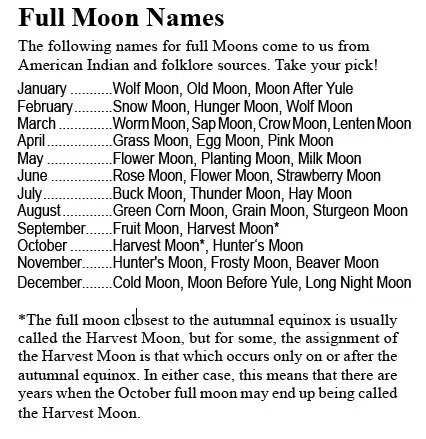
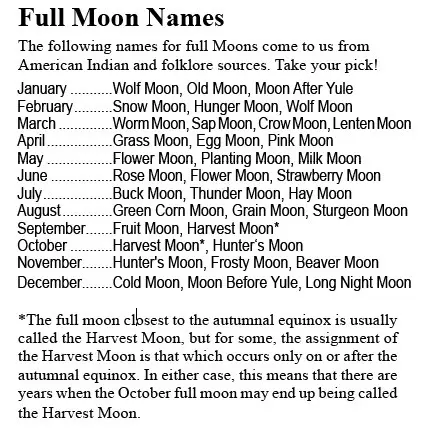
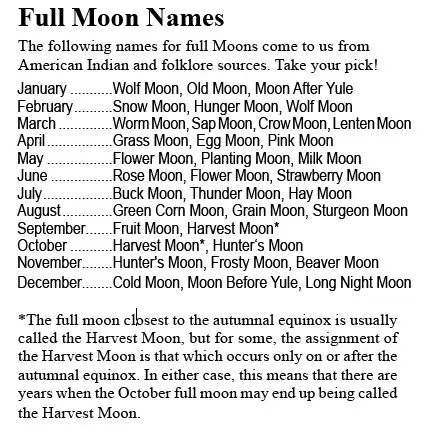
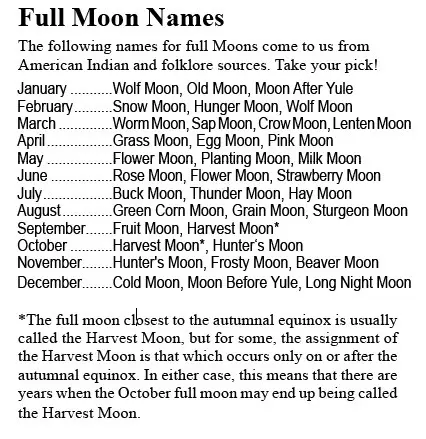
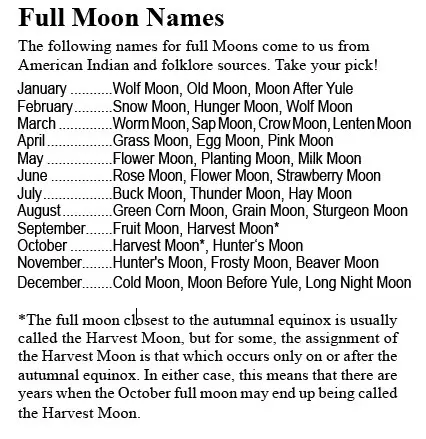
- January – Wolf Moon: Frequently associated with the echoing howls of hungry wolves prowling through deep winter snows, this name carries a dual heritage. While European settlers brought Celtic and Old English folklore regarding wolves to North America, various Native American tribes referred to this period as the Severe Moon or Center Moon, highlighting the apex of midwinter’s harsh realities.
- February – Snow Moon and Hunger Moon: February represented winter’s peak intensity. Many northern tribes dubbed this the Hunger Moon due to the severe scarcity of food sources. Conversely, other groups named it the Bear Moon, marking the season when bear cubs are born. The Ojibwe traditionally named this moon after the sucker fish, a vital aquatic resource that sustained communities through the late-winter lean period.
Spring Moons: Renewal, Thaw, and Reawakening
As the tilt of the Earth brought warmer sunlight, the landscape transformed rapidly, sparking a flurry of ecological activity.
- March – Worm Moon: As the ground softened and spring thaws commenced, earthworm casts reappeared, drawing the return of robins. Northern tribes often knew this as the Full Crow Moon, as the cawing of returning crows signaled the definitive end of winter. Other common Indigenous names included Snow Crust Moon and the Sap and Sugar Moon, referencing the critical time for harvesting maple syrup.
- April – Pink Moon: Named for the vibrant pink phlox wildflowers that carpet parts of North America in early spring, April’s moon was also tied to the vital process of maple sap boiling among the Ojibwe. Additional tribal names—such as Breaking Ice Moon and The Moon of the Red Grass Appearing—highlighted the dramatic hydrological and botanical shifts of the season.
Summer Moons: Abundance, Harvest, and Activity
Summer offered a reprieve from winter’s trials, marked by agricultural growth, foraging, and bountiful fishing expeditions.

- May – Flower Moon: True to its name, May signifies a landscape in full botanical bloom. Traditional moon names from this period frequently celebrate floral proliferation or serve as temporal markers for planting staple crops like corn.
- June – Strawberry Moon: Universally recognized across numerous tribes, including the Ojibwe, the Strawberry Moon coincided with the ripening and harvesting of wild strawberries. It symbolized the earth’s generosity, while coastal communities often called it the Fish Moon, noting the annual upstream migration of shad.
- July – Buck Moon and Thunder Moon: By midsummer, male deer (bucks) are growing their antlers at full capacity, inspiring the name Buck Moon. Simultaneously, the frequency of intense seasonal thunderstorms earned it the designation Thunder Moon in many traditions.
- August – Sturgeon Moon: Centered around the Great Lakes and major waterways, this moon marked the peak of the sturgeon fishing season. For the Anishinaabe, August held immense cultural and ritual significance as Manoomini-giizis, the moon for harvesting wild rice—a dietary and spiritual cornerstone of their culture.
Autumn Moons: Gathering and Preparation for the Long Night
With the turning of the leaves, communities shifted focus toward securing resources for the inevitable return of cold weather.
- September – Harvest Moon: Typically defined as the full moon closest to the autumnal equinox, this period signaled the gathering of core agricultural staples: corn, beans, squash, and pumpkins.
- October – Hunter’s Moon: Following the harvest, fields were clear and game animals had fattened themselves throughout the summer. This offered hunters optimal visibility and success before the onset of winter.
- November – Beaver Moon: Historical accounts suggest this moon marked the traditional time for setting beaver traps before swamps froze solid, ensuring a supply of thick, warm winter pelts. Alternatively, it observed beavers working feverishly to fortify their lodges.
- December – Cold Moon: Bringing the heaviest snowfalls and the longest nights of the year, December’s moon was characterized by deep chill. For many tribes, it doubled as a Long Night Moon or a secondary Hunger Moon, underscoring the formidable challenges of surviving the deep winter solstice.
Supporting Data: Tribal Diversity and Regional Realities
To view North American Indigenous cultures through a monolithic lens is to misunderstand their complexity. With 576 federally recognized tribes in the United States alone—and numerous First Nations in Canada—ecological adaptations varied wildly depending on geography.
| Region / Tribe | Primary Focus / Activity | Representative Moon Names |
|---|---|---|
| Great Lakes / Ojibwe (Anishinaabe) | Birchbark harvesting, copper trade, wild rice (Manoomini), maple sugaring | Manoomini-giizis (Wild Rice Moon), Sucker Fish Moon |
| Northeastern Woodlands / Algonquian | Agriculture (Corn, Beans, Squash), hunting, foraging | Wolf Moon, Flower Moon, Strawberry Moon |
| Coastal Communities | Marine migrations, fishing (shad, sturgeon) | Fish Moon, Sturgeon Moon |
Climate differences dictated that a tribe in southeastern Ontario experienced spring thaws weeks earlier than a community in North Dakota. Consequently, their lunar calendars were hyper-localized scientific tools, dynamically adjusted to local environmental feedback loops rather than abstract mathematical formulas.
Official Responses and Cultural Perspectives
In recent years, historians, anthropologists, and Indigenous leaders have increasingly spoken out regarding the popularization of traditional moon names. While the widespread adoption of names like the "Harvest Moon" or "Pink Moon" in publications such as The Old Farmer’s Almanac (which has published these terms since the late 1700s) has kept a version of this knowledge alive, concerns over cultural appropriation and dilution remain prominent.
Cultural historians emphasize that these names cannot be separated from the people who created them. Dr. Elizabeth LaPensée, an Anishinaabe scholar, artist, and researcher, notes that traditional ecological knowledge (TEK) embedded within lunar calendars represents thousands of years of scientific peer review conducted by Indigenous communities.
"When mainstream society uses these names simply as aesthetic novelties for stargazing, they often strip away the relational accountability," notes a cultural preservation statement from the Great Lakes Indian Fish and Wildlife Commission (GLIFWC). "These names are not just about what an animal is doing; they are about our reciprocal responsibilities to the land, the waters, and our non-human relatives."
Furthermore, contemporary Indigenous communities are actively utilizing their traditional lunar calendars to combat environmental degradation and respond to climate change. By comparing historical lunar observations with modern ecological shifts, tribal scientists are documenting the impacts of a warming planet on plant blossoming and animal migrations, proving that these ancient timekeeping systems remain scientifically relevant today.
Implications: Reconnecting with the Living Tradition
The revival of interest in traditional full moon names carries profound implications for modern environmentalism, public education, and cultural respect.
- Shifting from Consumption to Observation: In a hyper-accelerated digital age, modern populations are increasingly divorced from natural rhythms. Engaging with lunar cycles encourages a mindfulness toward seasonal shifts, local flora, and fauna behaviors.
- Honoring Indigenous Intellectual Property: Educators and science communicators are increasingly urged to explicitly acknowledge the Indigenous origins of lunar monikers, directing public attention toward the specific tribal nations native to their local watersheds.
- Climate Resilience: As anthropogenic climate change disrupts historical weather patterns, the flexibility inherent in traditional Indigenous lunar calendars offers a model for adaptive management. Unlike rigid solar calendars, lunar-ecological systems inherently acknowledge that nature is fluid, responsive, and constantly evolving.
Conclusion: Honoring the Wisdom of Grandmother Moon
The full moon names punctuating our modern calendars are far more than poetic linguistic artifacts. They are the surviving chapters of an ancient, highly sophisticated encyclopedia of ecological science and cultural wisdom.
For modern stargazers and nature enthusiasts, looking up at the full moon provides an opportunity to look beyond the immediate cosmos and connect with the deep heritage of the Indigenous peoples who first mapped the skies and seasons of North America. By approaching these traditions with historical awareness, ecological mindfulness, and profound cultural respect, we can transform a simple astronomical hobby into a meaningful journey of reconciliation, learning, and reconnection with the natural world.