



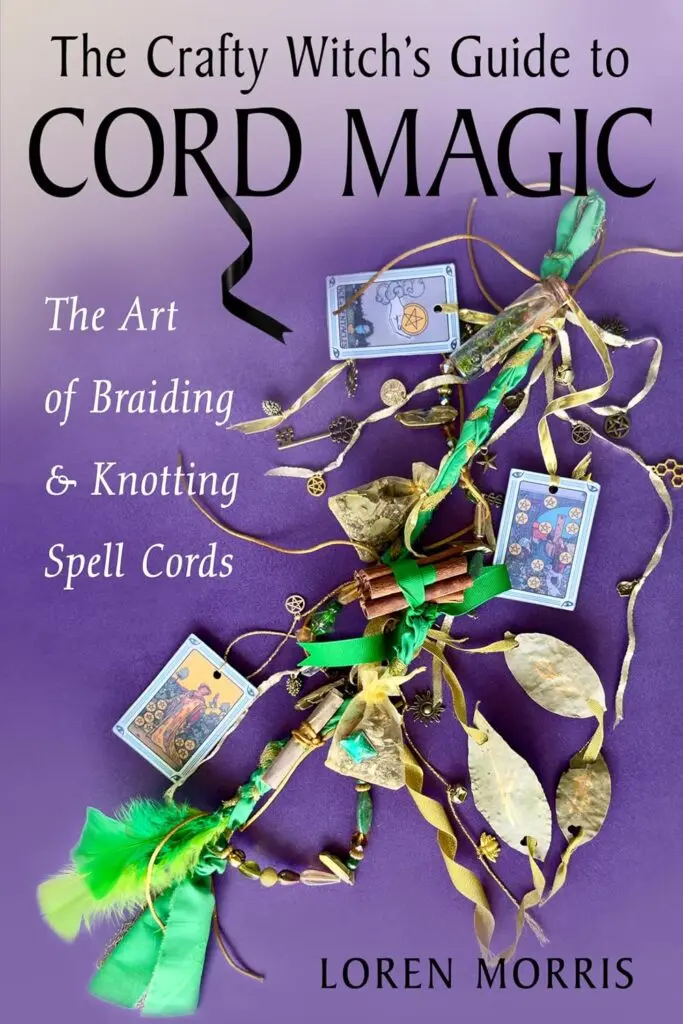
NEW YORK — Esoteric publisher Weiser Books, an imprint of Red Wheel Weiser, has formally announced the upcoming release of The Crafty Witch’s Guide to Cord Magic: The Art of Braiding & Knotting Spell Cords by artist and traditional witch Loren Morris. Slated for publication on July 6, 2026, the 178-page volume aims to provide a comprehensive, step-by-step exploration of fiber magic, transforming traditional knot spells into intricate, visually captivating talismans known as "witches’ ladders."
The book arrives at a time of growing interest in practical, tactile folk magic, offering both novice and experienced practitioners a structured method for weaving physical items—including herbs, crystals, tarot cards, and charms—into functional spiritual tools.
Main Facts: Elevating Folk Magic into Decorative Art
At its core, The Crafty Witch’s Guide to Cord Magic focuses on the traditional discipline of knot magic, expanding upon the widely recognized chant of the Nine Knots ("By the knot of one, the spell’s begun…"). While simple string spells have historically served as quick, focused workings for single intentions, Morris’s work elevates the practice into an ornate art form.
+------------------------------------------------------------------+
|                     PUBLICATION SUMMARY                          |
+------------------+-----------------------------------------------+
| Title            | The Crafty Witch’s Guide to Cord Magic        |
| Author           | Loren Morris                                  |
| Publisher        | Weiser Books / Red Wheel Weiser               |
| Release Date     | July 6, 2026                                  |
| Page Count       | 178 pages                                     |
| Core Focus       | Fiber Magic, Witches' Ladders, Folk Craft     |
+------------------+-----------------------------------------------+
The guide bridges the gap between spellcraft and aesthetic handicraft. Key aspects detailed within the release include:
- Multidisciplinary Components: Instructions on how to incorporate natural botanicals, metals, gemstones, and symbolic paper media directly into braided cords.
- Intention-Based Frameworks: Nine distinct spell cord blueprints tailored for specific spiritual goals, such as ancestral veneration, planetary alignment, zodiac representation, and financial prosperity.
- Comprehensive Instructional Aids: Black-and-white diagrams, cautionary advice, and step-by-step procedures covering component programming, assembly, incantation recitation, and ritual activation.
Chronology: From Ancient Folk Traditions to Contemporary Publishing
The practice of binding intentions into knots spans thousands of years across disparate global cultures. Understanding the lineage of fiber magic provides critical context for Morris’s modern adaptation.
HISTORICAL TIMELINE OF CORD & KNOT MAGIC

[ Ancient Antiquity ] ------------------------------------------------->
  • Mesopotamian, Greek, and Roman sailors use knot magic to "bind" winds.
  • Mediterranean cultures use threads for protection and warding off ill intent.

[ 19th Century Folk Magic ] ------------------------------------------->
  • 1886: Discovery of the famous "Wellington Witch Ladder" in Somerset, UK,
    featuring feathers woven into a three-ply rope.
  • European hearth magic standardizes the 9-knot incantation ritual.

[ Late 20th – Early 21st Century ] ----------------------------------->
  • Loren Morris begins practicing traditional witchcraft (25+ year journey).
  • Morris establishes "Primitive Witchery," focusing on revived folk practices,
    poppets, simmer pots, and spell cords.

[ Recent Media & Publishing Milestones ] ------------------------------->
  • 2022: Morris designs authentic spell bottle props for Disney's "Hocus Pocus 2."
  • July 6, 2026: Official publication of "The Crafty Witch’s Guide to Cord Magic"
    by Weiser Books.
The Lineage of the "Witch’s Ladder"
Historically, knot magic was prized for its simplicity and portability. Sailors across the North Sea bought knotted cords from local wise women to control maritime winds—untying one knot for a gentle breeze, two for a strong gale, and three for a tempest. In 1886, the discovery of a feather-bound cord hidden in the attic of a demolished house in Somerset, England, popularized the term "witch’s ladder" in modern folklore circles.
Morris builds upon this century-old foundation, modernizing the practice by integrating contemporary materials and artistic sensibilities refined over her 25-year practice in traditional witchcraft.
Supporting Data: Structure, Materials, and Practical Applications
The 178-page guide provides a detailed system for creating spell cords. Rather than relying solely on visual visualization, Morris emphasizes the tangible, sensory aspect of spellwork.
                  TYPICAL SPELL CORD ARCHITECTURE

                  [ Foundation Threads/Ribbons ]
                               |
       +-----------------------+-----------------------+
       |                                               |
[ Natural Elements ]                         [ Symbolic Charms ]
  • Botanicals (Rosemary, Corn)                • Keys, Bells, Feathers
  • Oak Leaves, Sunflowers                     • Runes, Sigils, Tarot
  • Crystals & Beads                           • Alphabets & Numerology
       |                                               |
       +-----------------------+-----------------------+
                               |
                   [ The Nine-Knot Matrix ]
               ("By the knot of one, the spell's begun...")
                               |
                    [ Ritual Activation ]
Material Correspondences Detailed in the Text
The manual breaks down specific magical correspondences across several categories:
- Charms and Metalwork: The acoustic and symbolic properties of bells for cleansing, keys for opening doors or unlocking potential, and metals for grounding energy.
- Divinatory Tools: Methods for physically attaching micro-tarot cards, carved runes, written sigils, and classical alphabets to reinforce the cord’s primary objective.
- Botanical and Organic Additions: The inclusion of feathers, leaves, dried flowers, and herbs directly woven into the structural plait of the cord.
Case Study: Seasonal Execution (Lughnasadh Spell Cord)
To test the practical utility of Morris’s methodologies, early reviewers tested the protocols outlined in the text. One notable application involved a ritual cord designed for Lughnasadh—the traditional Gaelic festival marking the beginning of the harvest season.
+------------------------------------------------------------------+
|                    LUGHNASADH SPELL CORD RECIPE                  |
+-------------------+----------------------------------------------+
| Objective         | Celebrating harvest, abundance, and gratitude|
| Base Materials    | Multicolored ribbons, natural twine          |
| Botanicals        | Sunflowers, dried corn husks, oak leaves,    |
|                   | fresh rosemary sprigs                        |
| Divinatory Anchors| Selected Tarot cards (The Sun, 10 of Pentacles)|
| Incantations      | Multi-stage spoken formulas from Chapter 4   |
+-------------------+----------------------------------------------+
The practical testing demonstrated that combining physical craftsmanship with structured meditation resulted in a durable, visually appealing ritual artifact that served as a continuous focal point long after the initial ritual concluded.
Official Responses and Industry Insights
The upcoming release has drawn commentary from publisher representatives, traditional craft practitioners, and independent book reviewers within the esoteric community.
Author Perspective: Loren Morris
Morris, whose professional work through her outfit Primitive Witchery focuses on reviving hearth and folk magic, emphasized the dual purpose of spell cords as both functional magical engines and permanent domestic art.
"Magic does not need to be hidden away in a hidden drawer or discarded after a single evening," Morris notes in background material accompanying the release. "By weaving spells into art, story, and practical craft, we create objects that carry sustained intention while enriching the domestic space."
Morris’s expertise in physical craft previously earned her industry recognition when she was commissioned to create prop spell bottles for the feature film Hocus Pocus 2, showcasing her ability to blend historical authenticity with visual appeal.
Practitioner and Reviewer Reactions
Early evaluation from itinerant practitioner and book reviewer known online as The Witch on Wheels—an eclectic solitary witch who travels the United States in a converted school bus sharing folk magic—praised the book’s clarity and accessibility.
"Witches’ ladders are a fun and potent tool to be used, and you will find all you need to know within this book," stated the reviewer. "The beautiful money spell cord on the cover and pictures of others—both in progress and completed—inspired me to make my first spell cord to celebrate Lughnasadh using local flora, ribbons, and incantations provided in the text."
In addition to the print edition, instructional multimedia content—including a video demonstration featuring Morris crafting a specialized "Moon Cord"—has been made available through retail platforms to assist visual learners with complex braiding patterns.
Cultural Implications: The Renaissance of Tactile Spellwork
The publication of The Crafty Witch’s Guide to Cord Magic reflects broader trends within contemporary occult and spiritual publishing.
TREND ANALYSIS: EVOLUTION OF MODERN FOLK CRAFT

[ 2000s - 2010s ]                            [ 2020s Present ]
High Theory & Ceremonial Magic    -------->   Practical, Tactile Folk Craft
• Abstract visualization                      • Hands-on fiber arts & weaving
• Minimal physical artifacts                  • Integration of art therapy & ritual
• Solitary mental focus • Aesthetic domestic display pieces- Re-engagement with Fiber Arts: As interest in handcrafts like knitting, macramé, and weaving has surged globally, spiritual practitioners are increasingly combining fiber arts with ritual intentions.
- Shift Toward Aesthetic Paganism: Modern practitioners frequently seek tools that blend seamlessly into home decor. By creating spell cords that double as decorative wall hangings, practitioners can keep their spiritual workings visible without drawing unwanted scrutiny.
- Accessibility and Sustainability: Cord magic relies heavily on accessible, biodegradable materials such as natural jute, cotton threads, found feathers, and local garden herbs, aligning with growing demand for environmentally conscious spiritual practices.
With its balance of historical context, clear diagrams, and adaptable recipes, Loren Morris’s guide is set to become a reference text for those seeking to incorporate fiber craft into their spiritual practice when it hits shelves in July 2026.