





Introduction: The Mythological Majesty of the Bennu
When visionary director Zack Snyder—best known for his stylized cinematic epics such as 300, Man of Steel, and Watchmen—set out to craft his original sci-fi fantasy universe for Netflix’s Rebel Moon, he understood that world-building required more than just futuristic technology and sprawling space armadas. It demanded a living, breathing ecosystem populated by creatures that felt both deeply ancient and startlingly alien.
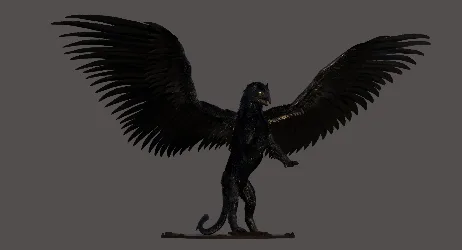
Enter the bennu: a majestic, lion-eagle hybrid that serves as the universe’s unique answer to the mythological griffin.
For fans wondering whether the majestic beast soaring across the screen in Rebel Moon — Part 1: A Child of Fire is indeed a classic griffin, the short answer is an emphatic yes. However, the deeper, more complex answer reveals a meticulously designed creature woven specifically into the lore of Snyder’s sprawling universe. Blending traditional world mythologies with high-concept science fiction, the bennu has quickly established itself as one of the most memorable cinematic beasts of recent years.
This comprehensive deep-dive explores the origins, design process, narrative significance, and visual effects wizardry behind the bennu—most notably personified by the striking black creature named Beatrice.
Main Facts: Anatomy of a Sci-Fi Griffin
At its core, the bennu is a hybrid creature that merges the regal power of an eagle with the muscular ferocity of a lion. Unlike standard griffins found in traditional European folklore, the bennu exists exclusively within the proprietary lore of the Rebel Moon universe.
Key facts regarding the bennu include:
- The Hybrid Design: The creature features a razor-sharp beak, piercing avian eyes, expansive feathered wings, and a powerful, quadrupedal mammalian body reminiscent of a lion.
- Planetary Origin: Native to the lush, expansive landscapes of Samandrai, bennus are utilized by the planet’s inhabitants as high-speed mounts, effectively functioning as the biological equivalent of horses.
- Temperament: Highly intelligent, fiercely independent, and notoriously difficult to break, bennus possess an innate sense of emotional resonance. They forge unbreakable lifelong bonds, but only with riders who earn their absolute trust and respect.
- Cultural Significance: In the context of the narrative, the creature represents freedom, shared trauma, and the bridging of disparate souls cast far from their homelands.
Chronology: The Journey from Concept Art to Screen
Bringing a creature of this scale to cinematic life required a multi-year collaborative effort between Zack Snyder’s production team and world-class visual effects studios.
Phase 1: Conceptualization and Mythology (2020–2021)
During the early pre-production phases of Rebel Moon, Snyder and his creative team looked to various global mythologies to populate the universe with unique fauna. Drawing from ancient griffin lore—while deliberately avoiding clichéd fantasy tropes—the concept of the bennu was born. The goal was to invent a creature that felt grounded in plausible biological mechanics despite its fantastical nature.
Phase 2: Design and Digital Craftsmanship by Framestore
The renowned visual effects studio Framestore was tasked with bringing the bennu to life. Artists at Framestore drew inspiration from a wide spectrum of sources, studying real-world raptors and big cats. Every feather, muscle twitch, and weight distribution calculation was meticulously plotted to ensure that when a bennu took flight or landed, it carried physical gravitas.
Phase 3: Principal Photography and On-Set Interaction (2022)
Filming required actors—specifically Staz Nair, who portrays the high-born warrior Tarak Decimus—to interact with complex rigging, green-screen stand-ins, and animatronic reference pieces. The emotional core of the creature’s introduction was shot on constructed desert sets on Neu-Wodi, far from the lush plains of Samandrai.
Phase 4: Post-Production and VFX Integration (2023–2024)
Framestore’s artists layered digital fur, hyper-realistic feathers, and intricate lighting shaders onto the creature. The resulting visual effects integration culminated in the celebrated "breaking of Beatrice" sequence in Rebel Moon — Part 1: A Child of Fire, followed by comprehensive behind-the-scenes breakdowns released to the public in early 2024.

Supporting Data: The Visual Effects Breakdown
To understand the immense scale of creating a creature like Beatrice, one must examine the technical prowess required by the Framestore team. Bringing a digital hybrid to life demands overcoming several major technological hurdles:
- Feather Simulation: Unlike fur, feathers require complex physics engines to simulate wind resistance, gravitational pull, and individual displacement as the creature moves at high speeds. Framestore developed proprietary grooming and feather-stacking tools to allow thousands of individual feathers to react dynamically during flight sequences.
- Quadrupedal Locomotion: Animating a hybrid creature poses a fundamental anatomical challenge: lions and eagles move with vastly different centers of gravity. The VFX team conducted extensive motion studies of both big cats bounding across terrain and birds of prey launching into flight to ensure the bennu’s transitions between running and flying appeared completely seamless.
- Lighting and Texturing: Beatrice’s distinct black plumage presented a unique lighting challenge. Black feathers can easily lose detail if underexposed or look glossy and unnatural under harsh studio lights. Utilizing advanced ray-tracing techniques, the artists captured the subtle iridescent sheen of dark feathers under the scorching sun of Neu-Wodi.
Official Responses and Creative Insights
The collaboration between Zack Snyder and Framestore has been widely praised by industry critics and fans alike. In promotional breakdowns released by the VFX studio, artists discussed the delicate balance of preserving animalistic instincts while granting the creature human-like emotional depth.
The emotional anchor of the bennu’s introduction relies heavily on Tarak’s dialogue with Beatrice—a moment that establishes the thematic resonance of the entire scene:
“I’m not going to hurt you. You’re far from home and so am I. You and I, we are alike. We’ve been hurt. Betrayed. Our trust has been broken. We both know fear. Yet, the biggest fear we both face is the fear of ourselves.”
— Tarak to Beatrice, Rebel Moon — Part 1: A Child of Fire
This monologue encapsulates Snyder’s recurring directorial themes: redemption, shared trauma, and the triumph of marginalized individuals over oppressive forces. By equating his own captivity and lost nobility with the caged, untamed nature of the bennu, Tarak elevates the creature from a mere beast of burden to a soulful equal.
Implications: The Future of the Bennu in the Rebel Moon Universe
The introduction of the bennu opens up thrilling narrative and world-building possibilities for future installments and extended cuts of the Rebel Moon franchise.
Expanding Beyond the Screen
As the cinematic universe continues to grow through director’s cuts, comic book adaptations, and potential sequels, fans have voiced an overwhelming desire to see more of these magnificent creatures. A logical narrative progression involves exploring Tarak’s home planet of Samandrai.
Should the narrative journey take audiences to Samandrai, filmmakers will have an organic opportunity to showcase herds of wild bennus soaring across vast plains, navigating dense alien forests, and interacting with their native ecosystem. Such a visual spectacle would deepen the audience’s immersion in Snyder’s universe, transforming the bennu from a single standout character into an iconic staple of sci-fi fantasy world-building.
Setting a New Standard for Cinematic Beasts
In an era dominated by CGI creatures designed purely for spectacle, the bennu stands out because it marries high-tech visual effects with emotional storytelling. By investing heavily in the creature’s design, mythology, and character arc, Snyder and Framestore proved that digital beasts can carry as much emotional weight as their human costars.
Whether viewers know them as sci-fi griffins or majestic bennus, these creatures have permanently carved out their place in modern cinematic lore, leaving fans eager for the next time a majestic black wing beats against the otherworldly sky.