









By Environmental Science Desk
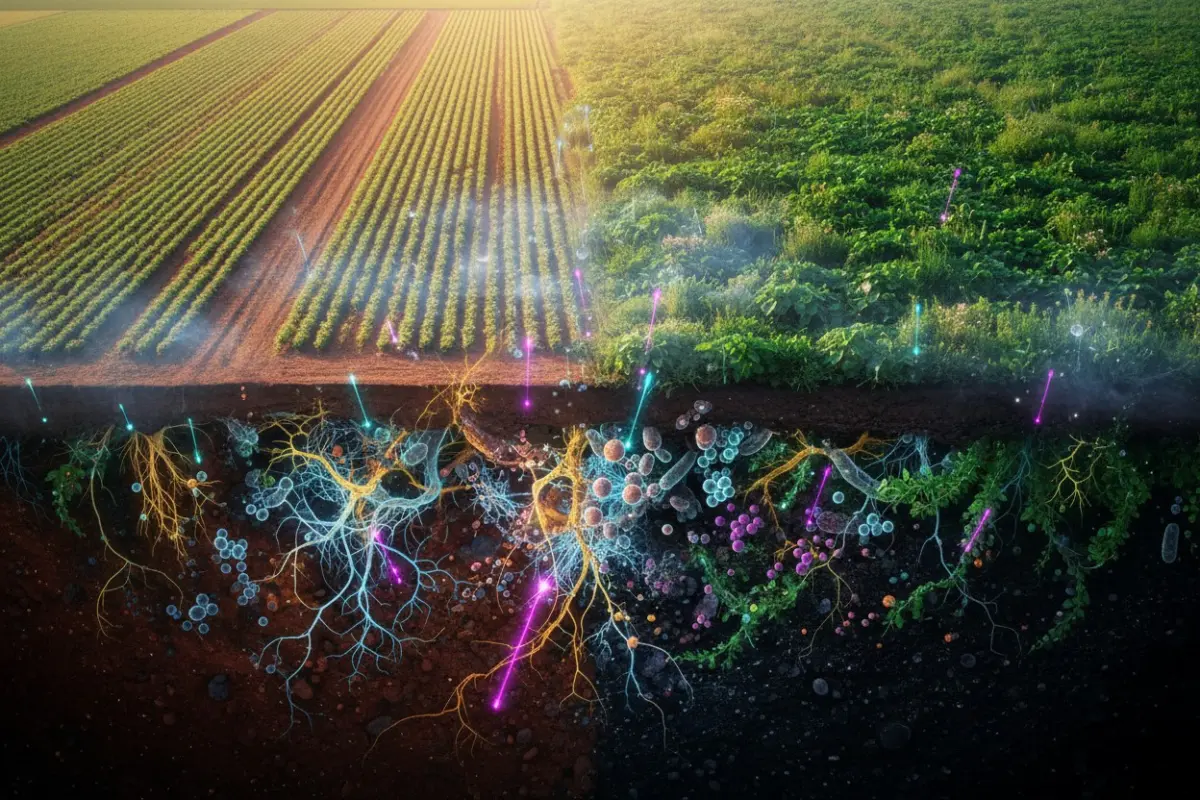
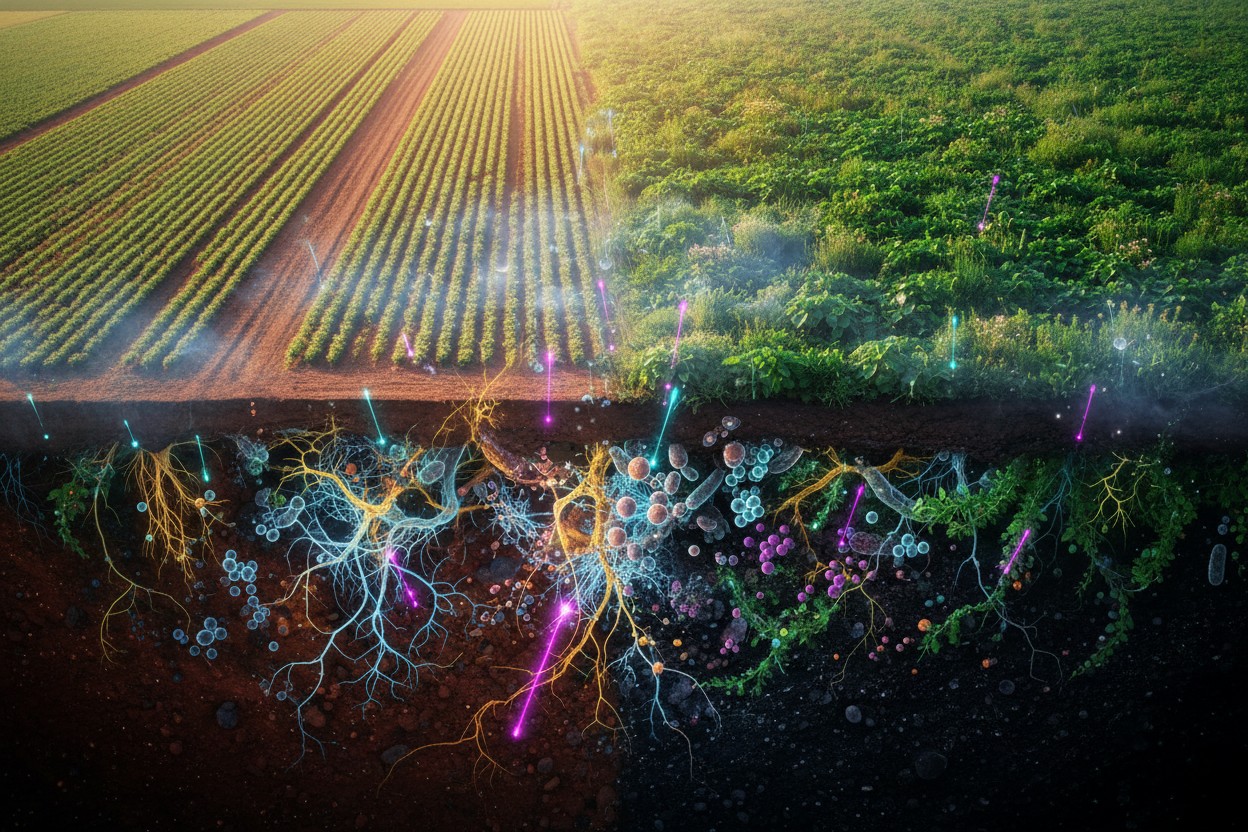
A comprehensive, continent-wide scientific investigation has revealed that complex chemical cocktails of pesticide residues are quietly reshaping the vital biological engine beneath our feet. Published in the journal Environmental Science and Pollution Research, the landmark study demonstrates that agricultural chemicals do not respect farm boundaries, adversely altering soil microbial communities across both conventional and organic farming systems in ten European countries.
The findings place a spotlight on the hidden ecological toll of modern agriculture. By evaluating real-world farming conditions rather than controlled laboratory environments, researchers have confirmed that the foundational ecosystems of European soils are routinely exposed to a diverse matrix of fungicides, herbicides, insecticides, and their persistent degradation products.
Main Facts: The Invisible Weight on the Soil Microbiome
At the heart of the study is the soil microbiome—a dense, highly complex network of bacteria, fungi, and other microorganisms that serve as the fundamental architects of planetary life. According to the research team, which included scientific experts and state agency representatives from across the European Union, these microscopic communities play a foundational, non-negotiable role in ecosystem functioning. They drive nutrient cycling, stabilize soil structure, filter water, and facilitate the natural growth of crops.
However, this biological foundation is under siege from what scientists call the "cocktail effect"—the combined, interacting impacts of multiple chemical residues lingering in the earth. The study identified measurable levels of numerous active ingredients and metabolites, including copper, fungicides, and aminomethylphosphonic acid (AMPA), which is the primary environmental metabolite of the ubiquitous herbicide glyphosate.
Crucially, the research—initially highlighted by the advocacy group Beyond Pesticides—revealed that chemical contamination is not restricted to conventional agricultural lands. Residues were detected in roughly 79 percent of organic fields sampled, compared to 96 percent of conventional fields. While the concentration and complexity of these mixtures were substantially lower in organic systems, their presence underscores the profound ubiquity of agricultural chemicals in the modern environment.
Chronology: Tracing the Path from Field Sampling to Publication
The journey of this multi-nation research project spans several years of intensive fieldwork, laboratory analysis, and data harmonization across diverse European landscapes.
- Phase 1: Site Selection and Harmonization (2020–2022): Researchers established an observational field study network spanning ten countries: Croatia, the Czech Republic, Denmark, France, Italy, the Netherlands, Portugal, Slovenia, Spain, and Switzerland. Approximately 20 agricultural sites were selected per country, split evenly between certified organic and conventional management systems to capture a diverse cross-section of European agriculture.
- Phase 2: Dataset Integration via Knuth et al. (2024): A companion paper by Knuth and colleagues provided the comprehensive pesticide residue dataset. This massive inventory cataloged 192 distinct chemical inputs, including 45 insecticides, 50 herbicides, 57 fungicides, 39 metabolites, and piperonyl butoxide, a common chemical synergist designed to enhance pesticide toxicity.
- Phase 3: Field Sampling Across Diverse Crops: Field researchers collected soil samples beneath a wide array of regional cropping systems. These included olives in Croatia, oilseeds in the Czech Republic, wheat in Denmark, vineyards in France and Portugal, permanent orchards in Italy and Switzerland, seed potatoes in the Netherlands, maize in Slovenia, and intensive field vegetables in Spain.
- Phase 4: Laboratory Analysis and Statistical Modeling: Soil samples underwent high-resolution chemical and DNA sequencing analyses to map microbial community structures. Researchers utilized advanced statistical models—controlling for geographical and country-level variations—to isolate the specific impacts of individual pesticide residues and multi-chemical mixtures on bacterial and fungal populations.
- Phase 5: Publication and Dissemination (2024): The final findings were published in Environmental Science and Pollution Research, triggering immediate discussions within environmental policy circles, organic farming boards, and scientific communities regarding the regulation of chemical mixtures in soil health frameworks.
Supporting Data: Quantifying the Chemical Cocktail
The empirical data gathered during the study paint a vivid picture of chemical pollution in European soils, highlighting stark contrasts—as well as surprising overlaps—between conventional and organic farming practices.
Residue Prevalence and Complexity
When researchers analyzed the soil samples for the 192 targeted substances, the frequency and concentration of the detections varied significantly by management type:
- Conventional Fields: Residues were detected in 96 percent of sampled fields. These soils hosted highly complex mixtures containing up to 21 distinct pesticide compounds simultaneously. The median total residue concentration reached 250.1 micrograms per kilogram.
- Organic Fields: Residues were detected in 79 percent of sampled fields. Despite strict prohibitions against synthetic pesticides in organic management, these soils contained mixtures of up to 12 different compounds. However, the median total residue concentration was significantly lower, resting at 31 micrograms per kilogram.
Key Chemical Drivers of Microbial Shifts
After adjusting statistical models to account for regional and national variations, the researchers isolated six specific chemical residues that exerted a statistically significant influence on the overall composition of soil microbial communities:
- Metalaxyl-M: A systemic phenylamide fungicide used to control soil-borne pathogens.
- AMPA: The primary degradation product of glyphosate, known to persist extensively in soils.
- Metolachlor OA: An oxanilic acid metabolite of the widely used chloroacetanilide herbicide metolachlor.
- Boscalid: A broad-spectrum carboxamide fungicide utilized across diverse horticultural crops.
- Difenoconazole: A triazole fungicide frequently applied to protect fruit, vegetables, and field crops.
- Glyphosate: The active ingredient in the world’s most widely deployed non-selective herbicide.
Of these compounds, AMPA and difenoconazole were found to directly impact bacterial community structures, while AMPA stood out as the sole compound that significantly altered fungal community profiles.
Synergistic Interactions and Legacy Pollutants
Perhaps the most alarming discovery involved the behavior of chemical combinations. In multi-variable models, AMPA appeared as a significant factor in every microbial interaction model it inhabited. Furthermore, hexachlorobenzene—a persistent organic pollutant (POP) and legacy pesticide that has been banned for decades—suddenly emerged as a significant driver of bacterial community composition only when AMPA was present in the soil matrix.
Additionally, researchers observed that the introduction of metalaxyl-M amplified the biological impact of the glyphosate metabolite AMPA. The study authors described this interaction pattern as "possibly synergistic," noting that such compounded, cross-chemical interactions have rarely, if ever, been documented in previous soil ecology literature.
Official Responses and Agricultural Implications
The publication of the European study has triggered widespread debate among agricultural regulators, organic certification bodies, and environmental health advocates.
The Organic Farming Dilemma
The detection of pesticide residues in 79 percent of organic fields has raised urgent questions regarding contamination pathways. Agronomists point to two primary vectors: chemical drift from neighboring conventional farms via wind and rain, and the historical persistence of long-lived synthetic compounds remaining in the soil from prior conventional management cycles.
Furthermore, the findings touch upon substances currently permitted under certified organic production rules (such as copper-based fungicides used to combat fungal blights). While authorized due to a lack of immediate, scalable alternatives, these substances are subject to continuous review.
Advocacy groups like Beyond Pesticides argue that the study establishes an indispensable methodology for governing bodies—such as the United States National Organic Standards Board (NOSB)—to evaluate how even permitted natural or transitional substances interact within complex soil food webs. This regulatory scrutiny is timely; a widely cited Consumer Reports survey noted that agricultural chemicals remain a top health and environmental concern for roughly 85 percent of American consumers.
Broder Environmental and Public Health Concerns
The implications of the study extend far beyond agricultural yields, intersecting with growing scientific anxiety over chronic chemical exposure and microbial resistance.
- Antimicrobial Resistance: A comprehensive literature review published in Comparative Biochemistry and Physiology Part C suggests that chronic, low-dose pesticide exposure can accelerate multidrug resistance in environmental bacteria through interconnected genetic and biochemical pathways.
- Glyphosate and Resistant Microbes: Research emerging from South America, cataloged in various scientific reviews, links the ubiquitous deployment of glyphosate to the unchecked proliferation of multidrug-resistant bacterial strains in agricultural soils.
- Nutrient Cycling and Mycorrhizal Suppression: Beyond direct toxicity to specific microbes, the study adds to a mountain of evidence showing that chemical cocktails disrupt essential soil functions. Pesticides have been shown to suppress arbuscular mycorrhizal fungi—symbiotic organisms that help plants absorb phosphorus and micronutrients—while actively altering global carbon and nitrogen cycling.
Future Outlook: Navigating the "Cocktail Effect"
As agricultural science transitions from viewing soils as inert chemical substrates to recognizing them as living, breathing super-organisms, studies like this European multi-country assessment mark a critical turning point.
The research underscores a glaring blind spot in traditional pesticide risk assessments, which typically evaluate chemicals in isolation. In the real world, soil microbes are never exposed to a single active ingredient; they swim in an evolving soup of dozens of interacting herbicides, fungicides, insecticides, and degradation byproducts.
Understanding this "cocktail effect" is no longer an academic exercise—it is an urgent prerequisite for global food security. As policymakers weigh the future of farming subsidies, pesticide bans, and organic standards, the message from the earth is clear: protecting the microscopic life beneath our feet is essential to safeguarding the health of the entire planet.