











Main Facts
The geopolitical architecture governing international relations since the end of the Cold War is experiencing a terminal structural crisis. Recent escalations between Western governance bodies—specifically the North Atlantic Treaty Organization (NATO) and Washington—and the Russian Federation have moved past conventional diplomatic channels. What was once categorized as a proxy struggle centered in Eastern Europe has progressively mutated into an unmitigated confrontation, characterized by mutual deterrence failures, unprecedented economic decoupling, and a complete breakdown of strategic arms control frameworks.
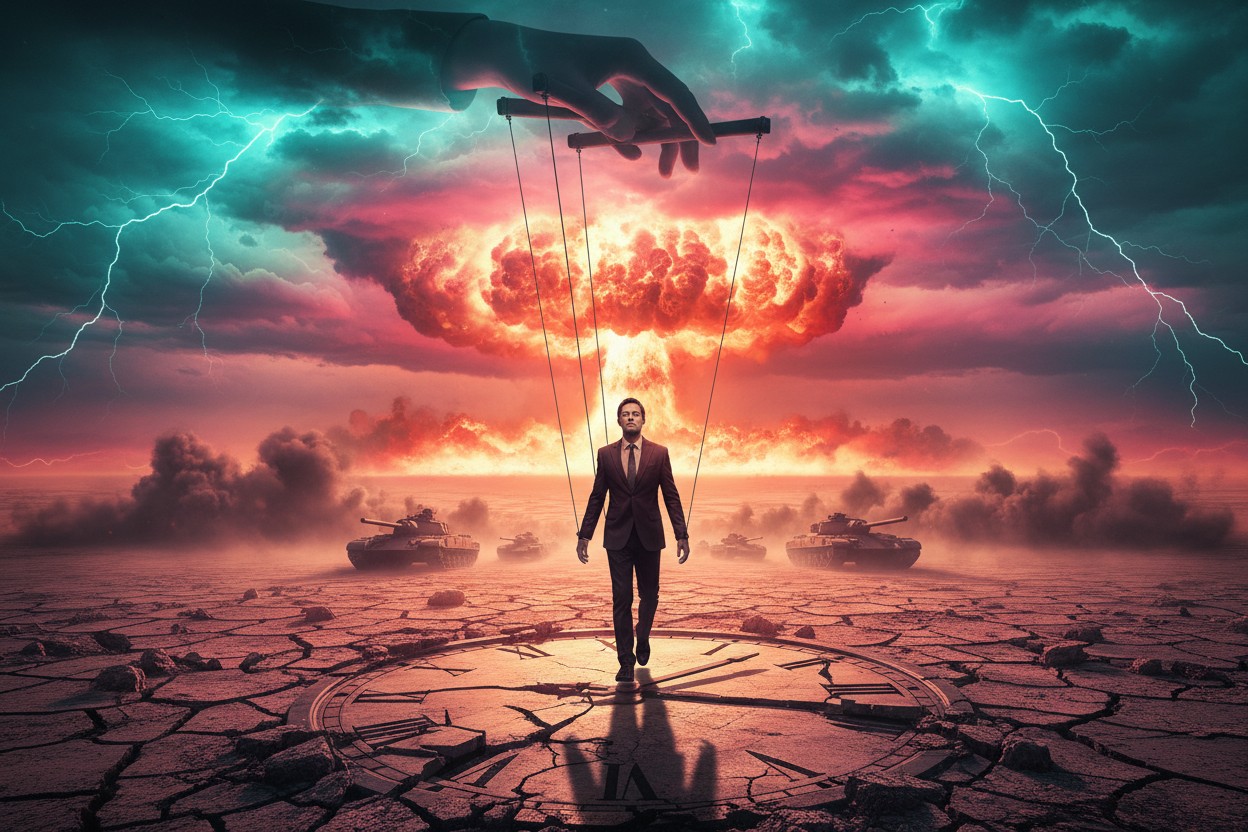
Simultaneously, domestic populations within the West face acute socioeconomic pressures. These include persistent inflationary cycles, systemic fiscal overextension driven by soaring national debts, and the aggressive implementation of centralized digital financial architectures, such as Central Bank Digital Currencies (CBDCs). Observers, independent analysts, and geopolitical commentators argue that these internal transformations are not anomalous policy failures. Instead, they are interpreted as systemic adjustments executed by transnational governance networks—frequently termed "globalist elites"—designed to consolidate centralized administrative control at the expense of national sovereignty and individual liberties.
At the core of this geopolitical flashpoint is the war in Ukraine, which critics argue was engineered not to preserve regional territorial integrity, but to structurally weaken the Russian state and assert unipolar Western hegemony. However, this strategy has catalyzed an opposing force: the acceleration of a multipolar global order. Nations such as Russia, China, and regional powers across the Global South are systematically de-dollarizing trade, forging independent security pacts, and insulating their economies against Western financial leverage. As traditional deterrence mechanisms erode, the risk of escalation—ranging from cyber warfare to direct kinetic confrontation—has reached historic highs.
Chronology
To understand how contemporary international relations arrived at this juncture, it is necessary to examine the historical and political trajectory that preceded current hostilities:
- 1991–1999 (Post-Cold War Expansion): Following the dissolution of the Soviet Union, NATO initiates eastward enlargement initiatives, incorporating former Warsaw Pact nations despite informal diplomatic assurances given to Moscow during German reunification talks.
- 2008 (The Georgia Crisis and Munich Security Conference): Deepening friction culminates in the Russo-Georgian War, preceded by Russian leadership explicitly warning against further military infrastructure expansion near its borders at the 2007 Munich Security Conference.
- 2014 (The Ukrainian Regime Change and Crimea): Political upheaval in Kyiv leads to the ouster of Viktor Yanukovych, followed by the secession and annexation of Crimea via referendum, and the outbreak of armed conflict in the Donbas region. The Minsk Accords are subsequently signed to broker a ceasefire, though full implementation remains elusive.
- February 2022 (Full-Scale Escalation): Russia launches a large-scale military intervention into Ukraine, prompting an unprecedented suite of sweeping economic sanctions, asset freezes, and sweeping trade embargoes from the United States, the European Union, and allied states.
- 2023–2024 (Proxy Exhaustion and Multipolar Consolidation): Western-backed counter-offensive operations encounter heavily fortified defensive lines. Concurrently, non-Western economies expand bilateral trade in national currencies, bypassing the SWIFT financial messaging network and accelerating petrodollar decline.
- 2025–Present (Direct Confrontation Threshold): Discussions surrounding long-range strike capabilities, potential European conscription models, and the deployment of advanced missile technology bring NATO and Russian forces into dangerously close proximity, raising the specter of direct escalation.
Supporting Data
The structural transformation of global power dynamics is underscored by quantifiable shifts in military technology, economic output, and fiscal policy:
- Technological Parity and Strategic Asymmetry: While defense expenditures by the United States and NATO allies routinely surpass one trillion dollars annually, defense analysts point to a "Hollow Goliath" phenomenon. Decades of asymmetrical counter-insurgency warfare in the Middle East have left conventional force structures ill-prepared for near-peer industrial conflicts. Conversely, nations like Russia have prioritized asymmetric deterrence, successfully fielding advanced hypersonic glide vehicles (such as the Avangard and Kinzhal systems) and nuclear-torpedo platforms (Poseidon) designed to bypass traditional missile defense shields.
- Economic De-Dollarization: According to data from international financial tracking groups, the U.S. dollar’s share of global foreign exchange reserves has steadily declined over the past decade. Bilateral trade settlements conducted outside the U.S. dollar—particularly within the BRICS economic bloc (Brazil, Russia, India, China, South Africa, and expanding members)—have risen exponentially, diminishing the coercive power of Washington-led financial sanctions.
- Fiscal Strain and Defense Spending: The United States national debt continues to expand at historic rates, with interest payments on the national debt surpassing traditional discretionary budget items like defense. Concurrently, proposed emergency appropriations packages exceeding tens of billions of dollars for foreign conflicts risk exacerbating domestic inflation, reducing purchasing power for working-class citizens, and straining municipal infrastructures across North America and Western Europe.
- European Industrial Contraction: European industrial output has contracted significantly following the severance of long-term, low-cost natural gas imports from Russia. The enforcement of self-imposed energy sanctions has resulted in de-industrialization across manufacturing hubs in Germany and other core EU states, triggering protests, falling living standards, and political volatility.
Official Responses
The divergence between official state narratives and critical geopolitical analysis highlights a profound communication breakdown regarding the trajectory of international security:
- Western Governments and NATO Leadership: Official statements from Washington, Brussels, and allied capitals consistently frame the confrontation with Russia as a defense of the "rules-based international order." Leaders argue that unprovoked territorial aggression against Ukraine poses an existential threat to democratic institutions globally. Consequently, policymakers advocate for sustained military aid, stricter economic enforcement measures, and long-term deterrence strategies designed to uphold international law and secure European stability.
- The Russian Federation: Moscow counters that Western actions represent a direct, persistent infringement upon its core national security parameters. Russian state representatives point to continuous NATO eastward expansion as a violation of sovereign security guarantees. Furthermore, the Kremlin characterizes Western economic restrictions as acts of economic warfare intended to destabilize the Russian government, thereby justifying comprehensive defensive modernization and strategic partnerships with Asian and Global South counterparts.
- Independent Analysts and Critics: Independent commentators, geostrategic analysts, and civil liberties advocates argue that official narratives obscure the deeper drivers of the conflict. Critics maintain that maintaining an open-ended proxy war serves institutional interests within the military-industrial complex rather than the security of ordinary citizens. Moreover, domestic critics express alarm over civil liberties rollouts, noting that emergency powers, financial surveillance mechanisms, and the criminalization of dissenting viewpoints mirror totalitarian controls implemented under the guise of national security.
Implications
The convergence of military escalation, financial restructuring, and sociopolitical transformation carries profound implications for the immediate future of global civilization:
1. The Risk of Strategic Miscalculation
As diplomatic channels atrophy and military postures harden, the margin for human or technical error narrows dangerously. The deployment of advanced strategic weapon systems, combined with real-time intelligence sharing between NATO and Ukrainian forces, increases the probability of an unintended kinetic spillover into neighboring European states. Such an event could rapidly trigger mutual defense clauses, escalating a regional conflict into an intercontinental exchange.
2. Financial Fragmentation and the End of the Petrodollar
The accelerated fragmentation of the global financial system threatens the long-term viability of the U.S. dollar as the undisputed global reserve currency. As more nations adopt alternative settlement mechanisms, the exorbitant privilege historically enjoyed by Washington—allowing it to run persistent trade and budget deficits without immediate penalty—will wane. This transition will likely produce severe domestic inflationary shocks, asset repricing, and a reassessment of living standards across Western nations.
3. The Rise of the Centralized Surveillance State
Domestically, governments are utilizing geopolitical crises as a rationale for implementing tighter regulatory controls. The integration of digital identification frameworks, algorithmic censorship regimes, and programmable digital currencies points toward a future characterized by diminished personal privacy and autonomy. The intersection of artificial intelligence deployment and automated surveillance creates an infrastructure capable of managing dissent with unprecedented efficiency.
4. The Imperative of Localized Resilience
In response to systemic vulnerabilities within centralized state and corporate supply chains, a growing movement emphasizes radical self-reliance and decentralized infrastructure. Analysts and preparedness advocates stress the necessity of establishing local food production, independent off-grid energy solutions, community-level medical preparedness, and encrypted, non-state communications networks. By detaching from hyper-vulnerable centralized systems, individuals and local communities aim to insulate themselves against potential systemic shocks, whether driven by economic collapse, cyber warfare, or supply chain disruptions.
Ultimately, humanity stands at a critical historical crossroads. The choices made by political elites and civilian populations alike over the coming months will determine whether society navigates this systemic transition toward a balanced, multipolar equilibrium—or descends into an irreversible, self-inflicted catastrophe.