Main Facts
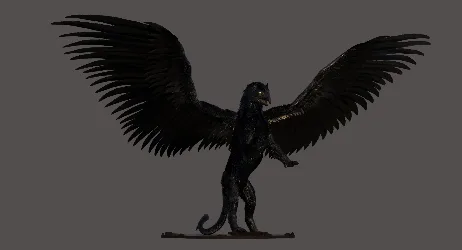
In Zack Snyder’s sprawling sci-fi fantasy epic Rebel Moon, world-building extends far beyond dystopian imperial dread and plasma-fire gunfights. Among the most striking additions to the director’s expanding cinematic universe is the bennu—a majestic, powerful lion-eagle hybrid that functions as Snyder’s distinct interpretation of the traditional mythological griffin.
To answer the most pressing question for fans diving into the lore: Yes, the bennu is effectively Rebel Moon’s version of a griffin. However, unlike traditional European folklore where griffins are standard fantasy tropes, the bennu is deeply woven into the socio-cultural and geographical fabric of the Rebel Moon universe. Specifically native to the lush world of Samandrai, these creatures serve a vital ecological and practical purpose: they are utilized as biological transport vehicles, functioning much like horses do in terrestrial societies.
The most prominent bennu featured in the franchise thus far is Beatrice, a stunning, fierce black-feathered specimen introduced in Rebel Moon – Part One: A Child of Fire. Beatrice takes center stage during a now-iconic sequence where the captive warrior Tarak Decimus (played by Staz Nair) attempts to break and tame the supposedly "unrideable" creature on the distant world of Neu-Wodi.
Brought to life by the world-class visual effects house Framestore, the creation of the bennu required a delicate balance between historical myth, biological plausibility, and cutting-edge digital artistry. The result is a creature that not only anchors one of the first film’s most emotionally resonant sequences but also hints at vast, unexplored narrative horizons for future installments of Snyder’s universe.
Chronology of the Bennu’s Cinematic Genesis
The journey of the bennu from a concept in Zack Snyder’s imagination to a photorealistic creature on screen spans years of collaborative design, digital engineering, and narrative framing.
Early Development and World-Building (2020–2021)
When Zack Snyder was conceptualizing the universe of Rebel Moon—initially conceived as a mature Star Wars pitch before evolving into an independent Netflix intellectual property—he wanted a universe that felt tactile, lived-in, and culturally rich. Drawing from ancient mythologies, Snyder and his co-writers (Kurt Johnstad and Shay Hatten) developed Samandrai as a planet defined by sweeping plains, dense forests, and a symbiotic relationship between its high-born inhabitants and local wildlife. The bennu was drafted not merely as a background monster, but as a central pillar of Samandraian culture and a mirror for Tarak’s own internal struggles.
The Framestore Design Phase (2021–2022)
Production partners at Framestore were tasked with designing a creature that would feel immediately familiar to audiences versed in mythology, yet distinctly alien enough to fit into Snyder’s gritty sci-fi sandbox. Artists studied real-world avian and feline anatomy—analyzing the muscle structure of big cats like lions and the wing aerodynamics of apex birds of prey—to ground the fantasy creature in physical reality. Riggers and animators worked in tandem to establish the bennu’s weight, balance, and distinctive movement patterns, ensuring that whether it was pacing in a pen or soaring through the air, it maintained believable animalistic behaviors.
Principal Photography and Practical Integration (2021–2022)
During the filming of Rebel Moon – Part One: A Child of Fire, actors like Staz Nair had to interact with physical stand-ins, blue-screen rigs, and motion-reference models. The "breaking of Beatrice" sequence required intense physical choreography between Nair and stunt coordinators, blending live-action performance with the future digital insertion of the massive creature. The emotional beats of the scene—culminating in Tarak whispering his famous empathetic monologue to the beast—were captured on set to ensure genuine emotional resonance before the visual effects were layered in.
Post-Production and VFX Finalization (2022–2023)
Framestore’s post-production pipeline focused heavily on feather simulation, lighting integration, and facial animation. Giving a creature with an avian beak and feline eyes expressive emotional cues without breaking the illusion of wild animal behavior was a monumental technical hurdle. The completed VFX sequences debuted globally when Rebel Moon – Part One: A Child of Fire premiered on Netflix in December 2023, instantly turning Beatrice into a fan-favorite element of the film.
Supporting Data & Technical Breakdown
To fully appreciate how the bennu came to life, it is necessary to examine the production metrics, design lineage, and narrative placement that validate its existence within the cinematic canon.
Anatomy and Biological Design
- The Hybrid Blueprint: Framestore’s design marries the muscular forequarters and feline head of a lion with the massive, feathered wings, talons, and raptor-like tail of an eagle.
- Coloration Dimorphism: While standard wild bennus on Samandrai may exhibit varied natural plumage for camouflage in plains and forests, Beatrice’s striking jet-black feathers visually echo Tarak’s own dark past, internal isolation, and aristocratic defiance.
- Scale and Physics: Standing significantly taller than a standard warhorse, the bennu requires a massive wingspan to achieve lift-off, a physical detail emphasized in Framestore’s technical breakdown reels showing aerodynamic bone structures and muscle flexing under tension.
Narrative Context: The Tarak and Beatrice Connection
- The Stakes of Neu-Wodi: Tarak, a former prince of Samandrai reduced to indentured servitude on a barren agrarian world, is offered a chance at freedom under one condition: he must break a penned-in, highly aggressive bennu that has injured or killed previous handlers.
- Thematic Parallelism: The sequence operates on mutual empathy. As Tarak approaches the creature, he recognizes their shared trauma. Both are displaced, stripped of their agency, and forced into hostile environments far from Samandrai.
| Feature / Metric | Detail in Rebel Moon |
|---|---|
| Origin Planet | Samandrai |
| Primary Function | Biological transportation / Mount (comparable to horses) |
| Visual Effects Studio | Framestore |
| Key Narrative Representative | Beatrice (Black-feathered bennu tamed by Tarak Decimus) |
| Debut Film | Rebel Moon – Part One: A Child of Fire (2023) |
Official Responses and Creative Insights
The realization of the bennu has drawn praise from critics, visual effects professionals, and the cast alike, shedding light on the collaborative effort required to build modern cinematic myths.

Zack Snyder on Crafting Mythic Ecosystems
Director Zack Snyder has frequently spoken about his desire to craft worlds that feel authentic rather than sterile. In promotional interviews surrounding the release of Rebel Moon, Snyder emphasized that mythical creatures in sci-fi should never feel like mere window dressing.
"When you introduce a creature like the bennu, it has to carry historical weight for the characters who interact with it," Snyder noted during production insights. "For Tarak, seeing a creature from Samandrai isn’t just about escaping a pen; it’s a visceral, heartbreaking connection to a home he was ripped away from. It’s a homecoming wrapped in a struggle for survival."
Framestore’s Artistic Philosophy
The VFX artists at Framestore highlighted the unique challenge of taking a creature rooted in ancient mythology—the griffin has roots in ancient Persian, Egyptian, and Greek art—and translating it into a high-octane modern science-fiction film.
In official featurette breakdowns released by the studio, lead designers explained that the key to making the bennu believable was avoiding the "cartoonish" traps of past cinematic monsters. By studying how birds of prey react to stress and how big cats display dominance, the animation team ensured that every hiss, feather ruffle, and wing beat adhered to real-world biological laws, even within a fantasy setting.
Staz Nair on Filming the "Breaking of Beatrice" Scene
Actor Staz Nair, who brought Tarak to life with intense physical dedication, shared deep insights into the emotional core of filming the taming sequence. The interplay between man and beast required Nair to convey profound vulnerability.
"I’m not going to hurt you. You’re far from home and so am I," Tarak tells Beatrice in the film.
Nair noted in post-release discussions that this dialogue was crucial to understanding Tarak’s character arc. The scene was not merely about brute force or dominance over an animal; it was an exercise in emotional resonance. By treating the bennu as an equal intellect rather than a domesticated tool, Tarak earns a loyalty that ultimately alters the trajectory of his journey.
Implications for the Future of the Rebel Moon Universe
The introduction of the bennu and its deep ties to the planet Samandrai opens up staggering world-building possibilities for the future of Zack Snyder’s franchise, encompassing upcoming director’s cuts, expanded universe media, and potential sequels.
1. Expanding the Lore of Samandrai
Thus far, audiences have only caught glimpses of Samandrai through Tarak’s tragic backstory and his interaction with a single captive bennu on Neu-Wodi. However, the narrative breadcrumbs point toward a much larger cultural landscape. If bennus function as common transportation on Samandrai, future storylines or expanded media could feature sweeping aerial cavalry units, nomadic tribes riding herds of wild bennus across Samandraian plains, and deep ecological lore explaining how these apex predators were originally integrated into ancient civilization.
2. Evolution of Creature Design in Sci-Fi/Fantasy Blends
Rebel Moon occupies a unique genre space, blending the aesthetic grandeur of high fantasy with the grit of space operas. The success of the bennu proves that audiences respond enthusiastically to creatures that bridge mythological archetypes with hyper-realistic visual effects. This paves the way for Framestore and Snyder to introduce even more exotic fauna in subsequent chapters, moving beyond standard CGI monsters to create species with distinct cultural, narrative, and emotional footprints.
3. Character Development and Animal Bonds
Beatrice’s integration into the narrative sets a precedent for how non-human entities interact with the rebellion against the Motherworld. Just as sci-fi franchises like Avatar utilize creatures (such as the Ikran or Direhorse) to signify a character’s spiritual growth and connection to their environment, the bond between Tarak and Beatrice symbolizes his reclamation of royal heritage and personal freedom. As the rebellion spreads across the galaxy, the tactical and emotional utility of creatures like the bennu could play a pivotal role in large-scale planetary conflicts.
As fans eagerly await deeper dives into the planetary systems of the Rebel Moon universe—particularly through the comprehensive director’s cuts and future narrative expansions—Beatrice the bennu stands out as a triumph of modern creature design. She is a testament to what happens when classic mythological inspiration collides with visionary world-building, leaving audiences eager to see entire flocks of wild bennus take flight across the skies of Samandrai.