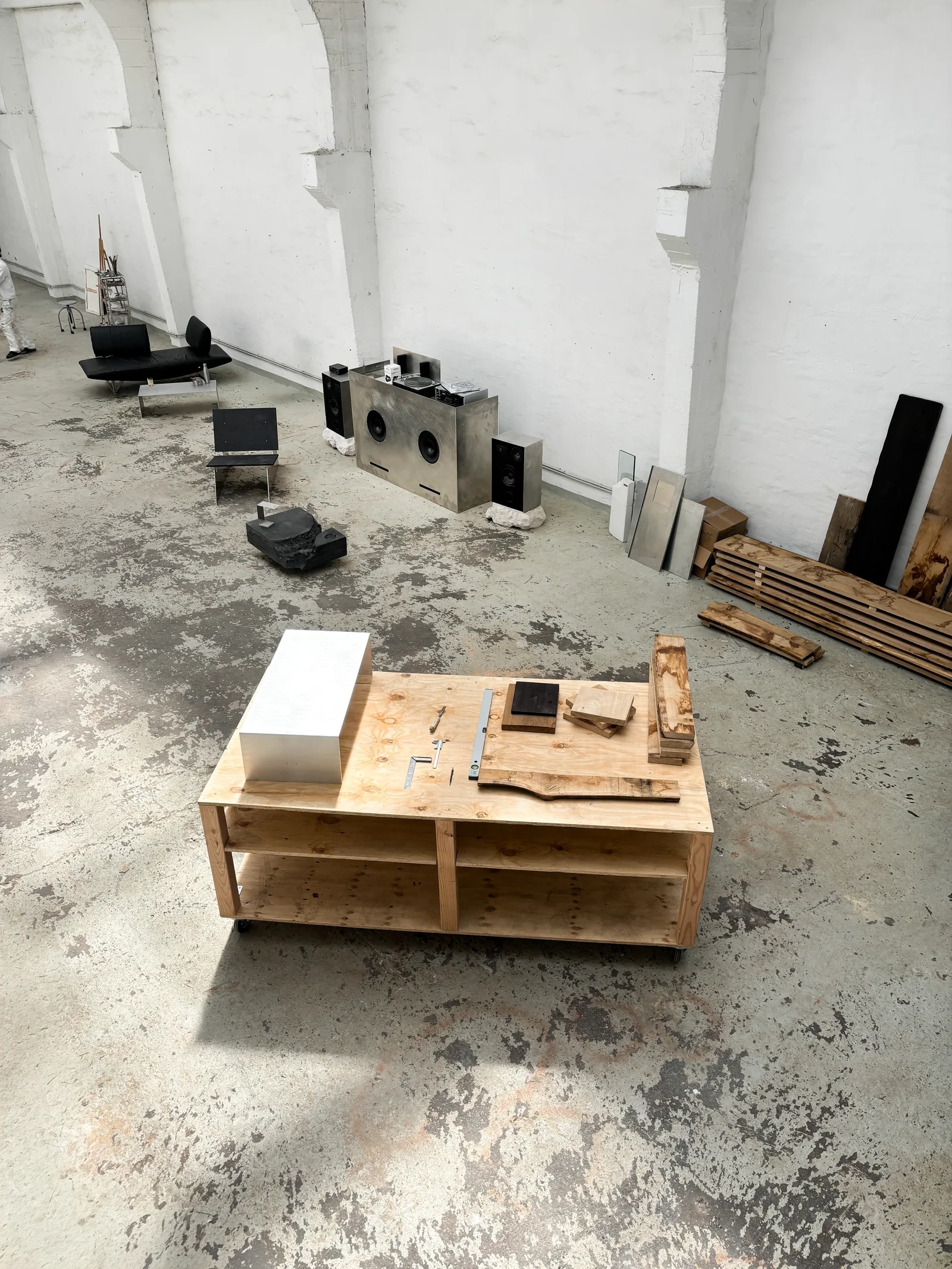
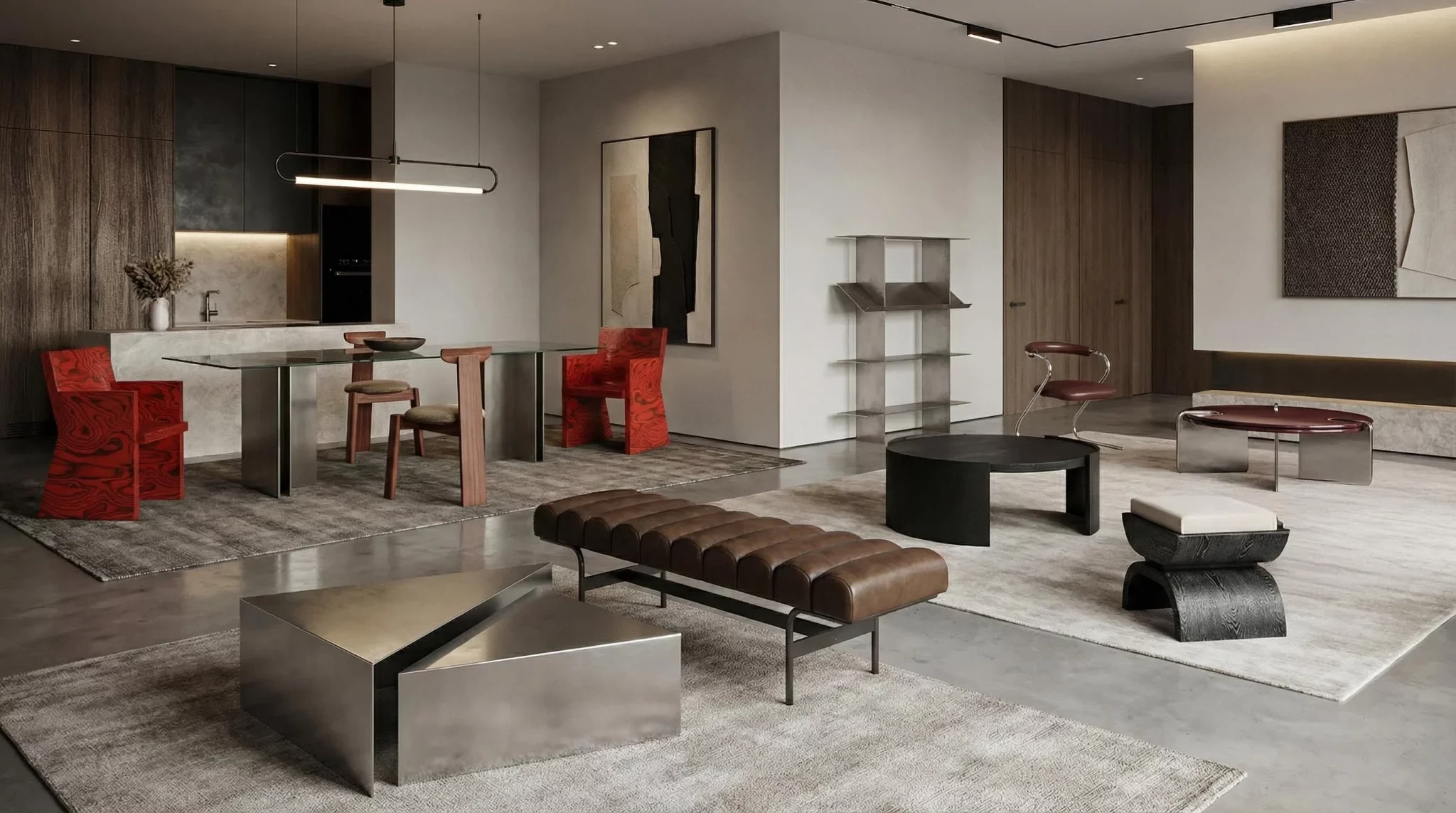
DÜSSELDORF — In the heart of Germany’s creative and industrial landscape, a quiet revolution is taking place in how we think about furniture, space, and materiality. Case Studios, a multidisciplinary design firm based in Düsseldorf, operates on a principle that feels increasingly radical in an era of mass production and digital ephemera: the material is the idea.
Founded by an interdisciplinary collective of visual artists and master craftsmen, the studio bridges the gap between high-concept artistic installations, interior architecture, and tactile product design. Yet, what binds their diverse portfolio together is not a shared aesthetic signature or a passing trend. Instead, it is an unwavering design philosophy—a disciplined commitment to understanding the intrinsic logic of raw materials, honoring their limitations, and, ultimately, getting out of the way.
1. Main Facts: The Philosophy of Material-Led Design
At Case Studios, the traditional design process is inverted. Where mainstream manufacturers typically begin by sketching a form and subsequently searching for a material to match the silhouette, Case Studios lets the material dictate the trajectory.
The studio’s core philosophy rests on three foundational pillars:
Material Autonomy: Every medium—whether raw concrete, centuries-old wood, or industrial metal—possesses its own inherent structure, history, and physical behavior. The designer’s role is not to bend the material to an arbitrary will, but to enter into a dialogue with it.
Structural Honesty: There is no superficial ornamentation in a Case Studios piece. Surfaces are structures; decorative elements are entirely absent. If a component exists on an object, it serves a definitive mechanical or spatial purpose.
Durability and Refinement: By utilizing unique, resilient, and time-tested materials such as concrete, hand-polished aluminum, and charred wood, the studio creates objects that age gracefully, developing a richer patina over time rather than degrading.
"The deliberate use, selection, and refinement of unique and durable materials create objects that both reshape and highlight the original properties of each material," the studio notes. This relentless focus ensures that the final product feels entirely inevitable—as though it could not possibly have been rendered in any other medium, or shaped in any other form.
2. Chronology: From Interdisciplinary Roots to the Exquisite Intersection of Fire and Metal
The evolution of Case Studios reflects a broader, contemporary craving for authenticity within the design world.
The Formative Years: Long before establishing their Düsseldorf workshop, the studio’s founders operated across disparate fields—spanning fine arts, sculpture, industrial design, and traditional carpentry. This cross-pollination of disciplines birthed a shared frustration with the hyper-commercialized, disposable nature of modern consumer goods.
The Synthesis of Practice: Recognizing that the most compelling spatial experiences occur where craftsmanship meets contemporary thought, the founders united to form Case Studios. They deliberately chose Düsseldorf as their base—a city famed for its rich history of industrial innovation and avant-garde art (epitomized by the legacy of the Kunstakademie Düsseldorf).
Expanding Horizons: Moving fluidly between product design, immersive interior architectures, and gallery-level artistic installations, the studio gained critical acclaim for treating domestic spaces not as venues for decoration, but as environments shaped by tactile energy.
The Integration of Ancient Techniques: As the studio matured, its research into material histories led them away from synthetic composites and toward primordial elements. This trajectory culminated in their contemporary exploration of concrete, raw metals, and traditional wood-charring methodologies.
3. Supporting Data: Anatomy of the Yakisugi Coffee Table
To understand the intellectual rigor behind Case Studios, one need look no further than their flagship piece: the Yakisugi Burnt Wood Coffee Table.
Measuring 115 × 60 × 30 cm, the table is part of the exclusive Case Studios line and serves as a physical manifestation of their design ethos.
Material Composition & Dimensions
Primary Structure: Hand-crafted, burnt, and sealed hardwood.
Dimensions: 115 cm (length) × 60 cm (width) × 30 cm (height).
Form Factor: Low, wide, and heavily grounded—proportioned intentionally to anchor a room rather than simply fill empty floor space.
Production Origin: Handcrafted in Germany.
The Science and Craft of Yakisugi
At the core of the table’s visual and tactile impact is yakisugi (often referred to in the West as Shou Sugi Ban), an ancient Japanese architectural technique historically used to weather-proof and preserve cedar siding.
The process involves intensely charring the surface of the timber with fire. This controlled burn obliterates the softer cellular layers of the wood while carbonizing the outer shell. What remains is a remarkably dense, sealed, and rot-resistant material. The resulting deep black surface boasts a craggy, tactile topography that no artificial paint, stain, or synthetic veneer can ever replicate.
Case Studios takes this ancient, meditative pyrotechnic craft and thrusts it into direct contrast with a thoroughly modern counter-material: hand-sanded aluminum.
This pairing creates a powerful dialectic:
Temperature & Texture: The cold, reflective, silky-smooth precision of machine-worked aluminum meets the warm, matte, organic roughness of charred wood.
Structural Necessity: The juxtaposition is not merely aesthetic. The aluminum framing provides structural tension and modern reinforcement, allowing the fragile-looking, carbonized wood to function securely as heavy-duty domestic furniture.
Singularity: Because both the charring of the timber and the hand-sanding of the metal are executed manually, no two coffee tables are identical. The unpredictable nature of fire ensures that every single piece carries its own distinct narrative fingerprint.
4. Official Perspectives: The Maker’s Mindset
While mass-market furniture brands rely on focus groups, trend forecasting, and cost-reduction metrics, Case Studios operates with the singular focus of a traditional atelier.
In statements reflecting their studio ethos, the collective emphasizes that objects should provoke a sensory dialogue with the user. By stripping away extraneous decorative elements, the studio aims to restore a sense of gravity to domestic interiors.
"When you understand what a material wants to do, you stop fighting its nature," notes a representative from the collective. "A piece of wood that has been transformed by fire carries history within its grain. Aluminum carries the precision of the hand that sanded it. Our job is simply to let these two forces speak to one another without interruption."
This commitment extends to their localized production model. By keeping manufacturing rooted in Germany under direct supervision, Case Studios preserves the integrity of the craft, ensuring that each artisan retains creative ownership over the execution of every piece.
5. Implications: What Case Studios Means for the Future of Design
The rise of Case Studios signals a broader, much-needed shift within contemporary interior architecture and product design. As consumers grow increasingly fatigued by flat-pack uniformity and digital saturation, the demand for high-integrity, tactile objects is reaching an all-time high.
1. The Rejection of Planned Obsolescence
By anchoring their designs in immutable, durable materials like stone, treated timber, and raw metals, Case Studios pushes back against the fast-furniture cycle. Their pieces are designed to last lifetimes, accumulating character rather than wear-and-tear degradation.
2. The Fusion of Heritage and High-Tech
The studio proves that looking backward—adopting historical techniques like yakisugi—is not an act of nostalgia, but a vehicle for innovation. By pairing ancient pyro-craft with contemporary metalworking, they carve out a unique space where tech-forward precision and artisanal heritage coexist seamlessly.
3. Redefining Luxury in the 21st Century
In an era where luxury is frequently conflated with brand logos and superfluous embellishment, Case Studios redefines the term through material honesty. True luxury, according to their portfolio, lies in the purity of the elements, the transparency of the production process, and the quiet confidence of an object that needs no explanation.
Case Studios is based in Germany. Explore their complete collection and upcoming architectural projects at case-studios.com.
To discover more curated design highlights, view the original feature on Roomhints.