Main Facts: The Philosophy of Material-Led Design
At the core of every creation emerging from Case Studios lies a strict discipline rather than a superficial style. Founded in Düsseldorf, Germany, by an interdisciplinary collective bridging visual arts and traditional craftsmanship, the studio operates across product design, interior architecture, and large-scale artistic installations. What unifies their diverse portfolio is not a fleeting aesthetic trend, but a foundational design philosophy: design as a direct, unmediated engagement with raw materials.
Rather than working backward—starting with a preconceived form and forcing a material to fit it—Case Studios reverses the creative equation entirely. The material initiates the process. Its inherent structure, physical properties, historical context, and structural limitations dictate the trajectory of the design. The final form emerges organically from this dialogue between maker and matter.
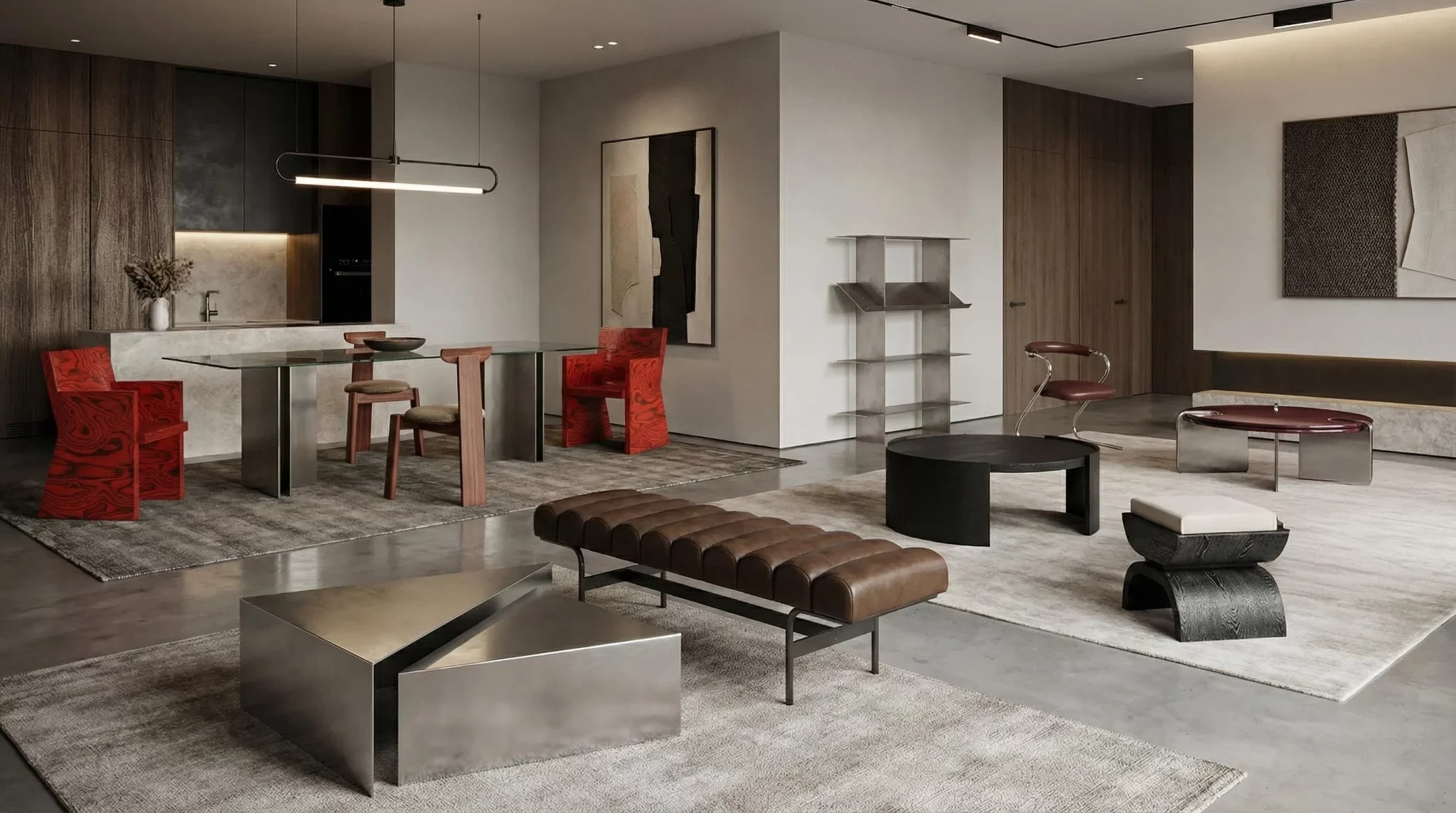
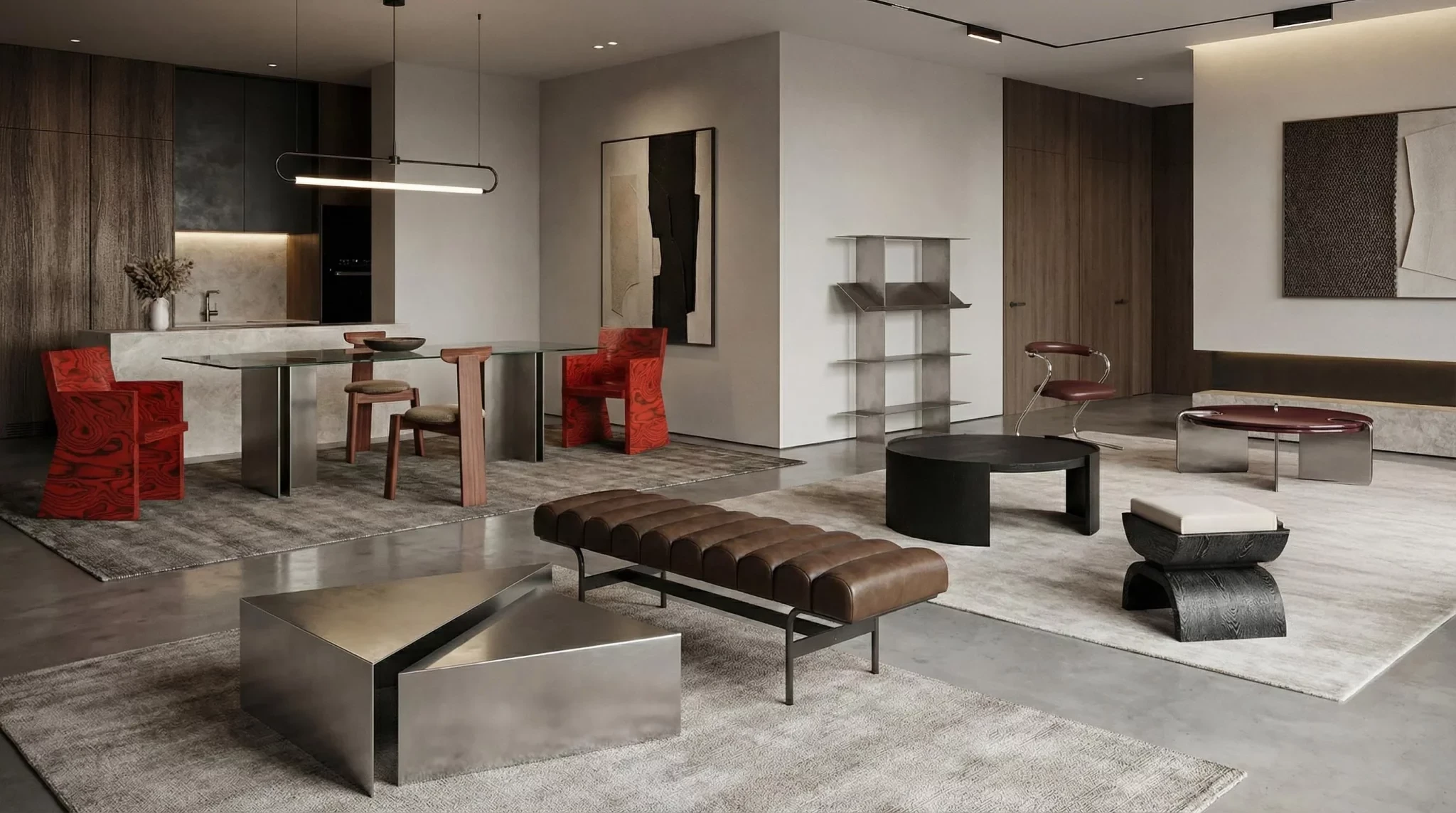
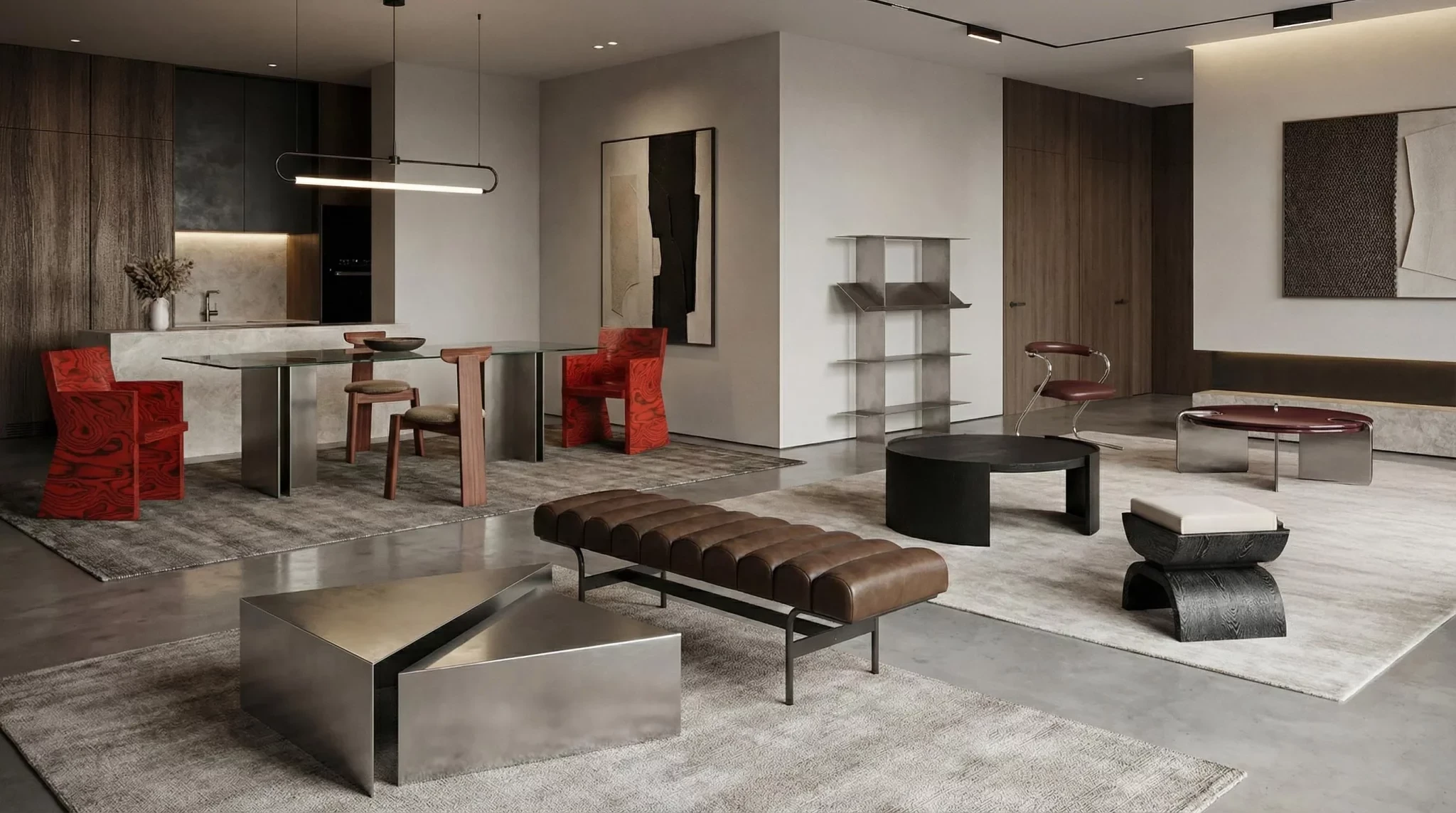
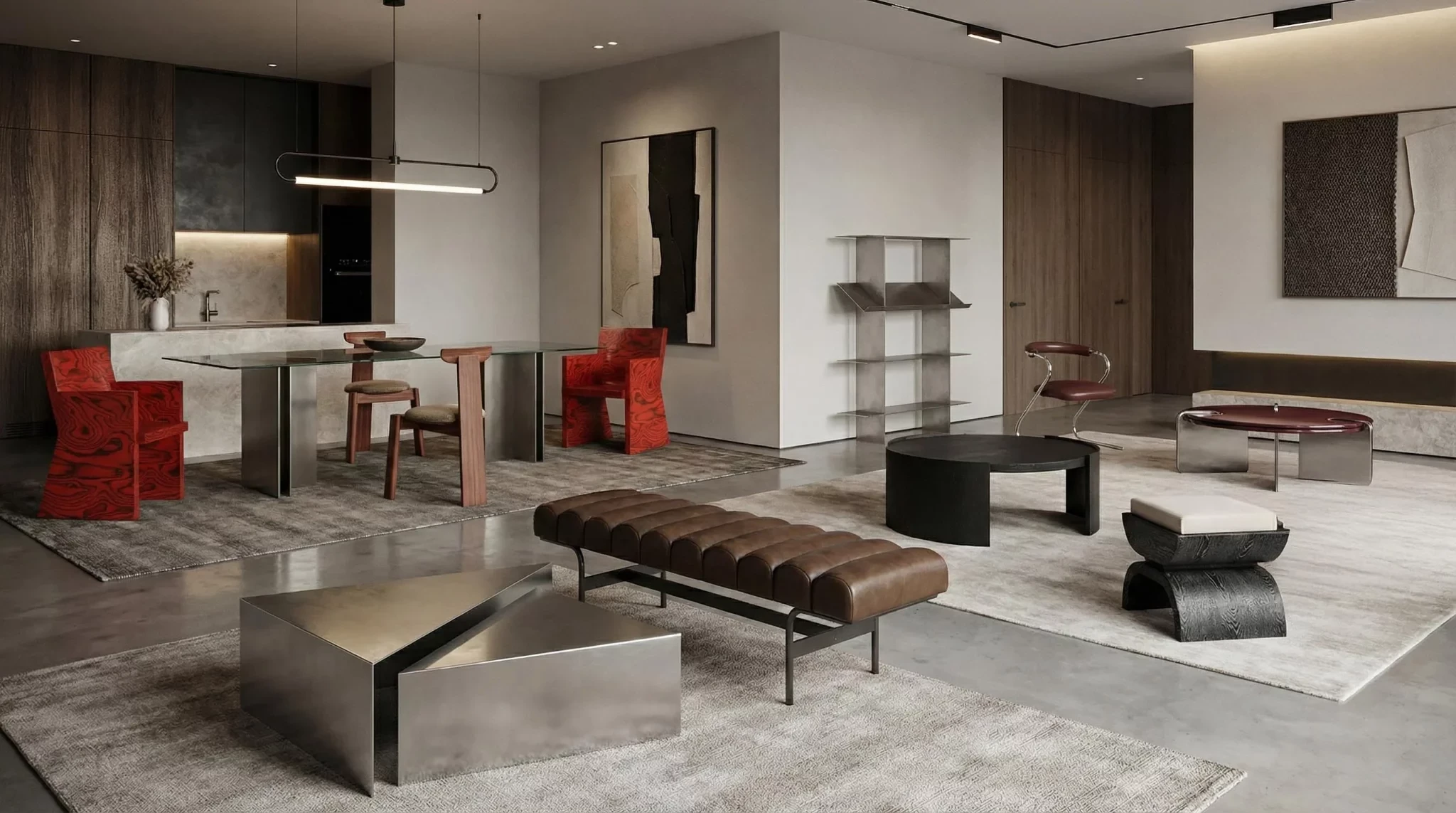
Utilizing uncompromising mediums such as raw concrete, hand-polished aluminum, and yakisugi burnt wood, the studio selects elements strictly for their functional performance and structural honesty rather than mere visual embellishment. The resulting objects possess an undeniable sense of inevitability; they appear as though they could not have been manufactured differently, nor derived from any other substance. There is a complete absence of excess, superfluous decoration, or decorative veneers. Every exposed surface doubles as a structural necessity.

"The deliberate use, selection, and refinement of unique and durable materials create objects that both reshape and highlight the original properties of each material," the founders note. This ethos differentiates Case Studios from conventional design houses that treat interesting textures as finishing touches. Within the walls of the Düsseldorf atelier, the material itself is the primary idea, while all else remains mere execution.
Chronology: The Evolution of an Interdisciplinary Atelier
To understand the trajectory of Case Studios, one must examine the progressive evolution of its founding members and their cross-disciplinary approach to modern spatial and product design.
- The Formative Years (Pre-Founding): The collective founders spent years operating independently within distinct spheres of visual art and industrial craftsmanship. This dual exposure cultivated a shared frustration with modern consumer design, which frequently prioritizes rapid manufacturing and superficial aesthetics over structural integrity and material truth.
- The Düsseldorf Establishment: The studio was officially established in Düsseldorf, strategically positioning itself at a crossroads of German industrial engineering and contemporary art practice. From its inception, the founders rejected specialized categorization, choosing instead to fluidly transition between consumer product design, spatial interior architecture, and gallery-level installations.
- The Material Exploration Phase: Early projects focused on testing the behavioral limits of brutalist concrete and industrial metals. The studio systematically documented how various structural compounds react to stress, environmental exposure, and human interaction over time.
- Integration of Ancient Techniques: Recognizing the limitations of purely modern, mechanized industrial production, the studio began researching historical preservation methods. This research led directly to the adoption and reinterpretation of ancient Japanese wood-charring techniques, marrying centuries-old craftsmanship with contemporary digital and manual fabrication processes.
- The Exclusive Line Launch: Culminating years of material research, Case Studios introduced its signature furniture lines—most notably the Yakisugi Burnt Wood Coffee Table. This release cemented the studio’s reputation internationally as a pioneer of material-led luxury design.
Supporting Data: Specifications of the Yakisugi Coffee Table
The physical manifestation of the studio’s rigorous philosophy is best observed in its signature piece: the Yaksugi Burnt Wood Coffee Table, part of the Case Studios Exclusive Line.

Physical and Material Specifications
- Dimensions: 115 cm (length) × 60 cm (width) × 30 cm (height)
- Primary Materials: Handcrafted German-sourced hardwood paired with hand-sanded industrial aluminum.
- Surface Treatment: Traditional yakisugi charring, followed by deep sealing to lock in structural density.
- Production Method: Individually handcrafted in Germany; strictly limited production batches.
Aesthetic and Structural Properties
The table’s dimensions are intentionally low and wide—proportions specifically engineered to anchor a domestic or commercial room rather than merely fill empty floor space. By combining the organic, tactile resistance of charred timber with the cold, precision-milled finish of hand-sanded aluminum, the piece creates a stark structural dialogue. The two materials do not merely coexist; they structurally justify and balance one another. Furthermore, because the charring process reacts organically to the unique grain patterns of each individual piece of wood, no two tables produced by Case Studios are identical.
Official Statements and Design Philosophy
The leadership team at Case Studios has consistently maintained that contemporary design suffers from a detachment from physical reality. In various institutional statements and design manifests, the atelier has articulated its core operational tenets:
- On Material Autonomy: "A material possesses its own intrinsic logic. The fundamental duty of the designer is not to dominate or disguise the medium, but to thoroughly comprehend it, honor its limitations, and step out of the way."
- On Ornamentation: "Decoration is frequently used to mask structural weakness or conceptual poverty. When a design is driven entirely by the structural truth of its components, applied decoration becomes entirely redundant."
- On Durability: "True sustainability in design begins with longevity. By selecting materials that actively improve, patina, or maintain their integrity through decades of use, we reject the cycle of disposable consumerism."
These statements underscore a broader institutional commitment to craftsmanship that resists cyclical trends in favor of timeless, material-centric architecture and product engineering.

Implications: The Future of Material-Led Craftsmanship in Contemporary Design
The emergence of studios like Case Studios carries significant implications for the broader furniture, interior architecture, and industrial design landscapes.
1. A Shift Away From Fast Furniture
As consumers and commercial clients grow increasingly fatigued by mass-produced, petroleum-derived, and short-lived furnishings, the market is experiencing a cultural pivot toward hyper-durable, provenance-driven design. By demonstrating that ancient techniques like yakisugi can be successfully integrated into contemporary luxury interiors, Case Studios validates the economic and artistic viability of slow, intentional craftsmanship.
2. The Fusion of High-Tech and High-Touch
The studio’s seamless integration of cold, precision-machined aluminum with organic, fire-treated timber signals a broader trend in industrial design: the reconciliation of digital/industrial precision with deeply tactile, human-centric craft. This duality proves that technological advancement does not necessitate the elimination of manual artistry; rather, the two can amplify one another’s strengths.

3. Redefining Luxury Through Transparency
In an era where "luxury" is frequently equated with brand prestige or superficial gilding, Case Studios redefines the term through radical material transparency. When an object’s beauty is derived entirely from how it was burned, sanded, and structurally assembled, the consumer is granted an unmediated connection to the physical reality of the object.
As Case Studios continues to expand its footprint from its Düsseldorf base into international architecture and exhibition spaces, it offers a compelling blueprint for the future of design: an industry where respect for the raw earth takes precedence over human ego, and where the material is, unequivocally, the idea.