









By Investigative Staff
For years, critics and digital watchdogs who sounded the alarm about corporate surveillance and the environmental toll of Big Tech were routinely dismissed as alarmists. Today, that luxury of skepticism has evaporated. The unprecedented acceleration of the artificial intelligence boom has transformed from a purely technological milestone into a profound physical crisis.
Far from the dystopian science-fiction trope of rogue humanoid robots marching through the streets, the modern threat to human communities is mundane, heavy, and sprawling: the modern hyperscale data center.
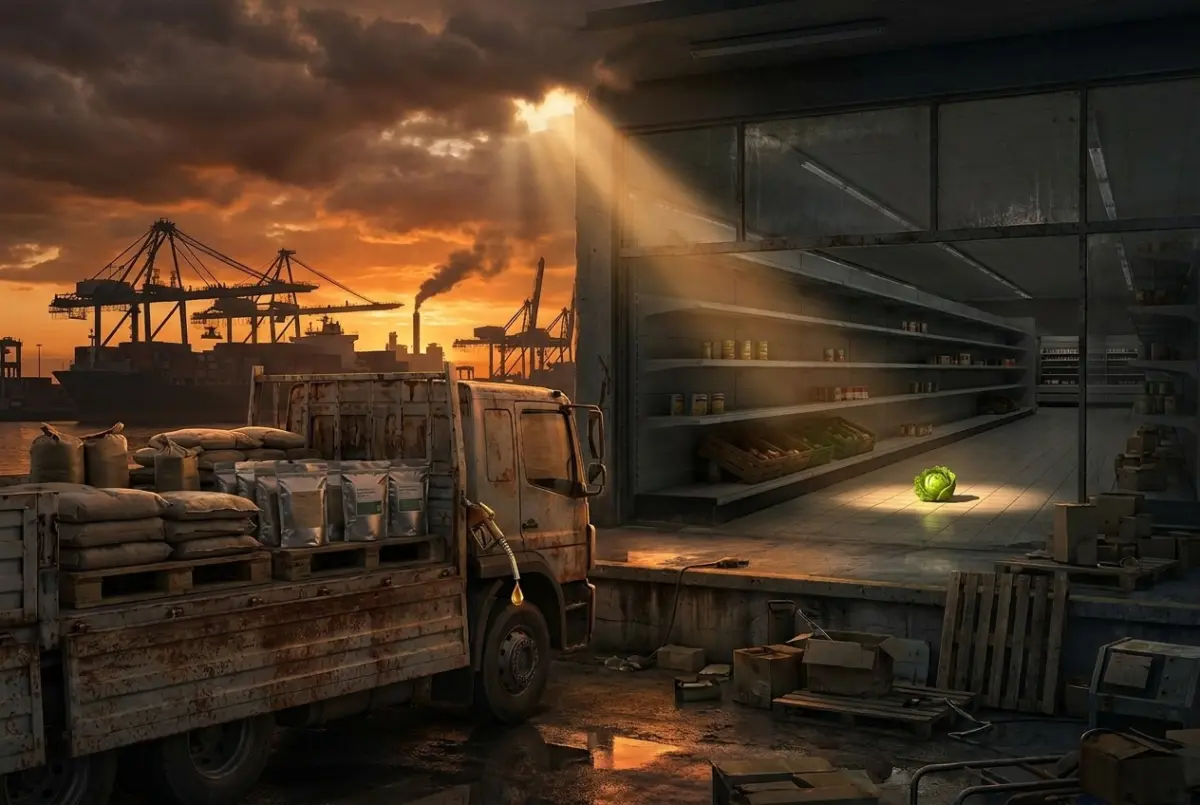
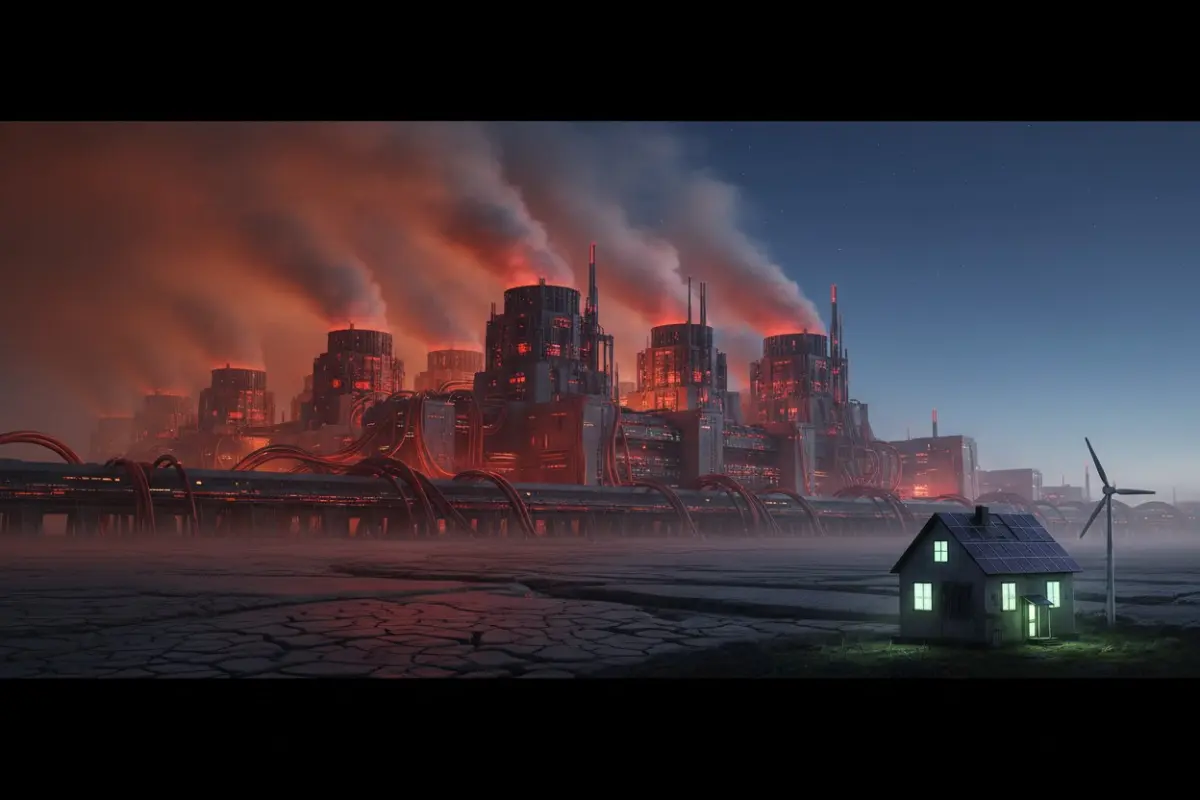
Stretching across rural farmland, tapping directly into major river systems, and aggressively plugging into an aging national electric grid, these colossal digital fortresses are consuming the vital foundations of human survival. Built not for broad societal progress, but for corporate profit and data control, the AI gold rush is reshaping the physical landscape of the United States. And as ordinary citizens bear the brunt of rolling blackouts, skyrocketing utility bills, and compromised natural resources, a growing grassroots movement is fighting back.
Main Facts: The Physical Footprint of the Digital Mind
The narrative surrounding artificial intelligence has long been dominated by immaterial concepts—the "cloud," software algorithms, and invisible neural networks. Yet, behind every high-speed query, automated translation, and generative image lies a harsh, tangible reality composed of concrete foundations, miles of copper wiring, heavy cooling towers, and relentless industrial exhaust.
The Energy Siphon
The sheer scale of energy required to train and maintain modern large language models defies conventional power planning. According to industry estimates cited by the White House, data centers currently consume approximately 4.4 percent of all electricity in the United States. That figure is projected to skyrocket to a staggering 12 percent by 2030.
To put this demand into perspective, leading AI developers like OpenAI are reportedly demanding up to 100 gigawatts of new energy capacity per year—an amount roughly equivalent to the electricity consumption of 80 million American households. During a recent discussion on Decentralize.TV, energy analyst Hakeem Anwar highlighted the staggering pipeline of approximately 800 hyperscale projects and 200 gigawatts of planned domestic demand currently moving through the development pipeline, largely without public consultation or community consent.
The Thirst of the Cloud
Electricity is only half the equation; AI runs just as heavily on water. Hyperscale data centers generate immense heat, requiring millions of gallons of water daily to cool humming server racks through evaporation.
In Utah, a planned 40,000-acre hyperscale project is projected to consume more electricity than the entire state currently utilizes. Compounding the energy crisis, that same installation could drain nearly 17 billion gallons of water per year merely to service its natural gas turbines, while simultaneously inflating the state’s carbon dioxide output by up to 75 percent. Mayors across the nation are increasingly warning that data centers are pushing regional utility grids to the brink of blackouts, while threatening severe localized water shortages driven not just by annual consumption, but by extreme peak-demand spikes that outstrip system capacity.
Chronology: From Digital Novelty to Physical Displacement
To understand how communities arrived at the brink of resource scarcity, it is necessary to examine how the digital infrastructure boom accelerated past regulatory safeguards.
- Early 2010s–2019: Hyperscale data centers largely blend into suburban office parks and industrial zones. While energy footprints grow, they remain manageable for regional utilities, and public awareness is low.
- Late 2022: The public launch of generative AI triggers an unprecedented global race among tech giants. Computing demands multiply exponentially, forcing companies to seek vast tracts of cheap land near existing transmission lines and water sources.
- 2023–2024: Tech corporations aggressively lobby for expedited zoning approvals. Subdivisions and rural farming communities find themselves targeted for multi-billion-dollar installations. Environmental reviews are frequently bypassed or streamlined under legacy green-energy frameworks.
- 2024–2025: Local resistance flares. Across more than 300 cities, towns, and counties nationwide, citizens organize to pass emergency zoning bans and moratoriums on hyperscale construction. State officials begin stepping in; Texas Governor Greg Abbott orders a temporary pause on new data center grid connections amid mounting reliability concerns.
- Present Day: The tension between national technological ambition and local resource protection reaches a boiling point. Regulatory loopholes are scrutinized, while grassroots communities increasingly demand decentralization and local control over their power and water grids.
Supporting Data: By the Numbers
The friction between corporate tech expansion and public welfare is starkly illustrated by a growing body of data, municipal reports, and legislative actions:
- 4.4% to 12%: The projected leap in U.S. electricity consumption by data centers between today and 2030.
- 100 Gigawatts: The annual energy capacity reportedly demanded by leading AI developers like OpenAI—equivalent to the power needs of roughly 80 million homes.
- 300+ Jurisdictions: The number of American cities, towns, and counties that have enacted explicit zoning bans or construction moratoriums on hyperscale facilities.
- 17 Billion Gallons: The estimated annual water consumption of a single massive Utah hyperscale project designed to power and cool gas turbines.
- 80% Dedicated Capacity: The proportion of energy from a planned Georgia transmission line—built using eminent domain to seize private homes and land—dedicated specifically to data centers rather than residential ratepayers.
Official Responses and Regulatory Capture
As public anxiety mounts, the response from federal and state regulators has exposed deep vulnerabilities in how critical American infrastructure is governed.
Eminent Domain for Digital Landlords
Rather than absorbing the costs of infrastructure expansion, tech giants and regional utilities are increasingly shifting the financial and physical burden onto local populations. In Georgia, Georgia Power initiated proceedings to seize 30 residential homes and 330 individual land parcels to construct a massive high-voltage transmission line. The primary purpose of this infrastructure? Delivering nearly 10,000 megawatts of power, with roughly 80 percent of that capacity earmarked exclusively for data centers. Critics note this represents a troubling evolution of eminent domain—subordinating private property rights not for public utilities, but for private corporate compute capacity.
Regulatory Loopholes and Voluntary Pledges
Environmental and zoning watchdogs have discovered that hyperscale developers routinely exploit legal gray areas. Following Supreme Court rollbacks of Clean Water Act protections, numerous data center projects have managed to bypass rigorous EPA jurisdiction entirely, qualifying instead for streamlined permits intended for low-impact developments. In some instances, private data centers on public land have been fast-tracked using permits originally drafted for benign solar energy installations.
Federal oversight has proven similarly sluggish. The White House’s introduced "Ratepayer Protection Pledge" remains entirely voluntary, leaving everyday citizens vulnerable to higher monthly utility bills while corporate profits soar. Only recently have federal agencies begun exploring mandates that would force tech conglomerates to fully internalize the staggering infrastructure costs of the water, grid upgrades, and electricity they consume.
Implications: The Choice Between Centralized Scarcity and Local Resilience
The rapid expansion of artificial intelligence infrastructure is forcing society to confront a fundamental question: Who owns the future of our essential resources?
The trajectory of centralized AI development points toward a future of engineered scarcity. When massive corporations monopolize water supplies and draw down regional grids, ordinary citizens are left vulnerable. The warning signs are already visible; lawmakers in states like Ohio have previously weighed legislation enabling utility companies to remotely control residential thermostats during peak energy grid strain. Surrendering public resources to digital monopolies ultimately invites direct intrusion into daily life.
The Decentralized Alternative
Urban planners, energy experts, and community organizers argue that the antidote to corporate overreach lies in radical decentralization.
- Local Action at City Hall: The most immediate defense is civic engagement. Grassroots resistance has proven effective; the more than 300 municipal moratoriums enacted nationwide demonstrate that local zoning boards and city councils remain vital battlegrounds where communities can halt predatory land and water grabs.
- Local Compute and Energy Independence: Just as households have increasingly embraced rooftop solar and home battery storage, the computing model itself must decentralize. Running smaller, efficient open-source AI models locally on user-owned hardware—rather than routing every trivial digital task through massive, resource-draining hyperscale facilities—reduces systemic strain.
- Off-Grid Innovation: Communities are increasingly exploring privately funded, "islanded" micro-utilities that operate independently of legacy public utility regulations. Peer-reviewed research in energy planning consistently shows that locally managed renewable resources can successfully anchor sustainable, resilient communities.
The AI boom does not have to mean the depletion of our communities. By rejecting the premise that technological progress requires the sacrifice of our water, land, and electricity, citizens can reclaim their local resources. The tech giants will not ask permission before draining municipal water supplies and overloading the grid; therefore, communities must no longer ask permission to defend their homes, their environment, and their future.