








WASHINGTON — In the rapidly expanding $40 billion global artisanal bath and body market, hobbyists and independent makers are continually seeking avenues to differentiate their products from mass-produced commercial lines. While melt-and-pour soap crafting has long been celebrated for its accessibility, safety, and lack of caustic lye handling, it often battles a perception of monotony. The traditional workflow—melt, pour, wait, unmold, repeat—can yield uniform results that lack the tactile and visual complexity of cold-process or master-crafted artisan soaps.
Enter soap curls: an emerging design technique transforming basic melt-and-pour projects into intricate, multi-dimensional works of functional art. By shaving, peeling, or rolling thin ribbons of soap from solid blocks, makers can achieve delicate floral motifs, embedded cross-sections, and textured ASMR-friendly surfaces without investing in complex manufacturing equipment.

Industry analysts note that sensory-driven crafting—encompassing visual depth, tactile variation, and auditory feedback—has seen a 35% surge in consumer interest over the last two years. Soap curls sit precisely at the intersection of this trend, offering both aesthetic elevation and a novel sensory experience for the end consumer.
The Anatomy of a Soap Curl: What and Why
At its core, a soap curl is a thin, ribbon-like sliver harvested from a cured block or sheet of soap. Because the molecular structure of melt-and-pour bases retains a degree of flexibility—particularly when formulated with humectants like glycerin—these shavings naturally roll into resilient spirals.

When allowed to cure and harden fully, these curls develop a rigid, crystalline texture. Consumers have increasingly embraced these elements for their unique physical properties. In use, the clusters offer a gentle, exfoliating scrub that contrasts sharply with the creamy lather of traditional bars. Furthermore, the tactile and auditory feedback—often referred to in the digital crafting community as ASMR (Autonomous Sensory Meridian Response)—has driven widespread viral interest across platforms like TikTok and Instagram.
Beyond surface decoration, soap curls serve structural purposes in professional soap manufacturing. When embedded within transparent or opaque soap loaf molds, they produce stunning geometric cross-sections upon slicing, mimicking the high-end appearance of cold-process mosaic or confetti soaps.

Essential Toolkit and Material Preparation
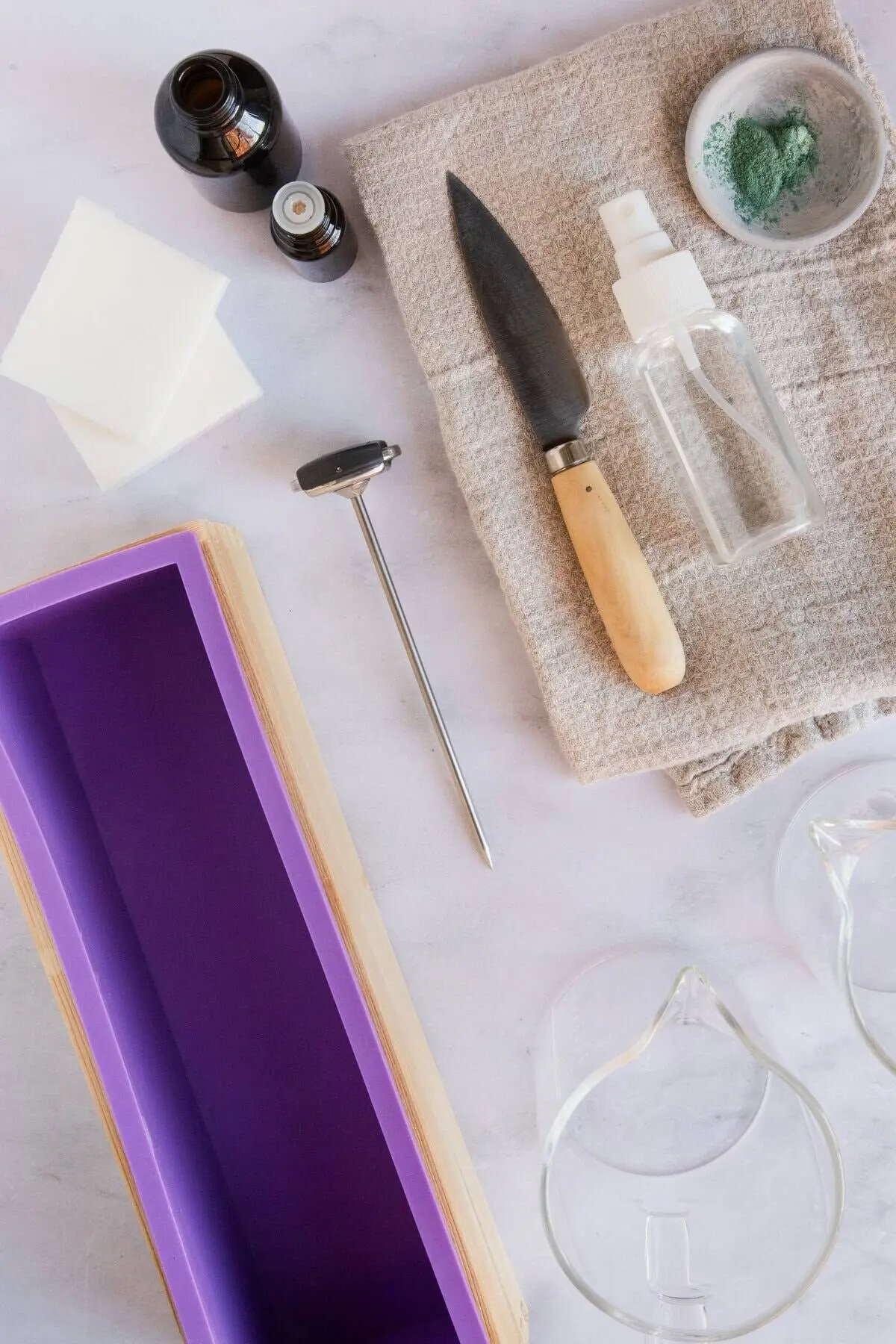
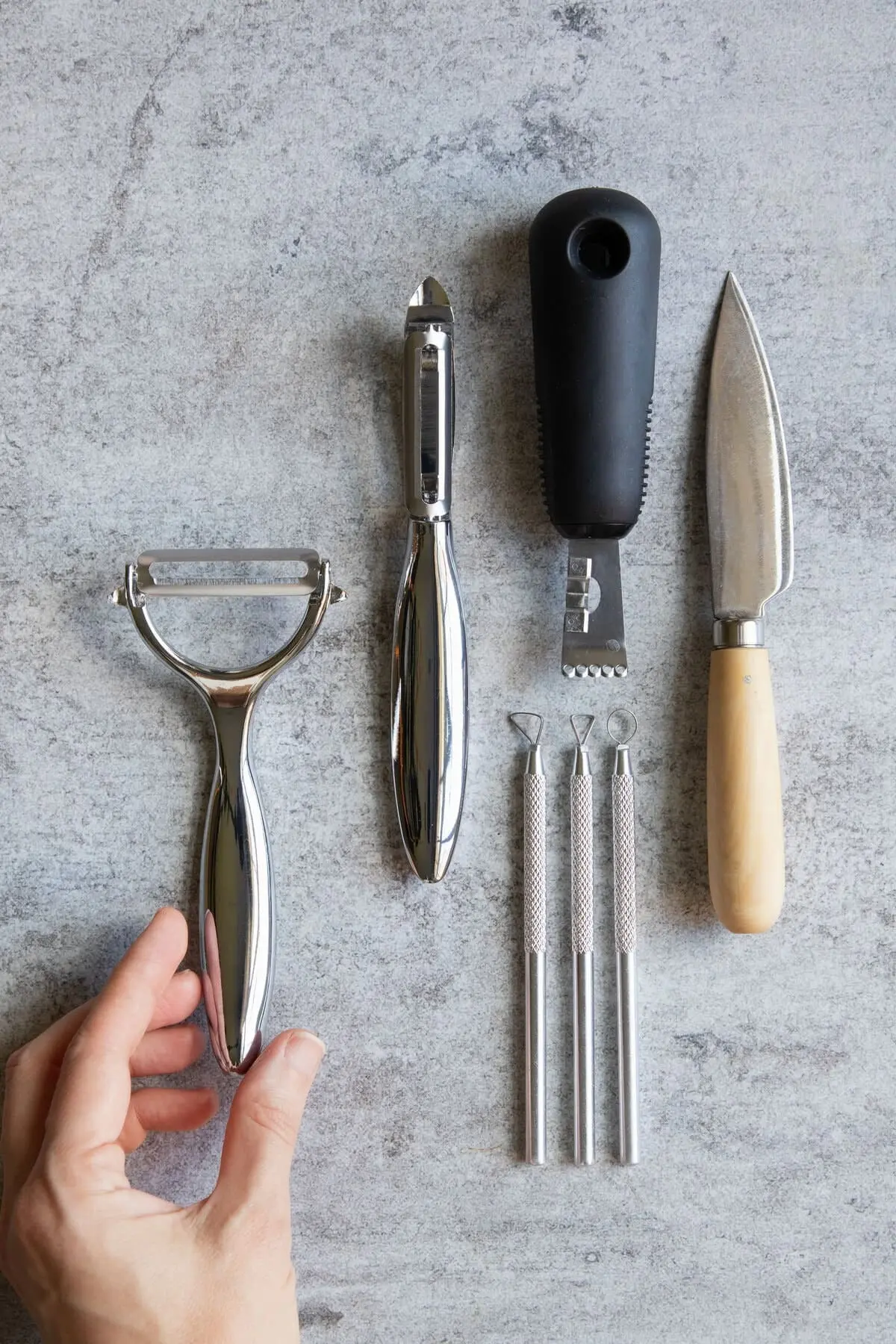
Before embarking on soap curl production, makers must assemble a targeted toolkit. While standard melt-and-pour supplies (soap bases, colorants, and fragrances) remain foundational, specialized shaving and casting tools dictate the final morphology of the curls.
Recommended Equipment
- Single-Cavity Molds & Loaf Molds: Used for casting the initial solid blocks or thin sheets.
- Vegetable Peelers & Y-Shaped Peelers: Ideal for pulling long, uniform ribbons.
- Citrus Zesters: Generates fine, confetti-like shavings for subtle, layered designs.
- Clay Trimming Tools: Offers an organic, hand-carved finish with irregular, artistic edges.
- Cheese Planers: Produces thicker structural slices necessary for creating dimensional floral petals.
Chronology of Production: Preparing the Base
To achieve optimal results, the base soap must be cast and cooled under controlled conditions.

- Melting: Melt the chosen melt-and-pour soap base slowly in a double boiler or microwave, avoiding excessive heat that can degrade added fragrances.
- Additive Integration: Incorporate desired cosmetic-grade colorants and skin-safe fragrance oils, whisking gently to prevent air bubble formation.
- Casting: Pour the liquid base into either a single-cavity mold (for block-shaving techniques) or a loaf mold (for the thin-pour method).
- Cooling and Maturation: Allow the soap to cool completely to room temperature. Rushing this process in a refrigerator can introduce condensation, which interferes with clean peeling and curling.
Five Professional Techniques for Crafting Soap Curls
Depending on the desired visual outcome, makers can utilize five distinct methodologies to harvest and shape soap ribbons.
1. The Vegetable Peeler Method (Classic Ribbons)
Utilizing a standard kitchen vegetable peeler on a fully cooled, single-cavity soap block yields long, flexible ribbons. The maker firmly grips the soap block (using a paper towel if the natural glycerin content makes the surface slippery) and draws the peeler smoothly along the flat edge. As the blade advances, the soap naturally curls into a delicate spiral. Because these ribbons are fragile, gentle hand manipulation while the soap is freshly cut can help secure the desired shape before it sets completely.

2. The Citrus Zester Technique (Confetti Effects)
For makers desiring subtle texture rather than prominent structural elements, a citrus zester is drawn lightly across the wide face of a soap block. This produces thousands of micro-curls resembling colorful confetti. When suspended in a transparent or white melt-and-pour base, these micro-shavings generate an organic, speckled appearance reminiscent of high-end terrazzo design.
3. Clay Trimming Tools (Organic Textures)
Ceramic and clay trimming loops offer a specialized blade curvature that carves uneven, highly textured ribbons. This method appeals to artisans seeking a rustic, hand-hewn aesthetic. To maintain consistency, makers should periodically use a utility knife to slice away tattered edges on the soap block, ensuring a flat, uniform working surface for subsequent passes.

4. The Y-Shaped Peeler & Loaf Mold Method (Wider Ribbons)
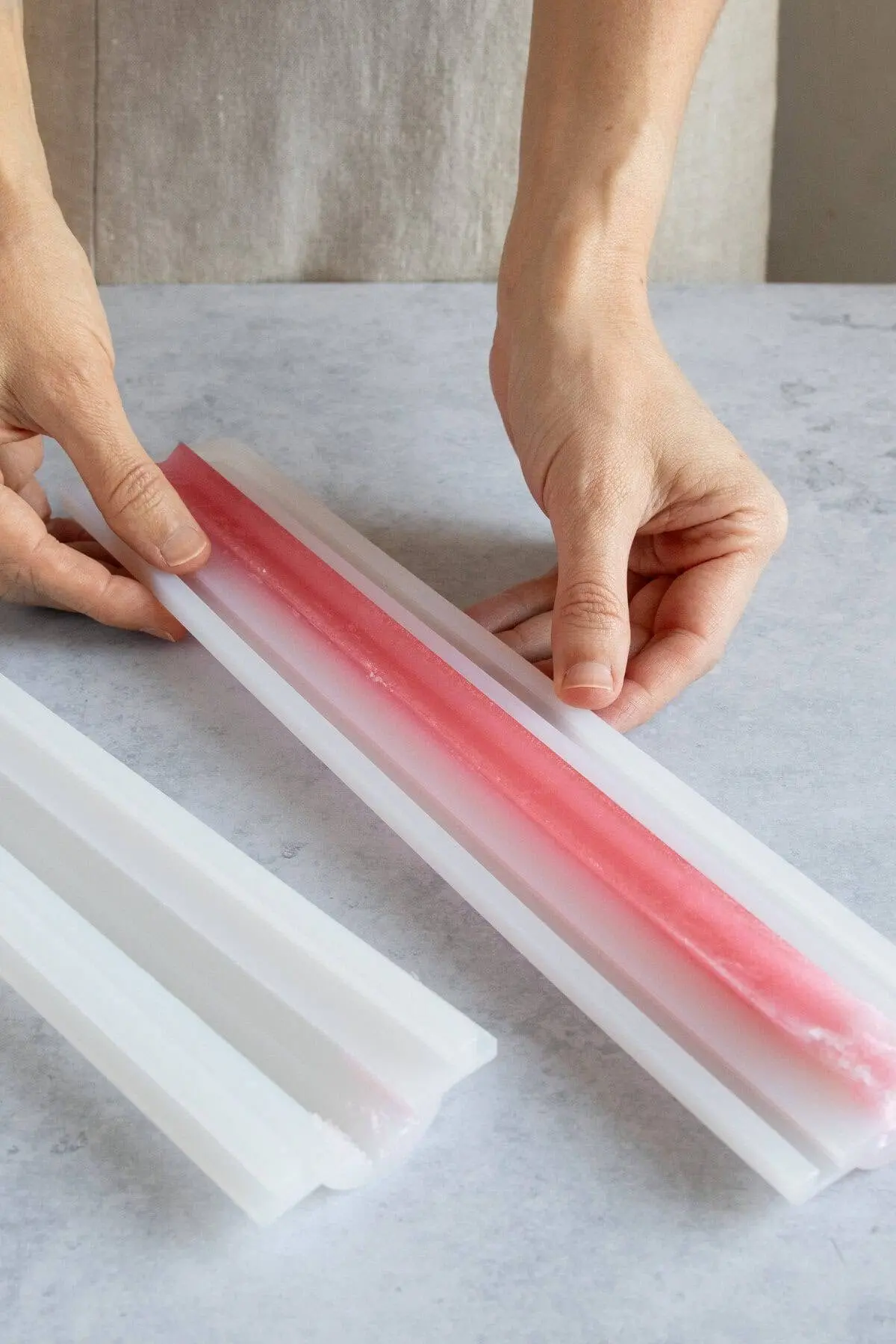
For substantial curls, makers pour approximately one inch of melted soap into the base of a standard loaf mold. Once solidified, the soap is sliced into two-inch-wide vertical strips designed to match the span of a Y-shaped peeler. Running the peeler down these strips produces thick, robust ribbons that can be hand-formed into dynamic structural accents.
5. The Thin-Pour Hand-Rolling Method (Sheet Curls)
By pouring a razor-thin layer (roughly 1/16 to 1/8 of an inch) of liquid soap into a loaf mold and allowing it to set partially for five to ten minutes, makers create pliable sheets. Once the sheet achieves a rubbery consistency—firm enough to handle yet soft enough to manipulate—it is removed from the mold, cut into strips, and rolled tightly by hand. This technique is frequently utilized for creating "Fruit Roll-Up" style tubes for complex loaf embeds.

Design Applications and Creative Implementations
Mastering the mechanics of curling opens up diverse avenues for product design within artisan bath lines.
- ASMR "Crunchy" Bars: By densely clustering thin, hard curls atop a freshly poured soap base, makers produce a textured top layer. When consumers handle or use the bar, the crumbling curls provide satisfying auditory and tactile stimulation.
- Embedded Loaf Cross-Sections: Rolling thin sheets into cylindrical logs and embedding them horizontally within a larger loaf mold yields captivating geometric patterns when the final product is cut into individual retail bars.
- Botanical Simulations (Soap Roses): Thicker curls harvested via cheese planers can be carefully manipulated and layered in a spiral configuration to mimic blooming roses. These intricate floral toppers elevate simple holiday or wedding favor soaps into luxury gift items.
- Gift Box Presentations: Specialized gift box molds combined with overlapping metallic-colored gold ribbons and soap curl bows create the visual illusion of wrapped packages, making them ideal for seasonal retail markets.
Troubleshooting Common Production Challenges
Even experienced crafters encounter hurdles when transitioning to soap curling. Industry experts recommend the following interventions for common structural failures:

| Problem | Root Cause | Corrective Action |
|---|---|---|
| Cracked Curls | Soap base is too brittle or dry. | Add 1–2 tablespoons of liquid vegetable glycerin to the melted base to enhance elasticity. |
| Trapped Air Bubbles | Air introduced during mold embedding. | Embed curls at a 45-degree angle to let air escape; spritz the base with rubbing alcohol before and after pouring. |
| Curls Falling Apart | Insufficient structural setting. | Lightly mist finished curls with isopropyl (rubbing) alcohol to instantly lock their molecular shape. |
| Melting During Over-Pour | Over-pour soap temperature is too high. | Allow the liquid over-pour soap to cool to approximately 140°F (60°C) or lower before contacting the delicate curls. |
| Uneven or Floppy Curls | Dull peeling tools or improper base firmness. | Upgrade to a sharper peeler, adjust base curing times, or incorporate minor amounts of glycerin for balanced flexibility. |
Frequently Asked Questions
Can I use any melt-and-pour soap base for curls?
Not uniformly. Bases formulated with excessive softness will result in mushy ribbons that fail to retain their shape, while overly rigid bases tend to fracture upon contact with peeling tools. Makers should experiment with specialty goat’s milk, shea butter, or clear glycerin bases to discover the optimal firmness-to-flexibility ratio.
Is glycerin mandatory for the thin-pour method?
It is optional. While glycerin significantly increases pliability and helps maintain curl integrity, certain high-quality commercial soap bases possess inherent flexibility that eliminates the need for additives.

How long should soap curls dry if marketed for ASMR applications?
To achieve a genuinely crisp, crunchy texture, thin curls should be cured in a cool, well-ventilated space for approximately four to five weeks, allowing excess moisture to evaporate fully.
Can cold-process soap be utilized for this technique?
Yes, though timing is critical. Cold-process soap must be fully cured, hardened, and aged (typically 4 to 6 weeks) before attempting to peel or shave structural curls to prevent smearing or structural collapse.