Main Facts: The Growing Renaissance of Artisanal Soap Crafting
The global market for handmade and artisanal personal care products has experienced an unprecedented surge over the past decade, driven by consumer demand for transparency, sustainability, and aesthetic self-care experiences. Among the various DIY disciplines, soap making has emerged as a dominant creative outlet. Within this community, melt and pour soap—a pre-saponified base that eliminates the need to handle caustic sodium hydroxide (lye)—has long been praised for its accessibility.
However, a persistent design challenge has divided crafters: achieving the mesmerizing, professional-grade color swirls typically associated with advanced cold-process soaping.
Color swirl melt and pour soap projects are visually stunning, beginner-friendly in principle, and undeniably rewarding to unmold and slice. Yet, achieving crisp, clean lines and distinct chromatic separation requires mastering specific thermal and mechanical techniques distinct from traditional soap making.

Unlike cold-process soap, which gradually thickens to a "trace" consistency ideal for intricate designs, melt and pour bases cool and solidify rapidly. This narrow operational window demands precision, specialized temperature control, and a disciplined workflow to prevent premature setting.
Chronology: Step-by-Step Execution of the Melt-and-Pour Swirl Technique
Successfully executing a swirled melt and pour project requires strict adherence to a chronological sequence. Because the material hardens quickly, improvising steps mid-process frequently leads to structural or aesthetic failure.
Phase 1: Preparation and Melting
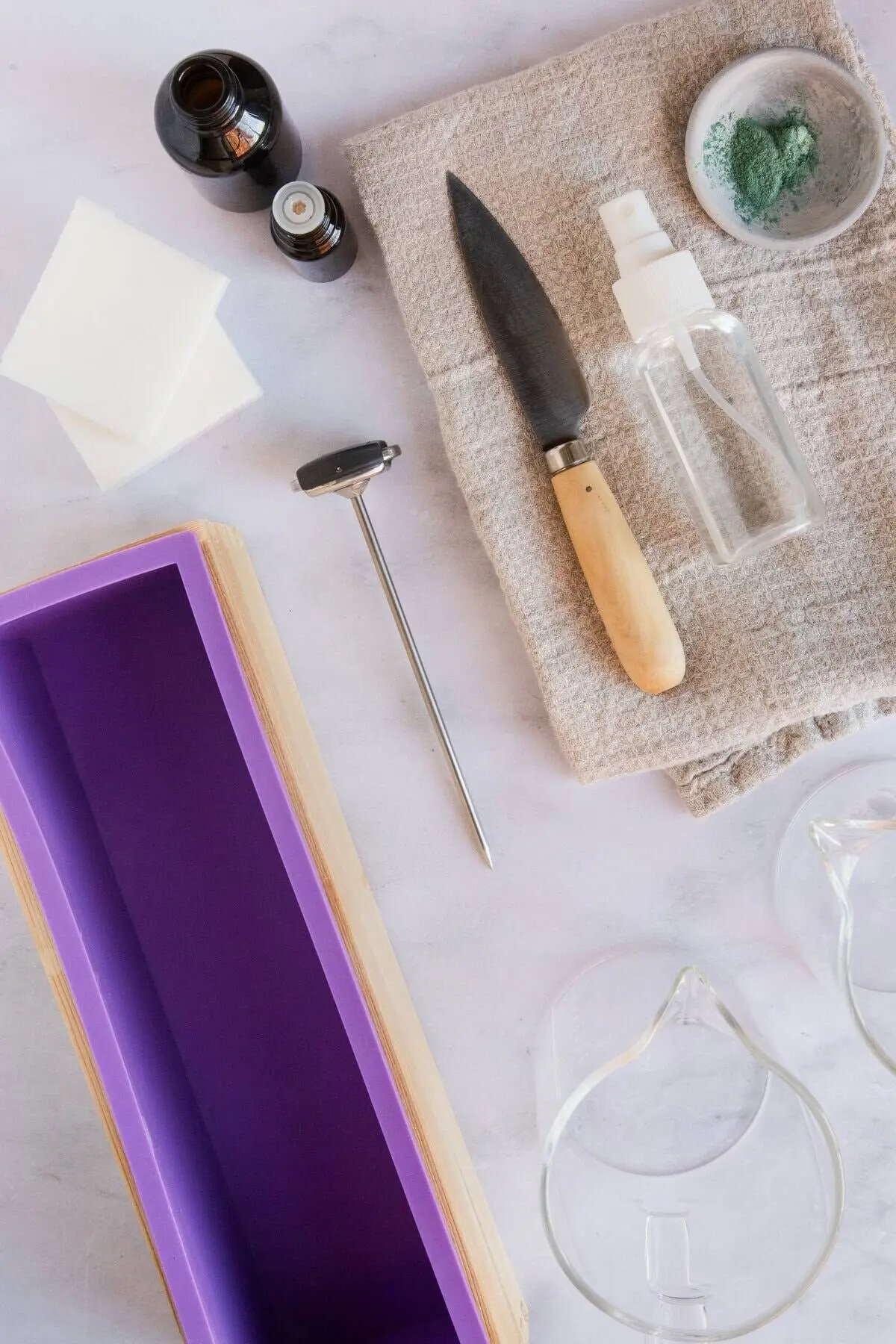
The process begins by cutting the raw soap base into small, uniform cubes. Crafters should divide the base into separate microwave-safe containers corresponding to the number of targeted colors. Uniform sizing ensures even melting rates.

Using short bursts—typically 30 seconds at a time in a microwave with intermediate stirring, or alternatively utilizing a double boiler—prevents localized overheating, which can degrade the integrity of the soap base.
Phase 2: Incorporation of Colorants and Aromatics
Once the soap is completely liquefied, non-bleeding colorants (such as mica powders or specialized color blocks) and essential oils or fragrance oils are introduced. Thorough, gentle stirring is critical to ensure uniform distribution without whipping excess air into the liquid base, which creates unwanted bubbles.
Phase 3: The Critical Cooling Window
Temperature regulation is the single most critical factor in achieving clean swirls. The soap must cool to a precise "sweet spot"—approximately 120°F (49°C).

- Too Hot (135°F / 57°C or above): The low viscosity causes disparate colors to bleed together instantly, resulting in a muddy, indistinct visual profile.
- Too Cool: The soap begins prematurely forming a solid skin on the surface, making it impossible for tools to glide through cleanly.
Utilizing a digital thermometer is mandatory; visual estimation cannot reliably gauge this narrow thermal threshold.
Phase 4: Pouring into Molds
Crafters generally choose between two primary pouring strategies:
- The Divider Method: Utilizing physical barriers within the mold to separate colors prior to pulling the barrier. While theoretically sound for structured geometry, many artisans report fluid leakage beneath poorly sealed dividers.
- Free-Form Pouring: Alternating colors from varying heights into an open mold. High-velocity, high-altitude pours introduce dynamic movement and deep layering, while low pours keep patterns contained.
Phase 5: The Swirl and Post-Pour Treatment
With a wooden skewer, chopstick, or specialized tool, the crafter makes deliberate, minimal passes through the medium—ideally restricting movement to one or two light passes to avoid over-blending.

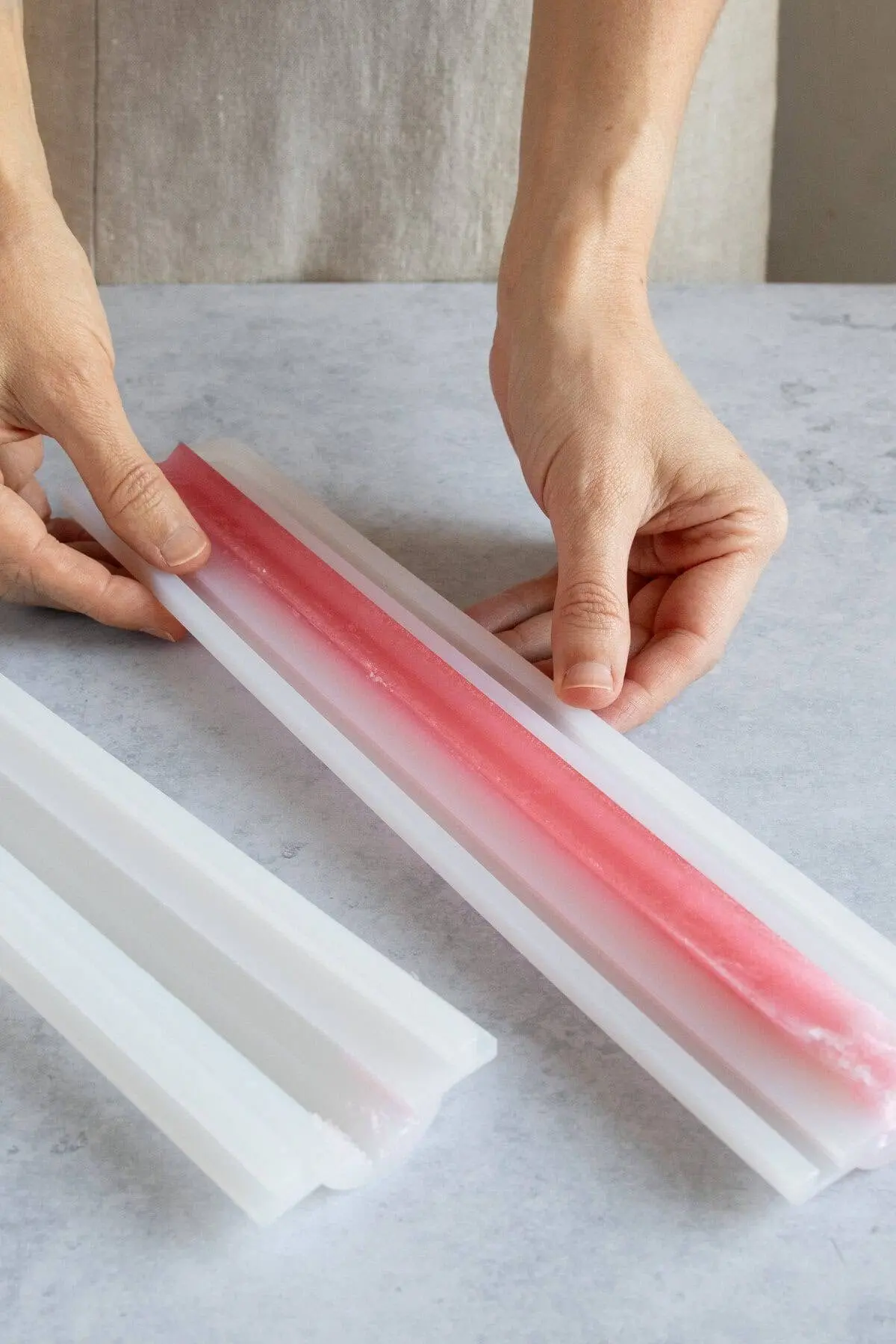
Immediately following the pour, a liberal spritz of 99% isopropyl alcohol is applied to the surface to eliminate trapped air bubbles. The mold must then remain entirely undisturbed until it reaches complete structural integrity.
Supporting Data: Technical Parameters and Material Science
To better understand why melt and pour swirling requires such rigid parameters, professional soap makers rely on comparative material metrics:
- Thermal Windows: Cold-process soap allows a working window of 30 minutes to several hours depending on oil composition and fragrance behavior. Melt and pour systems operate within a thermal window of roughly 3 to 5 minutes once the pouring temperature of 120°F is reached.
- Viscosity Thresholds: Viscosity in melt and pour drops steeply with minor temperature fluctuations. A 5-degree variance can transform a workable fluid into a gelatinous solid.
- Density Matching: Studies of batch failures indicate that mixing different soap base formulations (e.g., combining a heavy goat’s milk base with a lightweight clear glycerin base) leads to phase separation. The denser formulation invariably sinks, destroying the horizontal and vertical integrity of the intended swirl pattern.
- Alcohol Efficacy: 99% isopropyl alcohol possesses a lower surface tension than water-based solutions, allowing it to instantly rupture the delicate lipid-and-air bubbles formed during rapid pouring without compromising the surface cure of the soap.
Official Responses and Expert Insights from Formulation Chemists
Artisanal formulators and commercial soap base manufacturers emphasize that user error is rarely the result of poor artistic vision, but rather a misunderstanding of surfactant chemistry and thermal physics.

According to leading industry technical advisors:
"The biggest misconception among transitioning crafters is that melt and pour behaves like wax or cold-process soap. It does not possess a true ‘trace’ phase. Because it transitions directly from a liquid to a crystalline solid matrix based on ambient and liquid temperatures, thermal management is everything. If your thermometer isn’t calibrated, your swirl will fail."
Furthermore, cosmetic safety experts note that selecting appropriate colorants is vital for long-term product stability. Water-soluble dyes frequently migrate through glycerin-heavy melt and pour bases over time, causing colors to bleed into one another weeks after production. Industry guidelines consistently mandate the use of cosmetic-grade mica powders or pigment dispersions explicitly labeled as "non-bleeding" or "melt-and-pour stable."

Implications: Aesthetic Excellence, Quality Control, and Market Viability
Mastering the color swirl technique carries significant implications for both hobbyists and small-batch commercial enterprises.
Economic and Creative Impact
In the handmade bath and body sector, visual differentiation dictates market value. A cleanly swirled, multi-colored bar commands a higher retail price point than a solid, single-color block. By bridging the gap between the safety of melt-and-pour bases and the artistic complexity of cold-process aesthetics, makers can scale production efficiently while maintaining artisanal appeal.
Quality Control and Troubleshooting Protocols
Understanding the root causes of common failures—such as muddied colors, faint lines, or surface sweating—enables producers to reduce waste. For instance, addressing "sweating" (hygroscopic moisture attraction common in glycerin bases) through proper post-production shrink-wrapping or climate-controlled storage ensures extended shelf-life and professional presentation.

Ultimately, color swirl melt and pour soap projects represent a harmonious intersection of basic thermodynamics and creative expression. By respecting the rigid physical limitations of the medium and applying disciplined technique, makers can consistently turn simple soap bases into striking, gallery-worthy works of functional art.