By the Roomhints Editorial Board Part of the Roomhints Designer Spotlight Series
Main Facts
In the upper echelons of residential design, where architectural legacy meets contemporary luxury, few names carry the authoritative weight of Jerry Jacobs. Based in Belvedere-Tiburon, California, Jacobs is a rare hybrid in the design world: a fully trained architect whose career spans massive corporate developments, international retail flagships, and some of the most coveted high-end residential spaces on the West Coast and beyond.
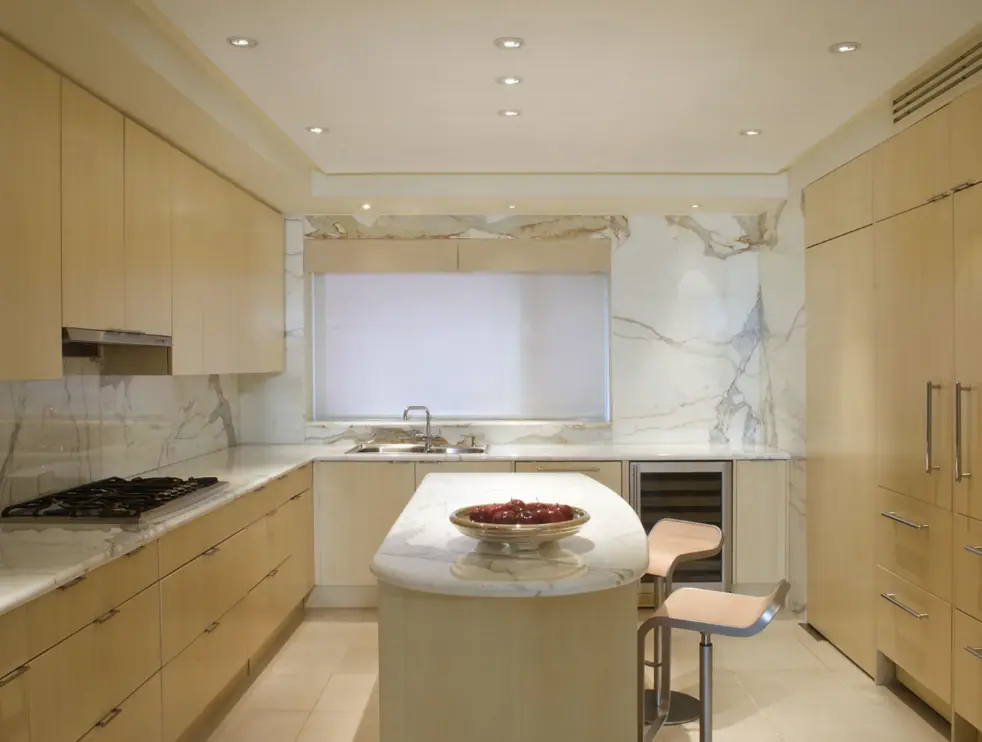
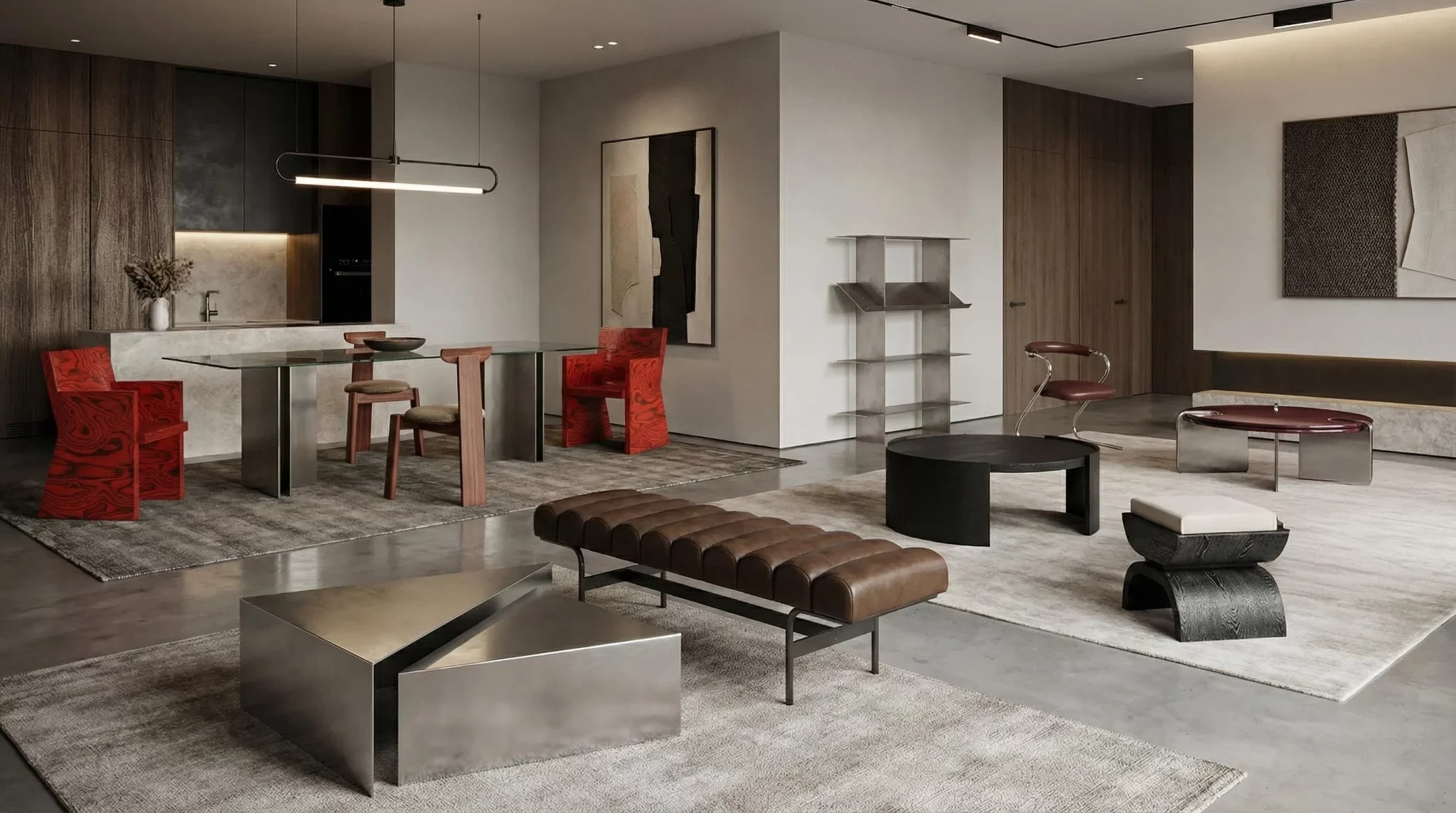
Holding credentials that distinguish him from a crowded field of interior decorators—including International Associate AIA, ASID (American Society of Interior Designers), and Certified Interior Designer in California—Jacobs has built a practice defined by precision, structural integrity, and deep psychological alignment with his clients. His portfolio ranges widely, encompassing sweeping waterfront villas in Marin County, dramatic penthouses in San Francisco’s Pacific Heights, ultra-custom modern estates in Silicon Valley, and luxurious resort residences in Mexico.
Yet, beyond his impressive project list and academic pedigree as a former professor of architecture and President of ASID Northern California, Jacobs is known for his unfiltered perspective on the realities of the design profession. In a wide-ranging conversation for the Roomhints Designer Spotlight series, Jacobs broke down the fundamental mechanics of what it takes to translate human desire into spatial reality, offering a masterclass in listening, budgeting, and the uncompromising pursuit of design as art.
Chronology: From Corporate Scale to Residential Intimacy
To understand Jerry Jacobs’ approach to interior architecture, one must trace a career trajectory that evolved from the macro-scale of urban commercial design down to the intimate micro-climate of the high-end private home.
The Corporate and Retail Era
Jacobs began his professional journey designing large-scale buildings, corporate structures, and dynamic clubhouses. His early career gave him a master’s-level understanding of structural engineering, spatial flow, and large-scale project management.
Among his most notable early achievements was his work on the once-world-famous Aca Joe retail stores. Jacobs designed these distinct commercial environments across 30 states and three continents. His crowning achievement of that era was the flagship corner location at Union Square in San Francisco—a landmark retail facade that remains standing to this day, serving as a physical testament to his early mastery of public-facing architecture.
The Residential Pivot (1991–Present)
In 1991, Jacobs made a pivotal transition, turning his full professional attention toward high-end residential architecture and interior design. Over the subsequent three decades, he methodically constructed one of the Bay Area’s most respected and sought-after boutique practices.
This era has been defined by continuous recognition and leadership within the industry. Beyond securing high-profile residential commissions, Jacobs took on academic responsibilities, shaping the next generation of minds as a professor of architecture. He also ascended to the presidency of ASID Northern California, steering the regional organization through a period of professional evolution. His design excellence was cemented nationally when he won the highly competitive San Francisco Decorators Showhouse Room Award from House Beautiful—widely regarded as one of the most rigorous accolades in American residential design.
Supporting Data & Professional Milestones
A quantitative look at Jerry Jacobs’ career illustrates the depth and breadth of his multi-decade influence on American architecture and design:
Years in Practice: Over 40 years total, with a dedicated focus on high-end residential design since 1991.
Geographic Reach of Past Commercial Work: 30 U.S. states and 3 continents (highlighted by the iconic San Francisco Union Square Aca Joe facade).
Key Professional Credentials: International Associate AIA (American Institute of Architects), professional member and past President of ASID Northern California, and Certified Interior Designer in the State of California.
Notable Accolades: Winner of the House Beautiful San Francisco Decorators Showhouse Room Award.
Project Typologies: Waterfront villas (Marin County), luxury penthouses (Pacific Heights), custom Silicon Valley estates, and international resort properties (Mexico).
Core Architectural Elements Monitored: Light (the optical controller), flooring (the foundational sensory plane), and curated fine art (the emotional anchor).
Official Insights & Design Philosophy
During his discussion with Roomhints, Jacobs offered raw, unvarnished insights into the philosophy that underpins his four-decade career. He deconstructed the design process not as a series of aesthetic trends, but as a deeply human, psychological, and disciplined undertaking.
On Listening: Decoding the Client’s Subconscious
For Jacobs, the entire architecture of a project begins and ends with active listening. Clients rarely walk through the door with a clear blueprint of their desires; instead, they arrive burdened with fragmented feelings, visual references, anxieties, and scattered memories.
"Listen to the client. Often they do not know what they want, but listening you help them by suggesting approximations, and they will say, that is it."
Jacobs views the designer’s primary role as a translator. By reading between the lines and proposing close approximations, the designer helps the client unearth what they truly want. This process demands patience, profound attentiveness, and the professional confidence to gently guide rather than aggressively impose a personal aesthetic.
On What Drives Great Design: Passion Over Pretense
When asked what truly fuels exceptional design, Jacobs dismisses conventional answers like raw talent, formal training, or prestigious credentials. His answer is immediate: passion.
It is fundamentally easier to dedicate one’s life to what one loves than to labor through a career driven purely by obligation. Yet, Jacobs is refreshingly candid about the gritty, unglamorous reality of running a design practice. Most residential designers operate as solitary entities, functioning as jacks-of-all-trades. They are simultaneously visionaries, sourcing agents, project managers, accountants, and client therapists.
"Keep seeking perfection and design as art, beauty. Hard to achieve but keep trying. Hope for the best but be prepared to struggle."
This perspective strips away the romanticism often manufactured by lifestyle media, replacing it with the hardened wisdom of a veteran who knows that true beauty is forged through relentless problem-solving.
On the Value of Professional Work: Stopping Free Labor
In an industry notorious for unpaid pitches, speculative design work, and scope creep, Jacobs addresses a taboo subject with total clarity and zero apology.
"Do not work for free or do things for nothing. It does not only affect your budget and survival, but it hurts the profession and the industry. Value yourself and your time."
Jacobs argues that undercharging or offering free services is not merely a personal financial misstep—it is a systemic threat to the entire ecosystem of design. Architecture and interior design require years of rigorous education, technical licensing, and continuous professional development. When designers fail to value their own labor, they devalue the discipline for everyone else.
On the Elements That Matter Most
When pressed to identify the critical physical components that completely transform a space, Jacobs highlights a specific hierarchy:
Light: While not a physical object, light is the absolute master controller of the visual field. Without properly managed natural and artificial illumination, no amount of fine furniture or expensive finishes will perform as intended.
The Floor:"You really can’t walk into a space without it. Ceiling can go and wall can be transparent, but all rooms need a floor." Whether it is rich wood planking, seamless marble, glass, or a meticulously crafted area rug, the floor establishes the spatial tone before a single chair is introduced. It is the surface people look at least, but feel most intensely.
Fine Art: Art functions as a genuine financial and emotional investment. Unlike furniture and finishes, which inevitably wear out over time, well-chosen art carries enduring emotional weight. Furthermore, Jacobs champions spatial restraint: leaving a wall completely blank is often a superior design choice to hanging mediocre art.
On How to Work with a Designer: A Client’s Guide
For prospective clients embarking on a high-end architectural journey, Jacobs lays down three golden rules:
Do Your Homework: Create a structured project brief, define your core priorities, and thoroughly research professionals by studying their past portfolios before making contact. Chemistry is vital, but informed preparation prevents mismatched expectations.
Establish a Realistic Budget:"This is an important and substantial investment. Don’t try to do too much with too little. You get what you pay for." High-end design cannot be executed on a discount budget without compromising structural and aesthetic integrity.
Practice Patience: Recognize that your design team is working intensively on your behalf. Mutual support breeds high productivity; creating needless friction or pressure only degrades the quality of the work and damages morale.
Implications for the Future of Residential Design
Jerry Jacobs’ reflections carry profound implications for the contemporary design landscape. As the industry faces a surge in digital platforms, automated rendering tools, and fast-paced aesthetic trends, Jacobs’ career serves as a powerful reminder of the irreplaceable value of human intuition, architectural training, and professional boundaries.
By insisting that design is an art form rooted in struggle, meticulous listening, and uncompromising self-valuation, Jacobs pushes back against the commodification of interior spaces. His philosophy suggests that the future of luxury residential design will not belong to those who chase fleeting digital trends, but to those who master the foundational triad of light, structure, and emotional resonance—and who demand the professional respect required to bring those visions to life.
Jerry Jacobs is based in Belvedere-Tiburon, California. His portfolio and architectural works can be explored at jerryjacobsdesign.com.