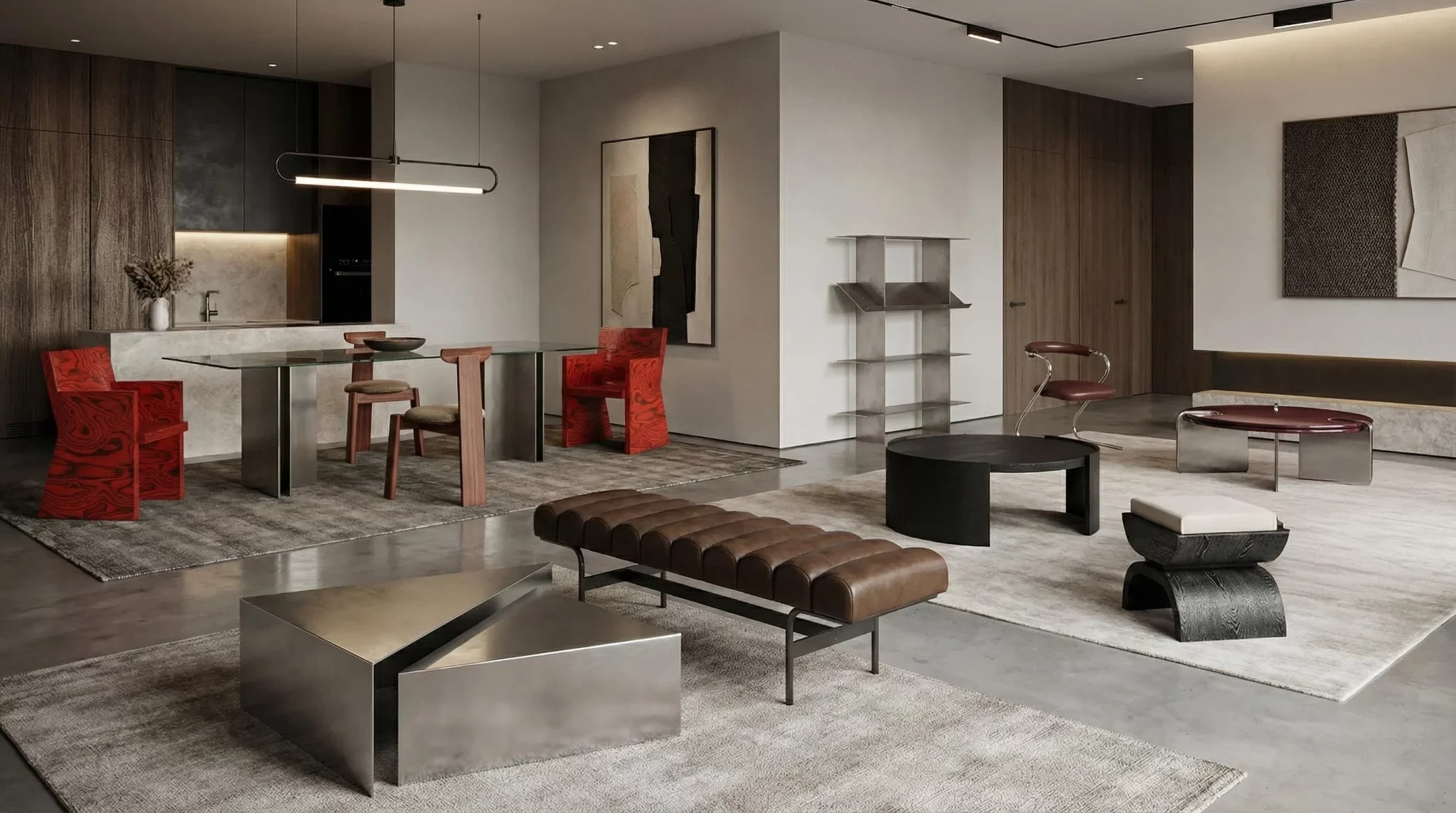
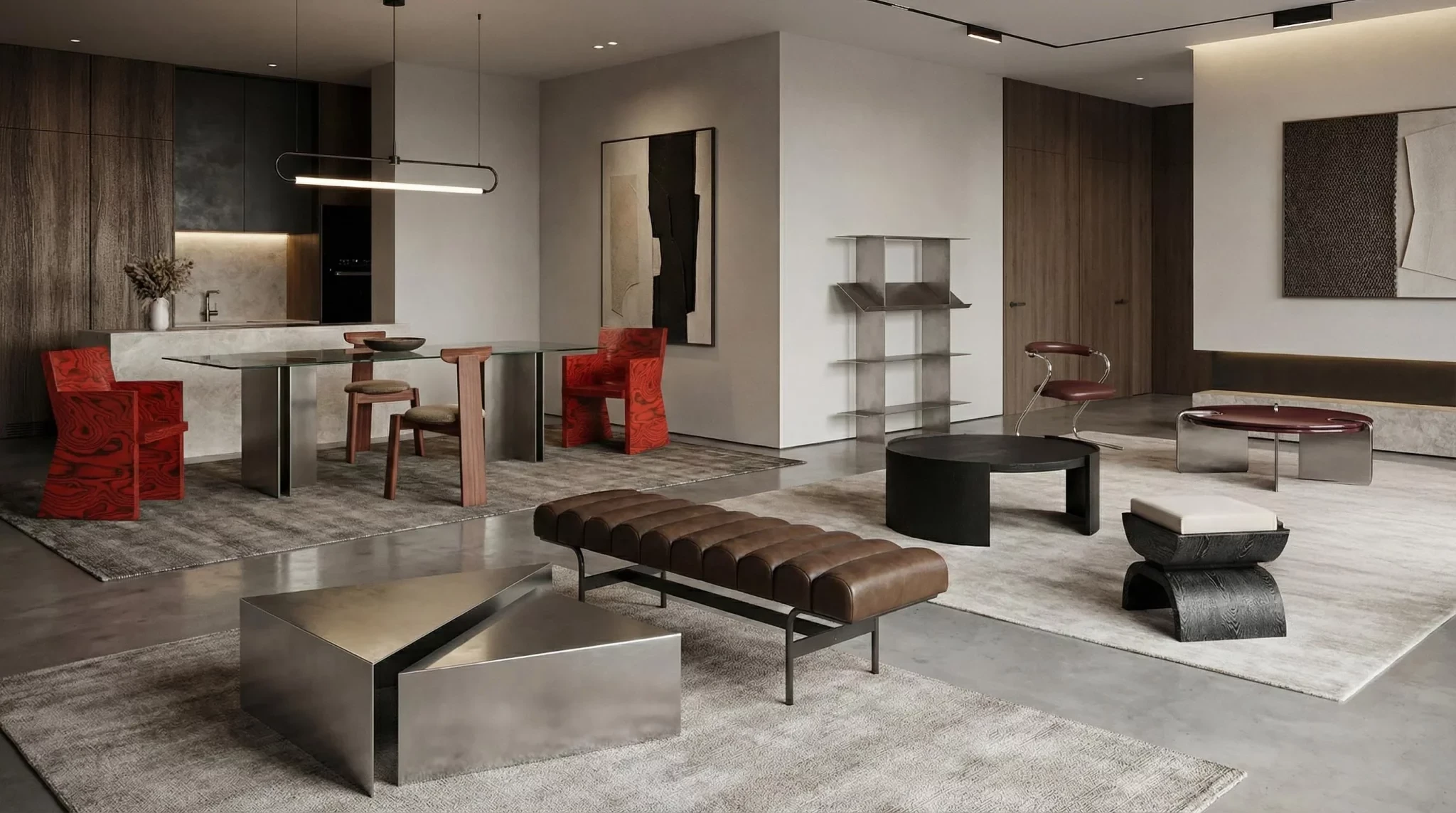
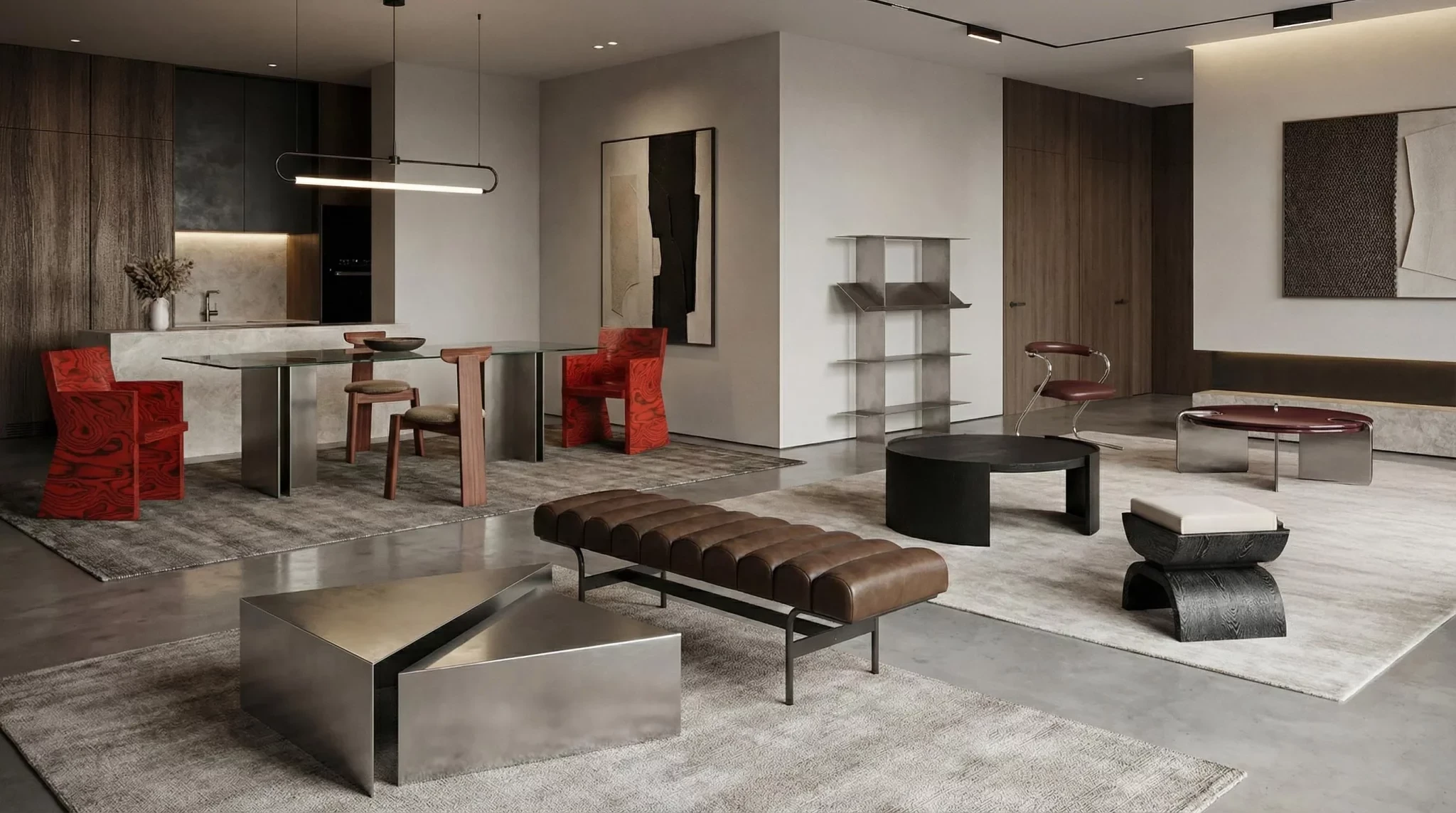
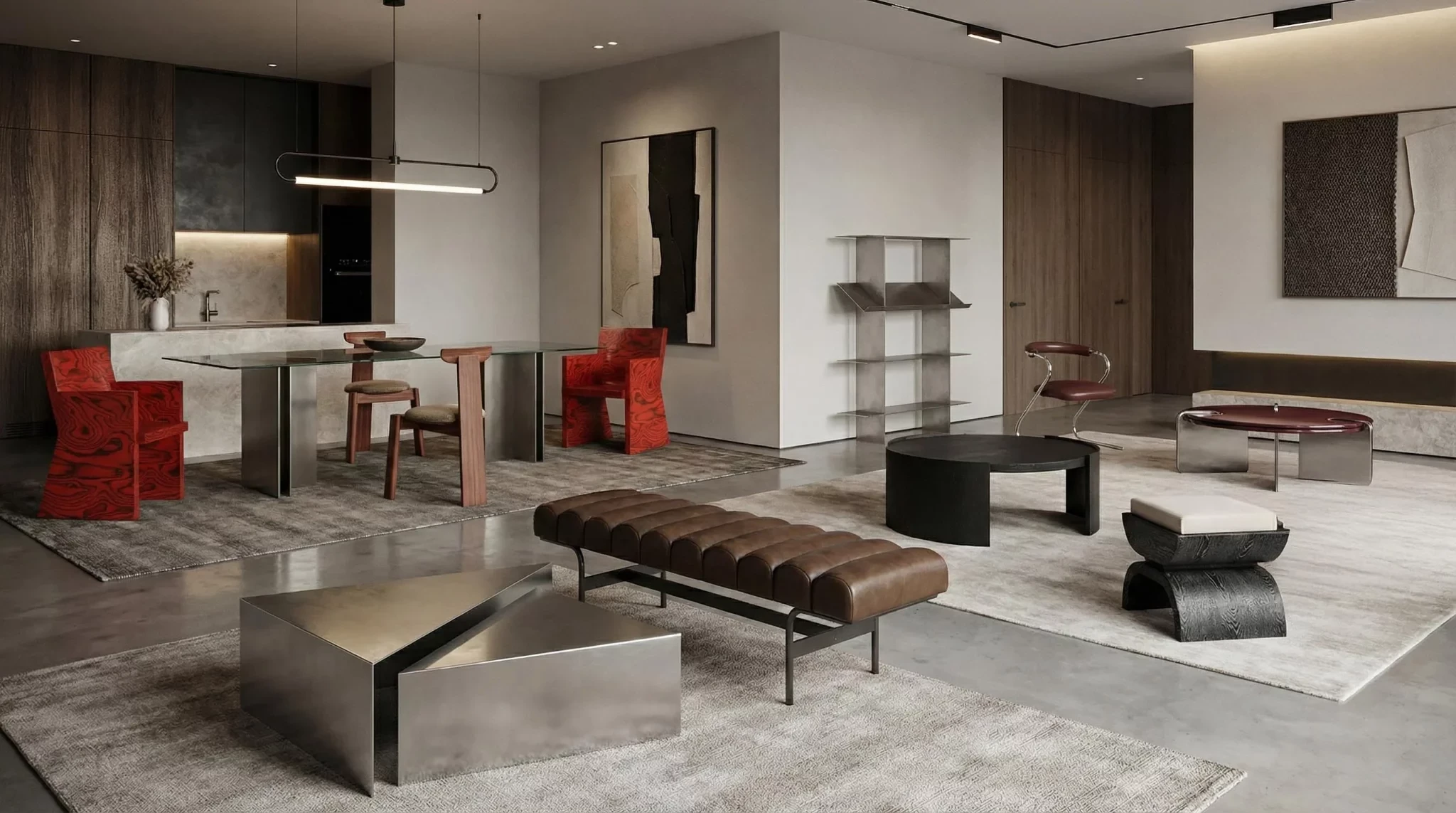
DÜSSELDORF — In the landscape of modern design, where fleeting trends often dictate form and superficial aesthetics reign supreme, a quiet counter-revolution is taking place in an atelier along the Rhine. Case Studios, an interdisciplinary design practice based in Düsseldorf, operates on a fundamentally different premise: that materials possess an innate, unyielding logic, and the designer’s primary responsibility is not to impose a shape upon them, but to uncover it.
Founded by a collaborative collective bridging visual arts and traditional craftsmanship, the studio’s output spans product design, immersive interior architecture, and large-scale artistic installations. Yet, what unifies this diverse portfolio is not a signature silhouette or a decorative motif, but a rigorous philosophical commitment to material engagement. Whether working with raw concrete, hand-polished aluminum, or centuries-old charred timber, Case Studios rejects the notion of the material as a mere finishing choice. Instead, for this German atelier, the material is the idea.
Main Facts: The Philosophy and Practice of Case Studios
At the core of Case Studios’ operational ethos is a profound respect for elemental substances. While many contemporary furniture houses begin with a conceptual sketch and subsequently search for materials to realize the form, Case Studios inverts the creative process entirely.
The journey begins with the raw substance itself—its structural capabilities, its historical context, its inherent limitations, and its physical properties. The final form emerges organically from this dialogue between maker and matter.
- Interdisciplinary Roots: The studio was founded by a team bridging visual practice and high-level craftsmanship, allowing them to fluidly cross boundaries between industrial product design, bespoke interior architecture, and conceptual art installations.
- Core Material Palette: The practice focuses on durable, raw, and tactile materials—primarily concrete, hand-sanded aluminum, and Yakisugi burnt wood.
- Structural Integrity: The studio adheres to a strict anti-excess philosophy. There is no applied decoration; every surface serves a structural purpose, resulting in objects that possess a profound sense of inevitability.
- The Flagship Piece: The Yakisugi Burnt Wood Coffee Table (measuring 115 × 60 × 30 cm) serves as the definitive physical manifestation of the studio’s design philosophy, combining ancient Japanese fire-charring techniques with cold, industrial hand-sanded aluminum.
"The deliberate use, selection, and refinement of unique and durable materials create objects that both reshape and highlight the original properties of each material," the studio notes. This uncompromising approach has positioned Case Studios as a vital voice in the European design conversation, appealing to collectors and architects who view furniture as sculptural architecture rather than consumable commodities.

Chronology: From Concept to Craft
To understand how Case Studios achieves its distinctive aesthetic, one must trace the chronological evolution of its design and manufacturing process—a journey that marries ancient heritage crafts with contemporary industrial precision.
Phase 1: Material Sourcing and Historical Research
Before a single tool touches a raw block of timber or a sheet of metal, the studio engages in an extensive research phase. For their wood-based projects, this involves studying grain structures, density, and natural weathering patterns. When adapting the Japanese technique of Yakisugi (traditionally known as Shou Sugi Ban), the team explores the precise thresholds of combustion.
Phase 2: Elemental Transformation (Yakisugi and Fire)
The transformation of the wood is a dramatic, highly controlled chronological milestone. The timber is subjected to intense fire, a process that intentionally burns away the softer cellular layers of the wood. What survives the inferno is the dense, highly resilient summer-growth ring structure. This charred layer is subsequently brushed, sealed, and stabilized, yielding a deep, obsidian-like texture that resists moisture, pests, and decay without the need for artificial paints or toxic chemical stains.
Phase 3: Industrial Counterpoint (Aluminum and Metalworking)
Once the organic, charred timber element is perfected, the process shifts to the cold realm of metallurgy. Hand-sanded aluminum is introduced to create a tension of opposites. The metal is meticulously cut, shaped, and hand-finished, ensuring that every touchpoint balances the rough, organic void of the burnt wood with a sleek, reflective, and precise industrial edge.
Phase 4: Proportional Assembly and Finishing
The final assembly stage is defined by restraint. Measuring precisely 115 centimeters in length, 60 centimeters in width, and standing at a low, grounding height of 30 centimeters, the pieces are proportioned to anchor a space rather than crowd it. Because the charring process and hand-sanding yield completely unique organic variations, no two pieces produced by Case Studios are ever identical.

Supporting Data: Dimensions, Materials, and Specifications
The meticulous nature of Case Studios’ production model is best illustrated through the specifications of their flagship exclusive line, exemplified by the Yakisugi Burnt Wood Coffee Table.
| Specification Category | Details & Measurements |
|---|---|
| Studio Origin | Düsseldorf, Germany |
| Primary Materials | Japanese-inspired Yakisugi burnt hardwood & Hand-sanded industrial aluminum |
| Dimensions | 115 cm (Length) × 60 cm (Width) × 30 cm (Height) |
| Design Classification | Case Studios Exclusive Line / Bespoke Functional Art |
| Manufacturing Method | Handcrafted in Germany; fire-charred, sealed, and mechanically finished |
| Aesthetic Characteristics | Low, wide proportions designed to anchor living spaces; zero decorative excess; highly textured, light-absorbing charred surfaces contrasted with reflective metal edges. |
This data underscores the studio’s commitment to permanence. In an era dominated by flat-pack furniture and disposable consumer goods, Case Studios utilizes materials selected explicitly for their multi-decade durability and their ability to age gracefully with patina.
Official Perspectives: The Philosophy of "Getting Out of the Way"
The founders of Case Studios have consistently articulated a design philosophy that strips away ego in favor of material honesty. In recent statements regarding their cross-disciplinary work, the leadership emphasized that the designer’s ego is often the greatest obstacle to creating authentic objects.
"A material has its own logic, and the designer’s job is to understand it, honor it, and get out of the way," explains a spokesperson for the Düsseldorf studio.
This perspective challenges the traditional industrial design complex, where computer-aided design (CAD) is frequently used to force materials into organic or geometric shapes they are ill-equipped to sustain. By listening to the inherent tendencies of concrete to cure under tension, aluminum to reflect light along grain lines, and charred wood to resist the elements, Case Studios treats the creation process as a collaborative dialogue with nature rather than an exercise in dominance.

Furthermore, interior architects who have integrated Case Studios pieces into high-end residential and commercial projects note that the furniture acts as an architectural anchor. Rather than filling a void, a Case Studios table or installation reorganizes the psychological gravity of a room, drawing the eye toward tactile authenticity in an increasingly digitized world.
Implications: The Future of Slow Design and Material Honesty
The rise of Case Studios points toward a broader, much-needed shift within the global design and architecture sectors: the ascendance of "slow design" and radical material transparency.
1. A Rejection of Superficial Sustainability
In recent years, "sustainability" has too often been co-opted as a marketing buzzword—applied as a thin veneer over poorly constructed products made from composite materials. Case Studios offers an alternative paradigm. By utilizing durable, repairable, and time-tested substances like stone, solid timber, and raw metal, their work suggests that true sustainability lies in longevity and emotional resonance. When an object is crafted to last generations, the lifecycle carbon footprint per year of use plummets.
2. The Fusion of Heritage Craft and High-Tech
The studio’s successful integration of Yakisugi—an architectural technique dating back centuries in Japan—with contemporary European metalworking highlights a borderless future for craftsmanship. As global supply chains face scrutiny, regional ateliers that rely on localized hand-craftsmanship combined with intelligent material science are proving to be more resilient and culturally relevant than mass-market furniture conglomerates.
3. Interior Architecture as Elemental Storytelling
For interior designers and spatial architects, pieces like the Yakisugi Burnt Wood Coffee Table provide an immediate narrative focal point. As residential spaces increasingly become sanitized by minimalist digital white boxes, consumers are craving tactile friction—surfaces that tell a story of fire, earth, and human hands. Case Studios meets this psychological need by providing objects that carry the visceral weight of their own creation.

Conclusion
Case Studios remains a beacon for what contemporary design can achieve when it abandons surface-level decoration and returns to first principles. By treating materials as active participants in the creative act, the Düsseldorf atelier has carved out a unique space at the intersection of art, architecture, and craft.
As the studio continues to release limited, highly considered works through its exclusive lines, it issues a quiet challenge to the design world: to look closer at what things are made of, to respect the history held within raw matter, and above all, to know when to step back and let the material speak for itself.
Explore the full collection and architectural installations by visiting the official studio portal at case-studios.com, or discover curated editorial insights via Roomhints.