By Global Environmental Desk
Published: February 2026
Main Facts: The Hidden Water Footprint of Everyday Life
We have all heard the standard environmental advice recited like a green mantra: want to save the planet? Try shaving two minutes off your daily shower. Turn off the tap while brushing your teeth. Collect rainwater in a barrel on your patio.
While these well-intentioned recommendations have dominated household conservation campaigns for decades, they often frame sustainability as a series of daily personal deprivations. Let’s face it—standing in a freezing bathroom trying to rush through a soap rinse rarely feels empowering; it feels like a sacrifice.
More importantly, it distracts us from the data-driven reality of where our most significant resource footprints actually lie. Recent analyses from ecological researchers and hydrological agencies reveal a striking disconnect between where we focus our conservation anxiety—our bathroom routines—and where the vast majority of our resource consumption actually occurs: our plates.
When we break down the numbers, the traditional focus on domestic water use begins to look like micro-management. While cutting shower times yields modest, incremental savings, the hidden water cost of modern agriculture—particularly animal agriculture—dwarfs domestic consumption by orders of magnitude. A single pound of beef requires an astonishing amount of water to produce, completely redefining what it means to make an environmentally conscious choice at dinner time compared to the bathroom.

Chronology: How the Narrative of Personal Conservation Evolved
To understand how society became obsessed with shower times while ignoring the agricultural supply chain, we must look at the historical trajectory of the environmental movement.
The 1970s–1980s: The Dawn of Domestic Efficiency
Following the energy crises of the 1970s and subsequent drought conditions in various parts of the developed world, governments and grassroots organizations needed immediate, highly visible ways to curb resource use. Municipalities targeted the most direct touchpoints of domestic life: toilets, faucets, and showerheads. This era birthed the low-flow plumbing standard, shifting public perception so that resource conservation became synonymous with home fixture management.
The 1990s–2000s: The Rise of Behavioral Nudges
As green living entered the mainstream consciousness, environmental messaging increasingly focused on individual behavioral habits. Campaigns urged citizens to turn off taps, fix leaky faucets, and shorten showers. The implicit contract between the consumer and the planet was built on micro-sacrifices. During this period, corporate supply chains and industrial agriculture largely remained behind a veil of opacity, shielded from public scrutiny regarding their intensive resource extraction.
The 2010s–Present: The Data Revolution and Lifecycle Analysis
With the advent of comprehensive scientific tools—such as those developed by the U.S. Geological Survey (USGS)—researchers began conducting life-cycle analyses (LCAs) on everyday consumer goods. Suddenly, the hidden "virtual water" embedded in manufactured goods and food products became quantifiable. The narrative shifted away from simple bathroom fixes toward systemic consumption patterns, revealing that lifestyle modifications in the kitchen yield exponentially higher ecological returns than modifying bathroom habits.
Supporting Data: Crunching the Numbers on Showers vs. Steaks
To truly grasp the disparity between domestic habits and dietary footprints, we must turn to the hard data provided by hydrological institutions.

Let us examine the standard shower scenario. Even with a traditional, low-efficiency showerhead running at a standard flow rate of 2.5 gallons per minute, cutting two minutes out of your daily routine saves roughly 5 gallons of water per day. Multiply that by 365 days, and you accumulate an annual savings of 1,825 gallons.
By any conventional standard, saving nearly two thousand gallons of water a year is a respectable achievement. It is measurable, tangible, and easy to calculate.
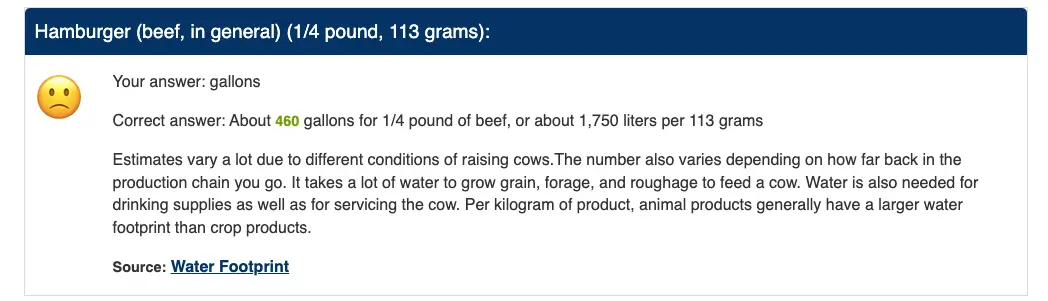
However, the perspective shifts dramatically when we consult tools like the USGS food impacts water calculator. The U.S. Geological Survey has long tracked the vast quantities of water required not just for direct human use, but for growing crops, hydrating livestock, and processing the food supply chain.
Consider the mathematics of beef production:
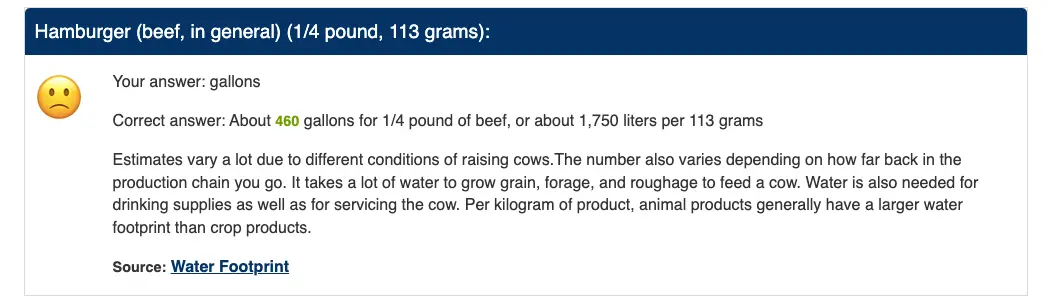
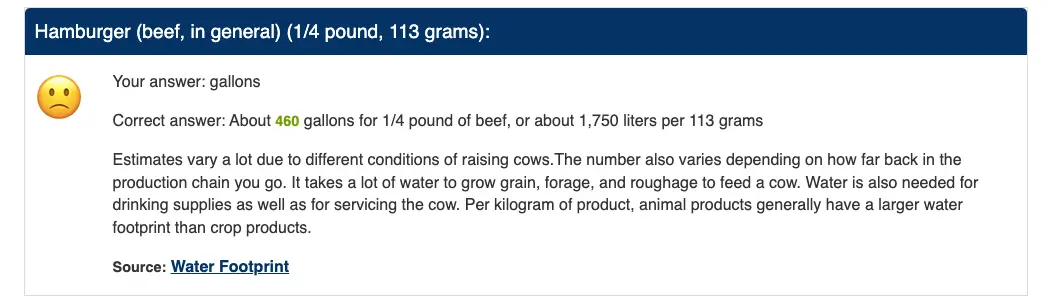
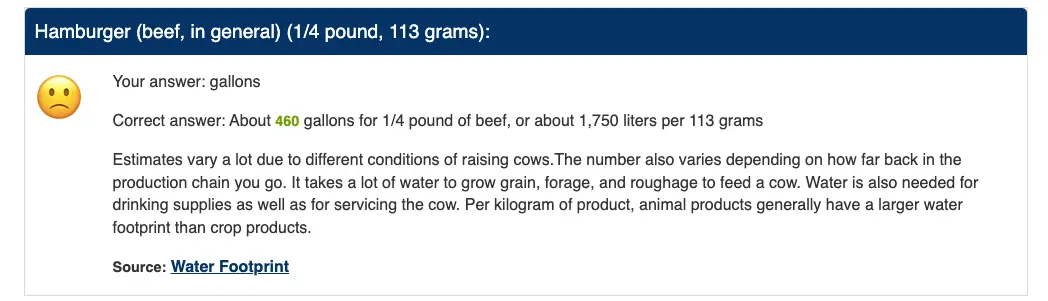
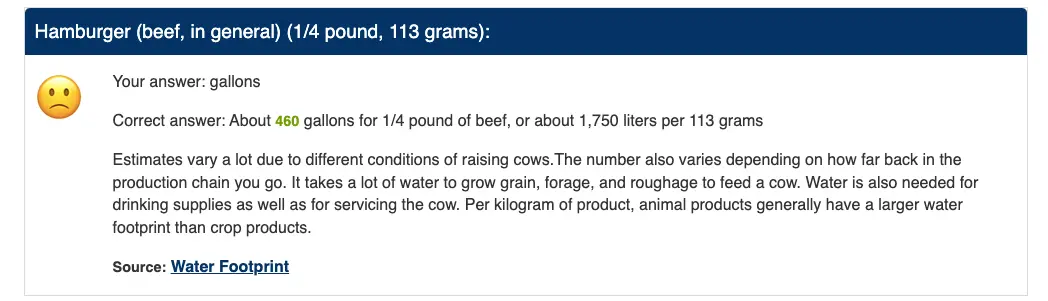
- A standard quarter-pound of beef requires approximately 460 gallons of water to produce from farm to table.
- Scaling that up, a single pound of beef demands roughly 1,840 gallons of water.
Let that statistic resonate. One single pound of beef utilizes more water than reducing your shower time by two minutes every single day for an entire 365-day year.

To put this into an even more vivid perspective: with a traditional 2.5-gallon-per-minute showerhead, it takes 736 minutes (or over 12 hours) of continuous showering to match the water footprint packed into a single pound of beef. An individual could theoretically stand in the shower for half a day, or simply choose to consume a pound of beef, and expend the exact same volume of water.
[1 Pound of Beef] = 1,840 Gallons of Water
[2-Minute Daily Shower Reduction for 1 Year] = 1,825 Gallons of Water
[Equivalent Shower Time for 1 lb of Beef] = 736 Continuous Minutes (12.2 Hours)
Official Responses and Expert Perspectives
Environmental scientists, sustainability consultants, and agricultural economists have increasingly spoken out about the need to pivot public awareness toward high-impact behavioral changes.
Dr. Scott Cooney, a prominent sustainability expert, serial eco-entrepreneur, and author, has long championed the concept of frictionless sustainability. "We’re all about saving the planet, but doing so without it ever feeling like a sacrifice," Cooney notes. When consumers are constantly nudged to shorten their showers or endure daily inconveniences while major resource sinks like industrial animal farming go unquestioned, public fatigue sets in.
According to sustainability researchers, the psychological barrier to conservation is much lower when individuals understand where their leverage points actually are. Making strategic dietary shifts—such as participating in Meatless Mondays, reducing red meat consumption, or exploring plant-based alternatives—does not require standing in the dark or altering personal hygiene routines. Instead, it leverages market choices that scale down industrial resource extraction far more effectively than any domestic plumbing modification.
Furthermore, governmental agencies and international bodies, including the United Nations Environment Programme (UNEP), have repeatedly emphasized that global food systems account for a staggering percentage of freshwater withdrawals worldwide—often cited at around 70% of all global water consumption. Agricultural water management is no longer just an industry concern; it is directly tied to the individual consumer’s shopping cart.

Implications: A New Framework for Sustainable Living
The realization that dietary choices outweigh daily bathroom habits carries profound implications for the future of the environmental movement, personal lifestyle design, and municipal resource planning.
1. Redefining "Eco-Friendly" Priorities
For decades, green living guides have overemphasized domestic micro-habits. While turning off the tap while brushing teeth is a good foundational habit for mindfulness, treating it as a primary pillar of conservation creates a false sense of accomplishment. Environmental education must evolve to prioritize high-impact areas: food choices, energy grids, and transportation.
2. Eliminating Conservation Fatigue
One of the greatest obstacles to mainstream environmentalism is eco-fatigue—the burnout people feel when trying to live sustainably feels like an endless series of ascetic restrictions. By shifting the focus away from daily annoyances (like freezing through the final minutes of a shortened shower) and toward enjoyable, health-conscious dietary adjustments, sustainability becomes a lifestyle upgrade rather than a punishment. Choosing flavorful plant-forward meals or reducing heavy meat intake can simultaneously improve personal health, lower carbon footprints, and drastically conserve freshwater resources without requiring personal sacrifice.
3. Policy and Consumer Power
As consumers become more aware of the "virtual water" embedded in everyday products, market pressure naturally shifts toward sustainable agriculture, regenerative farming, and transparent labeling. When individuals realize that their grocery cart holds more hydrological power than their bathroom fixtures, they can vote with their wallets to demand systemic changes from food producers and retailers.
Ultimately, saving the planet does not require living like an ascetic. By aligning our conservation efforts with the data—focusing on high-impact areas like food systems while enjoying our daily routines—we can achieve a sustainable future that feels less like a sacrifice and more like smart living.