







By Scott Cooney
Published by Green Living Ideas
Main Facts
For decades, the environmental movement has rallied around a familiar set of eco-friendly directives: turn off the tap while brushing your teeth, fix leaky faucets, and, most famously, shave a few minutes off your daily shower. The narrative is deeply ingrained in our cultural consciousness. We are told that by rushing through our morning routines and standing shivering in the tub a minute or two early, we are actively participating in the preservation of our planet’s most precious resource.
To be sure, water conservation is critical. Aquifers are depleting, rivers are running dry, and climate change is intensifying droughts across the globe. But as environmental consciousness matures, experts are taking a hard look at the math behind our daily habits. The reality is that the traditional guilt trip surrounding personal hygiene habits focuses our energy on the wrong targets.
When subjected to rigorous mathematical scrutiny, the water savings achieved by shortening a shower pale in comparison to the hidden water footprints embedded in our daily consumption—most notably, what we put on our plates. While taking shorter showers feels like a sacrifice, it yields a surprisingly meager return on investment compared to structural shifts in diet and lifestyle. The numbers reveal a staggering disconnect between where we think we use our water and where our water consumption is actually heaviest.
Chronology and Evolution of the "Save Water" Narrative
The Rise of Behavioral Environmentalism (1970s–1990s)
The modern environmental movement, catalyzed by the creation of Earth Day in 1970 and subsequent clean water legislation, initially focused on direct, tangible actions that individuals could visualize. Households were encouraged to adopt conservation habits that were easy to measure. Turning off faucets, installing low-flow aerators, and monitoring shower times became the bedrock of residential sustainability campaigns.

During this era, municipal utilities and grassroots environmental groups heavily promoted behavioral modifications. These campaigns operated on the premise that collective individual action—millions of people shaving minutes off their showers—would translate to massive municipal water savings. While effective at raising general awareness, these initiatives largely ignored industrial and agricultural water usage, which account for the vast majority of consumption.
The Agricultural Awakening (2000s–Present)
As data analytics and life-cycle assessments advanced in the 21st century, researchers began tracking "virtual water" or "water footprints"—the total volume of freshwater consumed directly and indirectly to produce goods and services. Organizations like the US Geological Survey (USGS) and the Water Footprint Network began publishing comprehensive datasets that mapped the hidden water costs of everyday products.
This shift in research illuminated a blind spot in consumer-facing sustainability advice. The narrative began to pivot from a purely direct-use model (what comes out of our taps) to an indirect-use model (what is required to manufacture our goods and grow our food). Despite this evolution in scientific understanding, public-facing conservation advice has been slow to catch up, often defaulting to tired refrains about shower times rather than addressing high-impact dietary choices.
Supporting Data: Crunching the Numbers
To understand why the shower-shaving narrative falls short, we must look closely at the data.
Consider a standard, traditional showerhead with a low-efficiency flow rate of 2.5 gallons per minute. If you commit to shaving two minutes off your daily shower, you save 5 gallons of water per day. Multiply that by 365 days, and your annual savings total 1,825 gallons.

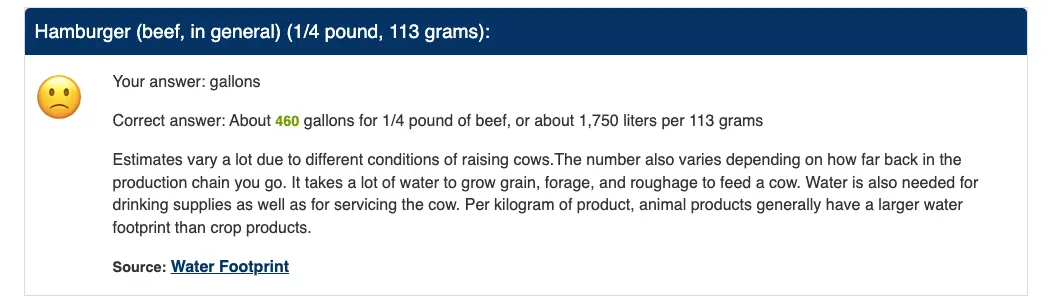
It sounds respectable on paper. But let’s contrast that with the USGS food impacts water calculator. When evaluating the water footprint of various food items, many consumers—including seasoned environmentalists—grossly underestimate the resource intensity of animal agriculture.
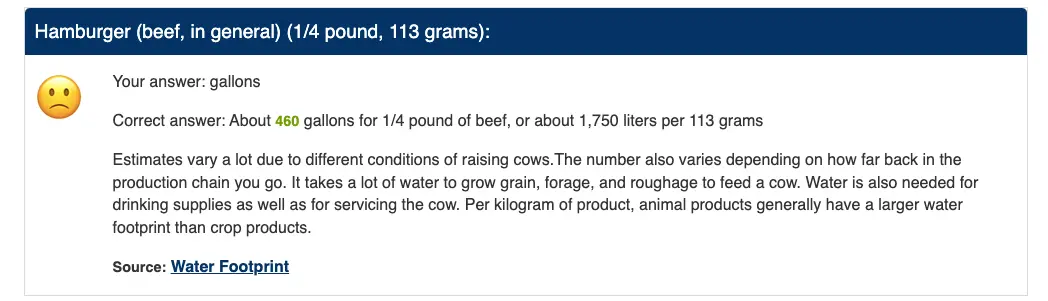
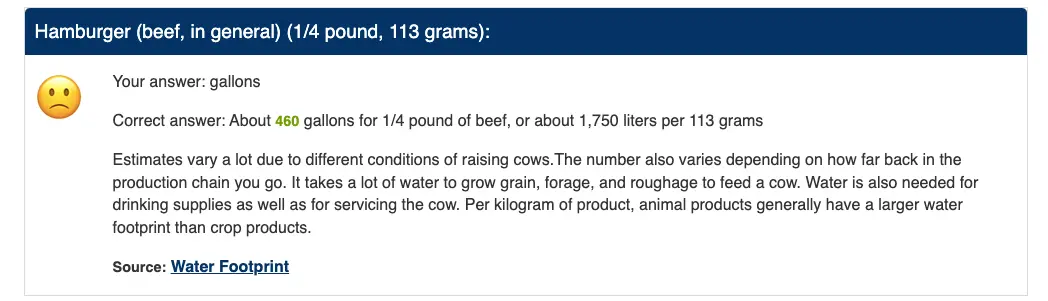
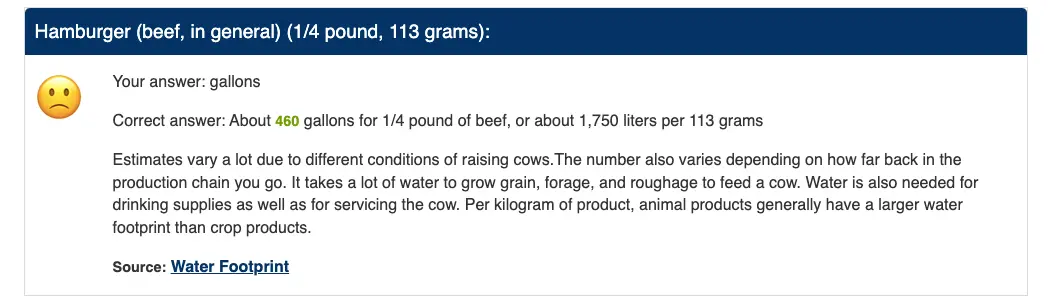
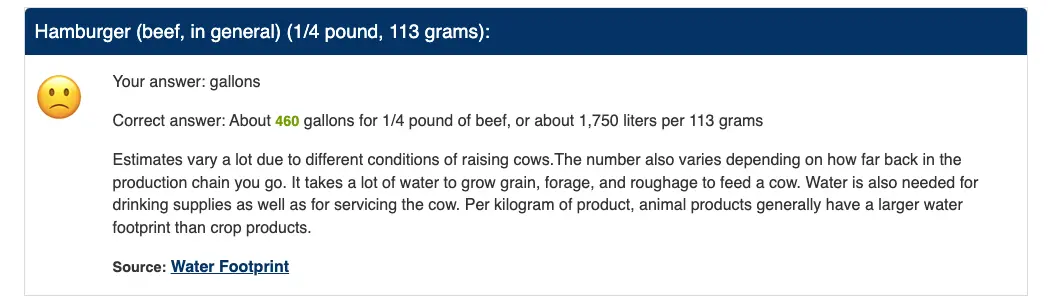
According to agricultural and hydrological data, producing a single quarter-pound of beef requires approximately 460 gallons of water. Scale that up to a full pound, and the water cost skyrockets to 1,840 gallons.
Let that sink in: One single pound of beef consumes more water than reducing your showers by two minutes every single day for an entire 365-day year.
To visualize this equivalence using the same traditional 2.5-gallon-per-minute showerhead, you would need to stand in the shower for 736 continuous minutes—more than 12 hours—to use the same amount of water required to produce just one pound of beef. Put differently, you could literally take a 12-plus-hour shower or eat a single pound of beef and consume the exact same volume of freshwater.
Official Responses and Perspectives
Water resource managers, agricultural experts, and sustainability consultants have increasingly weighed in on the efficacy of consumer-facing conservation campaigns.

The Utility Perspective
Municipal water utilities often promote residential conservation measures—such as shorter showers and lawn-watering restrictions—not necessarily because they represent the largest slice of water consumption, but because residential use is directly controllable by the local populace during acute drought emergencies. When reservoirs hit critically low levels, reducing indoor tap use provides immediate, localized relief to municipal treatment plants and distribution infrastructure.
The Agricultural Counter-Perspective
Conversely, agricultural economists point out that roughly 70% to 80% of all freshwater consumed in the United States goes toward agriculture, with a massive portion dedicated to livestock feed production and beef cattle. Water management experts argue that while household conservation fosters a mindful culture, true systemic progress on water scarcity requires addressing agricultural efficiency, shifting dietary habits toward plant-forward alternatives, and reforming water rights policies in drought-prone regions like the American West.
Sustainability advocates note that telling people to take shorter showers often backfires psychologically. It frames environmentalism as an act of deprivation and personal sacrifice. When sustainability feels like a chore, consumer fatigue sets in, and people abandon eco-friendly behaviors altogether. By contrast, shifting focus toward high-impact, low-sacrifice changes—such as reducing beef consumption or exploring plant-based meals a few days a week—can yield exponential environmental benefits without making individuals feel like they are suffering for the planet.
Implications for the Future of Sustainable Living
The realization that a single pound of beef eclipses a year’s worth of shortened showers carries profound implications for how we approach environmental education and personal carbon/water footprints.
1. Moving Beyond Guilt-Tripping
Environmental messaging must mature. Outdated tropes that focus on minor household habits while ignoring systemic drivers of resource depletion are no longer sufficient. Conservation campaigns must empower consumers with accurate data, guiding them toward actions that offer the highest return on investment for the planet.

2. Redefining "Sacrifice" in Diet and Lifestyle
Eating less meat—or swapping out beef for lower-impact protein sources like chicken, beans, or plant-based alternatives—often carries a stigma of sacrifice. However, as culinary innovation flourishes, plant-forward eating is increasingly recognized not as a deprivation, but as a vibrant, health-conscious, and delicious lifestyle choice. By reframing dietary shifts as an upgrade to personal health and culinary exploration rather than a sacrifice, sustainability advocates can drive broader adoption.
3. Holistic Resource Tracking
As climate pressures mount, tools like the USGS water calculator will become indispensable for everyday citizens. True sustainability requires systemic awareness. Just as carbon footprint calculators have helped consumers understand the climate impact of air travel versus driving, water footprint calculators are vital for illuminating the hidden liquid assets flowing through our grocery carts, wardrobes, and homes.
Conclusion
Saving the planet shouldn’t feel like a punishment. Shaving two minutes off your morning shower might make you feel virtuous, but the data proves it is the equivalent of bailing out the Titanic with a teaspoon while leaving the cargo hold wide open. By focusing our conservation efforts where they truly matter—starting with our plates and rethinking our food systems—we can achieve monumental resource savings while enjoying a lifestyle that feels abundant, sustainable, and entirely free of needless sacrifice.