









Main Facts
In the industrial waterfront neighborhood of Red Hook, Brooklyn, a 7,000-square-foot workshop is quietly reshaping the landscape of contemporary American design. At the center of this creative engine is Piscina, a collaborative design studio, fabrication house, and collective founded by Cuban-American artist Natalie Shook.
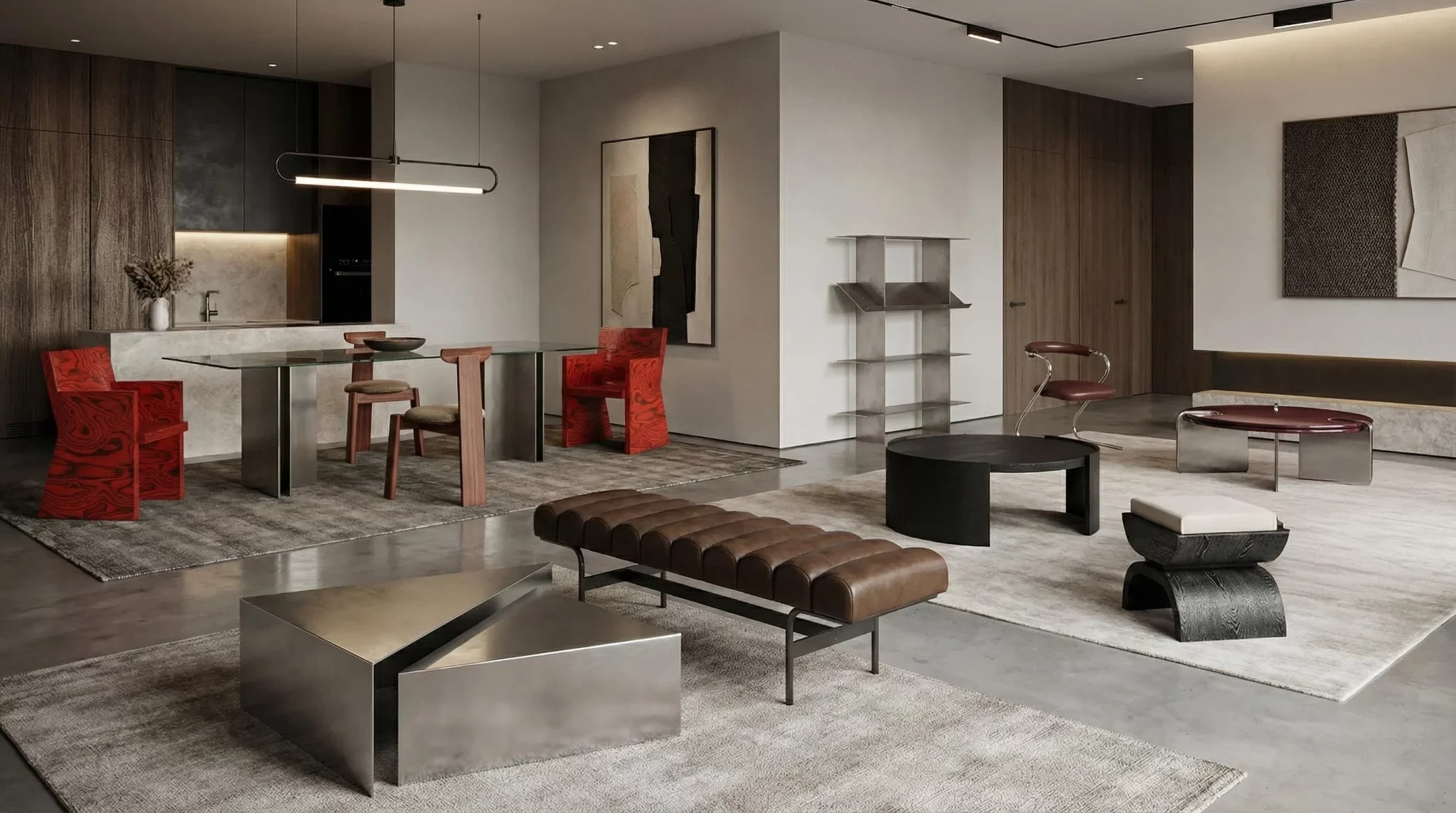
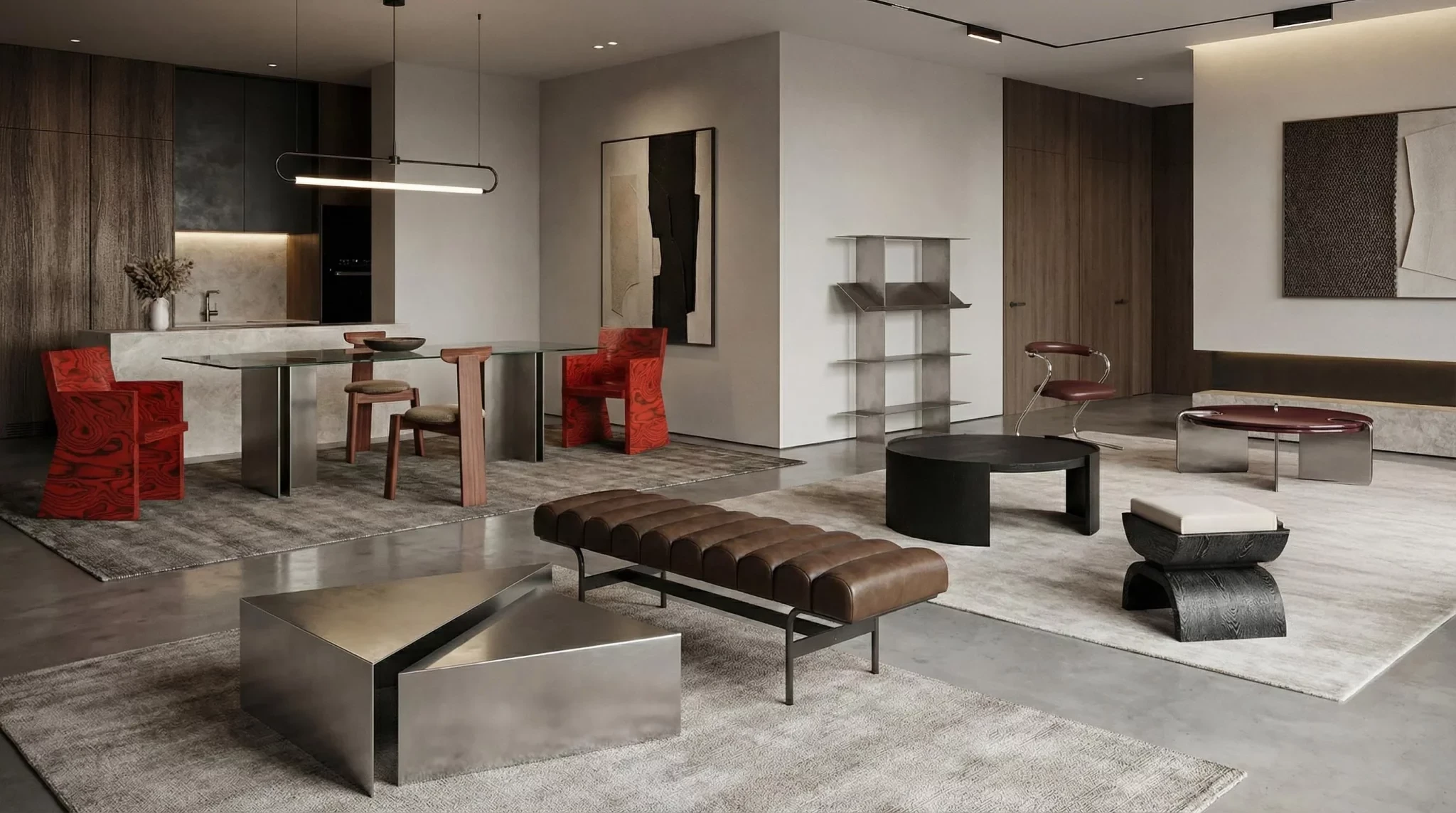
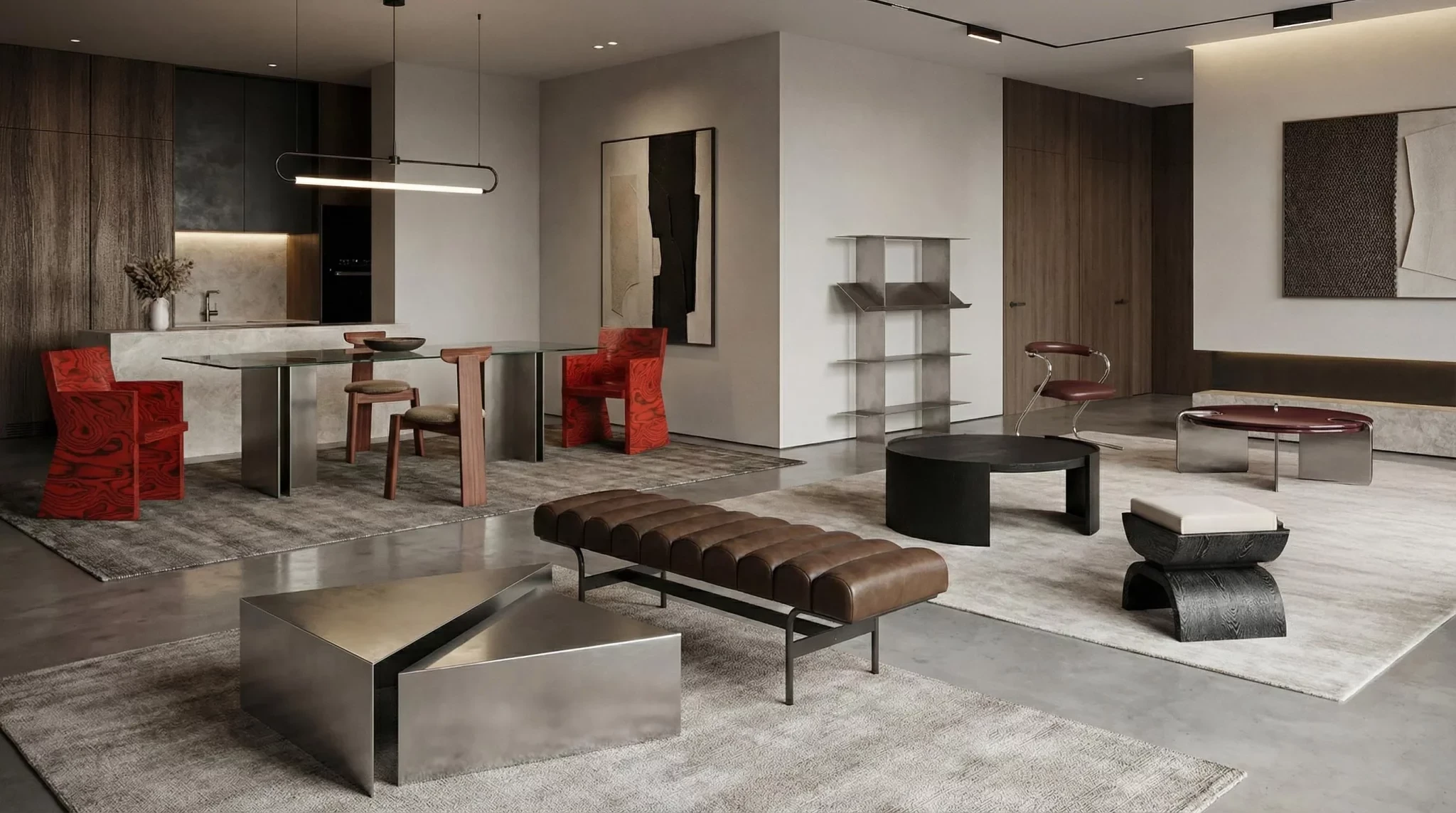
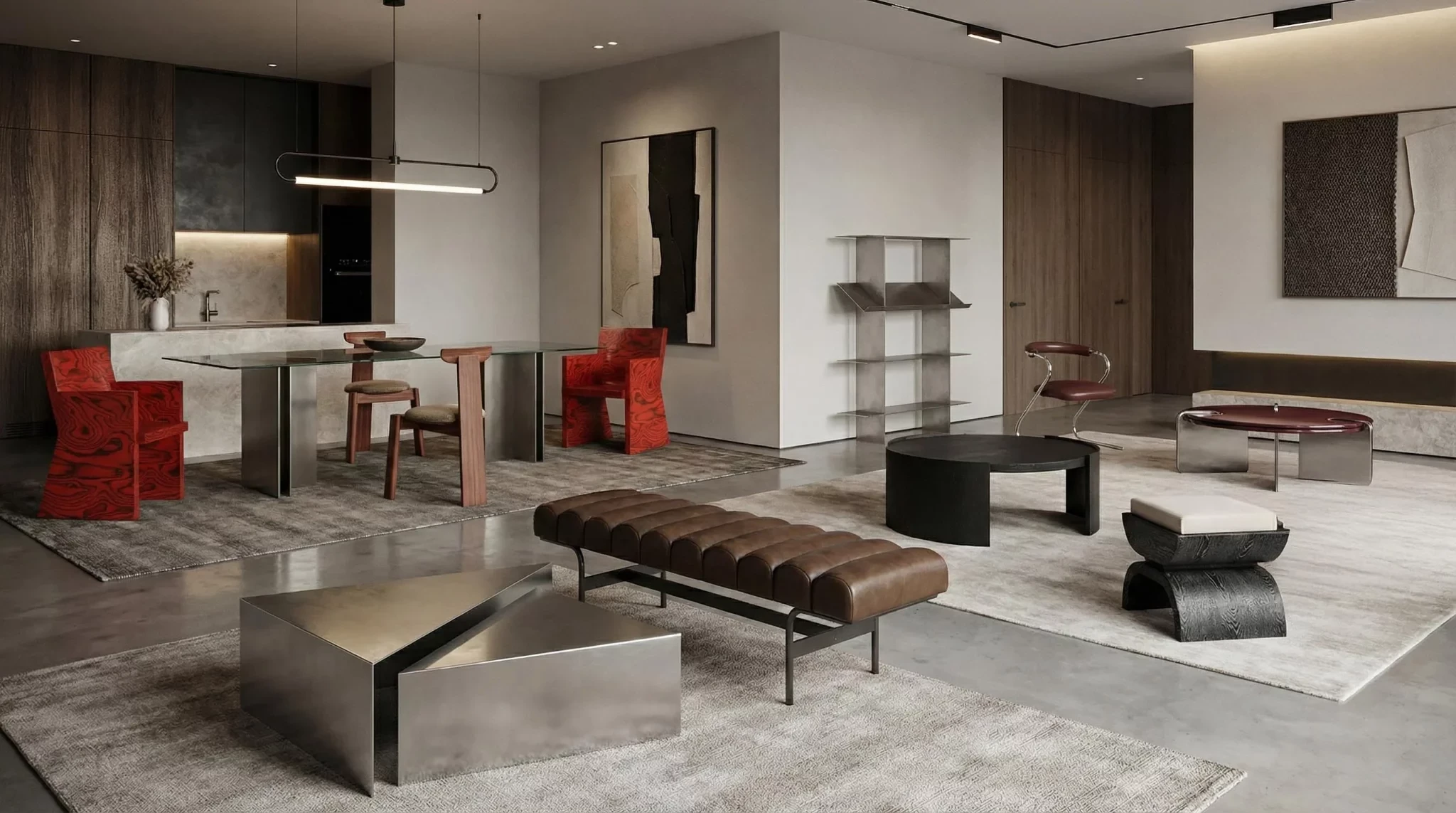
Piscina operates not as a traditional commercial gallery that occasionally displays finished goods, but as a living, breathing laboratory of craft. Within its sprawling floor plan, woodworkers, ceramicists, and metalsmiths labor side by side. Saws buzz across communal woodworking floors, pottery wheels spin in sunlit studio corners, and cross-disciplinary ideas are constantly exchanged. The physical outputs of this ecosystem—spanning monolithic solid-oak shelving units, textured ceramics, and tactile cast-iron objects—defy simple categorization. They exist at the intersection of fine art, functional furniture, and architectural form.
The collective’s meteoric rise was officially signaled at the International Contemporary Furniture Fair (ICFF) in 2022, where Piscina debuted to critical acclaim, sweeping both the "Best New Designer" and "Best in Show" accolades. Yet, despite the rapid commercial attention and institutional praise, Shook and her collaborators remain fiercely committed to the gritty, collective reality of the workshop floor. For Piscina, the magic does not lie in the polished showroom finish alone, but in the collective friction and collaborative problem-solving that happens when twenty distinct artistic minds occupy the same room.
Chronology: From the Midwest Easel to the Brooklyn Workshop
To understand the ethos of Piscina, one must trace the trajectory of its founder. Natalie Shook’s dedication to creative expression began long before she set foot in New York City.
Formative Years and the Painting Roots
Born and raised in the Midwest with a Cuban-American heritage, Shook exhibited an early, unyielding commitment to artistic practice. By the age of 14, she was already immersed in daily art-making. For the better part of her formative years, she operated under the absolute assumption that her medium was painting.
The Move to New York and the Material Pivot
Driven by her passion, Shook relocated to New York City to formally study painting at the prestigious Cooper Union. Situated in the heart of Manhattan’s East Village, Cooper Union challenged her perceptions, but the city itself offered broader architectural and material revelations.
During her studies, Shook experienced a profound creative pivot. She discovered an unexpected, magnetic affinity for carpentry, fabrication, and physical construction. While flat canvases had long been her primary vehicle, she found herself increasingly drawn to dimensionality—to making things that could be physically touched, sat upon, leaned against, and imbued with genuine physical weight. The flat plane of the canvas gave way to the three-dimensional realities of wood, metal, and gravity.
Establishing Piscina in Red Hook
This material awakening laid the groundwork for her eventual departure from traditional fine art and the birth of Piscina. Relocating to Red Hook, Brooklyn—a neighborhood long favored by artists, shipbuilders, and makers for its industrial grit and sprawling warehouse spaces—Shook established Piscina. What began as an exploration of physical fabrication evolved into a collective design studio designed to house and amplify the talents of diverse artisans.
The 2022 ICFF Breakthrough
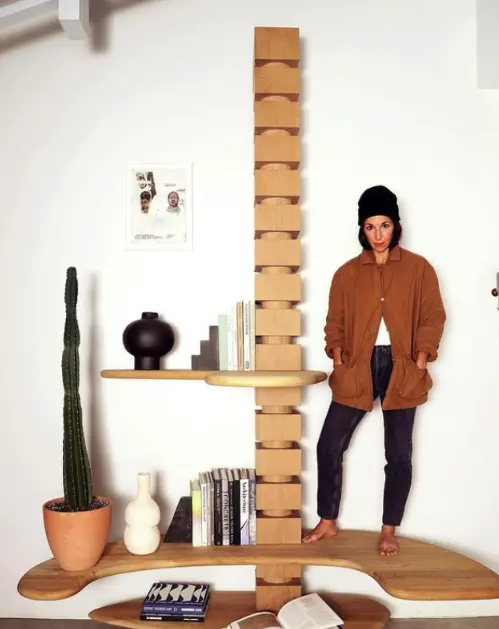
The culmination of years of quiet experimentation in the Red Hook studio came to a head at ICFF 2022. Launching their debut collection to the design world, Piscina stunned critics and curators alike. Winning "Best New Designer" and "Best in Show," the collective announced its arrival with a striking architectural oak shelving unit that instantly became a talking point of the fair.
Supporting Data and Creative Methodology
Piscina’s success is underpinned by a rigorous approach to material culture, spatial dynamics, and production methods.
The 7,000-Square-Foot Ecosystem
The physical infrastructure of Piscina is vital to its output. Spanning 7,000 square feet, the Red Hook workshop is divided into specialized yet porous zones:
- The Communal Woodworking Floor: Equipped with heavy-duty saws, planers, and joinery tools, this space hosts woodworkers tackling large-scale furniture and architectural components.
- The Ceramic Studio: Characterized by abundant natural light, this area houses pottery wheels, kilns, and glazing stations where ceramicists experiment with earth, mineral oxides, and high-fire temperatures.
- The Metal and Casting Bay: Dedicated to fabrication, welding, and metal shaping, allowing for the integration of cast iron and structural steel into the collective’s mixed-media pieces.
Design Philosophy: Sketch to Object
A defining characteristic of Piscina’s methodology is the democratization of the design process. In many traditional design houses, preliminary sketches are treated as ephemeral ephemera—discarded once the final product is achieved. Piscina elevates the drawing to a primary document of creative intuition.

The collective believes that drawing by hand is the direct translation of thought into physical form. Consequently, the immediacy of the sketch is preserved within the final object. When a buyer acquires a Piscina piece, they are not merely purchasing a functional item; they are acquiring an intimate document of the creative process. The objects literally carry the ghosts of their initial sketches inside them.
Signature Piece: The Oak Shelving Unit
At the heart of the award-winning 2022 debut collection was Piscina’s solid oak shelving unit. Crafted entirely in the Red Hook studio, the piece is a masterclass in duality. It reads simultaneously as a towering architectural monolith and a piece of refined furniture.
- Material: Solid white oak, sourced and selected for its grain pattern and structural integrity.
- Construction: Interlocking stacked forms that challenge standard joinery techniques, providing both visual lightness and immense physical stability.
- Aesthetic Intent: To blur the line between structural architecture and domestic interior design, proving that storage furniture can command a room in the manner of a grand sculpture.
Official Statements and Collective Perspectives
While Natalie Shook serves as the visionary founder and anchor of Piscina, the ethos of the collective is inherently decentralized. The studio’s identity is forged through a chorus of voices rather than a single artistic ego.
Reflecting on her transition from painter to spatial fabricator, Shook has often remarked on the psychological shift required to embrace multi-disciplinary design. In various studio reflections, she notes that she spent years trying to fit her artistic impulses into the singular box of a painter, only to realize that true creative fulfillment lay in multiplicity.
"She is, it turns out, many people trying to be one person," observers of the studio note. "That’s not a problem. That’s the whole point of Piscina."
By refusing to narrow the collective’s output into a single predictable aesthetic, Shook has cultivated an environment where cross-pollination is encouraged. A woodworker might consult on the structural balance of a ceramic vessel; a metalsmith might advise on the hardware integration of an oak shelving unit. This communal friction ensures that no single object is born in isolation.
Furthermore, representatives of international design fairs and architectural critics have praised Piscina for returning a sense of raw authenticity to American craft. In an era dominated by mass production, digital rendering, and outsourced manufacturing, Piscina’s insistence on localized, hand-wrought, collective production offers a radical alternative.
Implications for the Future of Contemporary Design
Piscina’s rise in Red Hook carries significant implications for the broader world of contemporary furniture design, urban manufacturing, and artistic collaboration.
1. The Revival of Urban Industrial Craft
For decades, high-end furniture production has faced increasing pressures to outsource manufacturing overseas in search of lower overhead costs. Piscina’s success in Red Hook—a historically industrial Brooklyn zone vulnerable to rapid real estate gentrification—proves that viable, high-end, localized craft economies can still thrive within major American metropolises. By anchoring themselves in a physical workspace that combines production, experimentation, and exhibition, they offer a blueprint for sustainable urban manufacturing.
2. Blurring Boundaries Between Art, Architecture, and Furniture
The design world has long debated the boundaries dividing fine art, craft, and functional design. Piscina’s work actively dismantles these artificial walls. When a shelving unit commands architectural presence, or when a cast-iron object serves simultaneously as a decorative sculpture and a functional tool, the hierarchy between "fine art" and "applied craft" dissolves. This trend points toward an increasingly interdisciplinary future where collectors and interior architects prioritize emotional resonance and material honesty over strict categorical definitions.
3. The Power of the Collective Model
The traditional model of the designer-maker often venerates the solitary genius working in isolation. Piscina flips this paradigm on its head, demonstrating that collective intelligence yields richer, more resilient design outcomes. As younger generations of makers enter the workforce, weary of hyper-individualistic hustle culture and digitally detached production methods, the communal workshop model championed by Shook provides a compelling, sustainable alternative.
Looking Ahead
As Piscina continues to expand its footprint beyond its breakout 2022 debut, the studio remains anchored to its foundational premise: that making things with weight, substance, and soul requires a community. Whether through the hum of the woodworking floor, the spin of the pottery wheel, or the stark architectural lines of a solid oak tower, Natalie Shook and her collective are proving that the future of design is tactile, collaborative, and resolutely human.