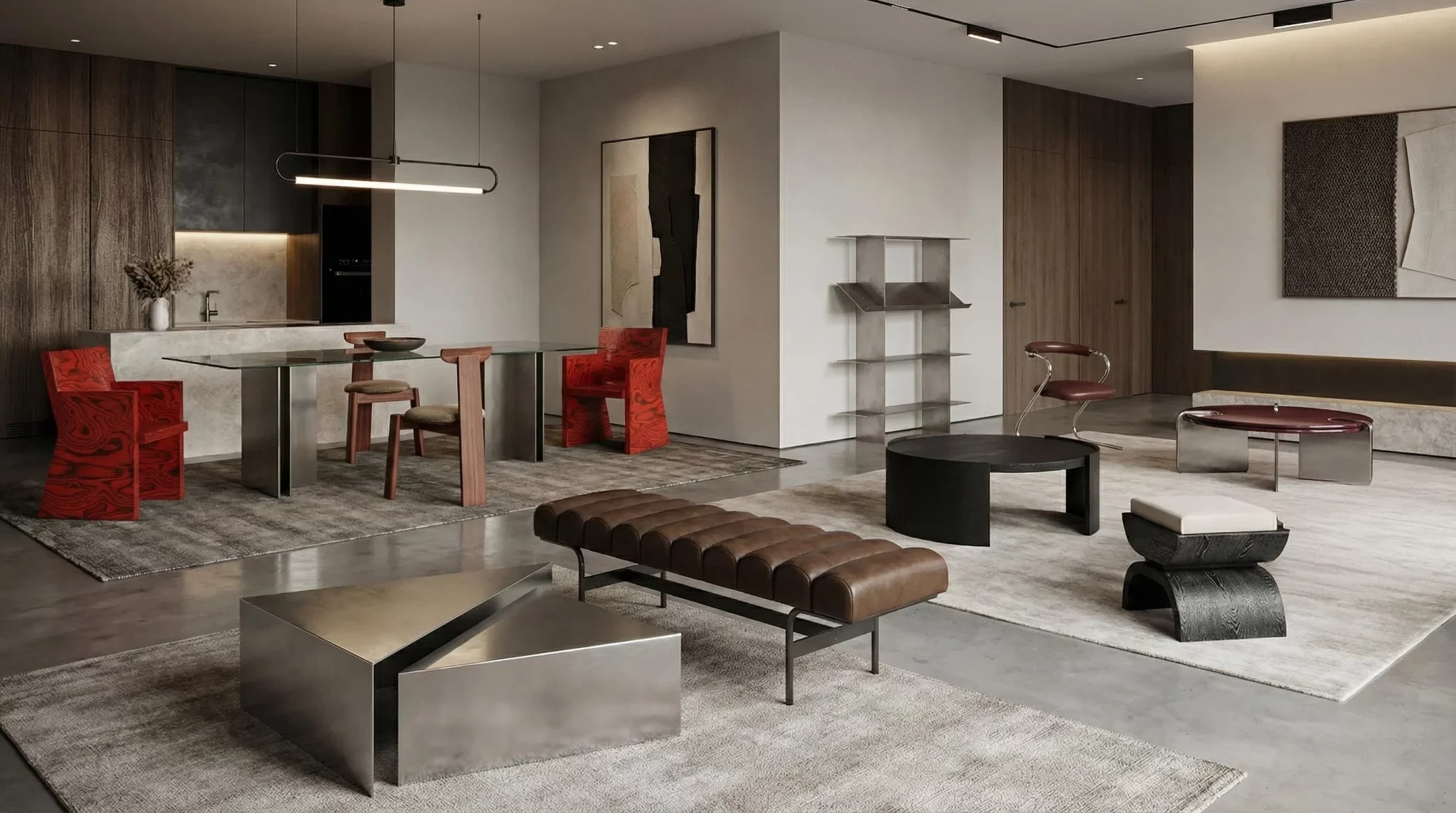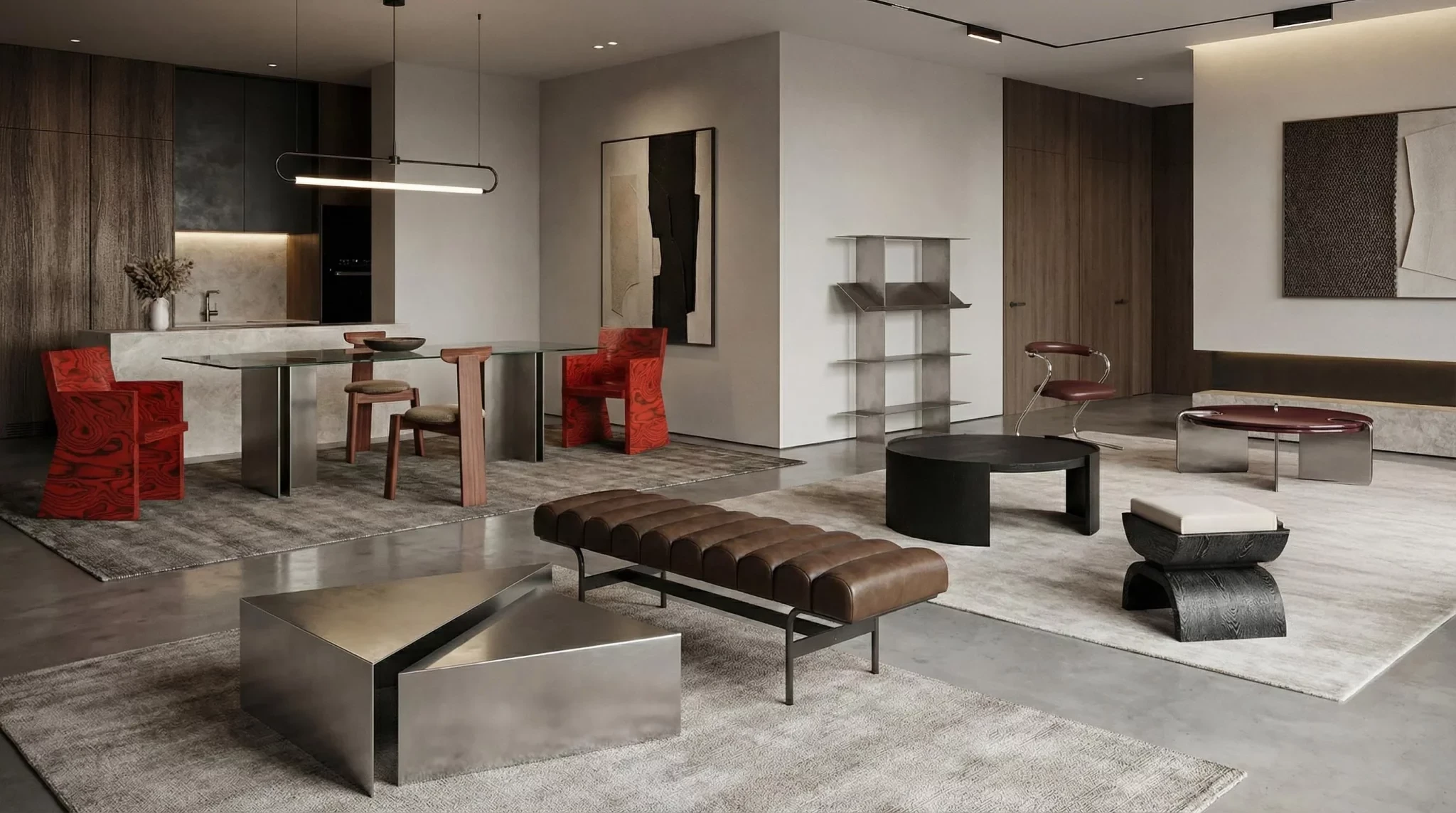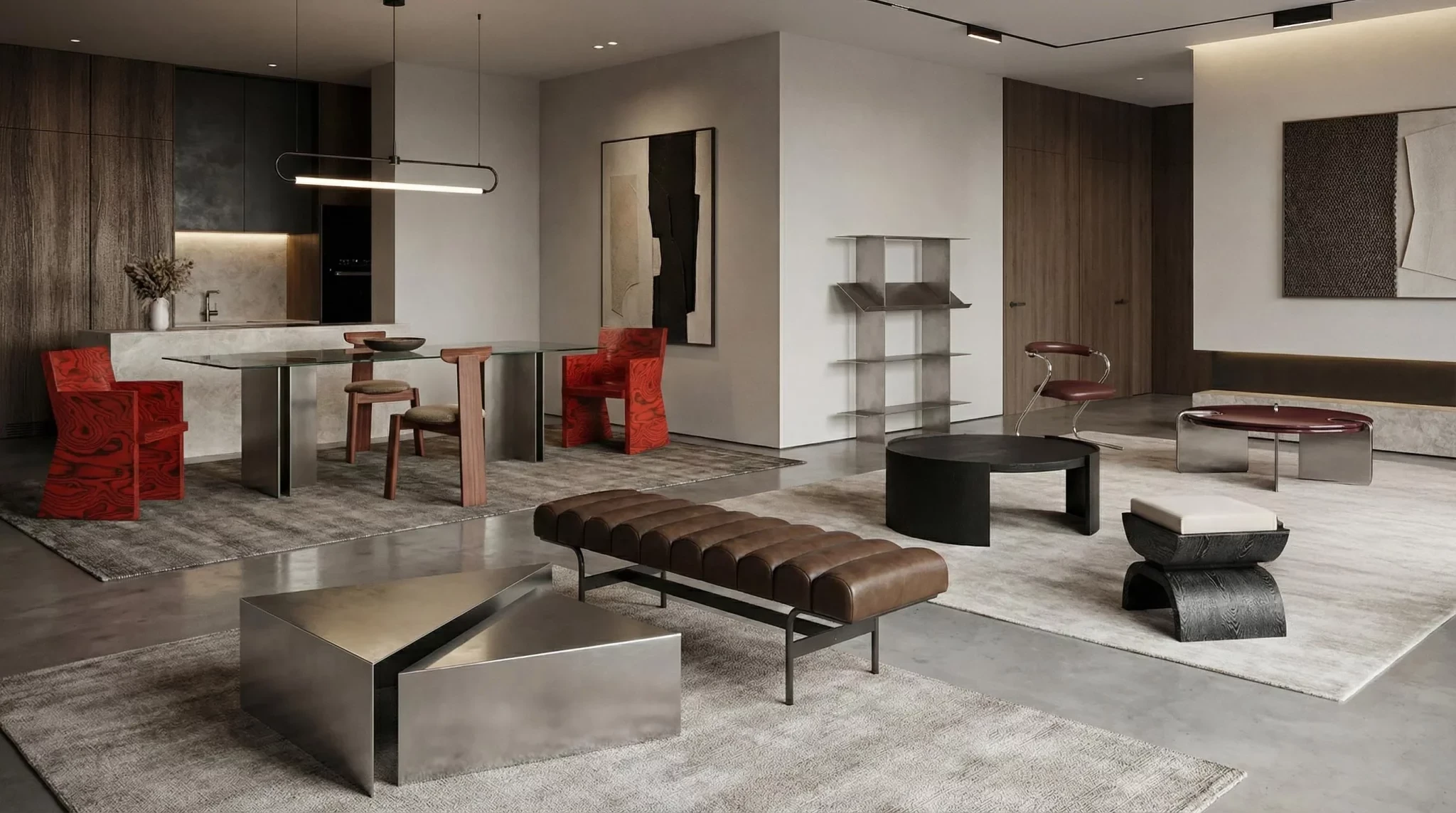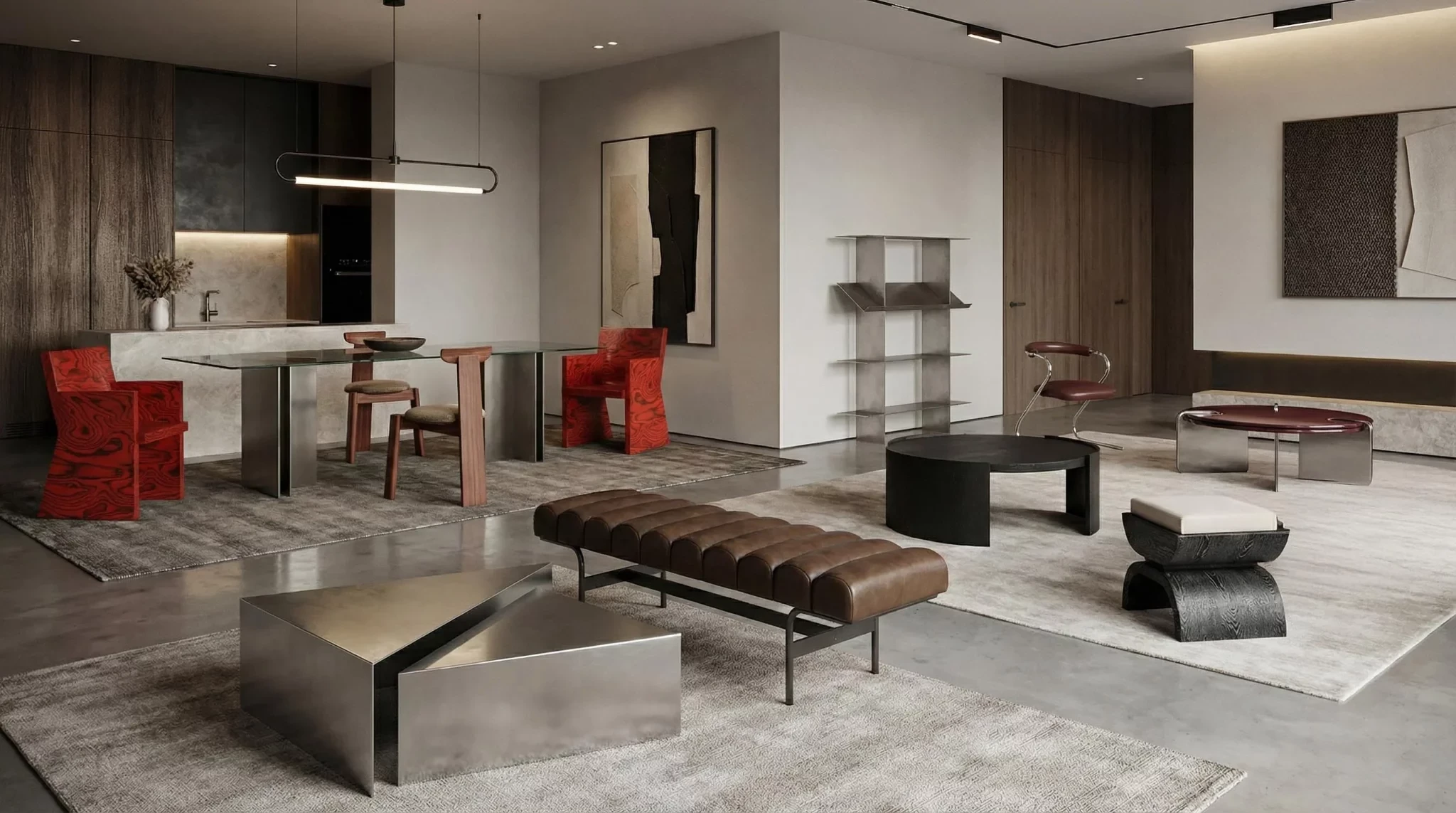










Main Facts
In the industrial waterfront neighborhood of Red Hook, Brooklyn, a 7,000-square-foot workshop hums with the collective energy of a new design movement. This is the home of Piscina, a multidisciplinary design studio and collaborative workspace founded by Cuban-American artist and fabricator Natalie Shook.
What began as a personal artistic evolution for Shook has transformed into a thriving incubator for contemporary craftsmanship. Piscina operates as a porous boundary between a factory floor and a design gallery. On any given afternoon, the air is filled with the sharp whine of table saws on the communal woodworking floor, the rhythmic spinning of pottery wheels in the sun-drenched ceramic studio, and the distinct clink of metal being shaped in the fabrication bay.
Piscina is not a traditional gallery that occasionally houses production; rather, it is an active production space that periodically exhibits its creations. Every piece of furniture, ceramic vessel, and cast-iron sculpture emerging from the Red Hook studio carries the collective pulse of roughly twenty artisans solving complex structural and aesthetic problems in real time.
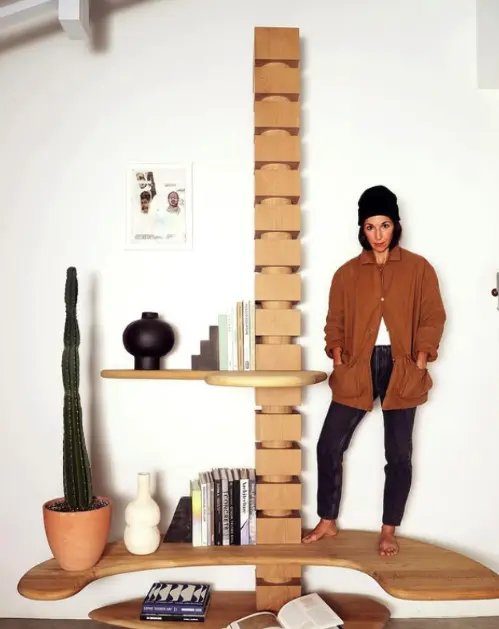
The studio’s breakout moment arrived at the International Contemporary Furniture Fair (ICFF) in 2022, where Piscina swept the competition, taking home both Best New Designer and Best in Show. Their debut collection featured a striking, architectural solid oak shelving unit that functioned simultaneously as a minimalist tower and a piece of functional furniture. Since then, Piscina has challenged the boundaries between fine art, architecture, and utilitarian design, proving that the future of American craft lies in radical collaboration.
Chronology: The Evolution of an Artist and a Studio
To understand the ethos of Piscina, one must trace the artistic trajectory of its founder. The timeline of Natalie Shook’s career is a testament to how creative intuition often leads artists down unexpected paths.
Formative Years and the Midwest Roots
Born and raised in the Midwest, Shook displayed an early dedication to the arts. From the age of 14, she maintained a rigorous daily studio practice. For the vast majority of her formative years, she identified unequivocally as a painter. Her world was defined by two-dimensional canvases, color theory, and the flat application of pigment.
The New York Transition and the Discovery of Volume
Seeking to formalize her artistic training, Shook moved to New York City to study painting at the prestigious Cooper Union. Placed in the heart of Manhattan’s intense artistic ecosystem, her practice underwent a profound conceptual crisis—or rather, an awakening.
While engaging with the physical spaces of New York and the rigorous curriculum at Cooper Union, Shook realized she was captivated by weight, gravity, and tactility. She found herself drawn away from the canvas and toward carpentry, woodworking, and spatial fabrication. She wanted to make things that people could touch, sit on, lean against, and structurally depend on. The two-dimensional world of paint gave way to the three-dimensional reality of wood, metal, and clay.
Establishing Red Hook and Launching Piscina
Armed with a newly discovered passion for physical making, Shook relocated to Red Hook, Brooklyn—a neighborhood long favored by sculptors and large-format artists for its industrial architecture and maritime grit. Recognizing that the solitary studio model limited creative potential, she envisioned a shared ecosystem where diverse craftspeople could cross-pollinate ideas.
Thus, Piscina was born. It transitioned from a personal workshop into a collective framework, gathering woodworkers, ceramicists, and metalsmiths under one sprawling roof.
The 2022 ICFF Breakthrough
The culmination of years of collaborative experimentation materialized at the 2022 International Contemporary Furniture Fair (ICFF). Unveiling their debut collection to the global design community, Piscina immediately captured the attention of critics and curators. Winning Best New Designer and Best in Show, the studio disrupted the convention of high-end furniture design by presenting works that felt intensely personal yet structurally monumental.
Supporting Data and Creative Philosophy
The operational mechanics of Piscina are as fascinating as the physical objects it produces. The studio’s success is anchored in specific methodologies, spatial dynamics, and material choices.
The Architecture of the Workspace
- Facility Size: 7,000 square feet of open-plan industrial space in Red Hook, Brooklyn.
- Disciplines Represented: Woodworking, ceramics, metalwork, and industrial design.
- Collaborative Capacity: A rotating and permanent community of approximately 20 artisans working simultaneously.
- Spatial Layout: Divided into specialized zones—a high-dust woodworking floor, a luminous ceramic studio equipped with professional pottery wheels, and a heavy-material metal fabrication area—all housed within visual sightlines of one another to encourage spontaneous dialogue.
The Design Philosophy: From Sketch to Object
Piscina rejects the conventional industrial design pipeline, which often separates the sketching phase from the engineering and manufacturing phases. At Piscina:

- Drawings as Primary Documents: Hand sketches are not treated as ephemeral preparatory materials; they are viewed as intimate, primary documents of creative thought.
- Embracing Intuition: The physical objects are designed to retain the raw gesture of the initial hand drawing. As Shook and her team explain, the sketches become the objects, and the objects carry the invisible memory of the sketch inside them.
- Category Defiance: The studio’s signature pieces—such as their award-winning solid oak shelving unit—defy simple categorization. They hover on the aesthetic line between minimalist sculpture, architectural columns, and domestic utility.
Official Perspectives and Statements
The ethos of Piscina is best understood through the philosophical reflections of its founder and the critical reception it has garnered within the architectural and design communities.
Reflecting on her unexpected transition from painting to material fabrication, Natalie Shook notes the fluidity of creative identity:
"I spent years thinking I was a painter because that was the box I built for myself at fourteen. But what I was actually searching for was resistance. I wanted materials that pushed back against my hands. When you move from canvas to timber or cast iron, the material has its own will. You have to listen to it."
Discussing the collaborative structure of the 7,000-square-foot Red Hook facility, Shook emphasizes that the collective model is not merely a logistical arrangement, but a creative necessity:
"She is, it turns out, many people trying to be one person. That’s not a problem. That’s the whole point of Piscina."
This pluralistic identity defines the studio’s output. By allowing ceramicists to influence woodworkers, and metalsmiths to challenge structural designers, Piscina dissolves the ego of the solitary auteur in favor of a polyphonic creative voice.
Industry critics reviewing the studio’s debut at ICFF noted the rare synergy present in the work. Design curators pointed out that objects originating from Piscina possess a distinct psychological weight—a tangible trace of the collaborative friction of twenty minds solving design problems under one roof.
Implications for the Future of Modern Design
Piscina’s rising prominence signals a broader cultural and economic shift in contemporary furniture and object design.
1. The Revival of the Collective Studio Model
For decades, high-end design has been dominated by either massive industrial manufacturing lines or isolated, solitary studio artists producing limited-edition luxury items. Piscina models a third way: the collaborative guild. By pooling resources, physical space, and technical expertise in neighborhoods like Red Hook, independent artisans can scale their ambitions without sacrificing material integrity or selling out to mass-production conglomerates.
2. Blurring the Lines Between Art, Architecture, and Utility
The acclaim received by Piscina’s oak shelving unit highlights a growing consumer and critical appetite for functional art that transcends mere utility. Objects are no longer expected to simply "work"—they are expected to hold spatial presence, tell a narrative of their creation, and evoke the emotional resonance of sculpture.
3. Hyper-Local Production in a Globalized Market
In an era dominated by global supply chains and digital mass manufacturing, Piscina doubles down on the hyper-local. Stating proudly that their signature pieces are "Solid oak. Made in Red Hook, Brooklyn," the collective roots its brand identity in the specific geography, grit, and creative community of New York City’s waterfront. This hyper-local focus authenticity resonates deeply with collectors who seek a direct connection to the maker.
Summary of the Signature Piece: The Oak Shelving Unit
- Material: Solid European or American Oak (sourced and fabricated locally).
- Aesthetic: A tower of stacked forms that reads simultaneously as a brutalist architectural column and a functional home organizer.
- Origin: Conceived through hand sketches and brought to life on the communal floors of the Red Hook workshop.
- Contact & Discovery: Available for viewing and acquisition via the studio’s official channels (
piscina.piscina).
As Piscina continues to expand its footprint in Brooklyn and beyond, it stands as proof that when artists stop trying to fit into rigid professional boxes, they can build entirely new spaces to inhabit together.