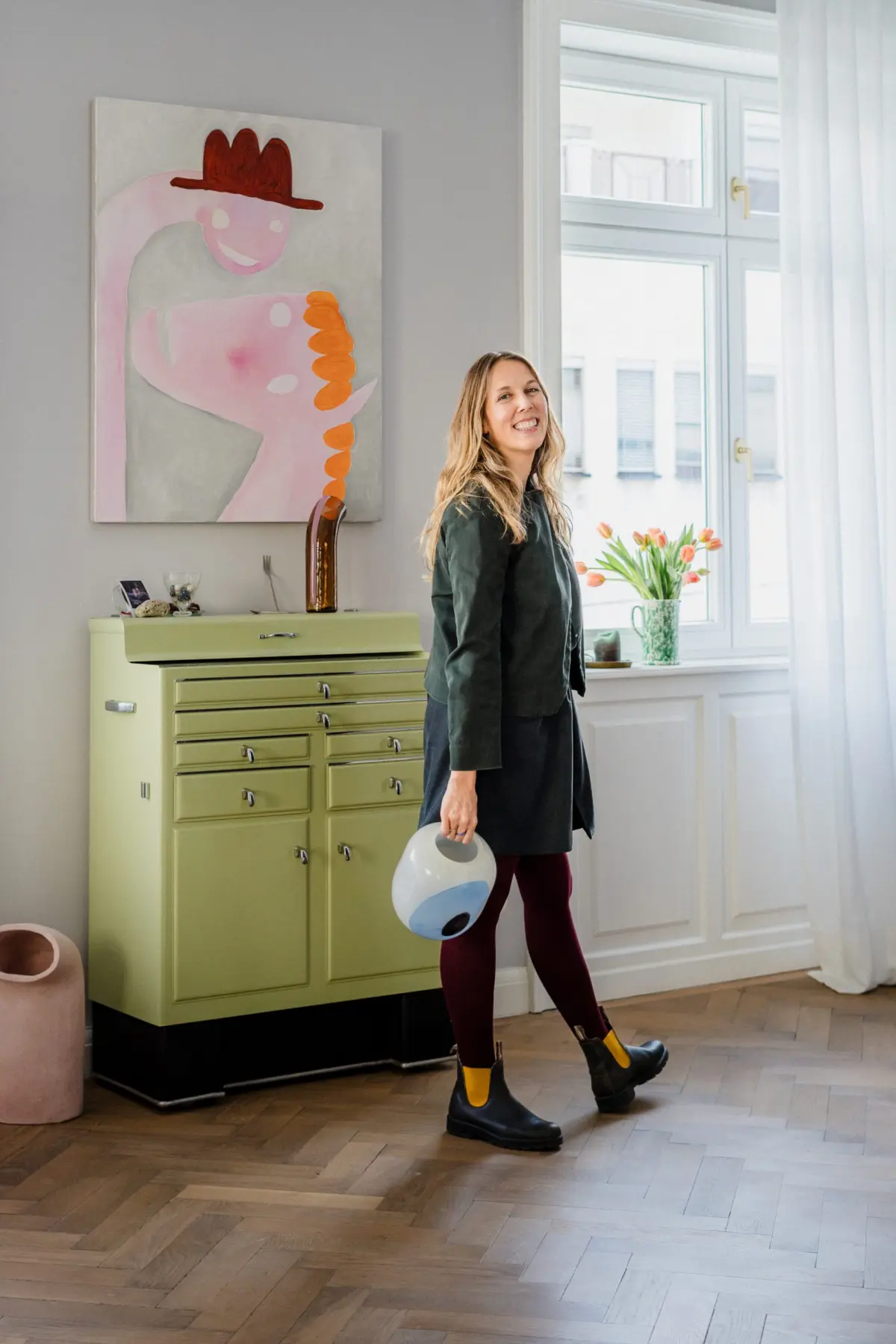
In the quiet intersection where alchemy meets modern interior architecture, a new design language is taking shape. Ursula Futura, the Vienna-based studio founded by designer Kathrin Schaden, is challenging the sterile perfectionism of mass-produced decor with a collection of mouth-blown, highly emotive glass objects. Operating less as a traditional commercial entity and more as an uncompromised artistic alter ego, Schaden’s studio produces sculptural lighting and decorative objects that celebrate irregularity, emotional resonance, and the volatile nature of glass.
At the heart of the studio’s growing acclaim is its signature line—including whimsical yet commanding statement pieces like Nessie and Phantom, and the mesmerizing Pulsar lamp series. Crafted in Bohemia using traditional mouth-blowing techniques, these objects reject industrial uniformity. Instead, they embrace trapped air bubbles, subtle asymmetries, and shifting color refractions that respond dynamically to the changing light of day.
Schaden’s work stands as a direct counter-narrative to minimalist restraint. By allowing the material to "argue back" during the cooling process, Ursula Futura turns technical imperfections into defining artistic signatures, positioning hand-crafted glass not merely as a functional medium, but as a living, breathing sculptural experience.
Chronology: The Evolution of Ursula Futura
The journey toward Ursula Futura did not begin in a sleek, corporate design incubator; rather, it was forged over years of creative friction and personal evolution.
The Formative Years: For much of her early career, Kathrin Schaden found herself navigating a design world that frequently favored restraint, neutrality, and strict self-editing. Constantly told that her instinct for vibrant color, bold scale, and emotional maximalism was "too much," she spent years refining her output to match market expectations.
The Birth of the Alter Ego: Recognizing that commercial conformity was stifling her truest creative impulses, Schaden established Ursula Futura. Conceived not just as a brand name, but as an unapologetic alter ego, the studio became a sanctuary for ideas that demanded to exist purely because the designer couldn’t stop thinking about them.
Mastering the Furnace: Moving away from modern casting and pouring techniques, Schaden chose the far more demanding and ancient path of mouth-blown glass. Establishing production partnerships rooted in the rich glassmaking heritage of Bohemia and operating out of Vienna, she began experimenting with scale, opacity, and wave dynamics.
The Debut of Signature Forms: The studio steadily introduced evocative pieces—such as the undulating Nessie and the elusive Pulsar—capturing the attention of interior stylists, collectors, and design publications globally.
Present Day and Future Horizons: Today, Ursula Futura stands as a rising force in European collectible design. With the table lamp iterations of the Pulsar series securing critical praise, the studio is actively expanding its footprint, developing anticipated pendant and wall lamp variations to bring its frozen kinetic waves to new architectural scales.
Supporting Data: The Craft and Composition of Ursula Futura
To understand the hypnotic visual weight of an Ursula Futura piece, one must examine the physical properties of the medium and the meticulous, labor-intensive process required to shape it.
Materiality: Glass is fundamentally a supercooled liquid—an amorphous solid that constantly exists in a state of suspended animation. When heated to high temperatures in Bohemian furnaces, the material "remembers" its liquid fluidity, allowing master blowers to manipulate it via breath and iron pipes before thermal shock forces it to solidify.
Production Geography: While conceptualized and directed from Vienna, the physical execution relies on the centuries-old glassblowing traditions of Bohemia, a region globally renowned for its master artisans who possess the rare physical endurance and tactile intuition required to blow heavy, colored glass by mouth.
The "Flaw" as Feature: Industrial glass production invests heavily in removing imperfections, striving for optical clarity and uniform thickness. Ursula Futura intentionally subverts this standard. Minor bubbles, swirling optical distortions, and microscopic variations in wall thickness are preserved as vital proof of human intervention and material autonomy.
The Pulsar Specifications:
Form: Softly stepped cone shapes translating the kinetic energy of a wave into static geometry.
Finish: Opaque and translucent colored glass layers that alter their visual profile depending on ambient light angles and whether the internal illumination is powered on or off.
Lineage: Includes the flagship table lamps, with impending expansions into architectural pendant fixtures and wall-mounted sconces.
Official Responses and Creative Philosophy
The philosophy underpinning Ursula Futura is deeply intertwined with Schaden’s personal liberation from creative self-doubt. Rather than chasing fleeting interior trends, the studio’s output is driven by spontaneous emotional responses to light, shadow, and kinetic form.
In discussing the conceptual anchor of her most famous creation, Schaden has articulated the meditative rhythm driving her work:
"I keep coming back to the wave because it never really stops moving, even when it’s frozen in glass. The repetition in the form feels meditative to me. Like breathing, or tides."
This perspective has resonated deeply within the contemporary design community. Critics and curators have noted that Schaden’s objects possess a rare psychological weight. They are not designed to seamlessly blend into the background of a minimalist room; they are crafted to interrupt it.
When light hits an Ursula Futura piece—casting sudden, unexpected rainbows or shifting the tones of a room—it evokes that precise, unexplainable moment of wonder mentioned in the studio’s foundational manifesto: You stop. You stare. You feel something you can’t explain. And you don’t want to. By prioritizing raw emotional impact over functional neutrality, Schaden has garnered praise from avant-garde interior architects who view her pieces as catalysts for experiential spatial design.
Implications for the Future of Collectible Design
The rise of Ursula Futura signals a broader, much-needed shift within the contemporary design landscape. For decades, the high-end interior market was dominated by clean lines, monochromatic palettes, and hyper-rational, mass-produced luxury that often left living spaces feeling sterile and emotionally vacant.
Schaden’s success points toward a renaissance of emotional maximalism and tactile authenticity. As consumers and interior architects grow fatigued by algorithmic trends and identical "Instagram-ready" aesthetics, objects that carry the undeniable fingerprint of their maker are commanding renewed value.
Furthermore, the studio’s embrace of traditional mouth-blowing techniques acts as a vital bridge safeguarding endangered European craft heritage. By proving that artisanal, imperfect, and labor-intensive processes can successfully capture modern imagination, Ursula Futura demonstrates that the future of design does not lie in digital perfection, but in the celebration of human vulnerability, breath, and unpredictable beauty.
As Ursula Futura looks toward its upcoming expansion into architectural lighting—with new pendants and wall sconces currently in development—the design world is watching closely. The studio is proving that when an artist stops apologizing for being "too much," they just might create objects that make the rest of the world stop, stare, and feel alive again.