









Main Facts
In the industrial waterfront neighborhood of Red Hook, Brooklyn, a 7,000-square-foot workshop hums with the kinetic energy of creation. This is Piscina, a multidisciplinary design studio and collective founded by Cuban-American artist Natalie Shook. Far from a conventional white-cube gallery that occasionally displays finished goods, Piscina is fundamentally a manufacturing ecosystem—a communal workshop where woodworkers, ceramicists, metalsmiths, and conceptual designers cross-pollinate ideas and share physical resources.
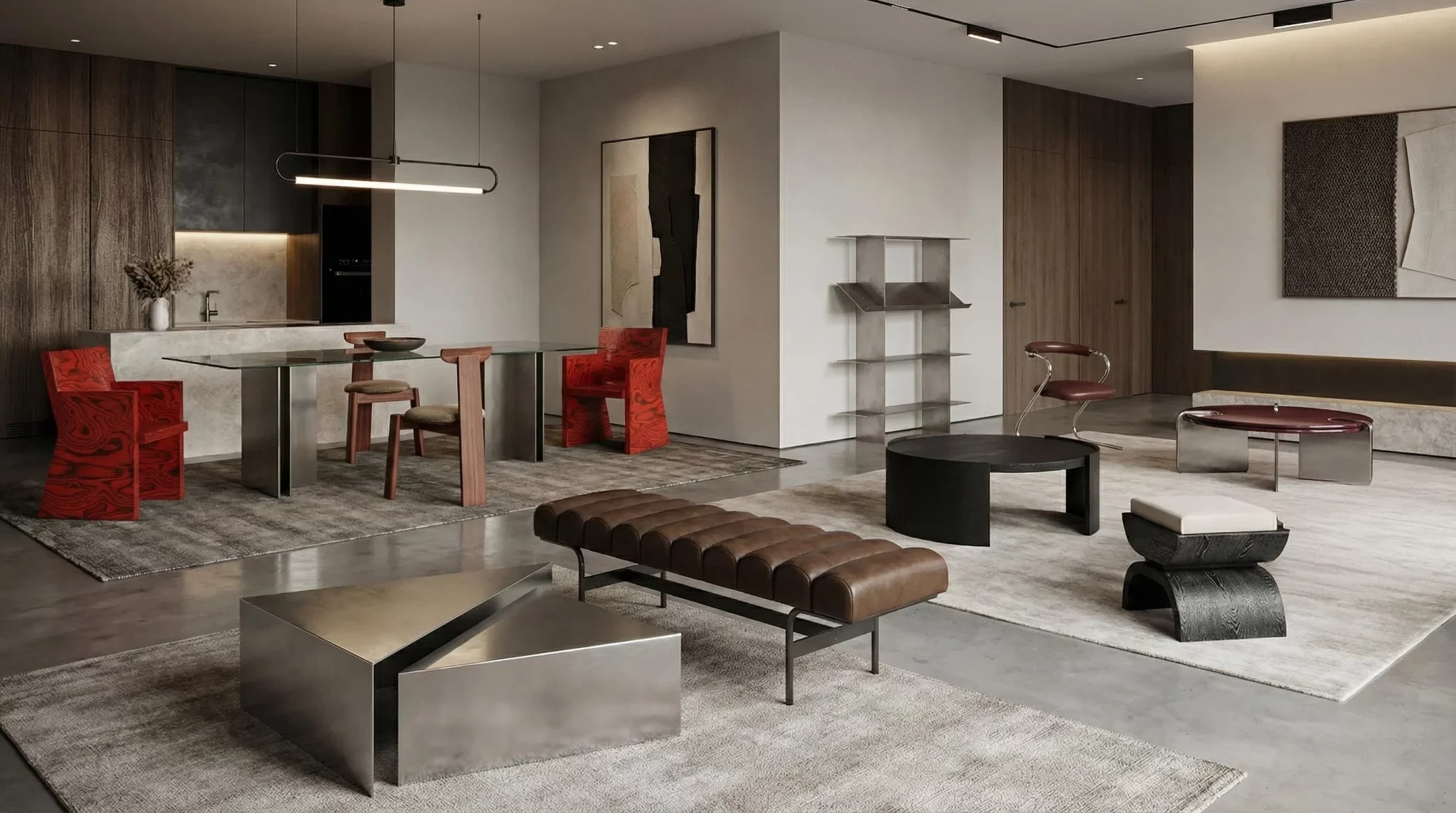
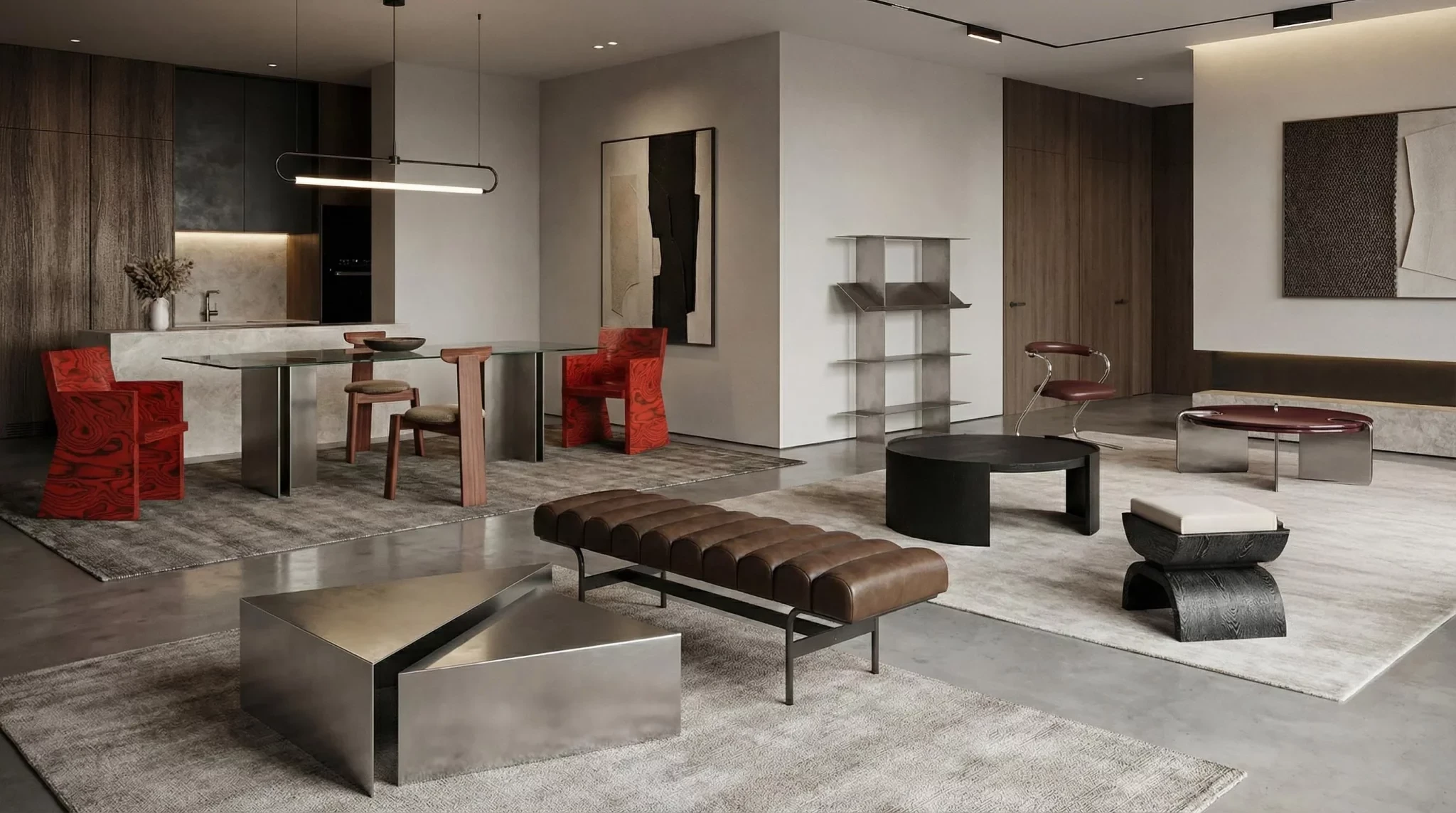
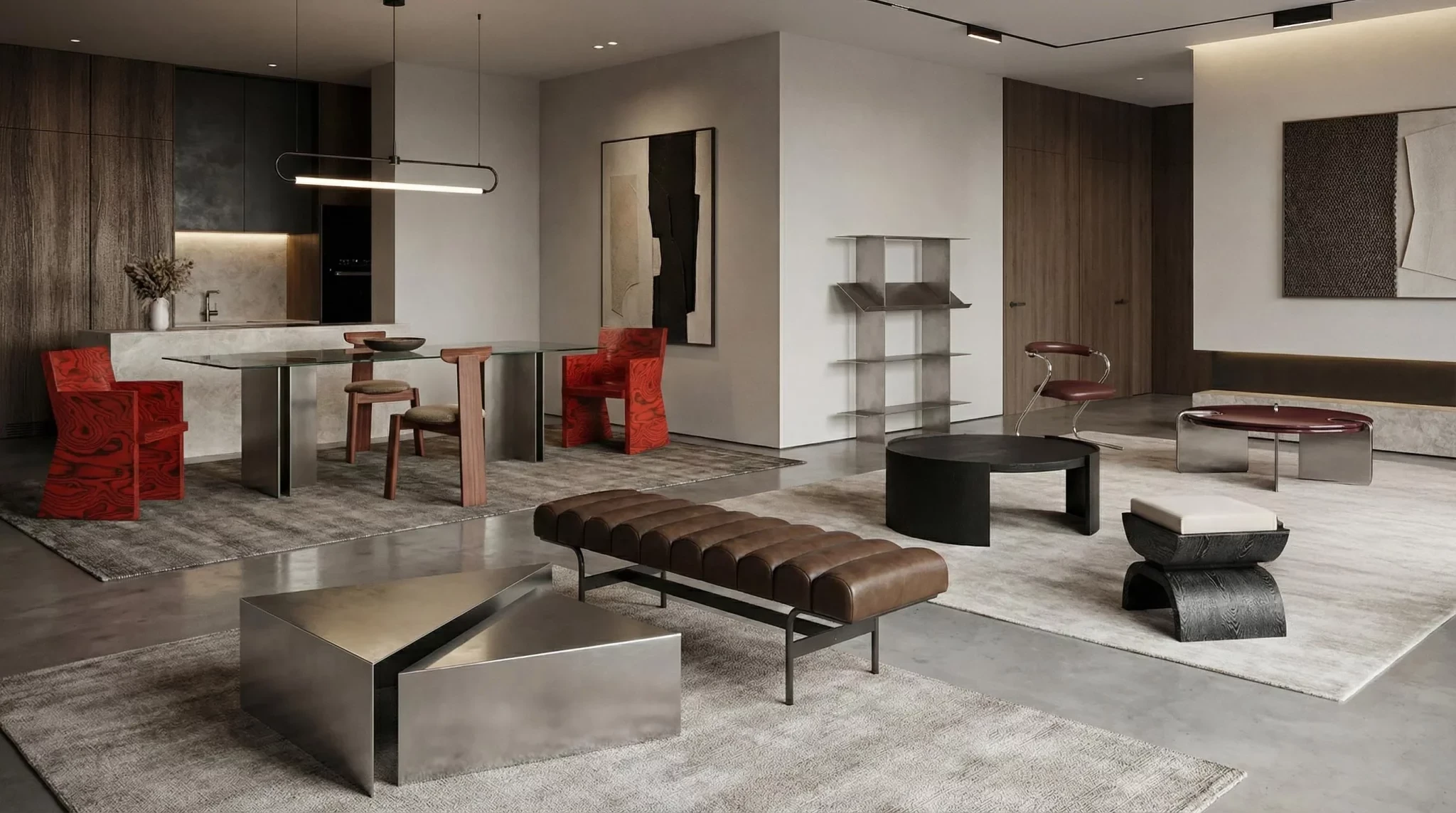
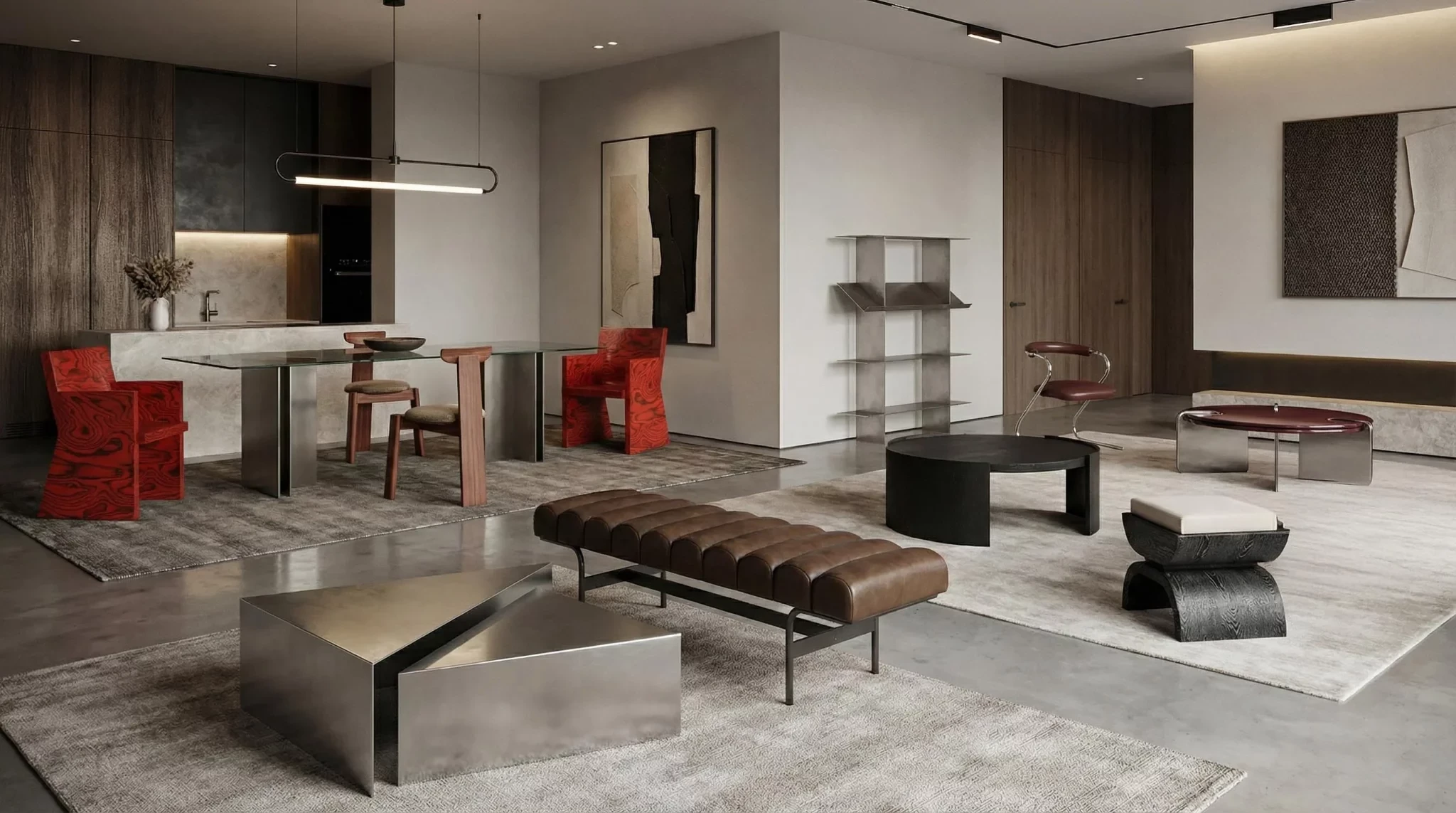
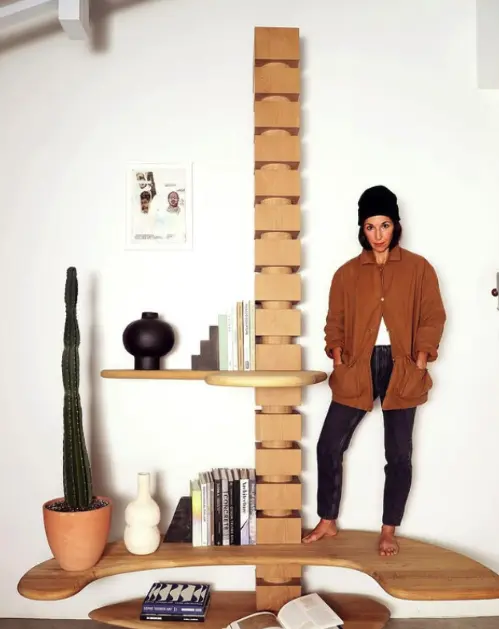
The collective burst onto the national design scene at the International Contemporary Furniture Fair (ICFF) in 2022, capturing both the "Best New Designer" and "Best in Show" accolades. Their debut collection, anchored by a monolithic yet graceful solid oak shelving unit that blurs the line between brutalist architecture and functional furniture, immediately established Piscina as a major force in contemporary American design.
Piscina’s core philosophy rejects traditional categorization. Its pieces—spanning tactile ceramics, heavy cast-iron works, and architectural woodwork—are direct translations of spontaneous, hand-drawn sketches into physical, weight-bearing reality. For Shook, the studio represents a radical acceptance of multiplicity: the idea that an artist does not need to be confined to a single medium, and that a collective can successfully function as a unified yet polyphonic creative voice.
Chronology
The Formative Years in the Midwest and Cooper Union
Natalie Shook’s artistic journey began in earnest when she was just 14 years old. Raised in the Midwest with a rich Cuban-American heritage, Shook committed herself to a daily creative practice. For the first decade and a half of her artistic life, she operated under the absolute conviction that she was a painter.
Driven by this ambition, she moved to New York City to study painting at the prestigious Cooper Union. Yet, the high-paced, highly conceptual environment of Cooper Union served as a crucible that melted away her preconceptions. Surrounded by diverse material practices, Shook experienced a profound epiphany: her creative impulses were not meant for the flat, two-dimensional plane of the canvas.
The Shift to Three Dimensions and the Birth of Piscina
During her time in New York, Shook found herself increasingly drawn to the basement workshops—to the scent of sawdust, the hum of table saws, and the tactile resistance of hard materials. She realized she possessed an innate affinity for carpentry and fabrication. She craved the creation of objects that possessed physical gravity: things you could touch, sit on, lean against, and trust to hold weight.
This realization prompted a complete pivot in her career trajectory. Moving away from painting entirely, she began gathering a community of like-minded makers who shared her passion for material honesty and hands-on craftsmanship. This community eventually crystallized into Piscina, establishing its physical roots in Red Hook, Brooklyn—a neighborhood long favored by sculptors, fabricators, and artisans for its industrial grit and cavernous warehouse spaces.
The 20th-Century Breakthrough: ICFF 2022
The culmination of years of quiet, behind-the-scenes experimentation in Red Hook exploded into public view at the 2022 International Contemporary Furniture Fair (ICFF). Industry veterans and critics were captivated by Piscina’s debut collection. The centerpiece was an ambitious, sculptural oak shelving unit that functioned simultaneously as an architectural column and domestic storage. Sweeping the floor with awards—including Best New Designer and Best in Show—Piscina transitioned overnight from an underground Brooklyn collective to an internationally recognized design powerhouse.
Supporting Data
- Workspace Scale: Piscina operates out of a sprawling 7,000-square-foot industrial workshop located in Red Hook, Brooklyn.
- Collective Composition: The studio houses a rotating and permanent roster of approximately 20 interdisciplinary artists, including master woodworkers, ceramicists, and metalsmiths.
- Inaugural Success: At ICFF 2022, Piscina’s debut collection won both Best New Designer and Best in Show.
- Signature Material: Solid white oak, utilized in their award-winning architectural shelving unit, paired with secondary mediums of high-fired ceramics and cast iron.
- Geographic Footprint: 100% of the collective’s flagship production is conceived, prototyped, and fabricated locally within their Brooklyn facility.
Official Responses and Creative Philosophy
To understand Piscina is to understand the mind of its founder, who views the studio not as a business model, but as an extension of personal identity.

"She is, it turns out, many people trying to be one person. That’s not a problem. That’s the whole point of Piscina," industry critics have noted regarding Shook’s eclectic approach to design leadership. Rather than enforcing a rigid corporate style, Shook has cultivated an environment where individual artistic friction is encouraged.
Speaking on the design process, Shook and her collaborators emphasize the sanctity of the initial mark. In an era dominated by digital renderings and computer-aided design (CAD), Piscina anchors its ethos in the human hand. Drawing is treated not as a preliminary step to be discarded, but as an intimate document of creative intuition.
"The sketches become the objects. The objects carry the sketches inside them," studio literature notes. This philosophy ensures that every grain of wood, every curve of a ceramic vessel, and every weld of cast iron retains the nervous energy and immediacy of the artist’s initial thought process.
Furthermore, the collaborative environment serves as a living laboratory. As Shook explains, the workspace is intentionally designed to dissolve boundaries between disciplines. A ceramicist working on a wheel might consult with a master carpenter on the structural integrity of a mixed-media base, resulting in cross-disciplinary breakthroughs that would be impossible in an isolated studio setting.
Implications
Piscina’s rise offers profound implications for the future of contemporary design, particularly within high-density urban centers like New York City.
The Revival of Localized, Industrial Craftsmanship
For decades, the global design industry has relied heavily on outsourced manufacturing, separating the designer from the maker by thousands of miles. Piscina challenges this paradigm by proving that localized, vertically integrated micro-manufacturing can not only survive in an expensive city like New York, but thrive and capture global acclaim. By keeping production in Red Hook, the collective maintains absolute quality control while injecting vitality into local artisanal economies.
The Erasure of Boundaries Between Art and Function
The success of Piscina’s debut collection underscores a broader cultural shift: contemporary consumers and collectors are increasingly weary of sterile, mass-produced minimalism. There is a surging demand for objects that tell a story, display the scars of manual labor, and possess architectural gravitas. By creating furniture that reads like sculpture—and art that functions as domestic infrastructure—Piscina is leading the charge in dismantling the artificial walls that have historically separated fine art from functional design.
The Collaborative Studio Model as the Future
As individual artistry gives way to complex, multidisciplinary problem-solving, traditional solo-artist models are facing burnout. Piscina provides a blueprint for a sustainable, communal creative lifestyle. By pooling resources, sharing vast workshop spaces, and celebrating collective achievements rather than individual egos, spaces like Piscina ensure that traditional crafts—woodworking, pottery, and metal-casting—not only survive the digital age, but lead it into a new, tactile Renaissance.