





Long before the advent of digital calendars, atomic clocks, and glowing smartphone screens, humanity’s primary timepiece hung brightly in the night sky. For millennia, indigenous communities across North America looked upward, treating the lunar cycle not merely as a nocturnal spectacle, but as an intricate, living ecological calendar.
Far from being poetic, random labels, the traditional names assigned to full moons represent a sophisticated system of environmental observation, animal tracking, botanical science, and tribal survival wisdom. Today, while most modern societies rely on the rigid structure of the Gregorian solar calendar, the legacy of these lunar names persists in almanacs, popular culture, and—most importantly—within the living traditions of the Indigenous nations that first charted them.
Main Facts: The Intersection of Astronomy, Ecology, and Culture
At its core, the traditional naming of full moons is an exercise in applied ecological literacy. Early North American Indigenous groups—most notably the Algonquian language family, which stretched from New England to Lake Superior—synchronized their communal lives with the natural rhythms of their local environments.
In Anishinaabe tradition, Nookomis Dibik-Giizis (Grandmother Moon) is regarded as a primary teacher. Rather than dividing the year into uniform 30- or 31-day blocks, many tribes tracked time through a fluctuating system of 12 or 13 moons, sometimes recognizing four seasons, and other times five. Because these names were rooted in direct, hyper-local observations of plant lifecycles, animal migrations, and weather shifts, they served as critical survival tools.
When European settlers arrived in North America, they encountered these sophisticated timekeeping systems. Through cultural exchange and adaptation, settlers integrated native lunar observations with their own Celtic and Old English traditions—such as the "Wolf Moon"—creating a hybridized folklore that forms the basis of the moon names recognized globally today.
Chronology of the Moons: A Journey Through the Four Seasons
The progression of the full moons tracks the dramatic shifts of the North American climate, transitioning from the harsh endurance required in winter to the abundant growth of summer and the deliberate preparations of autumn.
Winter Moons: Survival, Endurance, and Scarcity
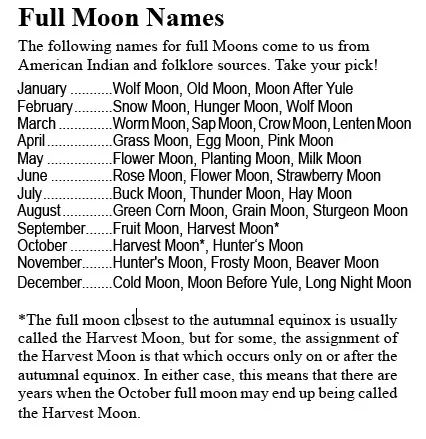
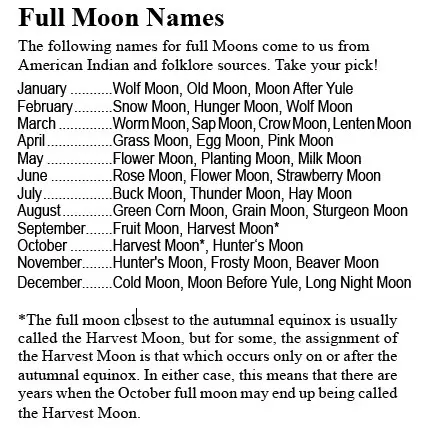
- January – The Wolf Moon: Often attributed to Old English and Celtic origins brought over by European settlers, this name reflects the eerie, echoing howls of hungry wolves prowling through deep midwinter snows. However, many Native American tribes designated this period as the Severe Moon or Center Moon, highlighting the brutal climatic peak of the season.
- February – The Snow Moon / Hunger Moon: Reaching the zenith of winter, February brought formidable challenges. Several North American tribes termed this the Hunger Moon due to depleted food stores, while others utilized names like Bear Moon to mark the birth of bear cubs. In the Ojibwe tradition, this moon was named after the sucker fish, a vital aquatic resource that sustained communities through the bitterest weeks.
Spring Moons: Renewal, Thaws, and Awakening
- March – The Worm Moon: As temperatures inch upward, the frozen ground softens, earthworm casts reappear, and migratory birds return. Northern tribes historically called this the Full Crow Moon, listening for the cawing that signaled winter’s retreat, alongside names like Snow Crust Moon and Sap and Sugar Moon, which marked the onset of maple syrup harvesting.
- April – The Pink Moon: Named for the wild ground phlox (Phlox subulata), which blankets parts of North America in vibrant pink blossoms during early spring. Indigenous groups also tracked this period through critical hydrological and ecological events, using monikers such as Breaking Ice Moon, The Moon of the Red Grass Appearing, and the maple sap boiling moon.
Summer Moons: Abundance, Harvest, and Activity
- May – The Flower Moon: Representing spring in full, exuberant force, May’s moon honors widespread floral blooms and signaled the crucial window for planting corn and other staple crops.
- June – The Strawberry Moon: Synchronized perfectly with the ripening of wild strawberries across the landscape, this moon was widely recognized by the Ojibwe and neighboring tribes. It marked a season of natural ease and plentiful foraging. Coastal communities frequently referred to it as the Fish Moon, noting the annual upstream migration of shad.
- July – The Buck Moon / Thunder Moon: By mid-summer, male deer begin growing their new antlers in earnest, inspiring the moniker Buck Moon. Simultaneously, frequent seasonal thunderstorms gave rise to the alternative title, Thunder Moon. European and Celtic traditions similarly tracked this period via terms like Claiming Moon and Herb Moon.
- August – The Sturgeon Moon: Centered around the Great Lakes and Lake Champlain, this moon coincides with the peak of the sturgeon fishing season. For the Ojibwe and Anishinaabe peoples, August carried immense cultural weight as Mannoomini-giizis—the sacred season for harvesting wild rice.
Autumn Moons: Gathering, Preparation, and Rest
- September – The Harvest Moon: Occurring closest to the autumnal equinox, this moon traditionally illuminated the fields late into the night, allowing farmers and foragers to gather the critical triad of indigenous staples: corn, beans, and squash, alongside wild rice and orchard fruits.
- October – The Hunter’s Moon: Following the harvest, fields lay bare and trees shed their leaves, removing natural camouflage for wildlife. Having feasted through the summer, forest game was plump, making October the optimal month for hunting and stocking meat supplies for the coming winter.
- November – The Beaver Moon: This moon signaled the critical deadline for setting beaver traps before swamps and rivers froze solid, ensuring communities acquired warm pelts for winter wear. Alternatively, it observed the frantic dam-building and winter-prep activities of the beavers themselves.
- December – The Cold Moon / Long Night Moon: Marking the winter solstice, December brought long, freezing nights and heavy snowfalls. Hunting grew exceedingly difficult, prompting names like the Full Hunger Moon or Long Night Moon, which honored the psychological and physical endurance required to survive the darkest weeks of the year.
Supporting Data: Tribal Diversity and Regional Realities
To view the lunar calendar as a monolith is to misunderstand its vast complexity. With 576 federally recognized Native American tribes in the United States alone—alongside hundreds of First Nations across Canada—the diversity of lunar nomenclature is nearly limitless.
Climate and geography dictated these variations. A tribe located in the southeastern forests of Ontario experienced entirely different ecological triggers in April than a tribe residing on the plains of North Dakota. Consequently, names were dynamic, fluid, and hyper-localized.
Furthermore, historical cross-pollination played a significant role. Colonial settlers brought medieval European tracking terms—such as the Mead Moon (July), Grain Moon (August), and Barley Moon (September)—and blended them with indigenous systems. However, the foundational survival wisdom remained deeply tethered to American soil. Publications like The Old Farmer’s Almanac, which has circulated these names since the late 1700s, helped preserve this lexicon, though they occasionally homogenized deeply localized tribal terms into generalized American folklore.

Official Responses and Perspectives on Cultural Preservation
In recent years, anthropologists, environmental scientists, and indigenous leaders have emphasized the need for a paradigm shift in how mainstream society interacts with traditional ecological knowledge (TEK).
Cultural historians stress that full moon names must not be treated as quaint, romanticized folklore stripped of context. Representatives from various Anishinaabe cultural preservation committees note that mainstream society’s fascination with names like "Wolf Moon" or "Pink Moon" frequently omits the sophisticated ecological science embedded within them.
"These names are not just poetic decorations for a calendar page," explains a tribal historian from the Great Lakes region. "They are historical data points. They tell us when the ice breaks, when the fish run, when the plants offer medicine, and how our ancestors successfully adapted to dynamic ecosystems for millennia."
Environmental agencies are increasingly recognizing TEK as a legitimate, highly accurate framework for understanding climate change. Because traditional lunar calendars are inherently tied to seasonal behaviors—such as bird migrations and plant blooms—any disruption in these timelines serves as an immediate, visible indicator of environmental stress.
Implications: Living Traditions in a Changing Climate
The practice of lunar timekeeping is not merely an artifact of history; it is a living tradition that continues to adapt today.
Many Native American communities—most notably the Anishinaabeg—actively maintain their traditional lunar calendars, such as the Gookomisinaan dibik-giiziso-mazina’igan. These frameworks offer a continuous, unbroken link to ancestral knowledge, standing in stark contrast to the rigid, industrialized nature of the Gregorian calendar.
However, modern climate change poses a profound challenge to these traditional systems. As global temperatures rise, unseasonal weather patterns cause ecological milestones—such as the running of fish, the budding of flowers, and the freezing of swamps—to shift out of sync with historical lunar markers. Indigenous communities are currently responding to these shifts by demonstrating the same resilience and flexibility that allowed their ancestors to survive for centuries: adapting their calendars and observations to meet a rapidly changing natural world.
For the casual stargazer or modern nature enthusiast, adopting these moon names offers an opportunity to look beyond urban lights and digital alerts. By understanding the profound ecological wisdom behind each lunar cycle, individuals can foster a deeper, more respectful connection with the natural world—honoring both the cosmos above and the rich, enduring heritage of the Indigenous peoples who first charted its rhythms.