






By the Environmental and Cultural Heritage Desk
For millennia, long before the digital glow of smartphones or the standardized rigidity of Gregorian wall calendars, humanity navigated the passage of time by looking upward. Across North America, Indigenous peoples relied on the rhythmic waxing and waning of the lunar cycle as an essential timekeeping instrument. Far more than mere poetic descriptors, the names given to each full moon functioned as sophisticated ecological almanacs. They captured the subtle shifts of the natural world—signaling when the ice would break, when fish would swim upstream, and when crops were ready for harvest.
Today, terms like the "Wolf Moon," "Strawberry Moon," and "Harvest Moon" remain fixtures in modern pop culture and almanacs. However, behind these familiar monikers lies a deep, intricate history of Indigenous wisdom, colonial adaptation, and a living heritage that continues to thrive in the face of modern ecological shifts.
Main Facts: The Foundations of Lunar Timekeeping
At its core, the traditional naming system of North American full moons is an exercise in applied environmental science. Long before European settlers arrived, diverse Indigenous nations tracked the cyclical patterns of the cosmos to synchronize their societies with the rhythms of the earth.
Among the most influential contributors to this lexicon are the Algonquian-speaking tribes, whose historical territories stretched from the shores of New England to the expansive waters of Lake Superior. Within this linguistic and cultural family, the Ojibwe (also known as the Chippewa) played a pivotal role in preserving and passing down lunar traditions. The Ojibwe lifestyle—historically characterized by the crafting of birchbark canoes, copper mining, and the intricate harvesting of wild rice (manoomin) and maple syrup—demanded an absolute precision in timekeeping that only a lunar-seasonal calendar could provide.
Unlike the fixed, solar-based Julian or Gregorian calendars, which divorce human time from natural cycles, Indigenous lunar calendars were deeply responsive to environmental feedback. In Anishinaabe tradition, Nookomis Dibik-Giizis (Grandmother Moon) is revered as a primary teacher. Depending on the specific nation, a year might be divided into four, five, or six distinct seasons, structured around either 12 or 13 moons. This flexibility allowed communities to adapt their calendars to regional climates, ensuring their survival through harsh winters and bountiful summers.
Chronology: A Journey Through the Twelve Moons
The traditional full moon year is an ecological narrative, tracing the wheel of the year from the biting cold of midwinter to the quiet dormancy of late autumn.
Winter Moons: Survival and Endurance
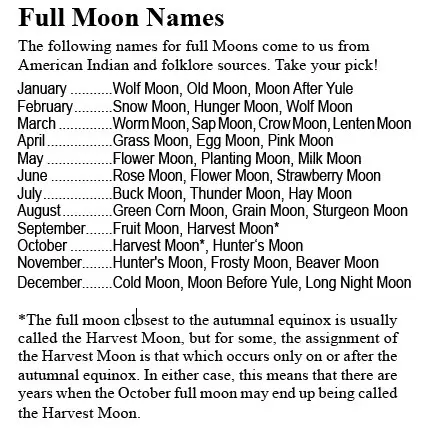
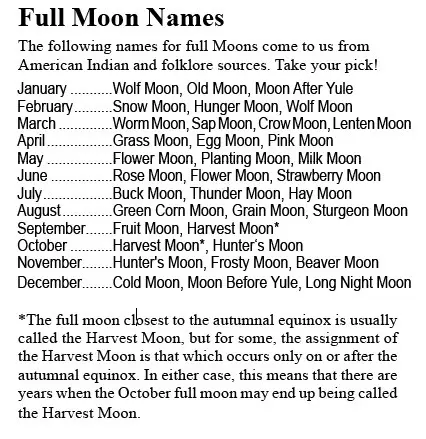
- January – The Wolf Moon: While widely popularized as a reference to the howling of hungry wolves in midwinter—a derivation likely brought to North America by European settlers with Celtic and Old English roots—Native American traditions often called this the Severe Moon or Center Moon. These names reflect the stark realities of deep winter survival.
- February – The Snow Moon / Hunger Moon: February marks winter’s peak intensity. Some tribes designated this the Hungry Moon due to depleted food stores, while others named it the Bear Moon, coinciding with the birth of bear cubs. The Ojibwe traditionally named this moon after the sucker fish, a vital seasonal resource.
Spring Moons: Renewal and Growth
- March – The Worm Moon: As the ground softens and earthworm casts reappear, signaling the return of robins, northern tribes historically knew this as the Full Crow Moon, marking the end of winter via the cawing of returning birds. Other names included the Snow Crust Moon and the Sap and Sugar Moon, tracking the crucial maple sugaring season.
- April – The Pink Moon: Named for the wild ground phlox (Phlox subulata) that paints North American fields in early spring. The Ojibwe and neighboring Algonquian tribes tracked this period through maple sap boiling, ice breakup, and the emergence of fresh green shoots (The Moon of the Red Grass Appearing).
Summer Moons: Abundance and Activity
- May – The Flower Moon: Reflecting a landscape in full bloom, May’s moon heralded the optimal window for planting corn and other staple crops.
- June – The Strawberry Moon: Synchronized with the ripening of wild strawberries, this moon signaled a time of easy foraging. Coastal tribes often called it the Fish Moon, as shad began their upstream spawning runs.
- July – The Buck Moon / Thunder Moon: Male deer grow their antlers at peak velocity during this month, inspiring the name Buck Moon. Frequent summer thunderstorms also earned it the title Thunder Moon. In alternative European folk traditions, it was known as the Meadow Moon or Herb Moon.
- August – The Sturgeon Moon: Centered around the Great Lakes, this moon marked the peak of the sturgeon harvest. For the Anishinaabe, it is deeply tied to Mannoomini-giizis, the sacred season of harvesting wild rice.
Autumn Moons: Harvest and Preparation
- September – The Harvest Moon: The full moon closest to the autumnal equinox, this lunar event illuminates the fields late into the evening, facilitating the gathering of the "Three Sisters"—corn, beans, and squash—alongside wild rice and orchard fruits.
- October – The Hunter’s Moon: With crops harvested and forest canopies thinning, game animals spent the summer fattening for winter, making this the prime month for hunting.
- November – The Beaver Moon: Signaling the onset of freezing temperatures, this moon marked the traditional time to set beaver traps for warm winter pelts, or simply observed beavers frantically fortifying their lodges.
- December – The Cold Moon / Long Night Moon: As the winter solstice approaches, deep snows and frigid temperatures made hunting perilous, challenging communities to endure the longest nights of the year.
Supporting Data and Regional Diversity
It is a common misconception that a single, monolithic list of moon names applies uniformly across North America. With over 576 federally recognized tribes in the United States alone—alongside numerous First Nations in Canada—the nomenclature is wonderfully diverse.
Climate and geography dictate these variations. For example, a tribe situated in the deciduous forests of southeastern Ontario experienced ecological cues vastly different from those of a band living on the plains of North Dakota. Consequently, while one community might track a moon by the migration of waterfowl, another might track it by the blossoming of a localized desert perennial.

Furthermore, the lexicon we recognize today is a hybrid product of cultural exchange. European settlers arriving in North America brought their own agrarian and folkloric traditions, merging them with Indigenous knowledge. Medieval European traditions contributed names like the "Mead Moon" for July and the "Grain Moon" for August, demonstrating a universal human impulse to name months after agricultural and environmental milestones.
Official Responses and Cultural Respect
In recent decades, folklorists, ecologists, and Indigenous leaders have increasingly emphasized the importance of cultural respect when engaging with traditional moon names. Institutions such as the Old Farmer’s Almanac—which has published these names since the late 18th century—helped preserve this vocabulary for mainstream audiences, but this widespread adoption has occasionally detached the names from their cultural roots.
Cultural preservationists stress that these names are not merely aesthetic novelties; they represent intellectual property and empirical ecological data accumulated over millennia. Scholars and educators advocate for framing moon-watching not just as an astronomical hobby, but as an opportunity to acknowledge the Indigenous nations—such as the Ojibwe, Cherokee, Lakota, and Abenaki—whose ancestral lands we inhabit.
Modern scientific organizations, including NASA and various meteorological agencies, have increasingly incorporated Indigenous ecological perspectives into climate monitoring and environmental education, recognizing that traditional knowledge systems offer vital insights into ecosystem health.
Implications: A Living Tradition in a Changing Climate
The practice of lunar timekeeping is far from a relic of the past; it is a living, breathing tradition. Today, many Native American communities continue to regulate cultural ceremonies and subsistence practices using traditional lunar calendars.
However, contemporary climate change has introduced profound challenges to these ancient systems. Unpredictable weather patterns, unseasonable warmth, and shifting ecological cues—such as maple sap running earlier in the year or wildflowers blooming out of sequence—are disrupting the synchronicity between the moon cycles and the natural world. In response, many Indigenous communities are demonstrating the traditional flexibility of their ancestors, adapting their calendars to account for a rapidly warming planet.
For the Anishinaabe people, who continue to utilize Gookomisinaan dibik-giiziso-mazina’igan (the traditional lunar calendar) alongside the Gregorian system, this timekeeping method remains a powerful tether to ancestral knowledge and environmental stewardship.
Embracing Lunar Wisdom Today
For modern nature enthusiasts and stargazers, integrating traditional lunar awareness offers a pathway back to ecological mindfulness. By observing the shifts in animal behavior, plant life, and weather patterns alongside the phases of the moon, individuals can cultivate a deeper, more grounded relationship with their local environment.
Ultimately, honoring the cultural heritage behind full moon names requires more than simply memorizing a list of seasonal titles. It demands an active appreciation of the Indigenous wisdom that birthed them—a reminder that humanity is inextricably bound to the cycles of the earth and the steady, watchful gaze of Grandmother Moon.