









Main Facts: The Convergence of Robotics and Food Independence
For decades, the modern homesteading and off-grid resilience movements have focused on mastering the foundational pillars of self-reliance: heirloom seed saving, solar energy capture, rainwater catchment, and permaculture design. Yet, a silent and insurmountable bottleneck has consistently threatened the longevity of these sovereign systems: human physical labor.
While knowledge and passion are infinite, the human body is not. The relentless, back-breaking physical grind—hours spent bent over raised beds pulling taproots, hauling thousands of pounds of compost across uneven terrain, and battling the relentless encroachment of weeds—remains the primary reason ambitious off-grid projects ultimately fail.
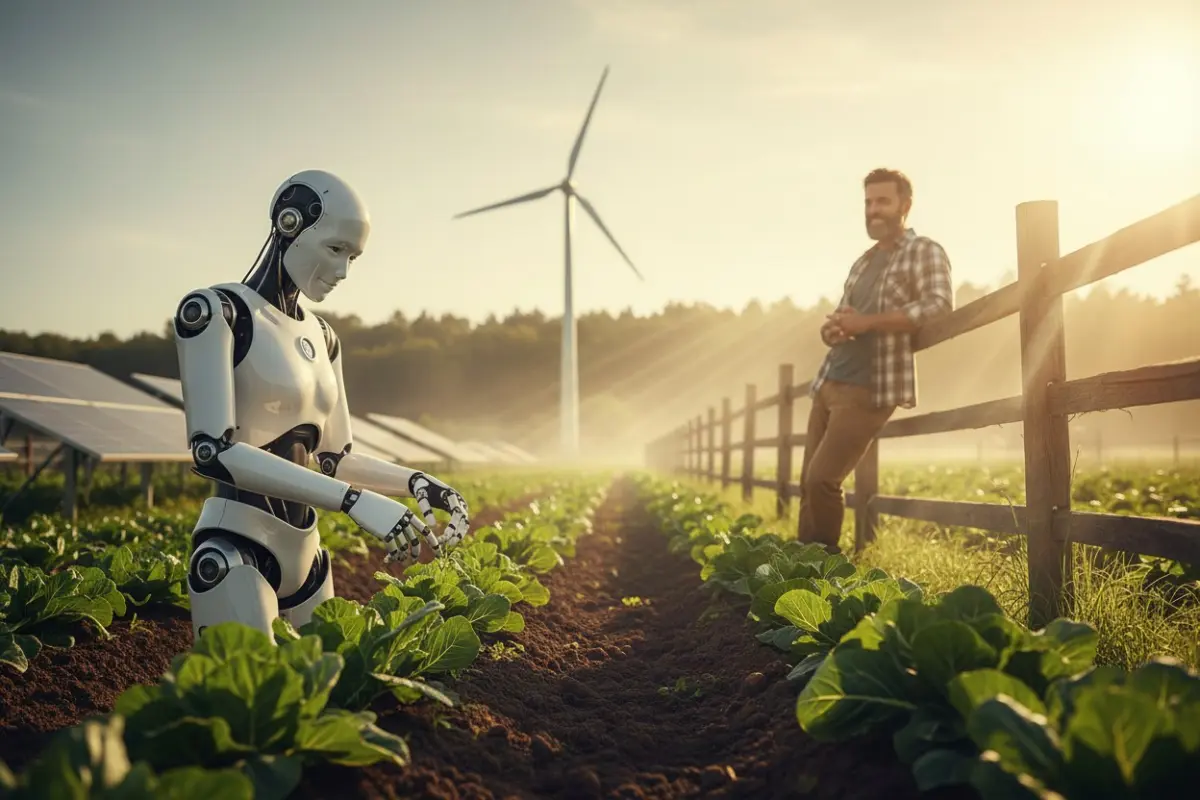
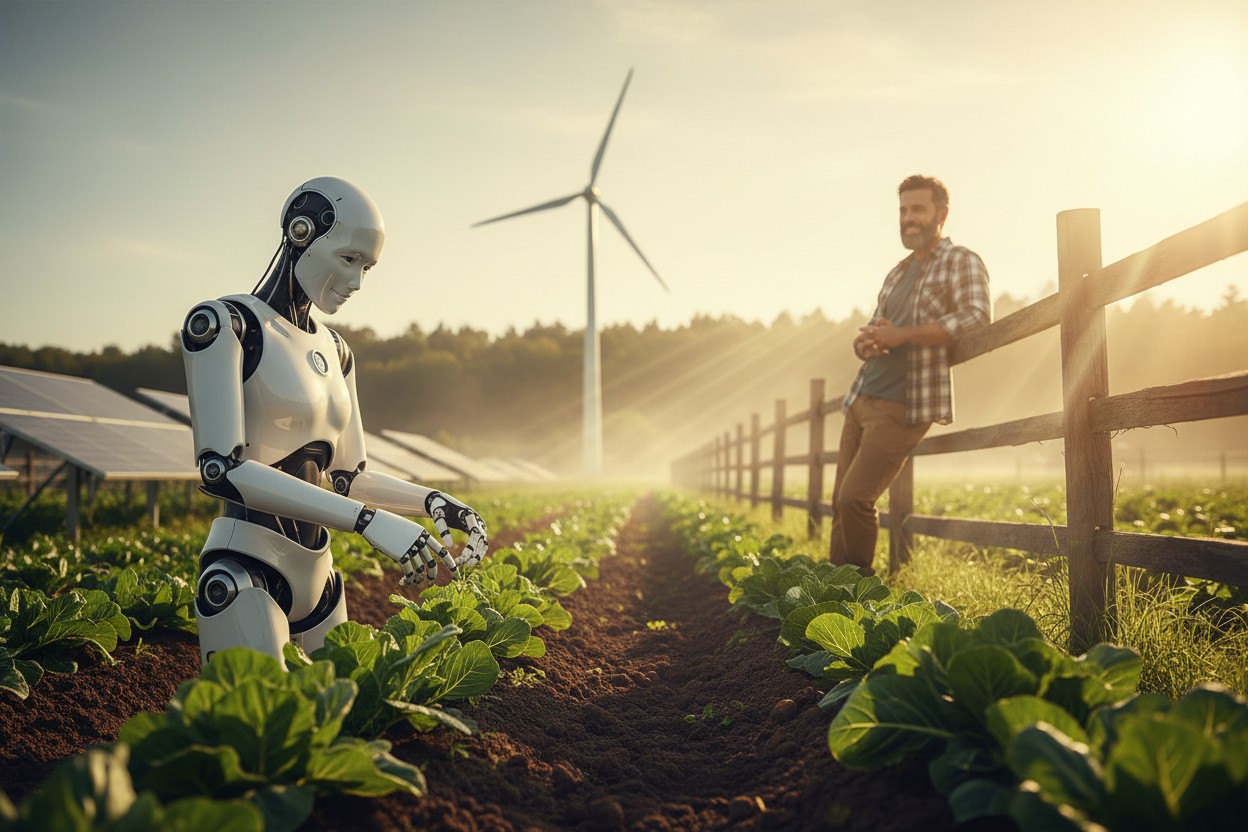
Enter the next frontier of agricultural automation: open-programmable humanoid and legged garden robots.
Unlike the massive, capital-intensive autonomous tractors used in commercial monoculture, these emerging domestic agricultural robots are designed specifically for small-scale, high-density polyculture plots and homesteads. Equipped with artificial intelligence, computer vision, and crucially, dexterous manipulators or grippers, these machines promise to bridge the gap between human ambition and physical endurance. For off-grid practitioners and survivalists alike, these machines are transitioning from science fiction to essential capital investments. However, the true debate surrounding this technological shift is not merely whether robots can farm, but who controls the software, where the data goes, and whether these systems will liberate homesteaders or shackle them to corporate subscription models.
Chronology: The Evolution from Industrial AgTech to Homestead Robotics
The journey toward the backyard garden robot is the direct result of decades of rapid advancement in commercial agriculture, artificial intelligence, and open-source hardware.
- Late 20th Century – The Mechanization Ceiling: For generations, agricultural mechanization was exclusively designed for large-scale operations. Combines, tractors, and heavy implements dominated the landscape, leaving small-scale gardeners, market farmers, and homesteaders entirely dependent on manual labor tools like hoes, shovels, and hand-held tillers.
- Early 2010s – Precision Ag and the Rise of Computer Vision: The proliferation of affordable LiDAR, high-resolution digital cameras, and machine learning algorithms gave birth to "smart" commercial ag-tech. Companies began deploying automated crop-sprayers and robotic weeders capable of distinguishing between cash crops and unwanted vegetation using computer vision. However, these systems remained prohibitively expensive, proprietary, and designed exclusively for massive monoculture fields.
- The 2020s – The Consumer Robotics Boom and Bipedal Breakthroughs: The commercial robotics sector experienced a massive paradigm shift. Companies began developing quadrupedal ("dog-style") robots and bipedal humanoids capable of navigating unstructured terrain. Concurrently, the open-source developer community began modifying affordable robotics kits, laying the groundwork for decentralized, user-customizable automation.
- The Present Day – The Threshold of Backyard Autonomy: Today, off-grid homesteaders and independent developers stand at a critical crossroads. With battery storage technology freeing machines from centralized power grids and advanced AI enabling fine-motor manipulation, the hardware is finally ready for the backyard. The primary battleground has now shifted from hardware engineering to software sovereignty: open-source community coding versus locked-down corporate subscription models.
Supporting Data: The Economics of Endurance and the Labor Bottleneck
To understand the necessity of garden robotics, one must examine the mathematics of small-scale food production. According to agricultural extension studies, maintaining a standard half-acre garden or food forest to supply a family of four with nutritional autonomy requires an average of 15 to 20 hours of manual labor per week during the peak growing season.
[Traditional Homestead Labor Distribution]
├── Weeding & Pest Control: 40% (High-frequency, monotonous)
├── Soil Management & Composting: 30% (High-strain physical labor)
├── Harvesting & Processing: 20% (Dexterity-dependent)
└── Planning & Infrastructure: 10% (Strategic management)
As illustrated above, repetitive, low-skill, high-exertion tasks—predominantly weeding and soil management—consume roughly 70% of a homesteader’s physical energy.
- The Attrition Rate: Data from small-farm advocacy networks indicates that nearly 60% of first-time homesteaders scale back or abandon intensive food production within three years, citing physical burnout as the primary catalyst.
- The Energy Equation: A single humanoid or quadrupedal robotic unit operating on a localized solar-charging loop can execute continuous, low-speed weeding and soil-monitoring tasks for 4 to 6 hours daily. This effectively eliminates the cumulative fatigue that causes human operators to procrastinate critical maintenance tasks.
- The Cost-to-Capability Ratio: While early-generation commercial humanoids command enterprise-level pricing, the proliferation of open-source hardware platforms suggests that modular, task-specific garden robots will drop significantly in price over the next decade, making them accessible to middle-income off-grid households.
Official Responses and Industry Perspectives: Proprietary Control vs. Open-Source Sovereignty
As the agricultural robotics market matures, a stark ideological divide is emerging between major technology conglomerates and independent off-grid advocates.
The Corporate Playbook: The "Printer-Ink" Subscription Model
Major corporate robotics manufacturers are increasingly leaning toward a centralized service model. Industry analysts project that many commercial agricultural robot vendors plan to subsidize the upfront hardware costs of their machines while locking critical software features—such as advanced weed-pulling algorithms, crop-harvesting profiles, and autonomous navigation packages—behind mandatory monthly subscription paywalls. Furthermore, these enterprise systems routinely rely on cloud-connected infrastructures that continuously upload environmental data, crop yields, and operational metrics back to corporate servers.
The Off-Grid Perspective: Sovereignty Through Source Code
In sharp contrast, the homesteading and open-source software communities view cloud-connected, subscription-locked robots as an unacceptable security risk and an instrument of digital feudalism.
Prominent homesteading educators and privacy advocates argue that food production is a fundamentally sovereign act. In an era where centralized supply chains are increasingly fragile and institutional oversight is expanding, allowing a corporate or government entity to monitor the precise square footage, crop diversity, and harvest yields of an off-grid homestead via a connected robot is a critical vulnerability.
Consequently, independent developers are championing a strictly localized approach. By utilizing open-source operating systems (such as customized versions of ROS – Robot Operating System) that run entirely offline, operators can inspect, modify, and audit every line of code executing on their machines. Under this model, digital "skills"—such as the optimal technique for pruning tomato vines or gently harvesting delicate greens—can be shared freely peer-to-peer within community repositories, bypassing corporate gatekeepers entirely.
Implications: Strategic Capital Investment in Future Resilience
The integration of open-programmable garden robots into off-grid systems carries profound implications for the future of localized food security, societal decentralization, and personal autonomy.
1. Scaling Beyond Human Limits
For decades, the scale of an off-grid food production system was strictly limited by the physical capacity of the individuals tending it. By offloading monotonous, high-frequency chores—such as dawn-patrol weeding, deep-pile compost turning, and baseline soil moisture monitoring—to autonomous machines, a single operator can effectively manage a sprawling, highly productive polyculture system that would otherwise require a small agricultural crew.
2. Fortifying Against Supply Chain Vulnerabilities
Global food distribution networks are notoriously brittle, vulnerable to everything from fuel price shocks and geopolitical conflicts to localized weather anomalies and cyberattacks on logistical infrastructure. Building robust, hyper-local food systems capable of weathering these disruptions is no longer a fringe hobby; it is a vital strategy for survival. Robotics represents the multiplier that turns marginal homestead acreage into high-yield, resilient ecosystems.
3. Redefining the Future of Technology on the Land
Ultimately, the advent of the garden robot proves that technology is not inherently antithetical to self-reliance, provided it remains under the direct, uncompromised control of the end-user. By rejecting cloud dependencies, resisting corporate software subscriptions, and embracing open-source hardware, the off-grid community is poised to pioneer a new era of decentralized automation. The future of sustainable agriculture will not be forged in the boardrooms of centralized tech monopolies, but in the soil of independent homesteads, tended by the combined strength of human ingenuity and tireless, open-programmable machines.