Main Facts: The Intersection of Grief, Craft, and Modern Design
At the foothills of the Rocky Mountains in Breckenridge, Colorado, a quiet revolution in contemporary furniture design is taking place. Studio Becker, founded by furniture maker and designer Coulton Becker, operates on the belief that physical objects can—and should—carry intangible emotional weight. Specializing in bespoke, handcrafted furniture fashioned exclusively from premium hardwoods like walnut, white oak, and maple, the studio rejects mass production in favor of a deliberate, highly personalized approach to woodworking.
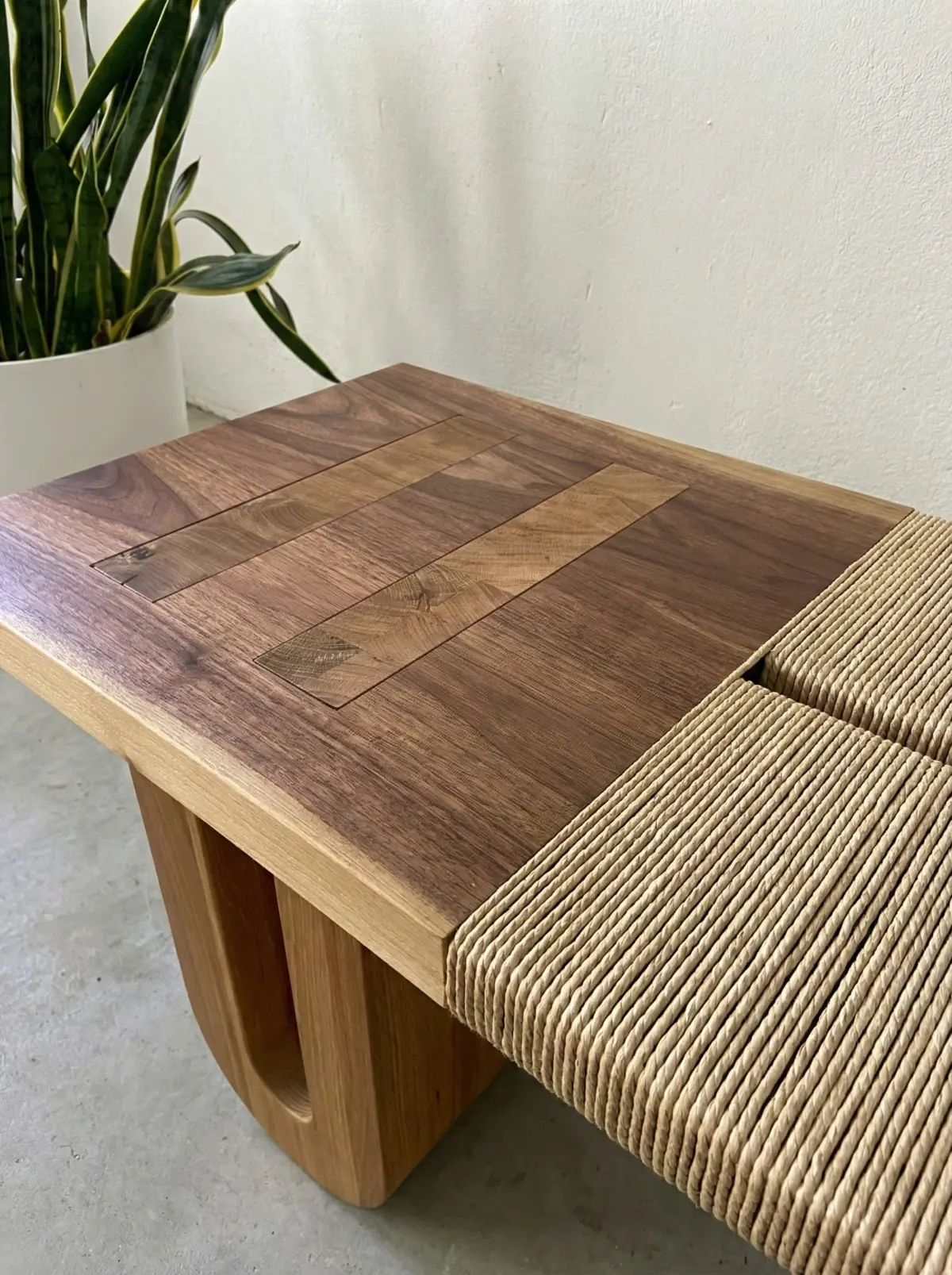
The hallmark of the studio’s current collection is the Una Bench—a $4,600 masterwork measuring 60 inches long, 16 inches wide, and 18 inches high. Combining solid hardwood with hand-woven Danish cord, the bench encapsulates Becker’s broader design ethos: a seamless blend of structural minimalism and rich tactile narrative. Operating out of Breckenridge, Studio Becker serves clients and interior designers seeking commissioned pieces that do not merely occupy space, but fundamentally transform it.
Chronology: From Architecture Student to Mountain Artisan
To understand the meticulous craftsmanship behind Studio Becker, one must trace the biographical and creative evolution of its founder—a journey catalyzed by unexpected loss and shaped by global disruption.
Formative Years and the Catalyst of Loss
Long before establishing his own maker’s mark, Coulton Becker was an architecture and interior design student at the University of Missouri. During his sophomore year, at just twenty years old, Becker suffered a profound personal tragedy: the death of his father.
Grief is a disorienting experience, particularly for young adults, and Becker found himself searching for a constructive outlet to process the loss. Naturally inclined toward spatial and structural expression, he turned to the medium designers know best: construction.
Without any prior experience working on a project of that magnitude, Becker built a memorial. He titled the piece Fluss Ewig—German for "constantly changing." Constructing Fluss Ewig served as an emotional anchor during a turbulent time, but upon stepping back to view the completed memorial, Becker experienced a transformative epiphany. The act of building bridged the gap between theoretical architecture and tangible craftsmanship, solidifying his lifelong passion for woodcraft.
Professional Beginnings and the Pandemic Pivot
Following his graduation in 2019, Becker moved to Frisco, Colorado, taking a position designing luxury mountain homes. On paper, it was an ideal start—gainful employment, prestigious architectural work, and a steady resume builder. However, the onset of the COVID-19 pandemic in early 2020 drastically altered the cultural and professional landscape, collapsing the distance between what Becker was doing to earn a living and what he felt compelled to create.
Transitioning from a hobby to a rigorous daily practice, Becker began working intensively with wood. In 2020—amidst widespread global uncertainty—Studio Becker was officially born. The timing was fitting; a studio predicated on the idea that physical objects can hold emotional resonance found its roots during a period when the comforts of home and hearth had never been more vital.
Geographic Evolution: Kansas City to Breckenridge
Becker’s journey as an artisan required physical relocation to refine his technical repertoire. He initially moved to Kansas City to fully immerse himself in the nuances of fine woodworking and master his craft. After honing his skills, he returned to Colorado, ultimately settling in Breckenridge by 2025.
Surrounded by the rugged topography of the Rocky Mountains, Becker’s work evolved to match his environment: quieter, more specific, and distinctly individual. Breckenridge provided not only physical isolation conducive to deep, focused craftsmanship, but also a direct connection to the natural materials that dictate the rhythm of his studio.
Supporting Data: The Architecture of Studio Becker
Studio Becker’s operational model stands in stark contrast to the fast-paced, high-turnover furniture industry. Every variable—from material selection to production scale—is deliberately controlled to maintain uncompromising quality.
Material Selection and Methodology
Exclusively Premium Hardwoods: The studio works solely with high-grade domestic and imported hardwoods, primarily walnut, white oak, and maple. These species are chosen not only for their structural integrity, but for how their grain patterns and natural patinas evolve over decades of human interaction.
Handmade, Zero Mass Production: No item produced by Studio Becker is automated or mass-produced. Each piece is constructed entirely by hand, ensuring that no two items are identical.
Textile Integration: Beyond raw lumber, Becker incorporates traditional techniques such as hand-wrapped Danish cord, blending natural wood with organic woven textures to provide ergonomic comfort and visual contrast.
Spotlight on the Una Bench
As part of the Roomhints weekly editorial series Studio Visit, the Una Bench has been highlighted as a definitive masterwork of the collection.
Design Utility: Engineered with a clean, low-profile silhouette, the bench is versatile enough to anchor the foot of a king-sized bed, provide a functional transition piece in a grand entryway, or serve as a focal point in a minimalist living room.
Official Responses and Design Philosophy
The underlying philosophy guiding Studio Becker is deceptively simple yet philosophically deep: every piece of furniture must possess an intangible presence that matches its physical footprint.
In interviews regarding his creative process, Becker has repeatedly emphasized the emotional transaction that occurs between a human user and a well-crafted object.
"The moment I took a step back from the completed memorial, I realized my passion for design and woodcraft," Becker recalls of his foundational work, Fluss Ewig.
Elaborating on how this translates to his current commercial and commission work, he notes:
"Physical objects often have a meaning and emotion associated with them, and that’s what I aim to instill in every piece I work on."
Rather than designing furniture to fill empty corners or satisfy fleeting interior design trends, Becker views his pieces as receptacles for human experience. A dining table, a credenza, or a bench like the Una is conceptualized as a silent witness to family gatherings, quiet mornings, and the evolving chapters of daily life. By collaborating directly with individual homeowners and professional interior designers on custom commissions, Becker ensures that the client’s personal narrative is woven directly into the grain of the wood.
Implications: The Shift Toward Slow Design and Emotional Sustainability
The rise of Studio Becker reflects a broader, highly significant shift within the contemporary design landscape: the rejection of fast furniture and disposable consumerism in favor of "slow design" and emotional sustainability.
The Sustainability of Heirloom Quality
In an era dominated by flat-pack furniture manufactured from synthetic particle boards and designed for short-term use, artisans like Coulton Becker represent a return to heirloom-quality longevity. By utilizing sustainable, durable hardwoods and traditional joinery techniques, Studio Becker produces items designed to outlive their original owners. This approach drastically reduces environmental waste while encouraging consumers to view furniture not as a transient commodity, but as a long-term investment.
The Psychological Value of Home Spaces
The COVID-19 pandemic fundamentally altered how humans perceive their interior environments. Homes transformed from mere resting places into offices, sanctuaries, and emotional strongholds. Studios that emerged from this period—such as Becker’s 2020 founding—tapped into a collective psychological need for grounding. When mass-produced goods feel increasingly sterile and disconnected from human labor, owning an object with a distinct lineage, handcrafted by a known artisan in Breckenridge, provides a sense of rootedness and authenticity.
The Future of Independent Craftsmanship
Studio Becker’s trajectory signals a healthy market demand for hyper-localized, transparent craftsmanship. By maintaining direct communication lines with clients through bespoke commissions and digital platforms like Instagram (@studio.becker) and their official design portal (studiobecker.design), independent makers are bypassing traditional corporate retail gatekeepers.
Ultimately, Coulton Becker’s journey—from an architecture student navigating profound grief to a respected mountain artisan shaping high-end interiors—proves that great design is rarely just about aesthetics. Through patience, respect for natural materials, and an unwavering commitment to emotional storytelling, Studio Becker has transformed raw lumber into a profound language of memory, permanence, and home.