Introduction: The Illusion of Transparency in the Grocery Aisle
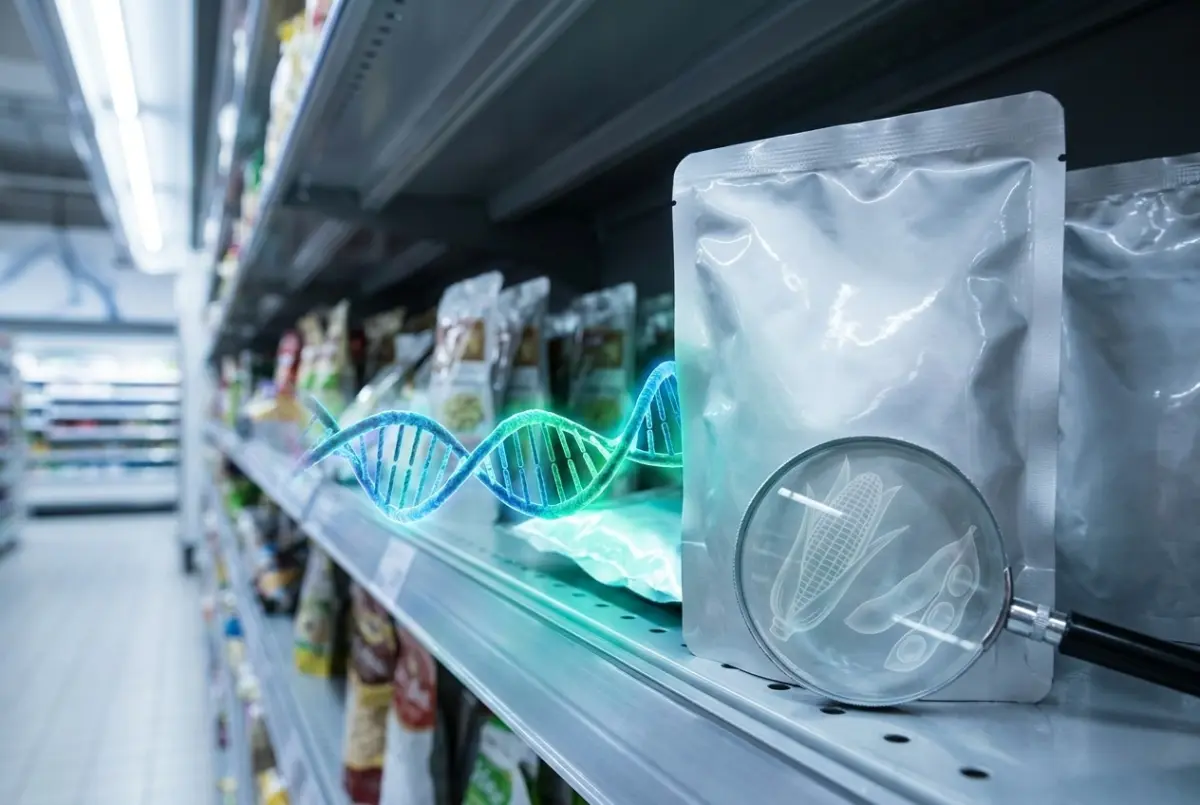
When consumers walk down the aisles of their local grocery stores, reading ingredient labels has become a routine part of navigating the modern food supply. For years, federal policies, consumer advocacy groups, and industry standards have promised transparency, aiming to give shoppers a clear understanding of what goes into their bodies. Yet, a startling reality underlies this promise: the absence of a "bioengineered" disclosure on a food package does not guarantee that genetic engineering played no role in the product’s creation.
According to a comprehensive report published by the Alliance for Natural Health USA (ANH-USA), significant gaps continue to plague America’s food labeling framework. Even as court deadlines approach and federal judges hand down sweeping rulings, regulatory loopholes mean that a wide array of genetically engineered (GE) ingredients can slip past mandatory disclosures unnoticed. This disconnect has sparked intense debates among food safety advocates, biotechnology pioneers, federal regulators, and everyday consumers trying to make informed dietary choices.
As advanced biotechnology surges forward—ranging from synthetic, microflora-derived dairy proteins to CRISPR-edited produce—the regulatory landscape struggles to keep pace. The core question facing the American food system is no longer just whether genetic engineering is safe, but whether consumers have a fundamental right to know when and how it is used in their food.
Main Facts: Decoding the Current Federal Framework
To understand how genetically engineered ingredients can hide in plain sight, one must examine the complex web of federal oversight governing the U.S. food supply. Two primary agencies dictate the federal stance on bioengineered foods: the U.S. Department of Agriculture (USDA) and the Food and Drug Administration (FDA). However, their regulatory philosophies and enforcement mechanisms differ significantly.
The FDA’s foundational policy on this matter dates back to its 1992 Statement of Policy: Foods Derived from New Plant Varieties. Under this long-standing framework, the FDA takes the position that it has no scientific basis to conclude that bioengineered foods differ from conventionally produced foods in any meaningful, inherent way simply by virtue of their breeding process. Consequently, the FDA generally does not require a food to bear a special label solely because it was derived from a genetically modified organism (GMO).
However, this laissez-faire approach has important caveats. As noted in food science literature, FDA regulations still require appropriate disclosures if a food is deemed misbranded or if its labeling is determined to be misleading to the consumer.
In contrast, the USDA operates under a more prescriptive disclosure framework established by the National Bioengineered Food Disclosure Standard. This standard dictates when and how food manufacturers must label products containing bioengineered materials. Yet, the USDA’s definitions and exemptions have drawn fierce criticism from consumer advocacy groups. For years, critics have argued that the USDA’s rules were crafted with loopholes wide enough to exempt numerous processed foods, advanced biotech ingredients, and modern gene-edited crops from ever seeing a "bioengineered" label.
Chronology: A Timeline of Regulatory Battles and Legal Challenges
The friction between federal regulators, biotechnology companies, and food safety watchdogs has unfolded over decades, marked by legislative battles, administrative rulemakings, and high-stakes courtroom showdowns.
The 1990s: The Foundation of Federal Policy
- 1992: The FDA issues its landmark Statement of Policy: Foods Derived from New Plant Varieties, establishing that genetically modified foods do not inherently require special safety labeling unless they present distinct nutritional changes, allergens, or safety risks.
The 2010s: The Push for Mandatory Standards
- 2016: Congress passes Public Law 114-216, directing the USDA to establish a national mandatory standard for disclosing bioengineered foods. This legislation sets the stage for years of contentious debate over what terms—such as "GMO" versus "Bioengineered"—should be used, and how those disclosures should be presented to the public.
- 2018–2019: The USDA finalizes the National Bioengineered Food Disclosure Standard, creating specific thresholds for genetically modified material and permitting alternative disclosure methods, including digital or electronic QR codes instead of text on physical packages.
The 2020s: Legal Reckoning and Modern Biotech
- The Coalition Lawsuits: Frustrated by what they viewed as unlawful exemptions, a coalition of food safety nonprofits, spearheaded by the Center for Food Safety and supported by organizations like Children’s Health Defense, files a federal lawsuit against the USDA. The plaintiffs challenge several key provisions of the labeling rules, arguing that they unlawfully conceal information from consumers.
- Recent Appellate Rulings: In a major victory for transparency advocates, a federal appeals court strikes down several controversial USDA loopholes. The court rules that the USDA acted unlawfully by exempting certain ultra-processed foods—such as refined corn and soy oils—from mandatory labeling simply because the modified genetic material could no longer be detected in the final product. Furthermore, the court overturns provisions allowing companies to rely solely on QR codes for bioengineered disclosures, ruling that consumers must have immediate, accessible on-package information.
- Commercialization of CRISPR and Synthetic Biology: Concurrently, biotech startups and agricultural giants begin commercializing next-generation products, including CRISPR-edited mustard greens and synthetic whey proteins produced via precision fermentation, pushing regulatory boundaries even further.
Supporting Data: Uncovering Hidden Ingredients and Synthetic Innovations
Modern biotechnology extends far beyond traditional genetic modification, introducing novel ingredients that test the limits of consumer awareness and analytical detection.
The Mystery Molecules in Synthetic Dairy
Recent independent testing has thrust synthetic biology into the public spotlight, raising critical questions about how novel ingredients are evaluated and labeled. According to reports from The Defender and Children’s Health Defense, independent analyses conducted by the Health Research Institute revealed 92 unknown molecules—including traces of a fungicide—in "Bored Cow," a popular synthetic milk product found on major grocery chain shelves.
Bored Cow utilizes whey protein manufactured not by dairy cows, but by precision fermentation using genetically modified microflora, a process pioneered by the biotech firm Perfect Day. While Perfect Day champions this technology as a sustainable alternative to traditional animal agriculture, the presence of nearly a hundred unidentified chemical compounds and a pesticide residue in the final consumer product has alarmed food safety advocates.
Over a dozen food and beverage companies currently utilize similar synthetic biotechnology formulations to produce consumer goods ranging from cream cheese and protein smoothies to ice cream. Because these proteins are produced by engineered microflora rather than whole engineered plants or animals, they often occupy a regulatory gray area, further complicating how they are disclosed to the public.
CRISPR Produce Enters the Market
The advent of gene editing via CRISPR-Cas9 has introduced another layer of complexity to the food supply. Unlike traditional genetic engineering—which often involves splicing foreign DNA from other species into a host organism—CRISPR allows scientists to precisely alter a plant’s native genome.
Biotech startup Pairwise made history by becoming the first company to bring CRISPR-created produce to the U.S. market. Following this milestone, agricultural giant Bayer signed an exclusive licensing agreement with Pairwise to develop and market its novel CRISPR-edited mustard greens. These greens were genetically modified to deactivate specific genes responsible for the plant’s natural bitterness, making them more palatable to consumers.
While developers market these innovations as triumphs of agricultural efficiency, critics and consumer safety advocates warn that gene editing is not foolproof. Potential risks include unintended off-target genetic mutations, the accidental creation or enhancement of natural plant toxins, and the introduction of novel allergens into the food supply. Because many CRISPR-edited crops do not contain foreign DNA, federal regulators have frequently exempted them from the stringent oversight applied to older GMO techniques, leaving consumers largely in the dark about their presence in grocery stores.
Official Responses: Perspectives from Regulators, Industry, and Advocates
The debate over food labeling is defined by sharply conflicting philosophies held by government agencies, the biotechnology industry, and consumer protection watchdogs.
The Federal and Industry Perspective
Proponents of agricultural biotechnology and federal regulators maintain that modern genetic engineering is both safe and essential for feeding a growing global population in the face of climate change. Agencies like the USDA and the FDA argue that their frameworks are rooted in rigorous scientific consensus.
From the industry standpoint, labeling regulations should focus strictly on tangible health and safety characteristics—such as allergenicity, nutritional composition, or toxicity—rather than the process used to breed or develop a crop. Industry representatives argue that mandatory, process-based labels stigmatize safe innovations, confuse consumers, and impose heavy economic burdens on food manufacturers and farmers alike. Furthermore, proponents of precision fermentation and CRISPR technology emphasize that these tools reduce land use, lower carbon emissions, and offer resource-efficient alternatives to conventional farming.
The Consumer Advocacy Perspective
Conversely, non-profit organizations and legal watchdogs view the current regulatory landscape as deeply flawed and overly accommodating to corporate interests. Groups such as the Center for Food Safety, ANH-USA, and Children’s Health Defense argue that consumers possess an inherent right to bodily autonomy and informed consent regarding what they eat.
Advocates contend that by exempting ultra-processed oils, highly refined ingredients, and products derived from gene editing or synthetic biology, federal rules effectively render mandatory labeling toothless. They point out that when genetic material is destroyed or rendered undetectable during processing—such as in high-heat extraction of corn and soy oils—the genetic engineering process still occurred, and the resulting food product is chemically and structurally distinct in ways that may matter to consumers for ethical, environmental, or health reasons.
Implications: What This Means for the Future of Food Transparency
The ongoing legal battles and regulatory ambiguities surrounding bioengineered foods carry profound implications for the future of the American food system. As biotechnology continues to evolve at a breakneck pace, the gap between scientific innovation and consumer awareness threatens to widen unless systemic reforms are enacted.
1. The Erosion of Consumer Trust
When shoppers discover that products containing genetically engineered ingredients or synthetic biology proteins can legally bypass clear, on-package disclosures, public trust in regulatory bodies diminishes. Transparency is the bedrock of consumer confidence; when people feel that information is being deliberately withheld or obscured through legal loopholes, skepticism grows toward both the food industry and government oversight agencies.
2. The Legal and Corporate Fallout
Recent federal appeals court rulings signal that the judiciary is increasingly willing to hold federal agencies accountable when their rules contradict statutory mandates. As courts strike down exemptions for ultra-processed GE foods and QR-code-only disclosures, food manufacturers face mounting pressure to overhaul their packaging strategies. Companies that embraced loophole-driven labeling practices may soon find themselves forced to adopt transparent, straightforward labeling to comply with shifting legal realities.
3. The Need for Comprehensive Reform
The central thesis of the ANH-USA report remains a vital warning: until federal rules bridge the gap between how food is produced and what appears on the package, true transparency will remain elusive. Addressing this challenge requires updating regulatory frameworks to encompass modern techniques—including precision fermentation and CRISPR gene editing—ensuring that all products derived from genetic engineering are clearly and unambiguously disclosed to the public.
Ultimately, as the boundaries of food science continue to expand, the marketplace must adapt to respect the consumer’s right to know. Whether through stricter federal enforcement, judicial intervention, or sustained pressure from advocacy groups, the demand for complete honesty in the grocery aisle is unlikely to fade away.