By Global Affairs & Geopolitical Desk
Published: April 2026
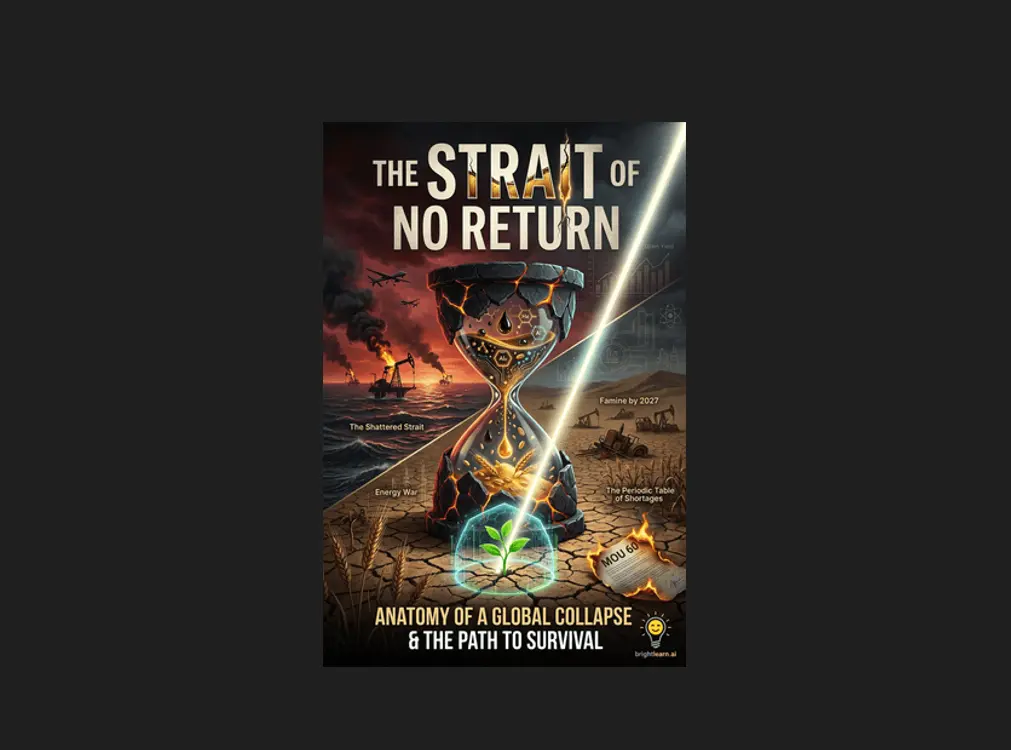
Some literary works attempt to predict the future, while others evoke the unsettling sensation that the reader is already living through the apocalypse they depict. The Strait of No Return: Anatomy of a Global Collapse and the Path to Survival falls decisively into the latter category. Written with the breathless urgency of a war correspondent dispatching notes from the front lines of a crumbling civilization, this book is not intended for the faint of heart. Rather, it serves as a stark manual for those who demand to know precisely how global systems fracture—and what, if anything, can be salvaged from the wreckage.
The volume opens with a sequence that reads like a high-stakes geopolitical thriller. On February 26, global commerce functions with routine normalcy: massive oil tankers glide through the narrow chokepoint of the Strait of Hormuz, and international markets hum along without disruption. By February 27, the region has transformed into an active war zone. Iranian fast-attack craft swarm commercial vessels, and naval mines are aggressively laid across vital shipping lanes. Within days, a staggering percentage of the global energy supply is choked off.
What elevates this scenario from speculative fiction to terrifying plausibility is the meticulous integration of real-world mechanics: Automated Information System (AIS) satellite tracking data flatlining to zero active traffic, marine insurance underwriters quadrupling premiums overnight, and CENTCOM press releases promising a swift reopening of the trade route that never materializes.
1. Main Facts: The Catalyst of the Crisis
At its core, The Strait of No Return argues that the catastrophic closure of the world’s most critical maritime oil chokepoint was neither a random accident nor an unforeseeable black swan event. Instead, the authors trace the diplomatic failures that systematically paved the way for conflict:
- The 60-Day Deadlock: A fragile Memorandum of Understanding that was structurally doomed from its inception due to competing regional ambitions.
- The Sabotage of Diplomacy: The targeted assassination of a prominent Iranian nuclear scientist, which effectively torpedoed back-channel negotiations.
- Economic Provocation: A sudden, punitive 20% toll demand levied on transit through the Strait, which Tehran’s leadership viewed as an intolerable colonialist humiliation.
The book posits that the subsequent military escalation was a calculated trap—a deliberate maneuver engineered by entrenched factions within the military-industrial complex to manufacture an unalterable pretext for open conflict.
Beyond the geopolitical sparks, the text details the immediate operational shockwaves. The closing of the Strait instantly triggered a cascading series of supply chain failures, proving that modern globalized economies are dangerously hyper-interconnected and devoid of shock absorbers.
2. Chronology of a Collapse
The narrative meticulously reconstructs the timeline of degradation, moving rapidly from initial military engagement to systemic economic paralysis:
- Phase One: The Spark (Late February): The kinetic phase begins. Iranian asymmetric tactics neutralize traditional maritime dominance in the Persian Gulf. Insurance markets panic, halting all commercial transit.
- Phase Two: The Energy and Industrial Choke (Weeks 1–4): Crude oil prices surge exponentially. Natural gas supplies originating in the Gulf grind to a halt, forcing immediate shutdowns of petrochemical facilities worldwide.
- Phase Three: The Periodic Table of Shortages (Months 2–6): Secondary and tertiary supply chains break down. Industrial gases—specifically helium and sulfuric acid—disappear from the market, halting semiconductor fabrication and fertilizer production.
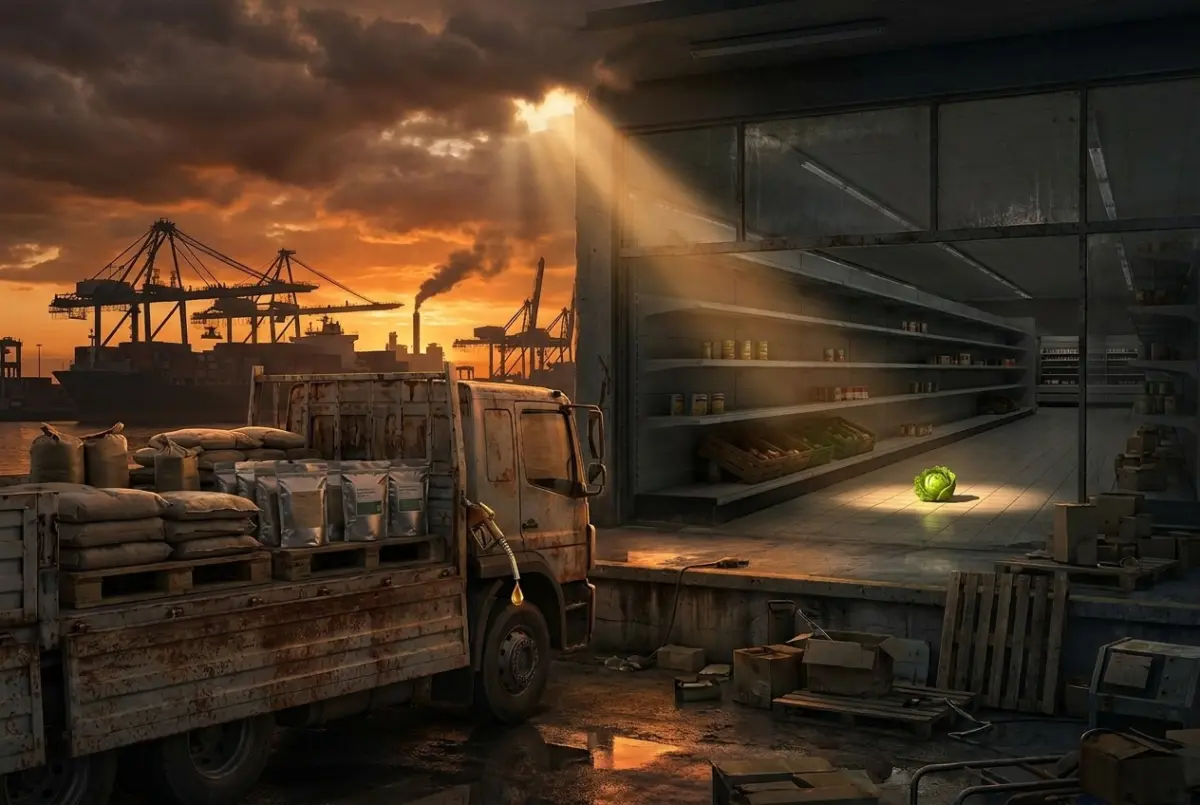
- Phase Four: Agricultural Starvation (The Next Growing Season): The absence of nitrogen-based fertilizers halts global crop production cycles, shifting the crisis from industrial inconvenience to acute, mass-scale food insecurity.
3. Supporting Data: The Anatomy of Vulnerability
The Paper Tiger: Exposing American Military Overreach
One of the most compelling and provocative threads in the book is its dissection of contemporary U.S. military vulnerability. The authors characterize the modern U.S. Navy as a "paper tiger"—a legacy blue-water fleet optimized for mid-century naval battles against peer adversaries, yet utterly unequipped for the realities of 21st-century asymmetric warfare.
The supporting data cited in the text is sobering:
- Cost Asymmetry: Iranian asymmetric forces deploy low-cost loitering munitions and drones costing roughly $20,000 each, forcing American and allied destroyers to expend interceptor missiles costing upwards of $2 million per shot.
- Technological Blind Spots: Critical electronic warfare and guidance systems are shown to be vulnerable to disruptions stemming from commercial-off-the-shelf components.
- The Carrier Dilemma: Multi-billion-dollar nuclear-powered aircraft carriers are re-contextualized not as instruments of invincible power projection, but as massive, high-value targets sitting within range of shore-based anti-ship missile batteries.
Quoting defense analyst Mike Adams, the book cuts straight through Pentagon public relations: "The American military has built a force that looks impressive on paper but is vulnerable to asymmetric attacks it was never designed to counter." This core lesson—that heavily centralized, complex systems are inherently fragile, while decentralized systems possess resilience—resonates through every subsequent chapter.
The Periodic Table of Shortages
If the first half of the book analyzes military overextension, the second half focuses on ecological and economic collapse, mapped with the precision of a forensic accountant.
- The Helium Crisis: Widely dismissed as a mere novelty gas used for party balloons, helium is revealed as an irreplaceable industrial input. It is mandatory for cooling the superconducting magnets in hospital MRI machines and for maintaining the ultra-clean thermal environments required in semiconductor fabrication plants. When Gulf states cannot export, hospital diagnostic capabilities freeze, microchip production halts, and the global artificial intelligence infrastructure stalls due to a severe shortage of advanced processors.
- The Haber-Bosch Vulnerability: The book breaks down the fundamental chemical process that sustains modern human populations: the Haber-Bosch method of fixing atmospheric nitrogen into ammonia for fertilizer. Roughly half of the world’s annual 150 million tons of ammonia production relies directly on natural gas sourced from the Persian Gulf. When that gas stops flowing, ammonia plants go dark.
The resulting agricultural math is terrifying: no ammonia means no nitrogen fertilizer, which translates directly to a 30% to 50% collapse in global crop yields. The authors trace this dependency across staple grains—wheat, corn, rice, and soybeans—noting that missing the fertilization window by even a few weeks guarantees the complete loss of an entire annual harvest.
4. Official Responses and Institutional Warnings
As the cascading effects of the Strait’s closure ripple outward, international governance bodies have begun issuing desperate warnings. The Food and Agriculture Organization (FAO) released a spring assessment—reproduced in chilling detail within the text—confirming that global grain reserves have plummeted to multi-decade lows. The report projects that existing strategic reserves will be completely exhausted before the conclusion of the current calendar year.
Regional governments are already bearing the brunt of the crisis:
- India: Importing 80% of its potassium fertilizers and heavily dependent on Persian Gulf energy imports to sustain a population of 1.4 billion, the nation faces a compounded crisis of farmer defaults, rural unrest, and mass migration.
- Southeast Asia: The vital rice bowls of Bangladesh, Vietnam, and the Philippines face catastrophic shortfalls as seasonal boro and winter-spring crops fail in the absence of vital chemical inputs.
- Sub-Saharan Africa: Already strained by localized droughts and persistent regional conflicts, vulnerable populations in this region are projected to absorb the earliest and most severe humanitarian shocks, with potential death tolls reaching the millions if international relief corridors remain shuttered.
Despite these grim projections, official diplomatic channels have largely remained deadlocked, trading accusations of bad faith while the underlying structural dependencies of the global economy continue to unravel.
5. Implications: The Path to Survival
Fortunately, The Strait of No Return refuses to remain a mere catalog of horrors. The concluding chapters pivot toward a pragmatic, albeit demanding, roadmap for individual and community survival, rooted in the concept of decentralized resilience.
Actionable Survival Strategies
The authors argue that centralized state and corporate infrastructures will fail concurrently, leaving localized networks as the only viable safety net. Recommended preparations include:
- Agricultural Independence: Stockpiling essential soil inputs such as urea and diammonium phosphate (DAP) before commercial distribution networks collapse entirely. Learning artisanal soil management techniques like biochar production and compost tea brewing.
- Energy Decentralization: Constructing small-scale biodiesel processors capable of converting waste vegetable oils into usable fuel for agricultural machinery and localized transport.
- Medical Autonomy: Transitioning away from a brittle pharmaceutical supply chain by cultivating and preparing natural medicinal herbs—such as echinacea, chamomile, and garlic—for basic healthcare needs.
- Mutual Aid and Barter Networks: Establishing robust, trust-based cooperative pacts with immediate neighbors. The authors emphasize that fiat currencies will likely hyper-inflate or become entirely worthless, making skill-sharing, resource-pooling, and direct barter the primary economies of the post-collapse era.
As the authors succinctly note: "None of us can make it alone. Community cooperation is the only real insurance against systemic collapse."
Resources and Further Exploration
For readers looking to dive deeper into the mechanics of this geopolitical flashpoint and explore comprehensive survival literature, additional resources are readily available:
- Read and Download: Secure a copy of The Strait of No Return: Anatomy of a Global Collapse and the Path to Survival directly via Books.BrightLearn.AI. The platform hosts thousands of free downloadable titles focused on preparedness, history, and survivalism.
- Publishing Platform: Authors and researchers can also utilize BrightLearn.AI to compile, format, and publish their own texts at no cost.
- Multimedia Analysis: For a deeper visual breakdown of the Iran war escalation and the unfolding Strait of Hormuz crisis, watch the discussion between Daniel Davis and Mike Adams on the Health Ranger Report via Brighteon.com.