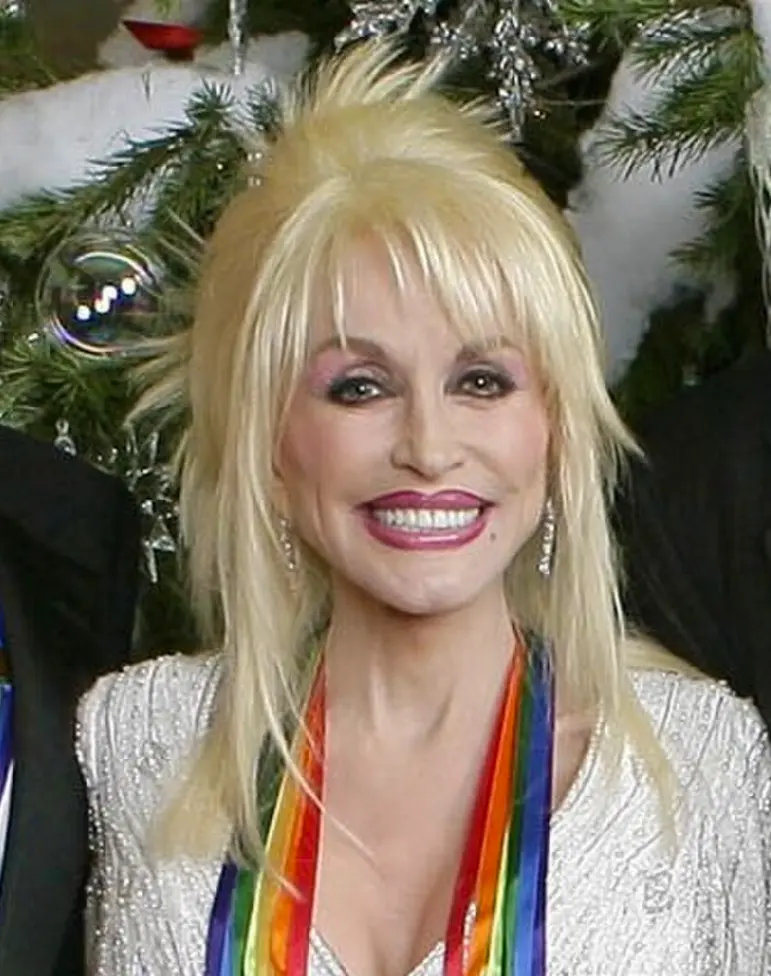
WASHINGTON — In an era defined by hyper-polarization, algorithmic outrage, and an acute deficit of public grace, the modern world lost one of its few universally acknowledged moral north stars. Dolly Parton, the legendary country music icon, philanthropist, and incandescent cultural force, has passed away. Her death has triggered an unprecedented, global wave of spontaneous public mourning that has left sociologists, cultural critics, and everyday admirers searching for a vocabulary to capture the depth of the collective grief.
While mainstream cultural institutions grapple with how to quantify the loss of a titanic pop-culture figure, communities on the margins—particularly within modern Pagan, occult, and queer spaces—have recognized her passing for what it truly is: the departure of a secular saint.
Long before her death, Parton transcended the traditional boundaries of celebrity. She functioned as a load-bearing pillar for a culture increasingly fractured by greed, pettiness, and systemic cruelty. Now, as impromptu shrines, handwritten tributes, and endless loops of her timeless discography echo across the globe, society is forced to confront a sobering reality: we have lost a singular light, and the world is palpably darker for it.
Chronology of a Cultural Earthquake
The announcement of Dolly Parton’s death sent immediate shockwaves through international media networks, but the true narrative of her passing is best told through the decentralized, organic response of the public.
- The Announcement: News of Parton’s passing broke late in the week, halting regular programming across news and entertainment outlets. Within minutes, social media platforms were flooded not merely with standard celebrity condolences, but with deeply personal, visceral narratives from individuals whose lives she had altered.
- The Immediate Public Reaction: By midday, the grief had spilled out of digital spaces and into the physical world. Urban centers and rural towns alike reported an spontaneous phenomenon: local shops, cafes, and diners playing her catalog on continuous loop. Improvised memorials began to materialize on street corners, affixed to telephone poles, and etched into the windows of community spaces. Mylar balloons, ribbons, printed photographs, and silver stars transformed ordinary street furniture into sacred spaces.
- The Global Wave of Testimonies: From the Appalachian communities she championed to international platforms where her philanthropy had reached millions, stories poured in. These ranged from macro-level impacts—such as the millions of books distributed globally via her Imagination Library—to micro-level acts of fierce, protective kindness, including her decades-long, often unheralded advocacy for marginalized and queer communities.
Supporting Data: The Measurable Impact of a Legend
While Parton’s cultural footprint is often discussed in ethereal terms of kindness and grace, the concrete metrics of her philanthropy and influence demonstrate an engineered, intentional dedication to uplifting humanity.
- The Imagination Library: Founded in 1995, Parton’s flagship literacy program began by mailing books to children in her home county of Sevier County, Tennessee. Before her passing, the program had expanded internationally—reaching the United States, Canada, the United Kingdom, Ireland, and Australia—gifting well over 200 million free books to children from birth until they enter school. Studies consistently link the program to improved early childhood literacy and school readiness.
- Targeted Philanthropy: Beyond literacy, Parton’s Dollywood Foundation and personal giving poured millions into disaster relief (such as the 2016 Smoky Mountain wildfires), medical research (including a $1 million donation to Vanderbilt University’s COVID-19 research, which helped fund the Moderna vaccine), and historical preservation in Appalachian and Black neighborhoods alike.
- Unyielding Advocacy: Parton’s support for the LGBTQ+ community was neither recent nor performative. Operating as a quiet, steadfast ally since the early decades of her career, she actively employed transgender individuals (such as her personal chauffeur in the 1990s) and routinely used her platform to preach acceptance, famously noting that God commands humanity to love one another, regardless of differences. Furthermore, her production company, Sandollar Productions, was instrumental in bringing Buffy the Vampire Slayer to television—cementing a quiet, foundational role in modern speculative fiction and pop culture.
Official Responses and Cultural Reactions
Public figures, world leaders, artists, and marginalized communities have released statements attempting to encapsulate the vastness of the void left by Parton.

Literary and artistic communities noted the sheer impossibility of replacing her unique synthesis of high camp and deep, grounded wisdom. "Dolly Parton was living proof that brilliance and humility are not mutually exclusive," noted one prominent cultural archivist. "She weaponized joy against a cynical world, and she did it with a wink and a rhinestone."
Within the spiritual and esoteric communities, responses took on a distinctly ritualistic tone. M. Belanger, a prominent author, occult historian, and clergy member within the Pagan and vampire communities, offered a profound reflection on the nature of the grief being experienced worldwide.
"How do you grieve for someone you have never met?" Belanger asked in a widely shared tribute published via The Wild Hunt. "This impact was not a mere symptom of their celebrity, but is something demonstrable. We have concrete proof that how they lived, the choices they made, every time they spoke out, they substantially improved our world—and our lives specifically."
Belanger drew sharp contrasts between Parton and the archetype of the modern billionaire or influencer, pointing out that while contemporary public figures often leverage power for self-aggrandizement, Parton operated as the antithesis: a beacon of genuine empathy.
"She was a Christian, but the kind of Christian who always hinted at deeper mystical beliefs," Belanger wrote, highlighting how long before her passing, votive candles featuring Parton as the "Queen of Hearts," "Rhinestone Angel," and "Patron Saint of Drag Queens" were already staples in homes across diverse subcultures.
Implications: Ancestor Veneration, Shrines, and the Future of Collective Grief
The passing of Dolly Parton forces a broader cultural reckoning regarding how modern, largely secularized societies process grief for public figures. In an age where traditional religious frameworks and localized community structures have eroded, many find themselves unequipped to handle the parasocial yet deeply authentic bonds they form with cultural icons.

The Rise of Secular Shrines and Domestic Veneration
Sociologists have noted that modern secular culture struggles to validate deep grief for public figures, often dismissing it as mere celebrity worship. However, the spontaneous eruption of hand-lettered signs, ribbon-wrapped poles, and makeshift altars dedicated to Parton tells a different story.
From an anthropological and Pagan perspective, these public displays are not anomalies; they are the natural human impulse toward ancestor veneration and sacred placemaking. When people light a candle, tape a photograph to a telephone pole, or leave tokens at a makeshift memorial, they are engaging in ancient, intuitive ritual behaviors. They are creating shrines.
A Load-Bearing Loss in a Cynical Age
The psychological weight of Parton’s death is exacerbated by the current sociopolitical climate. Citizens across the globe report feeling "drowning in pettiness and greed." Losing a figure who consistently modeled radical empathy, fierce autonomy, and unashamed generosity feels less like the passing of an entertainer and more like the removal of a load-bearing wall in a house already shaking from structural stress.
Yet, the ultimate implication of Parton’s life and death may lie in her legacy of inspiration. As communities mourn, the prevailing sentiment is not merely one of despair, but of a call to action.
The grief being felt globally is complicated because it carries a dual realization: we mourn the loss of a singular human being who cannot be replaced, but we also mourn the daunting challenge left in her wake. To honor Dolly Parton is to recognize the shrines built in her memory not merely as places of mourning, but as blueprints for living.
In a world desperate for light, her legacy remains a challenge to pick up the torch, put on some rhinestones, and choose kindness—loudly, unapologetically, and every single day.