Long before the glow of smartphones illuminated the night and digital calendars dictated the frantic pace of modern life, humanity looked up at the evening sky and found a reliable, luminous timepiece. Across North America, Indigenous peoples synchronized their lives with the celestial rhythms of the cosmos, utilizing lunar cycles intertwined with subtle environmental shifts as an essential system of timekeeping.
Far from being mere poetic labels, names like the "Wolf Moon," "Pink Moon," and "Sturgeon Moon" are deeply rooted in survival, cultural wisdom, and precise ecological observation. Today, while most of society relies on the standardized Gregorian solar calendar, these traditional lunar names persist in almanacs and popular culture. However, understanding their true origins reveals a sophisticated tapestry of Indigenous heritage, colonial adaptation, and a timeless blueprint for living in harmony with the natural world.
The Main Facts: Bridging Indigenous Knowledge and Modern Stargazing
At its core, the popular naming convention for full moons is a historical mosaic. The system most widely recognized today is primarily built upon a foundation laid by Algonquian-speaking tribes—a vast linguistic family whose historic territories stretch from New England to the Lake Superior region.
When European settlers arrived in North America, they encountered complex Indigenous societies that possessed an intimate, generational understanding of their local ecosystems. Settlers frequently adopted these descriptive lunar markers, blending them with elements of their own European folklore—such as Celtic and Old English traditions—to navigate an unfamiliar and often harsh new environment.
Among the most influential groups in preserving these lunar traditions are the Ojibwe (also known as the Chippewa), one of the largest Algonquian-led nations in the Great Lakes region. In Anishinaabe tradition, Nookomis Dibik-Giizis (Grandmother Moon) is revered as a primary teacher. The Ojibwe tracked time not by rigid, uniform months, but by the natural world around them—timing their legendary birchbark canoe construction, copper mining, wild rice harvesting (Manoomin), and maple sugaring precisely to the changing phases of the moon.
Chronology and Evolution: A Year Through the Moons
Unlike the static, solar-based months of the Julian or Gregorian calendars, traditional Native American timekeeping was remarkably fluid. Some tribes recognized four seasons, while others divided the year into five. Certain communities tracked 12 moons in a year, while others counted 13, adjusting their calendars to match local climates and environmental cues.
This chronological journey through the seasonal moons highlights how ancient communities survived and thrived:
Winter Moons: Survival and Endurance
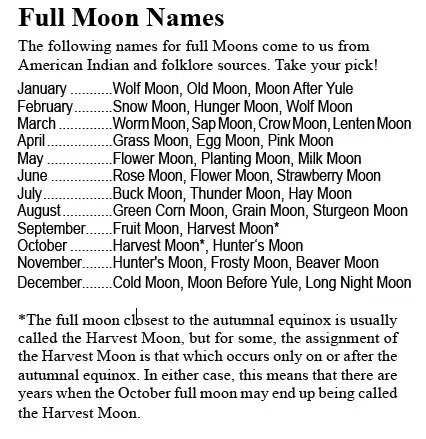
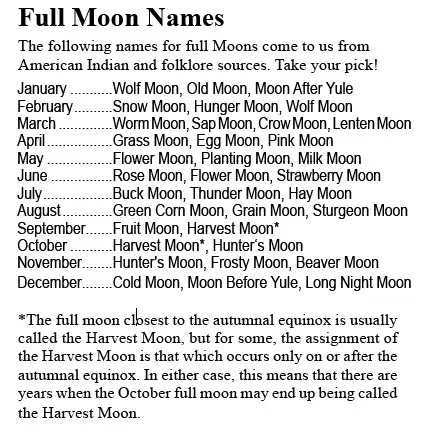
- January (Wolf Moon): Widely associated with the eerie howling of hungry packs of wolves echoing through deep midwinter snows. While colonial settlers brought this name from Old English and Celtic roots, Indigenous tribes often referred to it as the Severe Moon or Center Moon, marking the peak and most perilous phase of winter.
- February (Snow / Hunger / Bear Moon): This moon signified winter’s most punishing intensity. Tribes like the Ojibwe named it after the sucker fish, a vital survival resource, while others called it the Hunger Moon due to scarce game, or the Bear Moon, marking the birth of bear cubs.
Spring Moons: Renewal and Growth
- March (Worm Moon / Crow Moon): As temperatures crept upward, softening the earth, earthworm casts reappeared, signaling the return of robins. Northern tribes favored the Full Crow Moon, noting the cawing that heralded winter’s end, alongside names like Snow Crust Moon and Sap and Sugar Moon.
- April (Pink Moon): Named for the vibrant pink phlox wildflowers blanketing early spring meadows. The Ojibwe tracked this period as the Maple Sap Boiling Moon, while other nations observed Breaking Ice Moon and The Moon of the Red Grass Appearing.
Summer Moons: Abundance and Activity
- May (Flower Moon): Characterized by explosive floral blooms and serving as a critical biological calendar marker for planting corn and other staple crops.
- June (Strawberry Moon): Marking the ripening and ready harvest of wild strawberries. Coastal tribes concurrently named it the Fish Moon, coinciding with the annual upstream migration of shad.
- July (Buck Moon / Thunder Moon): Named because male deer (bucks) grow their antlers at peak capacity during this month. Frequent summer electrical storms also earned it the title Thunder Moon.
- August (Sturgeon Moon): Highlighting the peak catch season for sturgeon in the Great Lakes. For the Anishinaabe, this moon (Manoomini-giizis) directed the sacred, labor-intensive harvest of wild rice.
Autumn Moons: Harvest and Preparation
- September (Harvest Moon): The full moon closest to the autumnal equinox, signaling that corn, beans, squash, and wild rice were ready to be gathered before the frost.
- October (Hunter’s Moon): Historically the optimal time for hunting, as game animals were fattened from summer grazing and cleared fields made tracking easier.
- November (Beaver Moon): Signaled the final window to set beaver traps before swamps froze solid, ensuring warm pelts for the coming winter. Alternatively, it noted when beavers became hyper-active building winter lodges.
- December (Cold Moon / Long Night Moon): Deep winter’s return brought heavy snows, rendering hunting nearly impossible and ushering in a period of endurance and storytelling around the hearth.
Supporting Data and Regional Variations
The sheer diversity of North America’s Indigenous populations means that a single "universal" list of moon names is an oversimplification. With 576 federally recognized tribes in the United States alone—alongside numerous First Nations in Canada—naming conventions varied drastically by geography and ecology.
For instance, the climate and flora experienced by the Anishinaabeg in southeastern Ontario differed profoundly from those of tribes in the Dakotas or the Pacific Northwest. While an Algonquian tribe near the Atlantic might name a moon after coastal tides or runs of migratory fish, a desert southwest tribe would look to entirely different environmental cues, such as monsoon patterns or desert blooms.

Furthermore, European influences left a distinct footprint. Medieval European traditions contributed parallel names—such as the Mead Moon for July, Grain Moon for August, and Barley Moon for September—demonstrating that agrarian societies across the globe independently arrived at similar conclusions: tracking the heavens was essential to mastering the earth.
Official Responses and Cultural Respect
In recent decades, cultural institutions, environmental scientists, and Indigenous leaders have increasingly emphasized the importance of respectful engagement with these traditions.
Historically, mainstream publications like The Old Farmer’s Almanac—which has published Native American-derived moon names since the late 1700s—helped preserve this vocabulary. However, critics and cultural advocates point out that centuries of popular usage often stripped away the profound cultural context, reducing sacred ecological markers to quirky calendar trivia.
Tribal historians and educators stress that these names are not static historical artifacts; they represent a living science. Many Native communities continue to utilize traditional lunar calendars, such as the Anishinaabe Gookomisinaan dibik-giiziso-mazina’igan.
Cultural preservation programs across North America actively encourage the public to look beyond generic lists and learn about the specific Indigenous nations native to their local regions. By recognizing the sovereignty and intellectual property of these communities, modern astronomy enthusiasts can honor the deep historical roots tied to the night sky.
Implications: Climate Change and Modern Application
Today, the relevance of traditional lunar wisdom extends far beyond historical curiosity. As global climate change accelerates, altering weather patterns, floral blooming schedules, and animal migrations, traditional ecological knowledge (TEK) is gaining unprecedented scientific recognition.
Indigenous communities note that warming temperatures and shifting precipitation are disrupting the natural synchronization that traditional moon names rely upon. For example, sap is running earlier in the year, and insect hatches are shifting. By paying attention to these discrepancies, modern scientists and nature enthusiasts alike can use traditional lunar frameworks as diagnostic tools to monitor environmental health.
How to Apply Lunar Wisdom Today:
- Observe Local Phenology: Watch for physical changes in your immediate environment—such as bird migrations, budding trees, and insect emergences—rather than relying solely on arbitrary calendar dates.
- Acknowledge Indigenous Origins: When using terms like "Wolf Moon" or "Sturgeon Moon," recognize their cultural roots and research the original stewards of the land you inhabit.
- Reconnect with the Cosmos: Step outside during each full moon to reflect on the changing seasons, fostering a deeper, grounding connection with the natural rhythms of the Earth.
Ultimately, the tradition of full moon naming reminds us that humanity is inextricably linked to the natural world. By honoring the wisdom of Grandmother Moon and the Indigenous peoples who first translated her phases into a language of survival, we can cultivate a more observant, respectful, and ecologically conscious relationship with our planet.