By [Staff Investigative Journalist]
Published: October 2023
Main Facts
For more than a quarter-century, Joe White made a living out of assessing risk. Working deep within the fast-paced ecosystem of technology startups and information security, his professional existence revolved around identifying hidden vulnerabilities, questioning underlying assumptions, and making high-stakes decisions where the margins for error were razor-thin. Risk, to White, was never an abstract philosophical exercise; it was quantifiable, measurable, and manageable.
Yet, during one of the most pivotal chapters of his life, White fell victim to the most dangerous vulnerability of all—one embedded directly within his own cognitive architecture.
Severely burned out from decades of relentless professional pressure, White made a catastrophic financial miscalculation: he deposited and ultimately lost approximately $3 million of his hard-earned retirement savings into an offshore cryptocurrency lending platform.
The losses wiped out decades of disciplined financial planning, leaving him to confront a devastating reality. While White has spent the subsequent three years pursuing legal accountability and seeking ways to recover his lost capital, the core of his ordeal transcends a standard cryptocurrency scam or bad investment. It is a cautionary tale about the insidious nature of professional burnout.
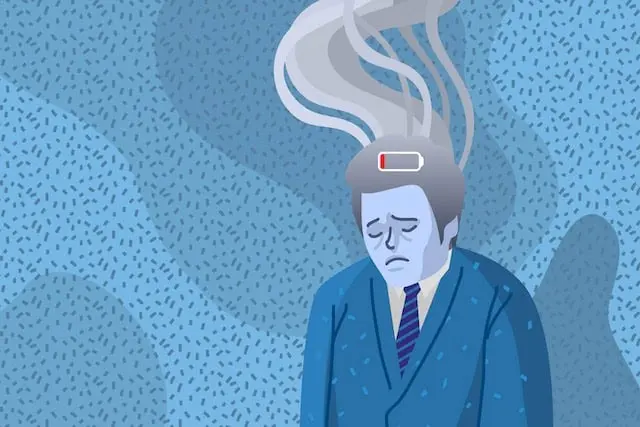
White’s story exposes a terrifying paradox of modern high-performance culture: chronic, accumulated exhaustion does not always manifest as a dramatic collapse or an inability to get out of bed. Instead, it can quietly hollow out an individual’s judgment from the inside, allowing them to maintain the outward appearance of high functionality while their cognitive guardrails silently fail.
Chronology
To understand how a seasoned security professional could walk into a multi-million-dollar financial trap, one must trace the timeline of accumulated depletion.
- The Decades-Long Build-Up (Late 1990s – 2010s): For over twenty-five years, White immersed himself in the high-stress worlds of tech startups and information security. Operating in environments defined by constant deadlines, systemic crises, and round-the-clock availability, he developed a psychological coping mechanism common among high-achievers: the ability to "push through" exhaustion. Every successful sprint past a wall of fatigue reinforced a dangerous neural feedback loop, teaching White that chronic tiredness was simply the cost of competence.
- The Slippery Slope of Cognitive Depletion (2019–2020): Years of unrelenting stress culminated in chronic sleep deprivation, brain fog, and systemic burnout. Because the decline was incremental—occurring month by month and year by year—White’s depleted state slowly morphed into his new baseline normal. Difficulty concentrating and chronic fatigue were rationalized as standard occupational hazards.
- The Critical Decision Window (2020–2021): Operating under severe cognitive impairment while believing he was entirely functional, White evaluated and ultimately trusted an offshore cryptocurrency lending platform. Red flags that should have triggered immediate skepticism or slow-downs were glossed over. The financial exposure was locked in before White realized his judgment had been compromised.
- The Realization and Aftermath (2021–Present): Once the financial consequences became irreversible, the stark reality of the loss set in. Recognizing that his mental state had played a pivotal role in his vulnerability, White began a multi-year journey of personal recovery, introspection, and legal mobilization. He launched a public awareness campaign and a GoFundMe initiative to support his ongoing legal battles and immediate living expenses.
Supporting Data and Psychological Insights
White’s experience is not an isolated anomaly; it aligns closely with emerging psychiatric and neurological research regarding the impact of chronic occupational burnout on executive function.
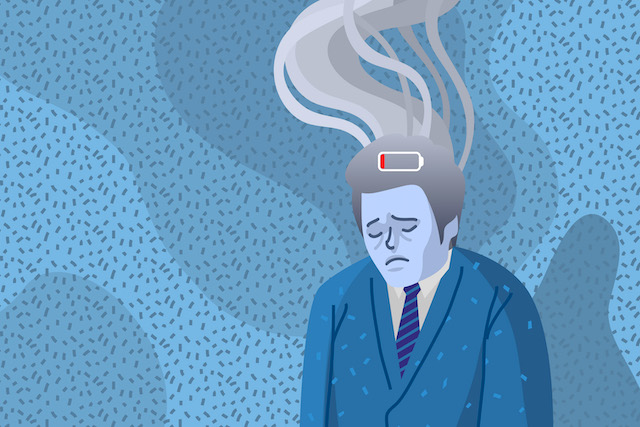
According to workplace wellness data, high-stress technology and cybersecurity sectors exhibit some of the highest burnout rates globally. When an individual operates under prolonged stress:
- The Prefrontal Cortex Suffers: Chronic elevation of cortisol and adrenaline impairs the prefrontal cortex—the region of the brain responsible for risk assessment, impulse control, and long-term strategic planning.
- The Illusion of Competence: Studies on cognitive fatigue show that high-achieving professionals often suffer from "functional burnout." They continue to execute rote tasks, write code, or hold meetings successfully, which tricks their self-monitoring systems into believing their decision-making capacity remains intact.
- Single Points of Failure: In information security, professionals are taught never to rely on a single control to protect critical assets. Layered defenses—such as redundant checks, peer reviews, and strict protocols—are mandatory. Yet, in personal financial and life decisions, successful individuals frequently rely on a single point of failure: their own overworked, un-audited minds.
In White’s case, his $3 million loss represents not merely a failure of asset selection, but a systemic failure of internal governance. His brain was the compromised system tasked with auditing its own security.
Official Responses and Broader Implications
As the boundaries between traditional financial markets and decentralized cryptocurrency ecosystems blur, stories like White’s have drawn attention from consumer protection advocates, financial planners, and mental health professionals alike.
The Financial Sector Perspective
Regulatory bodies, including the Securities and Exchange Commission (SEC) and the Commodity Futures Trading Commission (CFTC), have repeatedly warned consumers about the high risks associated with unregulated offshore crypto-lending platforms, many of which operate as high-yield traps or outright Ponzi schemes. However, financial analysts note that warnings often fail to protect individuals who are cognitively compromised. When a person is experiencing severe executive dysfunction, even well-publicized risk disclosures can be misread, minimized, or entirely ignored.
The Workplace Wellness Perspective
Corporate leaders and human resources experts are increasingly forced to look beyond basic wellness perks (like meditation apps or gym memberships) and address the systemic drivers of burnout. White’s narrative shifts the conversation from employee happiness to operational risk management. When senior engineers, executives, and security experts burn out, the risk extends beyond corporate productivity—it threatens the personal safety, financial security, and livelihoods of the individuals themselves.
Lessons Learned and the Path Forward
Reflecting on his catastrophic loss, White has distilled several critical takeaways for professionals operating in high-stress fields:
- Redefining Burnout: Functioning is not the same as functioning normally. Just because you can still complete tasks and meet deadlines does not mean your judgment is unimpaired.
- Introducing Personal Controls: High-risk personal decisions—particularly those involving substantial financial exposure or life-altering commitments—should never be made in isolation when an individual is exhausted. Just as code requires a peer review, critical decisions require an independent, unexhausted set of eyes.
- The Danger of Radical Independence: Highly competent professionals are often the most vulnerable to burnout because their identity is tied to self-reliance. Recognizing when you need help, distance, or a pause is an act of high-level risk management, not a sign of weakness.
- Holistic Recovery: True recovery from burnout requires systemic change—prioritizing sleep, enforcing strict boundaries, disconnecting from digital tethers, and building a life rich in non-work relationships and interests.
Joe White’s journey from a confident risk assessor to a victim of invisible cognitive depletion serves as a stark warning to the modern workforce. In a society that glorifies relentless output, the most critical security vulnerability may not be found in code or financial markets, but within the exhausted mind of the person making the choices.
To learn more about Joe White’s ongoing advocacy, or to support his legal fight and recovery efforts, you can visit his verified GoFundMe page.