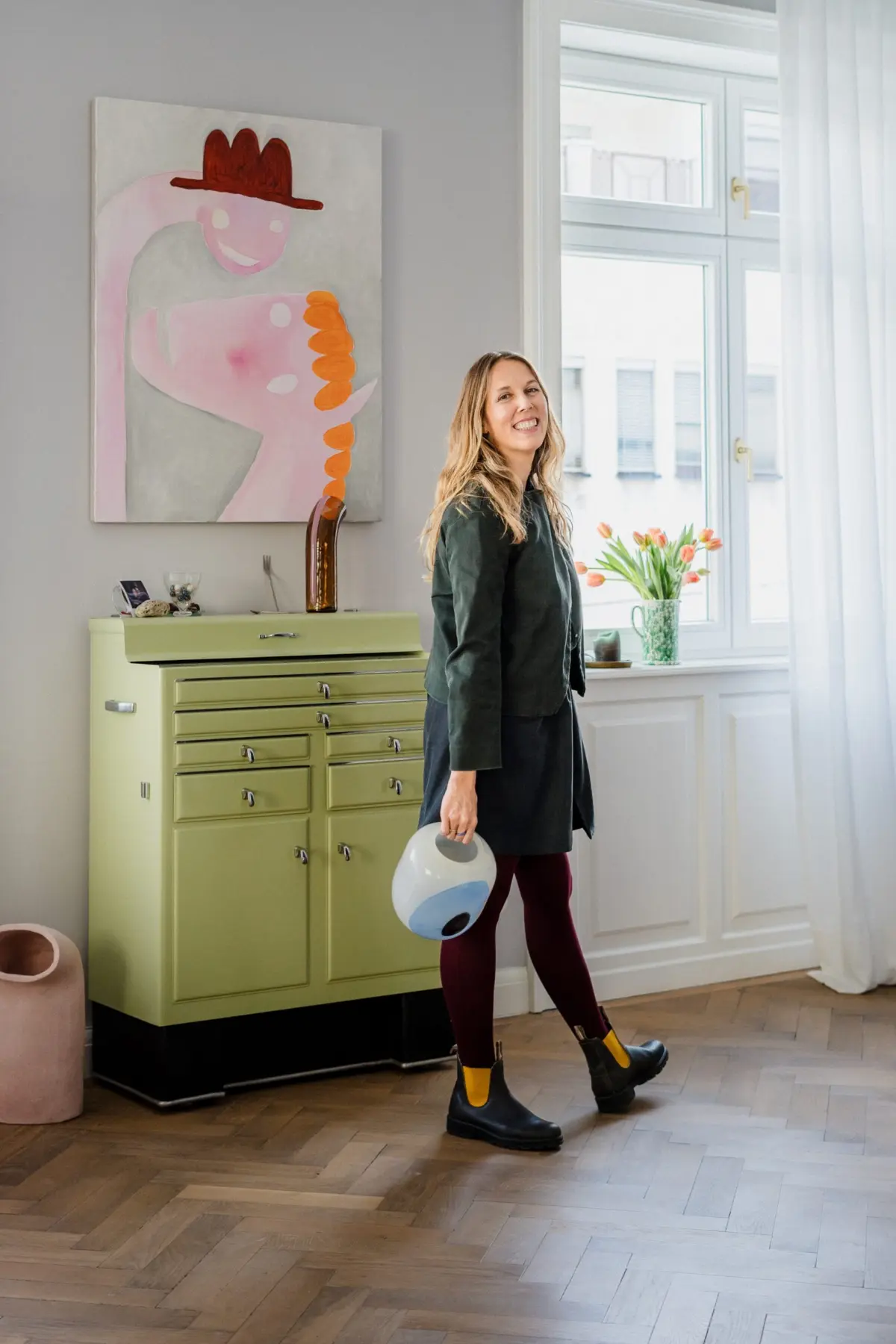
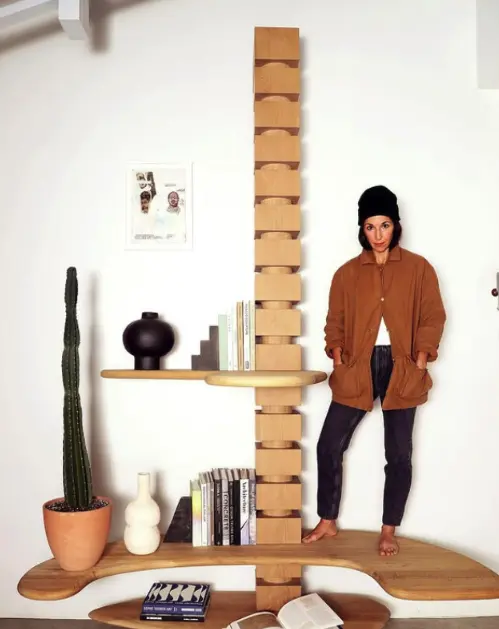
In the contemporary design landscape, where hyper-standardized, mass-produced minimalism often reigns supreme, a quiet rebellion is taking shape in the heart of Vienna. Ursula Futura—not merely a design studio, but a deliberate alter ego crafted by creator Kathrin Schaden—is redefining how we interact with light, space, and material culture.
At the core of Schaden’s practice is mouth-blown glass, an ancient and unforgiving craft treated here as a dynamic, living medium. Eschewing the cold precision of industrial molds or mechanical casting, Schaden collaborates with master artisans in Bohemia to create sculptural lighting and decor objects that embrace imperfection. Her signature pieces—such as the undulating NESSIE, the evocative PHANTOM, and the mesmerizing PULSAR lamp series—explore the liminal space between liquid and solid, geometry and organic fluidity.
Key facts defining the Ursula Futura phenomenon include:
The Medium: Pure, mouth-blown glass originating from historic furnaces in Bohemia, shaped by hand and breath.
The Philosophy: Rejecting self-censorship, perfectionism, and industrial uniformity in favor of emotional resonance, material honesty, and accidental beauty (such as intentionally retained air bubbles).
The Flagship Line: The Pulsar lamp series, characterized by softly stepped, wave-like conical forms rendered in opaque, colored glass that shifts dramatically under varying lighting conditions and viewing angles.
Geographic Footprint: Conceived and directed in Vienna, Austria, with manufacturing rooted in the rich glassmaking traditions of Bohemia.
Chronology: From Suppression to Unapologetic Creation
To understand the emotional gravity of Ursula Futura, one must retrace the personal and professional evolution of its founder, Kathrin Schaden.
The Formative Years (Pre-2020): Like many creative minds navigating a design industry obsessed with clean lines and commercial palatability, Schaden spent years being told she was "too much." Her instinct for dramatic colors, excessive textures, and emotional, baroque forms was frequently suppressed in favor of understated, corporate-friendly minimalism.
The Birth of an Alter Ego: Seeking liberation from the internal and external filters that stifled her intuition, Schaden conceptualized Ursula Futura. Named as a separate entity, the brand became a safe harbor—a creative space dedicated entirely to following intellectual and aesthetic obsessions without editorial apology. If an idea or a color combination captured her imagination to the point of distraction, it had to be made.
Establishing the Craft (Vienna and Bohemia): Schaden forged partnerships with traditional glassblowers in Bohemia, marrying her contemporary conceptual designs with centuries-old techniques. Rather than relying on digital renderings or automated casting, production was anchored in the high-heat, high-skill environment of traditional mouth-blowing.
The Introduction of the ‘Pulsar’ Series: Expanding beyond decorative objects like NESSIE and PHANTOM, Schaden turned her attention to functional lighting. The Pulsar table lamp was introduced, translating the concept of an unending wave into stacked, opaque colored glass.
Present Day & Future Horizons: Today, Ursula Futura operates at the intersection of high art and interior design. With pendant and wall lamp variations of the Pulsar series currently in active development, the studio continues to scale its presence across international design circles while fiercely guarding its uncompromising, handmade ethos.
Supporting Data & Material Analysis
The allure of Ursula Futura’s catalog lies not just in visual impact, but in the physics and material science of glassmaking. Understanding why these pieces evoke such visceral reactions requires examining how they are made and how they interact with their environment.
The Physics of the Melt
Glass is scientifically classified as an amorphous solid—essentially a supercooled liquid. At room temperature, it appears rigid and permanent. However, inside the furnace, it remembers its fluid state.
When a master glassblower gathers molten glass from a furnace heated to over 1,000°C (1,832°F) onto the end of a blowpipe, the material becomes dynamic. It flows, sags, and responds instantaneously to gravity, centrifugal force, and human breath.
Production Method
Industrial Casting / Pressing
Mouth-Blown (Ursula Futura)
Tooling
Steel molds, automated presses
Blowpipe, wooden blocks, hand shears
Material Memory
Rigidly uniform; stresses engineered out
Organic; captures the exact moment of cooling
Inclusions
Optically clear, defect-free
Retained air bubbles ("the material arguing back")
Uniqueness
Identical mass-produced units
Every single object is entirely one-of-a-kind
Embracing the "Flaw"
In industrial glass manufacturing, micro-bubbles (seeds or blisters) and minor surface ripples are considered defects, leading to immediate rejection by quality control inspectors. Schaden takes the exact opposite approach.
The tiny bubbles trapped within Ursula Futura pieces are celebrated as "the material arguing back." They represent the physical dialogue between the blower’s breath and the cooling resistance of the silica. By leaving these microscopic anomalies intact, each vessel or lamp carries a biological footprint—a tangible record of the human effort required to freeze a wave in time.
The Optics of the Pulsar Lamp
The Pulsar table lamp utilizes opaque colored glass engineered to manipulate light in two distinct states:
Powered Off: The lamp reads as a sculptural, minimal monolith. The stepped conical forms catch natural daylight, casting soft shadows and revealing subtle surface gradations.
Powered On: Light penetrates the dense, colored medium from within. The layers of glass refract the internal source, causing the color profiles to visually shift, bleed, and layer in unexpected ways depending on the observer’s viewing angle.
Official Responses & Creator Insights
The philosophy behind Ursula Futura is deeply personal, rooted in emotional transparency rather than market research. In statements reflecting on her creative process, Kathrin Schaden has articulated the foundational ethos driving her work:
"Light hits glass and the room shifts and you stop and you stare and you feel something you can’t explain. And you don’t want to. That’s where Ursula begins. That’s why she makes anything at all."
This sentiment underlines a rejection of hyper-intellectualized design discourse. Schaden does not design objects meant to be quietly admired from a distance; she creates pieces intended to arrest the viewer’s attention mid-stride.
Reflecting specifically on her fascination with wave mechanics and repetition, Schaden notes:
"I keep coming back to the wave because it never really stops moving, even when it’s frozen in glass. The repetition in the form feels meditative to me. Like breathing, or tides."
This meditative quality is precisely what translates into the physical architecture of the Pulsar lamp. By stepping the conical forms rhythmically, Schaden mimics natural hydrodynamic and atmospheric patterns, ensuring that an inanimate household object feels rhythmically alive.
Implications for Modern Interior Design and Craft
The rise of studios like Ursula Futura signals a broader, much-needed shift within the interior architecture and design industries. As consumers grow increasingly fatigued by algorithmic uniformity, flat-pack homogeneity, and the sterile aesthetic of digital-first spaces, the demand for authentic, emotionally resonant craftsmanship is surging.
1. The Rehabilitation of Emotional Excess
For decades, mainstream modernism preached restraint—stripping away ornamentation, color, and whimsy in the name of functional purity. Ursula Futura challenges this dogma. By proving that emotional intensity, vibrant color blocking, and dramatic silhouettes can coexist with sophisticated spatial design, Schaden opens the door for a new wave of expressive, maximalist-leaning curation.
2. The Revival of European Studio Glass
By partnering directly with historic Bohemian furnaces and Vienna-based workshops, Schaden helps sustain endangered craft ecosystems. Mouth-blown glass is a notoriously grueling profession plagued by an aging artisan demographic. Projects that demand high-level, bespoke execution provide vital economic lifelines to master blowers, ensuring that centuries-old techniques are passed down rather than automated out of existence.
3. Toward Sensory-Responsive Living Spaces
Interior design is increasingly moving away from static visual styling toward multi-sensory environments. Lighting is no longer just about illumination; it is about atmosphere, mood alteration, and spatial transformation. Objects like the Pulsar lamp, NESSIE, and PHANTOM serve as spatial anchors. They react to the changing trajectory of sunlight throughout the day and completely transform when illuminated at night, functioning as architectural chameleons.
Looking Ahead
As Ursula Futura expands its catalog—with new pendant systems and wall-mounted variations of the Pulsar line currently in development—the studio proves that the future of design does not lie in digital perfection. Instead, it lies in the fragile, breathing intersection of human vulnerability, stubborn material resistance, and the magical way a single piece of glass can catch an afternoon ray and make you stop, stare, and feel.
For more information, collections, and studio updates, visit ursulafutura.com.